How energy costs shape smart manufacturing investment in Europe
Energy costs change both the appeal of smart manufacturing investments in Europe and the ability of manufacturers to fund them. Higher prices can strengthen the case for better process control, lower scrap rates and energy monitoring. They can also weaken operating margins enough to delay capital spending. A project becomes attractive when it reduces an identifiable cost at a particular plant, with savings that remain credible under different energy-price and production scenarios.
For businesses evaluating smart manufacturing in Europe, this creates a selective investment opportunity. Plants with substantial avoidable energy use may justify targeted upgrades even under tight budgets. Factories with efficient equipment, limited scheduling flexibility or uncertain demand face a harder calculation. The distinction depends on how much energy an investment saves, when those savings occur, and whether the manufacturer can capture their financial value through its supply contract.
The electricity bill determines which technologies earn priority
A national electricity-price comparison provides useful context, but it cannot establish a factory’s investment case. Industrial buyers can face different combinations of supply charges, network costs, taxes, contractual arrangements and applicable relief. Two plants purchasing electricity in the same country may therefore attach different financial values to an identical reduction in consumption.
Evaluators need to separate three potential benefits: using fewer kilowatt-hours, reducing chargeable peak demand, and moving consumption into cheaper periods. These benefits require different technologies and operating conditions. A compressed-air improvement may reduce total consumption. Coordinating equipment start-ups may lower a billing peak where the tariff rewards that reduction. Rescheduling a batch process may change purchasing costs without reducing energy use at all.
Confusing these mechanisms can materially overstate returns. If a factory pays a flat contracted supply rate, moving production to a cheaper wholesale-price hour may provide no immediate saving. Some contract structures introduce exposure at renewal or through purchasing provisions, but that future possibility should be evaluated separately from savings available today.
The relevant price is also the cost the plant actually avoids when consumption falls. Dividing the entire annual bill by annual electricity use can overvalue savings if the bill includes charges that remain unchanged. Conversely, an upgrade that reliably reduces a chargeable peak may deliver value beyond its reduction in total electricity consumption. The calculation must follow the tariff.
This is why the smart manufacturing business case can vary significantly across European locations without any difference in the technology itself. Regional energy conditions influence project rankings, but site contracts and production patterns determine the result. Comparing factories solely through national average prices risks approving an attractive-looking project at the wrong facility.
Energy pressure makes investment priorities more selective
When energy spending becomes a larger concern, manufacturers have a reason to scrutinize investments that connect operational data to specific corrective actions. Monitoring utilities, improving machine controls and reducing process losses can offer a clearer route to savings than a broad digital transformation programme whose benefits depend on several future implementation stages.
That does not make every energy dashboard a worthwhile investment. A monitoring system creates financial value only when someone can act on what it reveals. Persistent overnight consumption may point to unnecessary idle operation, leaks or equipment that cannot safely be switched off. Each finding requires a different response. The commercial assessment should include the cost and feasibility of that response, rather than crediting the dashboard with all identified consumption.
Several applications deserve attention because their energy mechanisms are relatively easy to examine:
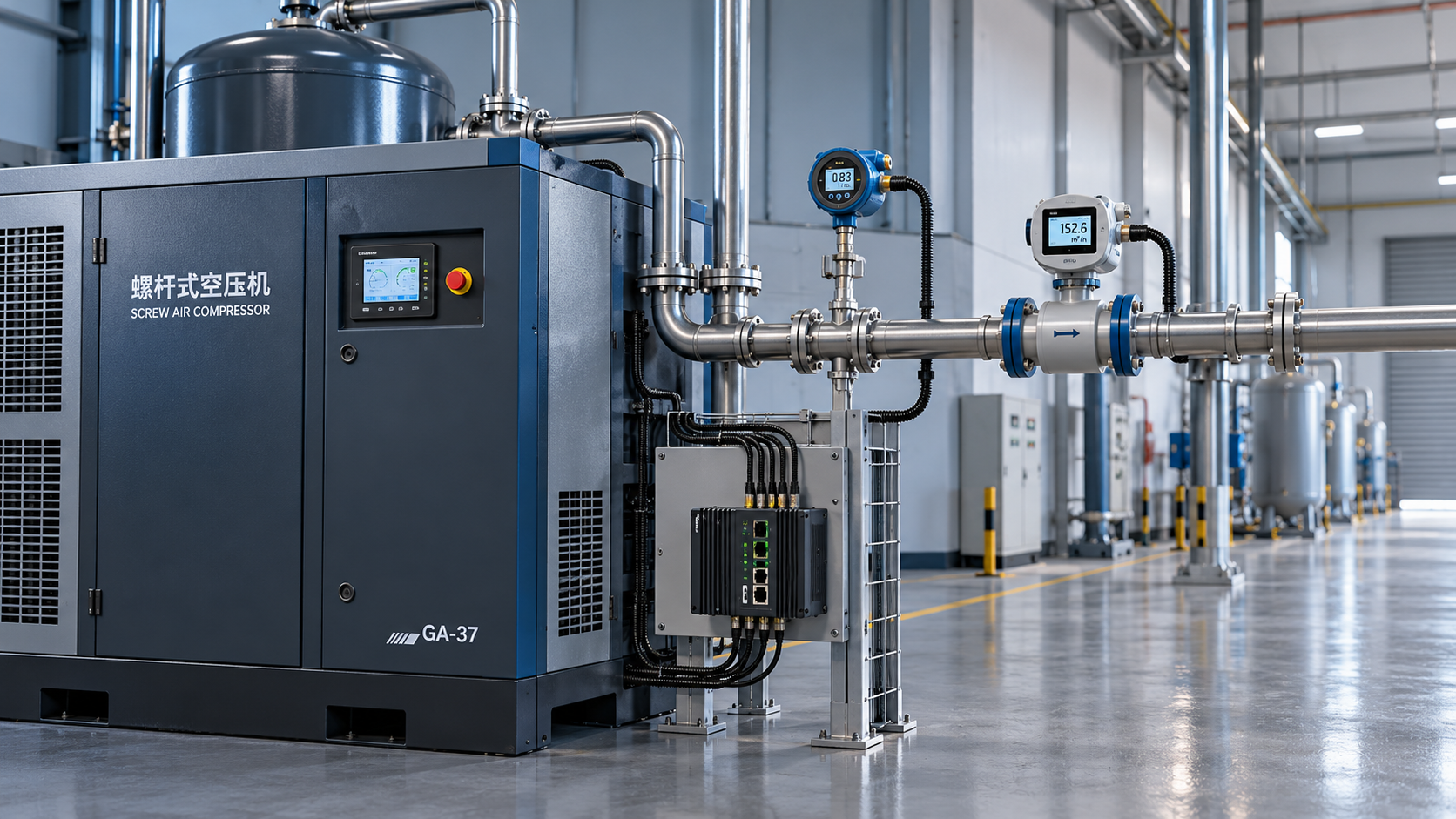
- Utility control: Metering and controls can help identify avoidable losses in compressed air, cooling, pumping and ventilation. Savings depend on the condition of the existing system and the operational changes that follow.
- Process control: Better control of heating, cooling or machine settings may reduce excess treatment, unstable cycles and unnecessary running time. Product specifications establish the safe operating limits.
- Quality improvement: Earlier defect detection can reduce the energy embedded in rejected production and rework. The benefit is strongest when defects would otherwise pass through additional energy-consuming stages.
- Production scheduling: Connecting energy information with production planning can help manage peaks or shift flexible loads. Its value depends on tariff exposure, delivery requirements and process constraints.
These applications should compete with straightforward engineering improvements. If an inefficient motor, poorly maintained utility system or unnecessary operating routine explains most of the loss, equipment work may deserve priority. Digital controls can support that work, but adding software to an unresolved physical problem can increase cost without addressing its cause.
Automation requires an equally careful assessment. A robot or automated handling system may increase electrical load while improving throughput and reducing defects. Energy consumption per accepted unit could fall even as total plant consumption rises. That can be a sound investment, provided the business can sell the additional output and the financial model includes the added energy demand.
For energy-intensive continuous processes, operational stability places tighter limits on flexibility. Interrupting a furnace or changing a thermal cycle may introduce restart losses, quality problems or equipment stress. In discrete manufacturing, individual operations may be easier to reschedule, but labour availability, changeover costs and downstream bottlenecks can restrict the available window. The same control platform will therefore have different economic potential across production environments.

Energy costs consequently influence the sequence of factory modernization. A plant may begin with metering one major utility, correct a measurable loss, and then extend controls to adjacent processes. This staged approach can release capital for later work and establish usable operating data. It works best when the first installation supports future integration; isolated systems can leave the factory paying repeatedly to connect information.
Volatile prices require a business case that survives several scenarios
A high energy price can make a weak project appear compelling. A lower price can hide the value of an improvement that also reduces scrap, downtime or maintenance. Evaluators should test both possibilities instead of allowing one recent bill or one procurement forecast to determine the investment decision.
The starting calculation is straightforward: verified energy savings multiplied by the avoidable energy cost, plus other defensible operating benefits, minus recurring costs. The difficulty lies in establishing each input. Savings should reflect expected utilization and the production mix. Software fees, calibration, support, cybersecurity maintenance and additional engineering work should remain visible throughout the project’s useful life.
At minimum, the assessment should consider lower, central and higher energy-cost scenarios alongside realistic production volumes. A project that clears the investment hurdle only under expensive energy and full utilization has a narrow commercial foundation. One that remains viable at lower prices because it also improves yield or reliability offers greater resilience.
Benefits must also be reconciled to prevent double counting. If a quality improvement eliminates rework, its energy saving may already be included in the calculated rework cost. If improved scheduling reduces both peak demand and purchasing costs, the model needs to confirm that each benefit is separately available under the contract. Adding every supplier claim together can create a return that the plant cannot realize.
Installation and commissioning can be decisive. Connecting older machines may require additional sensors, interface development or control-system modifications. A planned shutdown has an opportunity cost, particularly when production capacity is constrained. Savings may develop gradually as operators learn the system and engineers adjust control limits. A payback calculation that assumes full benefits immediately after purchase understates those execution risks.
Measurement should be designed before approval. Comparing bills before and after installation is insufficient if output, operating hours or product mix changes. A credible baseline relates consumption to the factors that drive it, using an appropriate measure such as energy per accepted unit or per tonne processed. Weather-sensitive utilities may require additional adjustment.
A pilot should test the weakest assumption in the business case. For a monitoring project, that may be whether the identified losses are actionable. For automated process control, it may be whether lower consumption can coexist with stable quality. For scheduling software, it may be whether production can move without creating overtime, inventory or delivery costs. A limited trial is valuable when it resolves a material uncertainty before wider spending.
Energy pressure also affects financing capacity. A manufacturer facing expensive utility bills may favour a smaller project with a quick, measurable return even when a larger upgrade has better long-term economics. Business evaluators should distinguish an unattractive project from an attractive project that the owner cannot comfortably finance. The distinction changes the appropriate implementation schedule and commercial structure.
Europe’s opportunity depends on flexibility as well as efficiency
Investment in smart manufacturing gains another dimension wherever industrial electricity contracts expose buyers to prices that vary over time. Under those conditions, factories can benefit from knowing both how much energy a process consumes and when it can run. The commercial opportunity expands from reducing waste to coordinating production with energy availability and cost.
Flexibility has boundaries. A factory may be able to move a cleaning cycle, charging operation or selected batch without disrupting output. Moving a constrained production stage can affect the entire delivery schedule. Savings must be assessed against overtime, storage requirements, work in progress and the risk of missing customer commitments. A cheap electricity period is useful only when production can exploit it economically.
On-site generation and storage can add further coordination needs. Controls may help align suitable loads with available generation, while storage may support peak management or provide other operational benefits. Their value depends on equipment costs, charging losses, tariff rules, operating limits and the timing of consumption. The presence of solar panels or a battery does not, by itself, establish a business case for a wider factory software platform.
Electrification can also change investment priorities. Replacing a fuel-based process with electrical equipment alters the site’s load profile and may create new control opportunities. However, electrical capacity, connection requirements and process performance can determine feasibility before any digital optimization is considered. Evaluators should examine these physical constraints early, especially when several upgrades would increase demand at the same facility.
For technology providers, this favours proposals built around a defined process, an explicit savings mechanism and an integration plan that the plant can support. A vendor should be able to explain which measurements drive an action, how that action affects production, and how the resulting benefit will be verified. Broad claims about intelligent factories offer little help when the investment committee needs to understand cash flow and operating risk.
The developments worth tracking are those that change the plant’s ability to capture value: electricity-contract renewal, exposure to variable prices, network charging arrangements, available connection capacity and changes in production demand. These can alter the economics of an existing proposal without any change in its technical performance. Falling energy prices may weaken a project based entirely on avoided consumption while leaving one supported by quality and reliability gains attractive.
A practical next step is to select one significant energy-consuming process and connect its load profile, production constraints and actual billing terms. That exercise reveals whether the strongest opportunity lies in reducing losses, improving yield, managing peaks or shifting consumption. Investment can then proceed against a measurable operating problem, with expansion tied to demonstrated results.
Get weekly intelligence in your inbox.
No noise. No sponsored content. Pure intelligence.
 Oct 24, 2026Tesla Q3 2026 Storage Deployments Rank Second Highest as Revenue Falls 16%Tesla Q3 2026 Storage Deployments Rank Second Highest as Revenue Falls 16%
 Oct 24, 2026Freight Forwarding Services Pricing: Comparing Quotes Beyond Base RatesFreight Forwarding Services Pricing: Comparing Quotes Beyond Base Rates
 Oct 23, 2026IndexBox Issues Off-Grid Solar Outlook to 2035, Forecasting 8.2% CAGRIndexBox Issues Off-Grid Solar Outlook to 2035, Forecasting 8.2% CAGR
 Oct 23, 2026NSF/ANSI 49 Biosafety Cabinets: Product Certification vs. Field TestingNSF/ANSI 49 Biosafety Cabinets: Product Certification vs. Field Testing
 Oct 22, 2026Mitsubishi Electric Develops Industry-First Humanoid Robot–CNC Machining SystemMitsubishi Electric Develops Industry-First Humanoid Robot–CNC Machining System
 Oct 22, 2026Aerospace Aluminum Machining: How to Control Distortion in Thin-Wall PartsAerospace Aluminum Machining: How to Control Distortion in Thin-Wall Parts
 Oct 21, 2026Genesis Energy commissions 200 MWh battery storage system at HuntlyGenesis Energy commissions 200 MWh battery storage system at Huntly
 Oct 21, 2026Buying AMI Smart Meters Wholesale: Compatibility Checks and Total CostsBuying AMI Smart Meters Wholesale: Compatibility Checks and Total Costs
 Oct 20, 2026Werner Enterprises Issues Q3 Earnings Warning as Costs RiseWerner Enterprises Issues Q3 Earnings Warning as Costs Rise
 Oct 20, 2026Are Digital Twins Viable for SMEs? Costs, Use Cases, and Data RequirementsAre Digital Twins Viable for SMEs? Costs, Use Cases, and Data Requirements
 Oct 19, 2026Choosing a Wholesale Servo Motor Exporter: Traceability and Warranty ChecksChoosing a Wholesale Servo Motor Exporter: Traceability and Warranty Checks
 Oct 18, 2026Syringe Manufacturing Equipment: Evaluating Throughput and Assembly AccuracySyringe Manufacturing Equipment: Evaluating Throughput and Assembly Accuracy
 Oct 17, 2026Air Freight Forwarding Services: How to Compare Quotes for Urgent ShipmentsAir Freight Forwarding Services: How to Compare Quotes for Urgent Shipments
 Oct 16, 2026Wholesale Solar Panels: How to Compare Bulk Quotes by Total Landed CostWholesale Solar Panels: How to Compare Bulk Quotes by Total Landed Cost
 Oct 15, 2026Supply Chain Intelligence for Sourcing: How to Vet New SuppliersSupply Chain Intelligence for Sourcing: How to Vet New Suppliers
 Oct 14, 2026How energy costs shape smart manufacturing investment in EuropeHow energy costs shape smart manufacturing investment in Europe
 Oct 14, 2026How skills shortages slow smart manufacturing in Southeast AsiaHow skills shortages slow smart manufacturing in Southeast Asia
 Oct 14, 2026How CNC wire-cut machining maintains tight tolerances in thick partsHow CNC wire-cut machining maintains tight tolerances in thick parts
 Oct 14, 2026Can automated feeding stabilize metal forming in smart factories?Can automated feeding stabilize metal forming in smart factories?
 Oct 14, 2026Can CT inspection detect internal defects in metal additive parts?Can CT inspection detect internal defects in metal additive parts?
 Oct 14, 2026When does additive manufacturing reduce lead time for spare parts?When does additive manufacturing reduce lead time for spare parts?
 Oct 14, 2026How production volume affects ROI on an automated painting lineHow production volume affects ROI on an automated painting line
 Oct 14, 2026What data does manufacturing bottleneck analysis consulting need?What data does manufacturing bottleneck analysis consulting need?
 Oct 14, 2026When should you hire a consultant for manufacturing bottlenecks?When should you hire a consultant for manufacturing bottlenecks?
 Oct 14, 2026What Are Electronics Exporters' Top Supply Chain Resilience Gaps in 2026?What Are Electronics Exporters' Top Supply Chain Resilience Gaps in 2026?
 Oct 14, 2026How Do You Measure AI Adoption Maturity in a Traditional Factory?How Do You Measure AI Adoption Maturity in a Traditional Factory?
 Oct 14, 2026Are Chinese AI-Assisted Surgical Devices Gaining Global Trust?Are Chinese AI-Assisted Surgical Devices Gaining Global Trust?