Recent Advances in Smart Manufacturing and Materials Reshaping Factory Investment
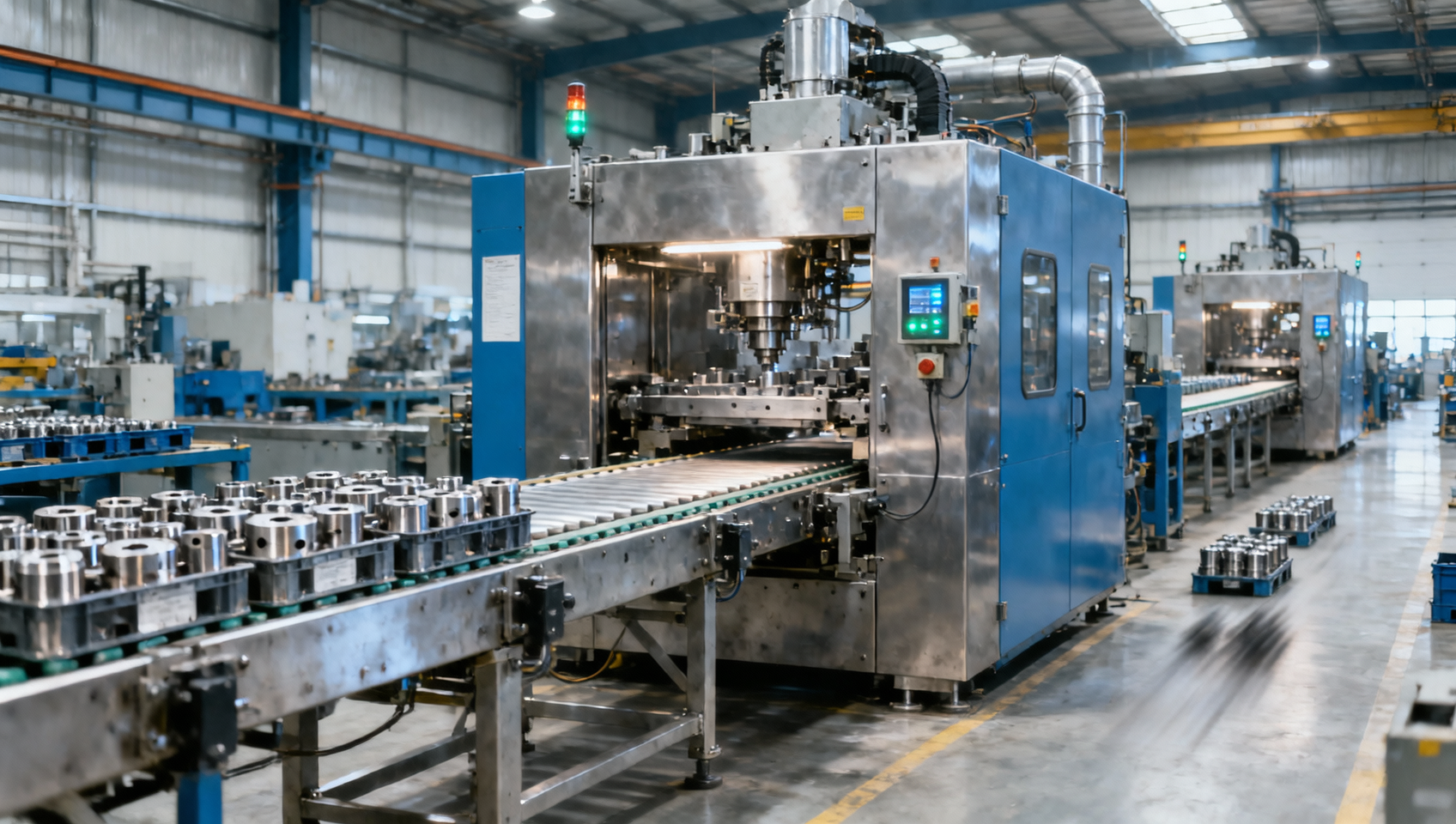
Recent advances in smart manufacturing and materials are reshaping how enterprise leaders evaluate factory investment, supplier capability, and long-term production resilience. From AI-enabled automation and digital twins to advanced alloys, sustainable materials, and connected equipment, these developments are changing cost structures, quality standards, and competitive positioning. For decision-makers navigating global expansion, understanding where technology delivers measurable value is now essential.
The important shift is not that factories are becoming fully autonomous overnight. Most industrial investment is moving in a more practical direction: targeted automation around bottlenecks, better visibility across fragmented operations, and material choices that improve performance or reduce exposure to regulatory and supply-chain risk. This is a different proposition from the highly publicized “lights-out factory” narrative. It requires management teams to assess not only what a technology can do, but whether it can be integrated into existing equipment, workforce practices, quality systems, and customer commitments.
For manufacturers, buyers, and cross-border investors, the recent advances in smart manufacturing and materials should therefore be read as a change in investment discipline. The strongest projects are no longer defined solely by a lower unit labor cost or a faster machine cycle. They are defined by whether the factory can maintain output under volatility: changing demand, tighter traceability requirements, skilled-labor constraints, energy-price exposure, material disruption, and rising expectations for documented quality.
Factory investment is becoming a resilience decision
For decades, location decisions were often led by labor availability, land cost, export access, and proximity to customers. These factors remain relevant, but they are less sufficient on their own. A plant with low operating wages can still become expensive if it has unstable quality yields, limited process data, poor maintenance planning, high scrap rates, or a weak ability to respond to specification changes.
Smart manufacturing investments address these operational weaknesses by connecting equipment, process data, planning systems, and quality controls. The commercial value lies in reducing variation and improving response time, rather than simply adding digital interfaces to the shop floor.
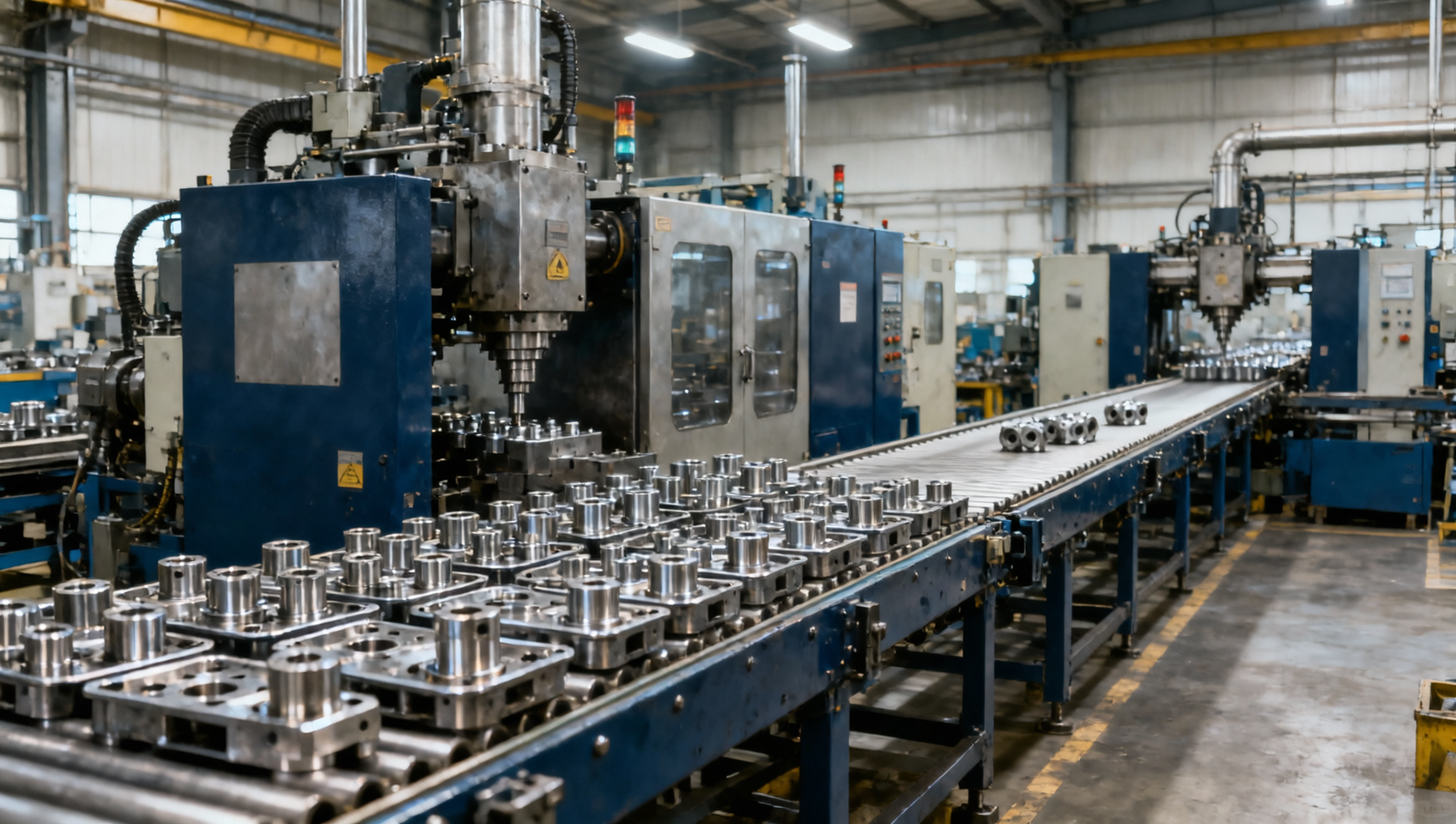
For example, a manufacturer producing precision parts may install machine monitoring not because management needs another dashboard, but because unplanned spindle wear, tooling inconsistency, or temperature variation creates hidden costs in rework and late delivery. A connected machining environment can make these patterns visible earlier. If the data is reliable and integrated into maintenance and quality decisions, it can reduce the probability of a costly production interruption. If it is merely collected without ownership or operational follow-through, it becomes another IT expense.
This distinction is increasingly important when evaluating overseas suppliers. A supplier that can explain its process controls, defect containment procedures, traceability architecture, and maintenance discipline may be a lower-risk partner than one with newer machinery but limited evidence of repeatable production control.
AI adoption is moving from experimentation to constrained industrial use
Artificial intelligence has become a central theme in manufacturing strategy, but adoption is more selective than many market discussions suggest. In industrial settings, AI delivers its clearest value when applied to bounded problems with accessible data and measurable operating consequences.
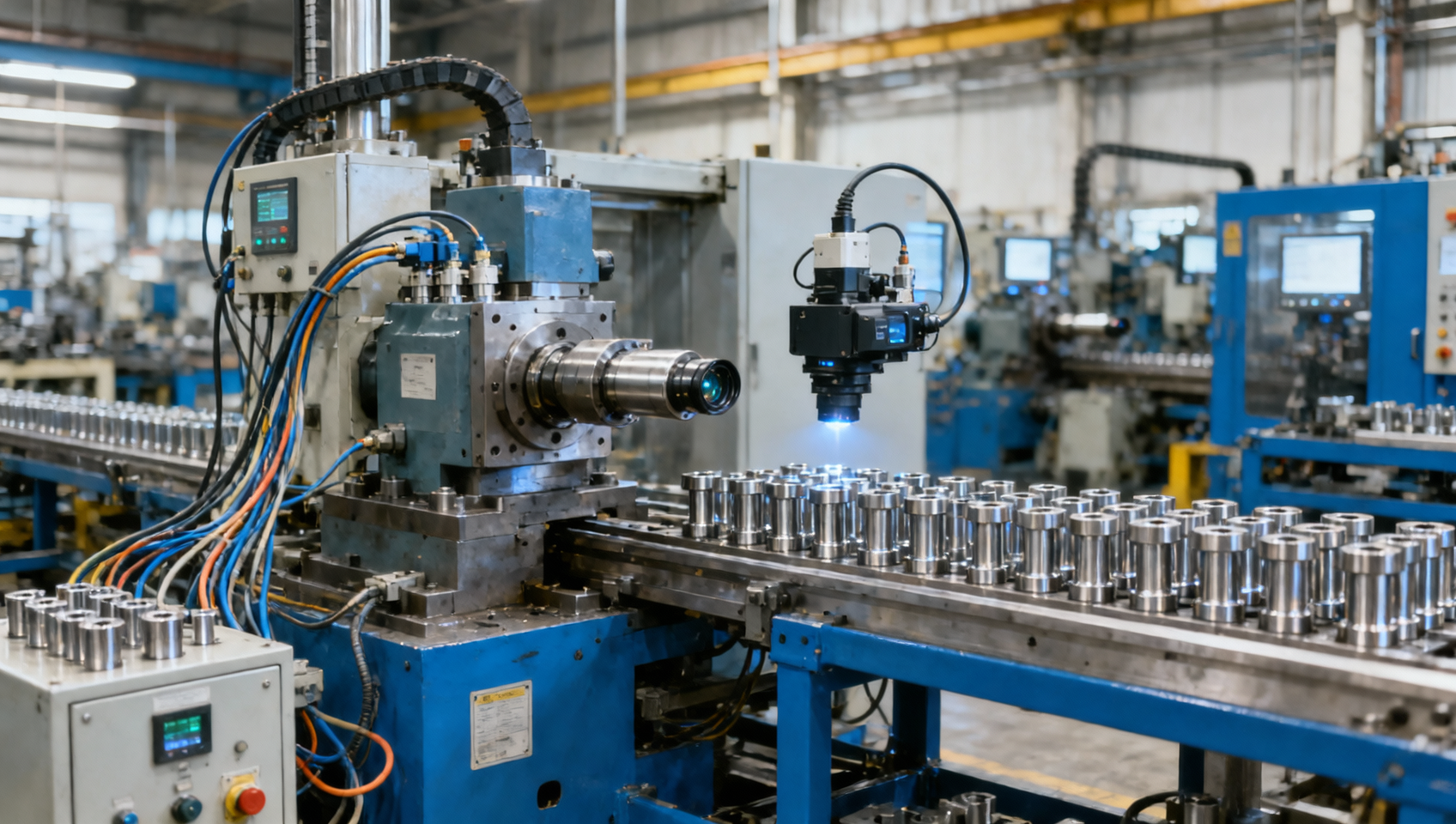
Computer vision is one of the more mature examples. It can support surface-defect inspection, assembly verification, label checking, weld assessment, and component identification. Unlike manual inspection, which can vary by operator fatigue, experience, and line speed, well-designed vision systems can apply repeatable acceptance criteria. Yet their performance depends heavily on image quality, lighting conditions, defect libraries, product variation, and a clear process for reviewing uncertain results. A vision model trained on one product finish or production batch may not automatically perform well after a supplier changes material, coating, or tooling.
Predictive maintenance is another practical area. By combining vibration, temperature, acoustic, current, or process data, plants can identify equipment behavior associated with deterioration. The opportunity is not to predict every failure perfectly. It is to prioritize maintenance attention for high-impact assets and avoid replacing components solely on fixed schedules when their actual condition does not justify it.
Generative AI also has potential in engineering documentation, maintenance knowledge retrieval, work-instruction drafting, and internal technical support. However, decision-makers should be careful where proprietary drawings, process parameters, customer data, and controlled technical documentation are involved. Data governance, access control, model usage terms, and validation procedures are not administrative details; they determine whether an AI deployment can be scaled safely.
In the near term, manufacturers are likely to obtain more reliable returns from AI that supports existing expert decisions than from systems intended to replace engineering, quality, or production leadership.
Digital twins are becoming more useful when tied to real operating decisions
The term “digital twin” has been used broadly enough to create confusion. At its most basic level, it may refer to a 3D representation of equipment or a process simulation. At a more advanced level, it is a dynamic model connected to operational data and used to test decisions before they affect the physical factory.
The strategic value comes from specific use cases. A plant may use a digital model to simulate line balancing before introducing a new product configuration, evaluate whether a warehouse layout can support a different material flow, or estimate the impact of a machine outage on delivery commitments. In capital-intensive industries, digital commissioning can reduce the risk of discovering control-system conflicts only after equipment is installed.
However, a digital twin should not be purchased as an abstract transformation program. Its usefulness depends on the quality of source data, the accuracy of process assumptions, and the willingness of engineering and operations teams to use the model in planning. A highly detailed simulation that is not linked to scheduling, maintenance, capacity planning, or design change control may have limited commercial value.
For factory investors, the relevant question is whether a proposed digital platform improves a decision that is currently slow, costly, or error-prone. If it does not change how the business allocates capital, plans capacity, manages risk, or protects quality, the investment case remains weak.
Advanced materials are changing the economics of production
Materials innovation is just as important as automation, although it is often treated separately in investment discussions. In practice, material selection affects equipment requirements, machining time, energy use, component life, product compliance, recycling options, and supply-chain exposure.
Advanced high-strength steels, aluminum and magnesium alloys, titanium, nickel-based superalloys, engineered polymers, composites, ceramics, and specialized coatings are expanding the range of performance available to manufacturers. Their adoption is being driven by several overlapping demands: lightweighting, electrification, higher operating temperatures, corrosion resistance, longer service life, improved energy efficiency, and lower environmental impact.
In transportation and industrial equipment, lightweight materials can support fuel efficiency or extend electric vehicle range. In energy infrastructure, corrosion-resistant alloys and high-performance coatings can reduce maintenance needs in demanding environments. In electronics and medical technology, material purity, thermal management, biocompatibility, and dimensional stability can be more important than the initial purchase price.
The procurement implication is significant. A material with a higher per-kilogram cost may still lower total lifecycle cost if it reduces machining complexity, extends service intervals, improves yield, or prevents product failure. Conversely, substituting a lower-cost material without understanding its behavior in forming, welding, heat treatment, coating, or end use can create quality issues that erase apparent savings.
Material decisions should therefore be evaluated across the full production and service chain. Questions worth asking include:
- Does the material require new tooling, cutting parameters, joining methods, or inspection standards?
- Can existing suppliers provide consistent chemistry, mechanical properties, documentation, and batch traceability?
- How sensitive is the material to export controls, regional capacity concentration, or long lead times?
- Can scrap be recovered, segregated, and reused economically?
- Will future environmental requirements alter the product’s material declaration, recycled-content expectations, or end-of-life obligations?
Sustainability is influencing material and equipment choices through operational reality
Environmental considerations are now increasingly linked to cost, customer qualification, financing, and market access. The impact varies by sector and jurisdiction, but the direction is clear: manufacturers are under greater pressure to understand the emissions, energy intensity, and traceability associated with what they produce.
This does not mean every factory must immediately replace conventional materials with novel alternatives. Many of the most practical gains come from better yield management, reduced scrap, improved furnace efficiency, electrified processes where viable, recycled-content sourcing, and more accurate measurement of material and energy consumption.
Smart manufacturing tools can support this shift by making resource use visible at a process level. Energy monitoring, for instance, is most useful when it identifies why one line, shift, machine, or product family consumes materially more power than another. Without that operational context, aggregate energy reporting has limited ability to change factory behavior.
At the same time, sustainability claims require caution. Recycled material content, low-carbon production claims, and life-cycle calculations can vary depending on methodology, system boundaries, and documentation quality. Buyers should ask suppliers for evidence appropriate to the product and market rather than treating broad sustainability language as proof of lower risk.
The real constraint is often integration, not technology availability
Many factories already operate a mixture of equipment generations. New robotic cells, CNC machines, automated inspection systems, enterprise resource planning software, manufacturing execution systems, and spreadsheets may all coexist. This is normal, especially in established industrial sites and acquired facilities.
The challenge is that smart manufacturing investments can fail when integration is underestimated. A new automation cell may achieve its rated speed but create downstream congestion. A manufacturing execution system may be introduced without standardized work instructions or master data. Sensors may be installed on equipment that lacks a maintenance team able to interpret alerts. A supplier portal may improve information exchange while exposing inconsistent item codes and incomplete certificates.
Interoperability should therefore be assessed early. Decision-makers do not need to prescribe a single software architecture, but they should require a clear view of data ownership, interface requirements, cybersecurity responsibilities, and future scalability. Open standards and vendor-neutral integration approaches can reduce long-term dependence on one equipment or software provider, although they do not eliminate the need for disciplined implementation.
Cybersecurity also deserves board-level attention. Connected equipment expands the operational attack surface, particularly where remote access, legacy controls, third-party maintenance, and production data exchange are involved. The cost of a cyber incident in manufacturing is not limited to IT recovery; it can include production stoppage, quality risk, missed deliveries, safety consequences, and loss of customer trust.
Supplier evaluation is shifting from capacity claims to capability evidence
As buyers adopt more complex products and more demanding delivery models, supplier assessment is becoming more evidence-based. Capacity remains important, but nameplate capacity does not demonstrate that a supplier can consistently produce within specification, manage engineering changes, or recover from disruption.
When reviewing a supplier investing in smart manufacturing or advanced materials, procurement and technical teams should look beyond equipment lists. Relevant evidence may include process capability records, calibration discipline, traceability procedures, documented material controls, quality escape response, maintenance practices, employee training, and the supplier’s ability to share production information in a structured manner.
A factory’s digital maturity should also be judged by use, not presentation. It is reasonable to ask how production data affects scheduling, quality containment, inventory accuracy, preventive maintenance, and customer communication. A supplier that can demonstrate these links is usually more credible than one that presents automation as a showroom feature.
For advanced materials, qualification risk needs equal attention. Switching material grades, mills, coatings, or recycling routes can affect forming behavior, fatigue performance, weld quality, corrosion resistance, and regulatory documentation. Qualification plans should account for process interactions rather than focusing only on a material certificate.
Capital allocation should favor bottlenecks with measurable consequences
The strongest investment programs tend to begin with a narrow operational problem: recurring defects, poor first-pass yield, long setup times, unstable delivery performance, excessive maintenance spending, constrained skilled labor, or high energy use. These problems create a baseline against which improvement can be measured.
It is tempting to approve large digital-transformation programs because they appear strategically necessary. Yet broad programs without operational priorities often struggle to prove value. A staged approach is usually more durable: identify the most expensive bottleneck, establish data quality, test the solution in a representative production area, validate results, and then scale where process conditions are similar.
Return on investment should include more than labor reduction. Relevant measures may include scrap avoided, throughput gained, downtime prevented, warranty exposure reduced, inventory accuracy improved, faster qualification of new products, lower energy intensity, and stronger delivery reliability. Some benefits, such as resilience during disruption, are harder to quantify but should not be ignored simply because they do not appear immediately in a conventional payback calculation.
What to watch over the next investment cycle
The next phase of manufacturing competition is likely to reward companies that connect technology choices with industrial fundamentals. AI, automation, connected equipment, and advanced materials will continue to develop, but their commercial importance will depend on how well they improve repeatability, speed, quality, resource efficiency, and supply continuity.
Regionalization of supply chains may accelerate this logic. As companies diversify production footprints, they will need factories that can ramp products consistently across locations, share process knowledge securely, and maintain comparable quality standards even when supplier networks differ. Digital process control and material traceability can make that expansion more manageable, but only if standards are defined before capacity is added.
Recent advances in smart manufacturing and materials are not a reason to pursue technology for its own sake. They are a reason to reconsider what a competitive factory must deliver: reliable output, documented quality, adaptable capacity, controlled resource use, and credible resilience under changing market conditions. The manufacturers and investors that treat these capabilities as connected business priorities, rather than isolated engineering projects, will be better positioned to make capital decisions that remain sound beyond the current technology cycle.
Get weekly intelligence in your inbox.
No noise. No sponsored content. Pure intelligence.
 Oct 24, 2026Tesla Q3 2026 Storage Deployments Rank Second Highest as Revenue Falls 16%Tesla Q3 2026 Storage Deployments Rank Second Highest as Revenue Falls 16%
 Oct 24, 2026Freight Forwarding Services Pricing: Comparing Quotes Beyond Base RatesFreight Forwarding Services Pricing: Comparing Quotes Beyond Base Rates
 Oct 23, 2026IndexBox Issues Off-Grid Solar Outlook to 2035, Forecasting 8.2% CAGRIndexBox Issues Off-Grid Solar Outlook to 2035, Forecasting 8.2% CAGR
 Oct 23, 2026NSF/ANSI 49 Biosafety Cabinets: Product Certification vs. Field TestingNSF/ANSI 49 Biosafety Cabinets: Product Certification vs. Field Testing
 Oct 22, 2026Mitsubishi Electric Develops Industry-First Humanoid Robot–CNC Machining SystemMitsubishi Electric Develops Industry-First Humanoid Robot–CNC Machining System
 Oct 22, 2026Aerospace Aluminum Machining: How to Control Distortion in Thin-Wall PartsAerospace Aluminum Machining: How to Control Distortion in Thin-Wall Parts
 Oct 21, 2026Genesis Energy commissions 200 MWh battery storage system at HuntlyGenesis Energy commissions 200 MWh battery storage system at Huntly
 Oct 21, 2026Buying AMI Smart Meters Wholesale: Compatibility Checks and Total CostsBuying AMI Smart Meters Wholesale: Compatibility Checks and Total Costs
 Oct 20, 2026Werner Enterprises Issues Q3 Earnings Warning as Costs RiseWerner Enterprises Issues Q3 Earnings Warning as Costs Rise
 Oct 20, 2026Are Digital Twins Viable for SMEs? Costs, Use Cases, and Data RequirementsAre Digital Twins Viable for SMEs? Costs, Use Cases, and Data Requirements
 Oct 19, 2026Choosing a Wholesale Servo Motor Exporter: Traceability and Warranty ChecksChoosing a Wholesale Servo Motor Exporter: Traceability and Warranty Checks
 Oct 18, 2026Syringe Manufacturing Equipment: Evaluating Throughput and Assembly AccuracySyringe Manufacturing Equipment: Evaluating Throughput and Assembly Accuracy
 Oct 17, 2026Air Freight Forwarding Services: How to Compare Quotes for Urgent ShipmentsAir Freight Forwarding Services: How to Compare Quotes for Urgent Shipments
 Oct 16, 2026Wholesale Solar Panels: How to Compare Bulk Quotes by Total Landed CostWholesale Solar Panels: How to Compare Bulk Quotes by Total Landed Cost
 Oct 15, 2026Supply Chain Intelligence for Sourcing: How to Vet New SuppliersSupply Chain Intelligence for Sourcing: How to Vet New Suppliers
 Oct 14, 2026How energy costs shape smart manufacturing investment in EuropeHow energy costs shape smart manufacturing investment in Europe
 Oct 14, 2026How skills shortages slow smart manufacturing in Southeast AsiaHow skills shortages slow smart manufacturing in Southeast Asia
 Oct 14, 2026How CNC wire-cut machining maintains tight tolerances in thick partsHow CNC wire-cut machining maintains tight tolerances in thick parts
 Oct 14, 2026Can automated feeding stabilize metal forming in smart factories?Can automated feeding stabilize metal forming in smart factories?
 Oct 14, 2026Can CT inspection detect internal defects in metal additive parts?Can CT inspection detect internal defects in metal additive parts?
 Oct 14, 2026When does additive manufacturing reduce lead time for spare parts?When does additive manufacturing reduce lead time for spare parts?
 Oct 14, 2026How production volume affects ROI on an automated painting lineHow production volume affects ROI on an automated painting line
 Oct 14, 2026What data does manufacturing bottleneck analysis consulting need?What data does manufacturing bottleneck analysis consulting need?
 Oct 14, 2026When should you hire a consultant for manufacturing bottlenecks?When should you hire a consultant for manufacturing bottlenecks?
 Oct 14, 2026What Are Electronics Exporters' Top Supply Chain Resilience Gaps in 2026?What Are Electronics Exporters' Top Supply Chain Resilience Gaps in 2026?
 Oct 14, 2026How Do You Measure AI Adoption Maturity in a Traditional Factory?How Do You Measure AI Adoption Maturity in a Traditional Factory?
 Oct 14, 2026Are Chinese AI-Assisted Surgical Devices Gaining Global Trust?Are Chinese AI-Assisted Surgical Devices Gaining Global Trust?