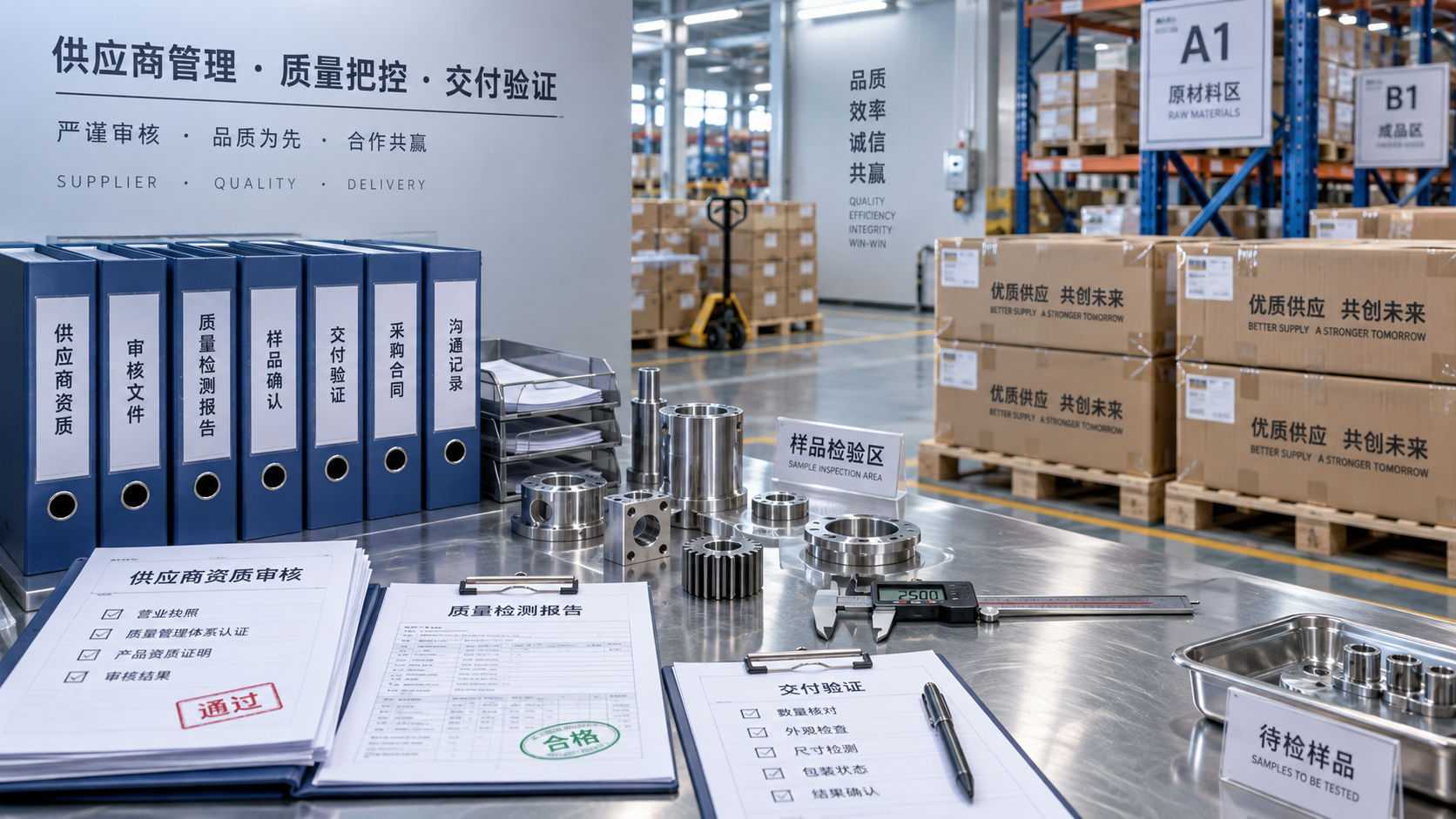
Customs API Integration: A Practical Checklist for Automated Trade Compliance
Customs API Integration: A Practical Checklist for Automated Trade Compliance
Customs API integration is becoming a critical capability for enterprises seeking faster, more reliable cross-border trade operations and stronger control over regulatory risk.
For technical evaluators, success depends on more than creating a connection between systems. The integration must preserve accurate data, support jurisdictional rules, remain secure, and produce defensible audit records.
The right implementation can reduce manual rekeying, prevent avoidable clearance delays, improve classification governance, and give trade teams earlier visibility into shipment exceptions.
Start With the Compliance Workflow, Not the API Endpoint

Before evaluating a customs API, map the existing import and export process from order creation through clearance, delivery, reconciliation, and post-entry audit.
Technical teams should identify every system that creates, enriches, approves, transmits, or consumes trade data. This commonly includes ERP, WMS, TMS, product information, broker, and supplier platforms.
A customs API integration often fails when it automates an incomplete workflow. Sending a declaration electronically does not solve missing origin, valuation, licensing, or product-classification data.
Define the exact compliance events the integration must support. Examples include export filing, import declaration, duty estimation, denied-party screening, document generation, and customs-status retrieval.
Separate mandatory regulatory data from commercially useful data. Customs authorities may require concise structured records, while internal teams need richer context for cost analysis and exception investigation.
For each event, document data ownership. A supplier may provide country of origin, engineering may maintain technical specifications, and trade compliance may approve tariff classifications.
This ownership model matters because API automation exposes weak governance quickly. Incorrect data moves faster through connected systems than it does through manual spreadsheets and email reviews.
Confirm Which Customs Systems and Jurisdictions Are Actually Covered
Customs authorities do not operate through one universal interface. Coverage, message formats, authentication methods, filing rules, and response timing vary by country, program, and declaration type.
Ask whether the provider connects directly to government systems, through licensed brokers, through a regional network, or through another third-party platform.
Direct connectivity may offer lower latency and greater control, but it can also increase certification requirements, maintenance obligations, and responsibility for regulatory updates.
Broker-mediated connectivity may simplify operational execution, particularly in markets with complex local requirements. However, it can limit visibility, customization, and access to raw filing data.
Evaluate the jurisdictions that matter now, then compare them with the company’s planned expansion markets. A technically elegant integration is inadequate if strategic lanes remain unsupported.
Coverage should be assessed by transaction type rather than country names alone. Import entries, exports, transit declarations, bonded movements, temporary admissions, and preferential-origin claims may differ substantially.
Technical evaluators should request a jurisdiction matrix showing supported declarations, update frequency, local partners, testing environments, response codes, and escalation procedures for each market.
Establish a Canonical Trade Data Model Before Building Connectors
A reliable customs API integration needs a canonical data model that translates internal product, shipment, party, and document data into jurisdiction-specific declaration formats.
The model should define consistent identifiers for legal entities, importers of record, exporters, consignee parties, products, shipment lines, purchase orders, and supporting documents.
Product records require particular attention because customs filings depend on accurate descriptions, HS codes, origin, declared value, quantity, unit of measure, and potentially export-control attributes.
Do not assume the ERP product master contains all required trade attributes. Many organizations store classification decisions, preference eligibility, and license data in disconnected files or specialist applications.
Use structured validation rules to detect incomplete records before a declaration reaches the customs API. Validation should occur early enough for users to correct issues without delaying shipment release.
Normalization is equally important for units, currencies, addresses, dates, and party names. Small formatting inconsistencies can produce rejections or obscure duplicate-risk screening results.
Version the trade data model and transformation logic. Regulatory fields, enterprise master data, and customs message schemas change regularly, making undocumented mappings a serious operational risk.
Design for Classification, Valuation, Origin, and Licensing Controls
Automated filing is only as compliant as the trade decisions behind it. The integration must apply approved classification, valuation, origin, and licensing policies consistently.
HS classification should be treated as controlled reference data, not a free-text value selected independently by every sales, warehouse, or shipping user.
Build a workflow for classification exceptions, including evidence capture, reviewer approval, effective dates, and links to the product or engineering documentation supporting the decision.
Customs valuation logic must account for transaction value, assists, royalties, packing costs, freight treatment, currency conversion, and related-party considerations where relevant.
Country-of-origin handling should distinguish between supplier-declared origin, non-preferential origin, preferential origin, and substantial-transformation determinations. These values can serve different legal purposes.
For controlled goods, connect license management and export-control screening to the shipment release process. A customs filing should not bypass a required hold or approval.
Technical evaluators should verify whether policy decisions are configured centrally, exposed through APIs, and traceable after deployment. Manual overrides need reason codes and authorization controls.
Evaluate API Architecture, Reliability, and Error Handling
API documentation should explain more than available endpoints. It should show request schemas, response models, rate limits, versioning policy, idempotency behavior, error codes, and retry recommendations.
Prefer integration designs that use stable identifiers and idempotent submission methods. A network interruption must not create duplicate declarations, duplicate documents, or conflicting status updates.
Determine whether the API operates synchronously, asynchronously, or through webhooks. Customs processing frequently involves delayed acknowledgments, reviews, holds, and releases that require event-driven monitoring.
Webhook delivery should include signature verification, replay protection, retry rules, event identifiers, and clear recovery procedures when downstream systems are temporarily unavailable.
Establish a visible exception queue for rejected submissions, missing data, customs holds, and status mismatches. Operational users need actionable details rather than generic integration-failure messages.
Measure reliability with practical service-level questions. Ask about uptime history, maintenance windows, throughput limits, peak-season capacity, regional redundancy, and support response during border disruptions.
Test realistic failure scenarios before production. Include malformed data, expired credentials, duplicate messages, authority downtime, delayed responses, partial shipment changes, and cancelled commercial orders.
Secure Trade Data and Maintain a Defensible Audit Trail
Customs declarations contain sensitive commercial and personal data, including product values, supplier identities, addresses, shipment routes, tax identifiers, and trade documentation.
Security review should cover encryption in transit and at rest, secrets management, key rotation, access controls, tenant isolation, logging practices, and incident-response commitments.
Use least-privilege access for service accounts and human users. The system should distinguish between users who view declarations, correct data, approve releases, and change compliance rules.
Authentication design may involve OAuth, mutual TLS, signed requests, API keys, or government-issued certificates. Confirm how credentials are stored, renewed, revoked, and monitored.
Auditability requires immutable evidence of what was sent, when it was sent, which source records were used, and which user or system approved changes.
Retain message payloads, acknowledgments, document versions, classification decisions, screening results, and exception resolutions according to applicable recordkeeping requirements and company policy.
Logs should be searchable without exposing sensitive values unnecessarily. Redaction, controlled access, and retention schedules help balance forensic usefulness with privacy and security obligations.
Plan Testing Around Real Trade Scenarios, Not Happy Paths
A meaningful test strategy uses representative transactions from actual lanes, products, incoterms, currencies, supplier relationships, and customs programs rather than generic sample declarations.
Create a test catalogue covering standard shipments, multi-line entries, split shipments, returns, repairs, samples, high-value goods, restricted goods, and preferential-origin claims.
Validate data transformation field by field. Compare the source record, canonical trade model, generated customs message, authority acknowledgment, and final clearance status for each scenario.
Where available, use government or provider sandbox environments. Confirm that test systems reflect production schema changes and that the certification process is understood before launch.
Involve trade compliance specialists, brokers, finance, logistics, product data owners, and cybersecurity reviewers. Integration quality cannot be assessed solely through successful technical message delivery.
Define acceptance criteria that include filing accuracy, error resolution time, status visibility, audit traceability, security controls, and operational usability under normal and exception conditions.
Run a controlled pilot on selected lanes before broad rollout. A phased deployment provides evidence about data quality and process ownership while limiting exposure to widespread disruption.
Build Operating Ownership for Regulatory and Platform Change
Customs API integration is not a one-time software project. Authorities change data requirements, tariff schedules, filing procedures, certificates, sanctions rules, and technical specifications continuously.
Assign named owners for regulatory monitoring, master-data quality, API maintenance, supplier-data collection, user support, and vendor relationship management. Shared responsibility without accountability creates gaps.
Establish a change-management process for new API versions, customs message updates, new validation rules, and changes to internal trade policies.
Every change should be assessed for affected lanes, products, business entities, data fields, downstream systems, testing needs, documentation, and release approval.
Supplier onboarding should include trade-data requirements where suppliers influence origin, composition, classification evidence, or preferential documentation. Missing supplier evidence can undermine automated compliance decisions.
Monitor operational metrics such as rejection rate, clearance lead time, exception aging, data-completeness rate, manual intervention volume, and post-entry correction frequency.
These metrics reveal whether automation is improving compliance performance or merely moving work into a less visible technical queue that trade teams must later repair.
Use the Checklist to Make a Go-or-No-Go Decision
A strong customs API integration should align regulatory coverage, structured trade data, controlled compliance logic, resilient architecture, security, testing, and long-term operating ownership.
Technical evaluators should reject proposals that focus exclusively on endpoint connectivity while leaving classification governance, source-data quality, exception workflows, and audit retention undefined.
The most valuable solution is not necessarily the one with the largest endpoint catalog. It is the one that fits the company’s lanes, controls, systems, and operating maturity.
Before selecting a provider, require documented answers to jurisdiction coverage, data mapping, security architecture, change management, service levels, testing support, and compliance accountability questions.
When these requirements are addressed early, customs API integration can become a practical foundation for automated trade compliance rather than another disconnected logistics technology project.
For enterprises expanding global supply chains, the objective is clear: create accurate, traceable, and adaptable customs workflows that support faster movement without weakening regulatory control.
Get weekly intelligence in your inbox.
No noise. No sponsored content. Pure intelligence.
 Oct 24, 2026Tesla Q3 2026 Storage Deployments Rank Second Highest as Revenue Falls 16%Tesla Q3 2026 Storage Deployments Rank Second Highest as Revenue Falls 16%
 Oct 24, 2026Freight Forwarding Services Pricing: Comparing Quotes Beyond Base RatesFreight Forwarding Services Pricing: Comparing Quotes Beyond Base Rates
 Oct 23, 2026IndexBox Issues Off-Grid Solar Outlook to 2035, Forecasting 8.2% CAGRIndexBox Issues Off-Grid Solar Outlook to 2035, Forecasting 8.2% CAGR
 Oct 23, 2026NSF/ANSI 49 Biosafety Cabinets: Product Certification vs. Field TestingNSF/ANSI 49 Biosafety Cabinets: Product Certification vs. Field Testing
 Oct 22, 2026Mitsubishi Electric Develops Industry-First Humanoid Robot–CNC Machining SystemMitsubishi Electric Develops Industry-First Humanoid Robot–CNC Machining System
 Oct 22, 2026Aerospace Aluminum Machining: How to Control Distortion in Thin-Wall PartsAerospace Aluminum Machining: How to Control Distortion in Thin-Wall Parts
 Oct 21, 2026Genesis Energy commissions 200 MWh battery storage system at HuntlyGenesis Energy commissions 200 MWh battery storage system at Huntly
 Oct 21, 2026Buying AMI Smart Meters Wholesale: Compatibility Checks and Total CostsBuying AMI Smart Meters Wholesale: Compatibility Checks and Total Costs
 Oct 20, 2026Werner Enterprises Issues Q3 Earnings Warning as Costs RiseWerner Enterprises Issues Q3 Earnings Warning as Costs Rise
 Oct 20, 2026Are Digital Twins Viable for SMEs? Costs, Use Cases, and Data RequirementsAre Digital Twins Viable for SMEs? Costs, Use Cases, and Data Requirements
 Oct 19, 2026Choosing a Wholesale Servo Motor Exporter: Traceability and Warranty ChecksChoosing a Wholesale Servo Motor Exporter: Traceability and Warranty Checks
 Oct 18, 2026Syringe Manufacturing Equipment: Evaluating Throughput and Assembly AccuracySyringe Manufacturing Equipment: Evaluating Throughput and Assembly Accuracy
 Oct 17, 2026Air Freight Forwarding Services: How to Compare Quotes for Urgent ShipmentsAir Freight Forwarding Services: How to Compare Quotes for Urgent Shipments
 Oct 16, 2026Wholesale Solar Panels: How to Compare Bulk Quotes by Total Landed CostWholesale Solar Panels: How to Compare Bulk Quotes by Total Landed Cost
 Oct 15, 2026Supply Chain Intelligence for Sourcing: How to Vet New SuppliersSupply Chain Intelligence for Sourcing: How to Vet New Suppliers
 Oct 14, 2026How energy costs shape smart manufacturing investment in EuropeHow energy costs shape smart manufacturing investment in Europe
 Oct 14, 2026How skills shortages slow smart manufacturing in Southeast AsiaHow skills shortages slow smart manufacturing in Southeast Asia
 Oct 14, 2026How CNC wire-cut machining maintains tight tolerances in thick partsHow CNC wire-cut machining maintains tight tolerances in thick parts
 Oct 14, 2026Can automated feeding stabilize metal forming in smart factories?Can automated feeding stabilize metal forming in smart factories?
 Oct 14, 2026Can CT inspection detect internal defects in metal additive parts?Can CT inspection detect internal defects in metal additive parts?
 Oct 14, 2026When does additive manufacturing reduce lead time for spare parts?When does additive manufacturing reduce lead time for spare parts?
 Oct 14, 2026How production volume affects ROI on an automated painting lineHow production volume affects ROI on an automated painting line
 Oct 14, 2026What data does manufacturing bottleneck analysis consulting need?What data does manufacturing bottleneck analysis consulting need?
 Oct 14, 2026When should you hire a consultant for manufacturing bottlenecks?When should you hire a consultant for manufacturing bottlenecks?
 Oct 14, 2026What Are Electronics Exporters' Top Supply Chain Resilience Gaps in 2026?What Are Electronics Exporters' Top Supply Chain Resilience Gaps in 2026?
 Oct 14, 2026How Do You Measure AI Adoption Maturity in a Traditional Factory?How Do You Measure AI Adoption Maturity in a Traditional Factory?
 Oct 14, 2026Are Chinese AI-Assisted Surgical Devices Gaining Global Trust?Are Chinese AI-Assisted Surgical Devices Gaining Global Trust?