How Reliable Is Flexible Electronics Yield in Mass Manufacturing?
Flexible Electronics Yield Is a Manufacturing Readiness Question, Not a Single Number
Flexible electronics have moved well beyond laboratory demonstrations. They now appear in wearable health monitors, flexible printed sensors, foldable display assemblies, smart labels, automotive interfaces, battery-monitoring systems, and industrial Internet of Things devices. As these applications move from pilot lines toward larger procurement programs, a central question follows: what is the production yield reliability of flexible electronics for mass manufacturing?
The practical answer is conditional. Flexible electronics can achieve commercially viable and repeatable yields, but reliability is highly dependent on the specific device architecture, substrate, materials stack, production method, inspection capability, and required operating life. A factory may report strong yield on a simple flexible sensor or printed conductive circuit while encountering substantial losses on a multilayer, fine-pitch, stretchable, optoelectronic, or display-related product.
For procurement leaders and product teams, the issue is not whether flexible electronics are “mature” in the abstract. The more useful question is whether a particular supplier can sustain an agreed yield, quality level, lead time, and cost structure for the intended product over repeated production runs. That requires looking past headline claims about flexible materials or pilot-line capability.
What Does Yield Reliability Actually Mean?
Manufacturing yield is often described as the percentage of units that pass production requirements. In flexible electronics, that simple definition can obscure important differences. A unit may pass an initial electrical test yet fail after bending, thermal cycling, humidity exposure, lamination, assembly, or repeated use. Therefore, a meaningful yield assessment needs to separate at least three layers of performance.
- Process yield: the share of units that survive each manufacturing stage without a detectable defect.
- Final test yield: the percentage that meet agreed electrical, visual, dimensional, and functional specifications at the end of production.
- Field reliability yield: the proportion that continue to perform through the required use conditions and service life.
A supplier can have acceptable final test yield but weak field reliability if its testing does not reflect real use. This gap matters particularly in products that bend repeatedly, contact skin, operate outdoors, undergo temperature changes, or are integrated into another assembly process. A flexible temperature sensor used once in packaging has a very different risk profile from a flexible circuit designed to flex thousands of times in a wearable device.
Mass-manufacturing reliability also means consistency. A capable production line should not only produce a good first batch. It should maintain performance across material lots, shifts, equipment maintenance cycles, geographical production sites, and periods of higher output. Buyers should seek evidence of stability rather than rely on an average yield figure from a limited trial.
Why Flexible Electronics Are More Sensitive Than Rigid Electronics
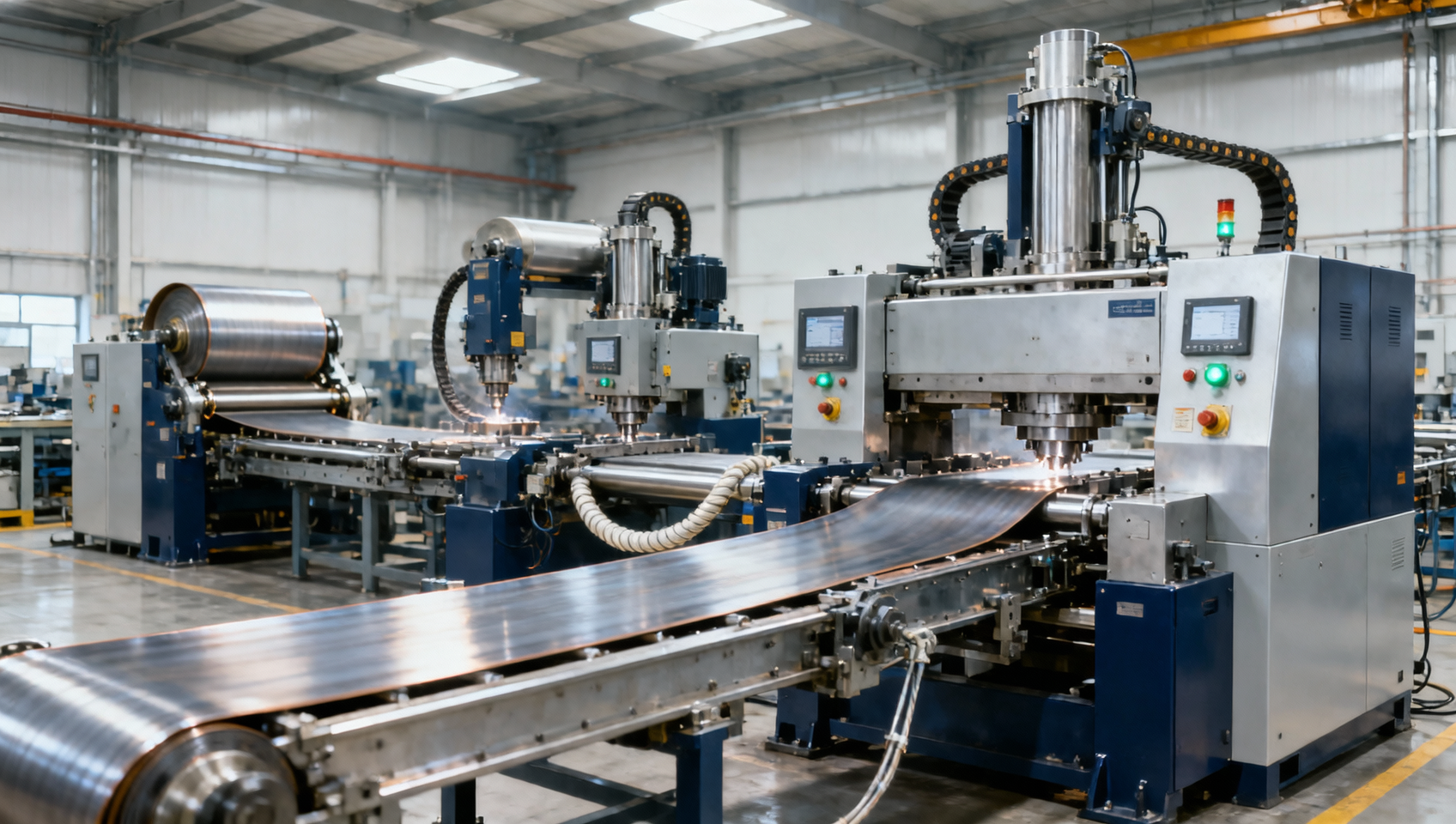
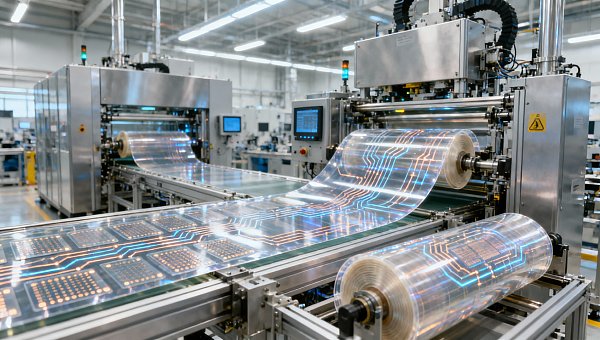
Conventional rigid printed circuit and semiconductor processes benefit from long-established materials, equipment standards, handling methods, and inspection routines. Flexible electronics borrow from these systems, but they introduce additional variables. Thin polymer films can stretch, wrinkle, curl, absorb moisture, accumulate static charge, or shift during printing and lamination. Conductive inks, adhesive systems, encapsulants, and functional layers may react differently to heat, pressure, humidity, and curing conditions.
These effects are manageable, but they make process windows narrower. A small variation in tension during roll-to-roll processing, drying temperature, ink viscosity, alignment, or coating thickness can affect line resistance, adhesion, optical uniformity, or device performance. Fine features and multilayer structures increase sensitivity further because registration errors can compound across production stages.
The risk is not limited to the flexible substrate itself. Flexible products usually involve a chain of interfaces: substrate-to-conductor, conductor-to-encapsulant, adhesive-to-cover layer, flexible circuit-to-rigid component, and device-to-final housing. Failures frequently emerge at these interfaces. Cracking, delamination, moisture ingress, conductor fatigue, connector damage, and unstable electrical contact are often more consequential than a visible defect on the film surface.
Which Applications Are Most Ready for Volume Production?
Not every flexible-electronics application carries the same yield risk. Mature use cases tend to have simpler structures, larger tolerances, known materials, and less demanding lifetime requirements. These include flexible printed circuits, membrane switches, RFID-related formats, basic printed sensors, smart packaging elements, and selected medical or industrial sensing patches. In such applications, suppliers with established process discipline can often provide dependable production performance.
Risk increases when a product combines multiple difficult requirements at once: very fine conductive patterns, repeated dynamic bending, stretchability, transparent electrodes, demanding optical performance, high-density interconnects, thin encapsulation, skin-contact requirements, or precise calibration. Flexible hybrid electronics, foldable display components, organic electronic devices, and some biosensing platforms can be commercially viable, but their manufacturing economics may be less forgiving.
This does not mean buyers should avoid advanced applications. It means that qualification should match the application. A consumer wearable program may accept some cosmetic variation if function remains intact, while a medical device, automotive component, or industrial safety sensor may require tight traceability and qualification across environmental conditions. Yield targets need to be defined against the product’s commercial and regulatory consequences, not borrowed from an unrelated category.
The Main Drivers of Yield Loss
Material consistency is one of the first factors to examine. Flexible substrates may vary in thickness, surface energy, roughness, thermal behavior, and dimensional stability. Conductive inks and functional coatings can change with storage conditions, batch age, mixing, and supplier formulation adjustments. Where a manufacturer relies on specialty films, silver-based inks, transparent conductors, barrier films, or pressure-sensitive adhesives, incoming-material control becomes central to output reliability.
Alignment and registration are another common challenge. In multilayer printing, circuit formation, display structures, sensor arrays, or hybrid assembly, each layer must land in the correct position. Minor shifts can cause opens, shorts, poor electrical contact, uneven response, or rejected visual quality. High-volume production requires more than accurate equipment specifications; it requires demonstrated control of web tension, thermal expansion, machine calibration, and measurement feedback.
Assembly integration creates another yield boundary. A flexible circuit may be manufactured successfully but fail when chips, batteries, connectors, antennas, rigid islands, or protective housings are attached. The choice of soldering method, conductive adhesive, anisotropic film, bonding pressure, and curing profile can all affect the final result. Buyers should be cautious when a supplier reports yield only for the fabricated flexible layer but does not own or control the downstream assembly process.
Inspection limits can also produce misleading confidence. Some defects are easy to detect with automated optical inspection, electrical continuity testing, or machine vision. Others, such as early-stage delamination, weak adhesion, microcracks that appear after flexing, or moisture-related degradation, may not be visible at end-of-line inspection. Yield figures are only as trustworthy as the tests behind them.
How Should Buyers Evaluate a Supplier’s Yield Claims?
A credible supplier discussion begins with definitions. Ask what the reported yield includes, what it excludes, and at which stage it is measured. “Over 95% yield” is not enough information unless the buyer knows whether this refers to printed panels, singulated units, final assemblies, or products that passed reliability screening. It is equally important to understand whether reworked units are included and whether the result is based on engineering lots, routine production, or a sustained volume program.
For serious sourcing decisions, procurement and engineering teams should request a view of the manufacturing control system rather than a single performance number. Useful evidence can include process flow documentation, critical-to-quality parameters, inspection coverage, nonconformance categories, corrective-action practices, lot traceability, and historical trends across multiple runs. Sensitive details may remain confidential, but a supplier that understands high-volume quality management should be able to discuss its controls clearly.
- What are the highest-loss steps in the current process, and how have they changed over time?
- Which defects trigger scrap, rework, or concession, and who approves those decisions?
- How are substrate, ink, adhesive, and encapsulant lots qualified before production?
- What electrical, mechanical, and environmental tests are performed on finished units?
- Is yield measured by shift, line, material batch, and customer program, or only as a broad average?
- What happens when output must increase quickly: are capacity, operators, inspection tools, and qualified material sources already available?
Supplier audits should include the actual manufacturing floor where possible. A presentation may show advanced equipment, but the operational questions are more revealing: how materials are stored, how work instructions are controlled, whether operators handle films consistently, how defects are quarantined, and whether engineering changes are traceable. For cross-border sourcing, these details matter because an apparently small process variation can become a significant delivery and warranty issue once products travel through multiple assembly partners.
Do Higher Yields Always Mean Lower Risk?
Not necessarily. A high reported yield may reflect a broad acceptance range, low test coverage, or a product that has not yet been exposed to demanding reliability conditions. Conversely, a lower early-stage yield can be acceptable if the supplier has identified the failure modes, is improving the process with controlled experiments, and has a credible path to the required volume economics.
The more relevant commercial measure is the combination of usable yield, reliability, cost of quality, and delivery predictability. A process with a slightly lower initial yield but strong screening and clear containment may be safer than one with attractive headline yield and limited defect detection. This distinction is especially important when the failure cost is high: field replacement, regulatory investigation, product recall, loss of a launch window, or damage to a customer relationship.
Buyers should also distinguish between yield improvement through process capability and yield improvement through selective reporting. Removing difficult product variants from the average, shipping borderline units under a concession, or reclassifying rework can make performance look better without solving the underlying issue. Contract language should establish the agreed quality definition, acceptance criteria, test methods, sampling rules, reporting cadence, and responsibility for rework and scrap.
Scaling From Pilot to Volume Is Where Many Programs Change Character
Pilot production proves that a product can be made. It does not prove that it can be produced at commercial scale with stable cost and quality. At higher volumes, material lots become more varied, equipment uptime matters more, operator variation becomes visible, and supply-chain interruptions have a larger effect. The transition can expose bottlenecks in curing capacity, inspection throughput, clean handling, lamination, component placement, or final test.
For this reason, a staged qualification model is usually more reliable than moving directly from prototypes to a large purchase order. Teams can begin with engineering samples, then a controlled pilot lot, followed by a production-validation build and a limited commercial release. Each phase should have defined acceptance criteria and learning objectives. The aim is not simply to approve the part; it is to verify whether the production system behaves predictably as volume rises.
Dual sourcing may be attractive for supply resilience, but it is not always simple in flexible electronics. Differences in materials, equipment, curing profiles, and inspection standards can produce products that appear equivalent but behave differently in service. Where second sourcing is necessary, qualification should include both manufacturing equivalence and application-level performance. A common specification alone may not ensure a common outcome.
What Should Decision-Makers Watch Next?
Flexible electronics manufacturing is becoming more capable as suppliers improve roll-to-roll processing, digital printing, inline inspection, automation, materials engineering, and hybrid integration. These developments can raise repeatability and reduce labor dependence, but they do not remove the need for product-specific qualification. In fact, as applications become more complex, the value of transparent process data and robust reliability testing increases.
Sustainability requirements will also shape supplier evaluation. Flexible products can use lightweight materials and reduce material consumption in some designs, but films, conductive materials, adhesives, and multilayer constructions can complicate recycling and end-of-life handling. Customers with ESG or product-compliance obligations should ask early about material declarations, restricted substances, traceability, and the feasibility of future design changes. Specific regional requirements should be verified against the relevant market and product category rather than assumed.
Ultimately, flexible electronics yield in mass manufacturing should be treated as a managed business risk, not a universal technology verdict. The right supplier is not simply the one claiming the highest yield. It is the one that can explain its process limits, demonstrate control over critical materials and assembly steps, provide evidence from comparable volume programs, and work within a qualification plan that matches the real cost of failure. For companies entering this category, that level of evidence is usually more valuable than an impressive number in an initial quotation.
Get weekly intelligence in your inbox.
No noise. No sponsored content. Pure intelligence.
 Oct 24, 2026Tesla Q3 2026 Storage Deployments Rank Second Highest as Revenue Falls 16%Tesla Q3 2026 Storage Deployments Rank Second Highest as Revenue Falls 16%
 Oct 24, 2026Freight Forwarding Services Pricing: Comparing Quotes Beyond Base RatesFreight Forwarding Services Pricing: Comparing Quotes Beyond Base Rates
 Oct 23, 2026IndexBox Issues Off-Grid Solar Outlook to 2035, Forecasting 8.2% CAGRIndexBox Issues Off-Grid Solar Outlook to 2035, Forecasting 8.2% CAGR
 Oct 23, 2026NSF/ANSI 49 Biosafety Cabinets: Product Certification vs. Field TestingNSF/ANSI 49 Biosafety Cabinets: Product Certification vs. Field Testing
 Oct 22, 2026Mitsubishi Electric Develops Industry-First Humanoid Robot–CNC Machining SystemMitsubishi Electric Develops Industry-First Humanoid Robot–CNC Machining System
 Oct 22, 2026Aerospace Aluminum Machining: How to Control Distortion in Thin-Wall PartsAerospace Aluminum Machining: How to Control Distortion in Thin-Wall Parts
 Oct 21, 2026Genesis Energy commissions 200 MWh battery storage system at HuntlyGenesis Energy commissions 200 MWh battery storage system at Huntly
 Oct 21, 2026Buying AMI Smart Meters Wholesale: Compatibility Checks and Total CostsBuying AMI Smart Meters Wholesale: Compatibility Checks and Total Costs
 Oct 20, 2026Werner Enterprises Issues Q3 Earnings Warning as Costs RiseWerner Enterprises Issues Q3 Earnings Warning as Costs Rise
 Oct 20, 2026Are Digital Twins Viable for SMEs? Costs, Use Cases, and Data RequirementsAre Digital Twins Viable for SMEs? Costs, Use Cases, and Data Requirements
 Oct 19, 2026Choosing a Wholesale Servo Motor Exporter: Traceability and Warranty ChecksChoosing a Wholesale Servo Motor Exporter: Traceability and Warranty Checks
 Oct 18, 2026Syringe Manufacturing Equipment: Evaluating Throughput and Assembly AccuracySyringe Manufacturing Equipment: Evaluating Throughput and Assembly Accuracy
 Oct 17, 2026Air Freight Forwarding Services: How to Compare Quotes for Urgent ShipmentsAir Freight Forwarding Services: How to Compare Quotes for Urgent Shipments
 Oct 16, 2026Wholesale Solar Panels: How to Compare Bulk Quotes by Total Landed CostWholesale Solar Panels: How to Compare Bulk Quotes by Total Landed Cost
 Oct 15, 2026Supply Chain Intelligence for Sourcing: How to Vet New SuppliersSupply Chain Intelligence for Sourcing: How to Vet New Suppliers
 Oct 14, 2026How energy costs shape smart manufacturing investment in EuropeHow energy costs shape smart manufacturing investment in Europe
 Oct 14, 2026How skills shortages slow smart manufacturing in Southeast AsiaHow skills shortages slow smart manufacturing in Southeast Asia
 Oct 14, 2026How CNC wire-cut machining maintains tight tolerances in thick partsHow CNC wire-cut machining maintains tight tolerances in thick parts
 Oct 14, 2026Can automated feeding stabilize metal forming in smart factories?Can automated feeding stabilize metal forming in smart factories?
 Oct 14, 2026Can CT inspection detect internal defects in metal additive parts?Can CT inspection detect internal defects in metal additive parts?
 Oct 14, 2026When does additive manufacturing reduce lead time for spare parts?When does additive manufacturing reduce lead time for spare parts?
 Oct 14, 2026How production volume affects ROI on an automated painting lineHow production volume affects ROI on an automated painting line
 Oct 14, 2026What data does manufacturing bottleneck analysis consulting need?What data does manufacturing bottleneck analysis consulting need?
 Oct 14, 2026When should you hire a consultant for manufacturing bottlenecks?When should you hire a consultant for manufacturing bottlenecks?
 Oct 14, 2026What Are Electronics Exporters' Top Supply Chain Resilience Gaps in 2026?What Are Electronics Exporters' Top Supply Chain Resilience Gaps in 2026?
 Oct 14, 2026How Do You Measure AI Adoption Maturity in a Traditional Factory?How Do You Measure AI Adoption Maturity in a Traditional Factory?
 Oct 14, 2026Are Chinese AI-Assisted Surgical Devices Gaining Global Trust?Are Chinese AI-Assisted Surgical Devices Gaining Global Trust?