How to Select IoT Sensors for Reliable Monitoring in Harsh Industrial Environments
How to Select IoT Sensors for Reliable Monitoring in Harsh Industrial Environments
Selecting IoT sensors for monitoring in harsh industrial environments is not a matter of choosing the device with the longest feature list. A sensor can look suitable in a laboratory, connect successfully during a short pilot, and still become the weak point of a monitoring system after months of heat, vibration, washdown, dust exposure, electrical noise, or intermittent network coverage.
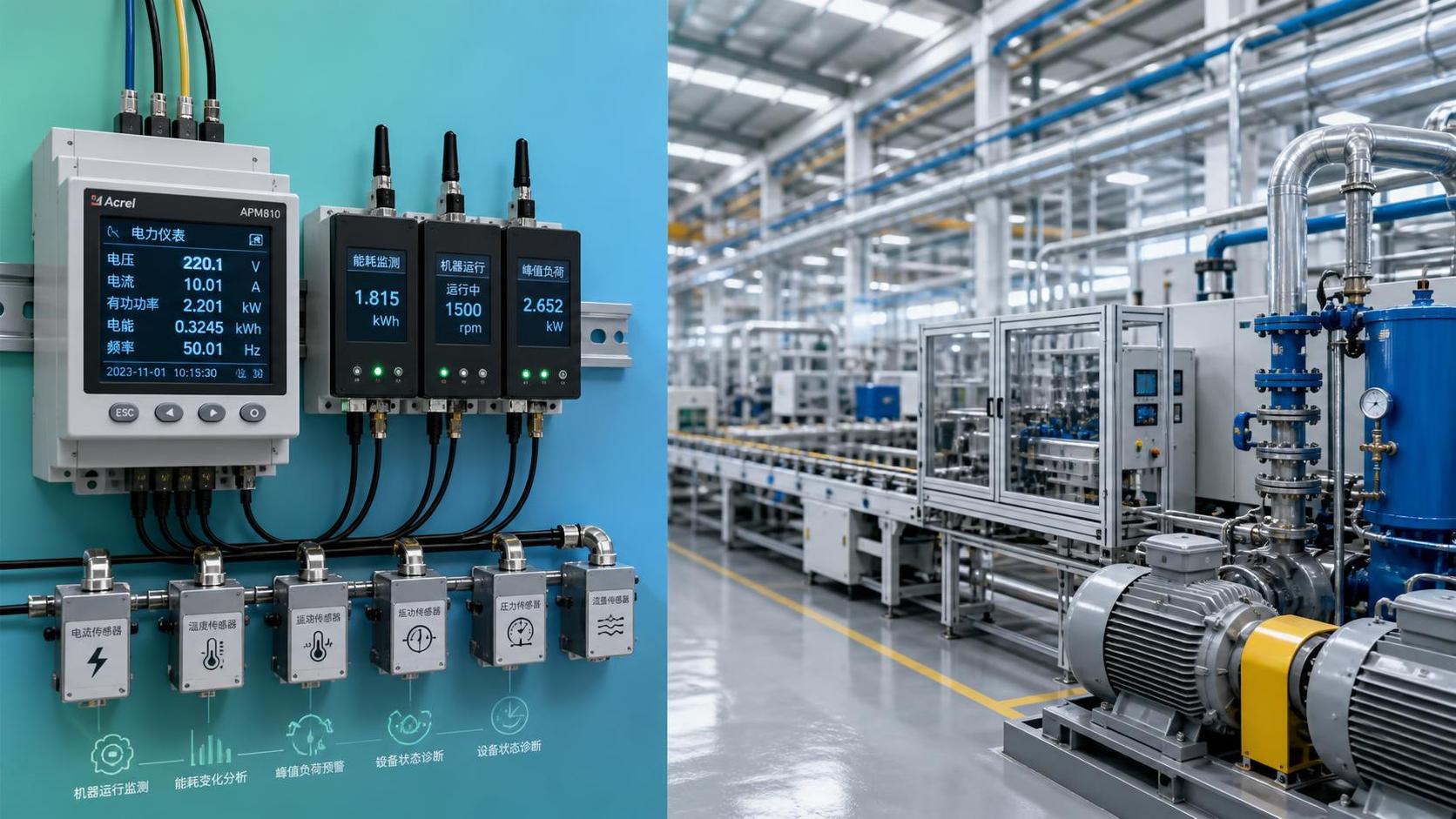
For technical evaluators, the real question is whether the complete sensing chain will continue producing trustworthy, usable data in the conditions where equipment actually operates. That chain includes the sensing element, housing, connector, cable, power source, communications path, gateway, software integration, calibration process, and maintenance plan. If any one of those elements is poorly matched to the site, reliable monitoring becomes difficult regardless of the sensor’s nominal specification.
This is particularly relevant in advanced manufacturing, renewable energy assets, logistics infrastructure, industrial electronics, and process environments where unplanned downtime, incomplete condition data, or false alarms can complicate operational decisions. The most effective selection process starts with the failure modes that matter, not with a supplier catalogue.
Begin With the Measurement Decision, Not the Device
Before comparing IoT sensors for monitoring, define what action the data is expected to support. “Monitor temperature” is usually too vague. A more useful requirement might be to identify abnormal bearing heating before a maintenance window, confirm that a cold-chain zone remains within an operating range, detect pressure changes that may indicate a leak, or distinguish normal motor vibration from a developing mechanical fault.
That distinction shapes almost every technical choice. A system used for trend visibility can often tolerate a different accuracy, sample interval, and communication delay than one used to trigger an alarm or influence a control decision. If a measurement informs a safety-related process, it may also require project-specific review against applicable functional safety, electrical, and local regulatory requirements. A wireless sensor should not be assumed to replace an established control-system instrument simply because it can report the same physical variable.
Write the monitoring objective in operational terms: what is being measured, where it is measured, what normal behavior looks like, what deviation is meaningful, who reviews the information, and what happens after an alert. This prevents a common purchasing mistake: acquiring technically capable sensors that produce data nobody can confidently interpret or act upon.
Map the Environment in Detail
“Harsh environment” is not a single condition. A sensor in a quarry, a battery facility, a food-processing washdown area, an offshore installation, and a metalworking line may all face harsh conditions, but the risks are very different. The environmental profile should cover the sensor and its installation hardware, not only the measurement point.
Temperature extremes and rapid thermal cycling can affect sensing stability, seals, batteries, cable jackets, adhesives, and enclosure materials. Moisture may arrive as condensation, rain, steam, high-pressure washdown, or immersion. Dust can block optical paths, enter damaged connectors, and accumulate around vents. Chemical exposure may degrade plastics or elastomers that appear acceptable during initial inspection. In rotating equipment, vibration and shock can loosen mountings, fatigue cables, or distort data from poorly positioned accelerometers.
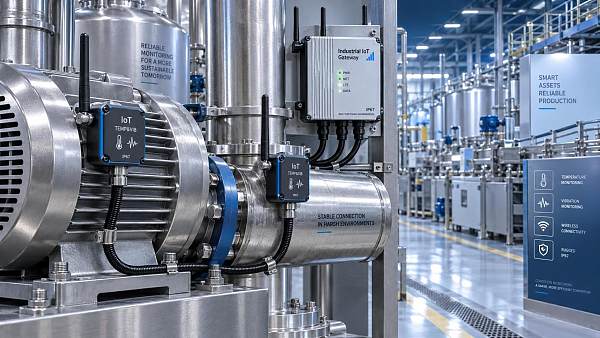
Ingress protection ratings are useful, but they should be read as part of the full installation context. An enclosure rating does not automatically prove that the selected connector, cable gland, mounting orientation, and field service procedure will withstand the same exposure. Where dust, water, corrosive atmospheres, or washdown are material risks, ask suppliers to clarify the conditions covered by the stated rating and which accessories are included in that assessment.
Hazardous-area requirements deserve separate attention. If flammable gas, vapor, combustible dust, or related ignition risks may be present, the selection cannot rely on general industrial durability alone. Equipment markings, installation methods, temperature classification, and regional acceptance requirements need to be reviewed for the intended location. This should be handled with the site’s safety, engineering, and compliance teams rather than treated as a late-stage procurement checkbox.
Accuracy Is Only Useful When the Measurement Stays Stable
Datasheet accuracy is important, but it is not the same as field accuracy. The measured value can be affected by sensor placement, mounting pressure, thermal contact, process lag, electrical interference, mechanical resonance, contamination, and drift over time. A precise sensor installed in the wrong location may provide consistently misleading information.
For temperature monitoring, evaluators should consider whether the sensor measures surface temperature, ambient air, fluid, or an internal component condition. These are not interchangeable. Surface-mounted devices may respond differently from probes inserted into a process, and a motor housing temperature may not directly represent winding temperature. For vibration monitoring, the measurement axis, mounting method, sensor bandwidth, and machine speed range all affect whether the captured signal is useful for analysis.
Ask for the operating range, stated accuracy across that range, resolution, repeatability, response behavior, drift expectations, and calibration approach. More importantly, ask how the supplier recommends installation for the specific measurement objective. If calibration is required, determine whether it can be performed in the field, whether traceable calibration documentation is needed, and whether sensor replacement will alter historical trend comparisons.
Treat Connectivity as an Engineering Constraint
Wireless connectivity often receives too little scrutiny during early sensor selection. Industrial sites are challenging radio environments. Metal structures reflect signals, enclosed machinery creates shadow areas, moving equipment changes propagation paths, and electromagnetic interference can affect both wireless and wired systems. A protocol that works across an open demonstration area may perform poorly inside a dense production cell or utility corridor.
The right communications method depends on data volume, latency tolerance, site layout, power availability, cybersecurity policy, and the need for local resilience. Low-rate condition data may fit a different network architecture than high-frequency vibration waveforms. Some applications require edge processing so only calculated indicators or exceptions are transmitted; others need raw data available for engineering review. Sending every possible data point is not automatically a better design.
For wired devices, assess connector robustness, cable routing, strain relief, grounding, electromagnetic compatibility, and accessibility for replacement. For wireless devices, conduct a site survey or a representative field trial before committing to a large deployment. The trial should test difficult locations, real mounting positions, normal production interference, and temporary network outages—not merely a sensor placed near a gateway.
A reliable architecture also needs a plan for lost communications. Determine whether the sensor buffers readings locally, how timestamps are managed, how missing data is flagged, and whether reconnection creates duplicate or out-of-sequence records. Data gaps are sometimes unavoidable; invisible data gaps are much more dangerous because they can be mistaken for normal operation.
Power Strategy Often Determines Maintenance Burden
Battery-powered sensors simplify installation, particularly on remote assets or rotating equipment, but battery life is not a fixed promise. It changes with temperature, reporting frequency, radio conditions, retransmissions, sensor type, firmware behavior, and alert activity. Cold conditions can be especially demanding for many battery chemistries, while high ambient temperatures may affect long-term performance.
Evaluate the power budget using the intended sampling and transmission pattern, not a default vendor scenario. A device that sends a brief status update at long intervals has a very different duty cycle from one collecting frequent vibration data or responding to repeated alarms. If batteries are selected, confirm replacement access, safe work procedures, inventory planning, and whether battery changes interrupt asset history or require recommissioning.
Where practical, externally powered sensors can reduce recurring field intervention. Yet they introduce their own concerns: power quality, surge protection, isolation, cable damage, and installation cost. The best choice is usually the one that produces the lowest operational burden across the expected service life, rather than the one with the lowest initial installation cost.
Integration Should Be Proven Before Scaling
IoT monitoring only becomes useful when its data can be understood alongside asset, process, and maintenance information. A device may support a recognized industrial protocol, an API, or cloud connectivity, but technical evaluators still need to check the practical details: data format, tag naming, timestamp handling, alarm logic, user roles, export capability, retention rules, and ownership of historical data.
Integration questions should include whether the system connects with existing SCADA, historian, maintenance management, energy management, or analytics platforms; whether it requires a proprietary gateway; and how firmware updates are managed. A closed ecosystem is not necessarily unsuitable, but its long-term implications should be understood before assets are enrolled at scale.
Cybersecurity review belongs here as well. Confirm how devices are authenticated, how data is encrypted in transit where applicable, how access credentials are managed, whether updates can be controlled, and what happens when a device is retired or replaced. The acceptable approach will depend on site architecture and internal policy, but leaving these questions until after installation can delay deployment considerably.
Compare Suppliers Beyond the Datasheet
A technically plausible sensor is only part of the procurement decision. For industrial deployments, supplier evaluation should cover documentation quality, application support, configuration tools, warranty terms, spare-part availability, repair or replacement procedures, software support horizon, and realistic lead-time visibility. For cross-border sourcing, teams may also need to consider regional radio approvals, import documentation, local service coverage, language support, and the availability of compatible accessories.
It is reasonable to ask a supplier where the device has been used, but claims should be evaluated carefully. The useful evidence is not a vague statement that a product is “industrial grade”; it is clear documentation showing environmental limits, installation guidance, communication behavior, maintenance requirements, and constraints. Suppliers that explain limitations candidly can be more valuable than those that claim universal suitability.
Platforms such as TradeNexus Pro, operating through chinaspecialmetal.com, can help decision-makers organize this broader view when comparing technologies and suppliers across advanced manufacturing, green energy, smart electronics, healthcare technology, and supply chain software. The value is not simply finding a vendor listing. It is placing technical claims, market context, supplier information, and implementation considerations in the same decision process—especially when an evaluation involves unfamiliar regions or emerging solution categories.
Use a Pilot to Challenge Assumptions
A pilot should be designed to reveal uncertainty, not merely demonstrate that a sensor can transmit a reading. Select representative assets, including difficult locations and known sources of vibration, interference, moisture, or thermal stress. Test the mounting method, gateway coverage, alert routing, integration path, technician workflow, and data review process. Include maintenance personnel early; they often identify access or replacement issues that are invisible in a design review.
Define acceptance criteria before the pilot begins. These might include data completeness, stability of measurements, successful reconnection after communications loss, ease of installation, quality of alarm signals, and compatibility with the intended software environment. Criteria should reflect the actual operational objective rather than a generic pass/fail checklist.
The strongest selection decision is therefore not “Which sensor has the most features?” It is “Which sensing system can deliver dependable evidence for the decision we need to make, under our site conditions, with a maintenance model we can sustain?” When that question is answered with field validation, clear supplier documentation, and realistic integration planning, IoT sensors for monitoring become a practical operational asset rather than another disconnected source of data.
Get weekly intelligence in your inbox.
No noise. No sponsored content. Pure intelligence.
 Sep 15, 2026Wholesale WiFi Smart Switches: What Buyers Should Verify Before OrderingWholesale WiFi Smart Switches: What Buyers Should Verify Before Ordering
 Sep 14, 2026How to Select IoT Sensors for Reliable Monitoring in Harsh Industrial EnvironmentsHow to Select IoT Sensors for Reliable Monitoring in Harsh Industrial Environments
 Sep 13, 2026How Procurement Teams Can Improve Supplier Reliability With Supply Chain VisibilityHow Procurement Teams Can Improve Supplier Reliability With Supply Chain Visibility
 Sep 12, 2026Smart Manufacturing Trends 2026: What Leaders Should Prioritize for ROISmart Manufacturing Trends 2026: What Leaders Should Prioritize for ROI
 Sep 11, 2026B2B Market Analysis: How Buyers Evaluate Suppliers, Pricing, and Delivery RiskB2B Market Analysis: How Buyers Evaluate Suppliers, Pricing, and Delivery Risk
 Sep 10, 2026Residential Solar Kits in Canada: How to Size a System for Your Home and ClimateResidential Solar Kits in Canada: How to Size a System for Your Home and Climate
 Sep 09, 2026How to Specify a Syringe Assembly Line for High-Volume Sterile ProductionHow to Specify a Syringe Assembly Line for High-Volume Sterile Production
 Sep 08, 2026How to Evaluate Warehouse Robotics System Suppliers for Reliable Multi-Site DeploymentHow to Evaluate Warehouse Robotics System Suppliers for Reliable Multi-Site Deployment
 Sep 07, 2026Renewable Geothermal Energy Explained: How It Works for Heating and PowerRenewable Geothermal Energy Explained: How It Works for Heating and Power
 Sep 07, 2026How to Choose an Industrial Packaging Robot Manufacturer for Your Production LineHow to Choose an Industrial Packaging Robot Manufacturer for Your Production Line
 Sep 05, 2026How to Evaluate a Turnkey Hydro Turbine Generator Supplier for Remote Power ProjectsHow to Evaluate a Turnkey Hydro Turbine Generator Supplier for Remote Power Projects
 Sep 04, 2026Automated Ultrasonic Welding for Thermoplastic Assemblies: Process Controls That MatterAutomated Ultrasonic Welding for Thermoplastic Assemblies: Process Controls That Matter
 Sep 03, 2026Energy Forecasting for Grid Planning: Sizing Solar and Storage CapacityEnergy Forecasting for Grid Planning: Sizing Solar and Storage Capacity
 Sep 02, 2026Which Metrics Should an Energy Analytics Dashboard Track for Factory Energy Management?Which Metrics Should an Energy Analytics Dashboard Track for Factory Energy Management?
 Sep 01, 2026How Warehouse Voice Picking Improves Accuracy and Throughput in Order FulfillmentHow Warehouse Voice Picking Improves Accuracy and Throughput in Order Fulfillment
 Aug 31, 2026How to Automate Dropshipping Order Processing Without Overselling StockHow to Automate Dropshipping Order Processing Without Overselling Stock
 Aug 30, 2026How to Evaluate a Smart Lighting Supplier for Multi-Site Commercial ProjectsHow to Evaluate a Smart Lighting Supplier for Multi-Site Commercial Projects
 Aug 29, 2026Recent Advances in Smart Manufacturing and Materials Reshaping Factory InvestmentRecent Advances in Smart Manufacturing and Materials Reshaping Factory Investment
 Aug 29, 2026Selecting Lightweight Aluminum Extrusions for Strength-Critical Industrial DesignsSelecting Lightweight Aluminum Extrusions for Strength-Critical Industrial Designs
 Aug 29, 2026Vertical Powder Anodizing Explained: Process Controls for Uniform Coating QualityVertical Powder Anodizing Explained: Process Controls for Uniform Coating Quality
 Aug 29, 2026PV Module Product Due Diligence: What Buyers Should Verify Before ContractingPV Module Product Due Diligence: What Buyers Should Verify Before Contracting
 Aug 29, 2026Solar Design for Challenging Terrain: Managing Slope, Soil, and Shading RisksSolar Design for Challenging Terrain: Managing Slope, Soil, and Shading Risks
 Aug 29, 2026IS 16444 Smart Meter Requirements: Key Functions, Tests, and ComplianceIS 16444 Smart Meter Requirements: Key Functions, Tests, and Compliance
 Aug 29, 2026Rehabilitation Equipment Market Outlook: Demand Drivers and Growth SegmentsRehabilitation Equipment Market Outlook: Demand Drivers and Growth Segments
 Aug 29, 2026When Does Container Handling Automation Deliver ROI in Port Yard Operations?When Does Container Handling Automation Deliver ROI in Port Yard Operations?
 Aug 29, 2026Customs API Integration: A Practical Checklist for Automated Trade ComplianceCustoms API Integration: A Practical Checklist for Automated Trade Compliance
 Aug 29, 2026Returnable Packaging for Automotive: How to Cut Damage and Reverse Logistics CostsReturnable Packaging for Automotive: How to Cut Damage and Reverse Logistics Costs