Smart Manufacturing Trends 2026: What Leaders Should Prioritize for ROI
Smart manufacturing trends 2026 are reshaping how enterprise leaders evaluate automation, data infrastructure, AI deployment, workforce capability, and supplier resilience. For organizations pursuing measurable ROI, the priority is no longer adopting technology for visibility—it is building connected, scalable operations that improve productivity, reduce risk, and strengthen competitiveness across global markets.
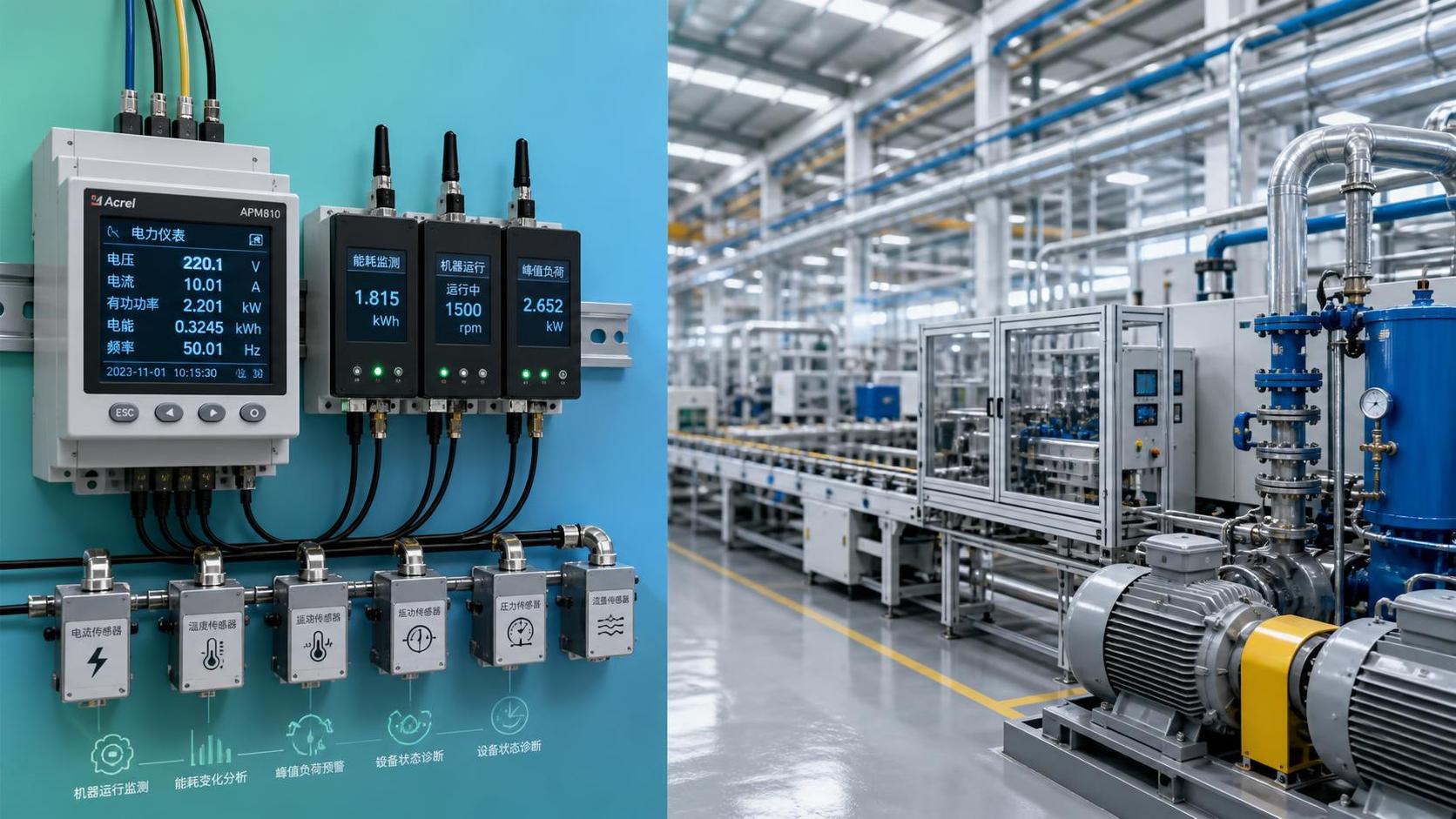
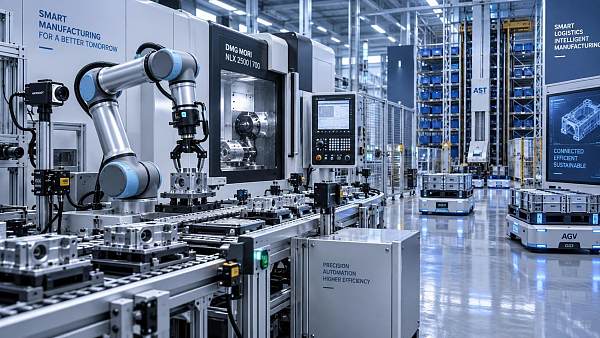
That distinction matters. A factory can install collaborative robots, machine-vision cameras, industrial IoT sensors, and a dashboard layer, then still struggle with late orders, inconsistent quality, poor maintenance planning, or unreliable component supply. The equipment may be modern, but the operating model remains fragmented. In 2026, the strongest manufacturing investments will be those that close a specific operational gap and can be measured against a credible baseline.
For senior leaders, the question is becoming less “Which technology should we buy?” and more “Where does a connected decision loop remove the most friction?” That may be on a machining line with unstable cycle times, in a plant where energy costs are difficult to allocate, or across a supplier network where engineering changes take too long to reach every tier. The answer will vary by industry, product mix, production volume, and regulatory exposure. The common thread is that smart manufacturing is moving from isolated pilots toward business-critical operating infrastructure.
The ROI conversation is becoming more disciplined
The era of the “innovation showcase” is fading. Many manufacturers have already learned that a promising proof of concept does not automatically survive the realities of shift patterns, legacy equipment, plant-floor connectivity, maintenance ownership, and financial scrutiny. A pilot that works with a small set of clean data is not necessarily ready for a multi-site rollout.
In 2026, capital approval is likely to favor projects tied to operational outcomes that executives can observe: fewer unplanned stoppages, lower scrap at a known process step, shorter changeover time, more accurate production scheduling, improved first-pass yield, or faster response to a supplier disruption. These are not glamorous metrics, but they are the measures that translate technology spending into plant-level accountability.
A practical investment case should account for more than software licenses or equipment purchase price. Integration work, data cleanup, cybersecurity controls, operator training, downtime during commissioning, and long-term support often determine whether an initiative produces value. Leaders should be wary of ROI models that count theoretical labor savings while ignoring the people needed to maintain sensors, validate data, manage exceptions, and improve the process after launch.
The most credible business cases also distinguish between hard savings and capacity gains. Reducing material waste may show up directly in cost reporting. Increasing throughput can be commercially valuable, but only if the business has demand, labor, tooling, and downstream capacity to use it. This is where finance, operations, and commercial teams need to review the same assumptions rather than approving technology in separate conversations.
AI moves closer to the production decision, not just the dashboard
Artificial intelligence will remain central to smart manufacturing trends 2026, but the useful applications will be narrower and more grounded than the market rhetoric suggests. Manufacturers are increasingly interested in AI that helps people make better decisions within defined operating conditions: identifying anomalies in machine data, supporting visual inspection, predicting maintenance risk, optimizing schedules under constraints, or helping engineers find relevant records in technical documentation.
Generative AI can be helpful in knowledge-intensive environments where experienced technicians spend time searching manuals, past maintenance notes, quality procedures, or engineering change documents. Yet an answer generated from incomplete or outdated internal data can create its own risk. In a production setting, an AI assistant should not be treated as a substitute for validated work instructions, qualified engineering review, or safety procedures.
The operational test is simple: can the team explain what data informs the recommendation, who owns the decision, and what happens when the system is wrong? If those questions do not have clear answers, the organization is not ready to scale the use case. Human oversight is not a temporary inconvenience; in many applications, it is part of the control design.
Computer vision illustrates the difference between a useful deployment and a costly experiment. Inspection automation can be valuable where defects are visually detectable, inspection criteria are stable, and images can be reliably captured. It becomes more difficult when the defect definition is subjective, lighting changes across shifts, product variants proliferate, or the quality team lacks a process to review edge cases. The camera itself is rarely the hardest component. The hard work is agreeing on what counts as a defect and maintaining that definition as production changes.
Data architecture is now a manufacturing capability
Factories have generated data for years, but much of it remains trapped in machines, spreadsheets, local databases, quality systems, enterprise resource planning platforms, and suppliers’ portals. In 2026, manufacturers will face greater pressure to make these sources interoperable enough to support timely decisions. This does not mean every organization needs a complete digital twin of its enterprise. It means the data required for a priority decision must be accessible, consistent, and governed.
A recurring mistake is starting with an enterprise-wide platform selection before defining the decisions that need improvement. A more effective approach is to map one high-value workflow from input to outcome. Consider a delayed customer order: which information is needed to identify the root cause? Machine status, work-in-progress, tooling availability, material lot status, labor allocation, supplier delivery status, and quality holds may all matter. Once that path is visible, the gaps in data ownership and system integration become clearer.
Data quality should be treated as an operational discipline, not a one-time IT task. Inconsistent naming conventions, missing timestamps, manually overridden records, and unclear master-data ownership can quietly undermine analytics. The plant manager may see a dashboard, but if different systems define downtime or yield differently, the dashboard becomes another source of debate rather than a basis for action.
Interoperability deserves more attention than novelty
Manufacturers rarely operate in a greenfield environment. They manage equipment of different ages, software from multiple vendors, and regional sites with different process maturity. The priority is therefore not replacing every legacy asset. It is establishing practical ways to connect critical information while protecting availability and cybersecurity.
Before committing to a new platform, leaders should ask whether it can work with existing operational technology, whether data can be exported without unnecessary restrictions, and how it will fit with ERP, manufacturing execution, quality, warehouse, and maintenance systems. A highly polished interface does not compensate for difficult integration or unclear data ownership. Procurement teams should also review support arrangements and upgrade dependencies; a system that is affordable to acquire can become expensive to sustain.
Automation priorities are shifting toward flexibility and reliability
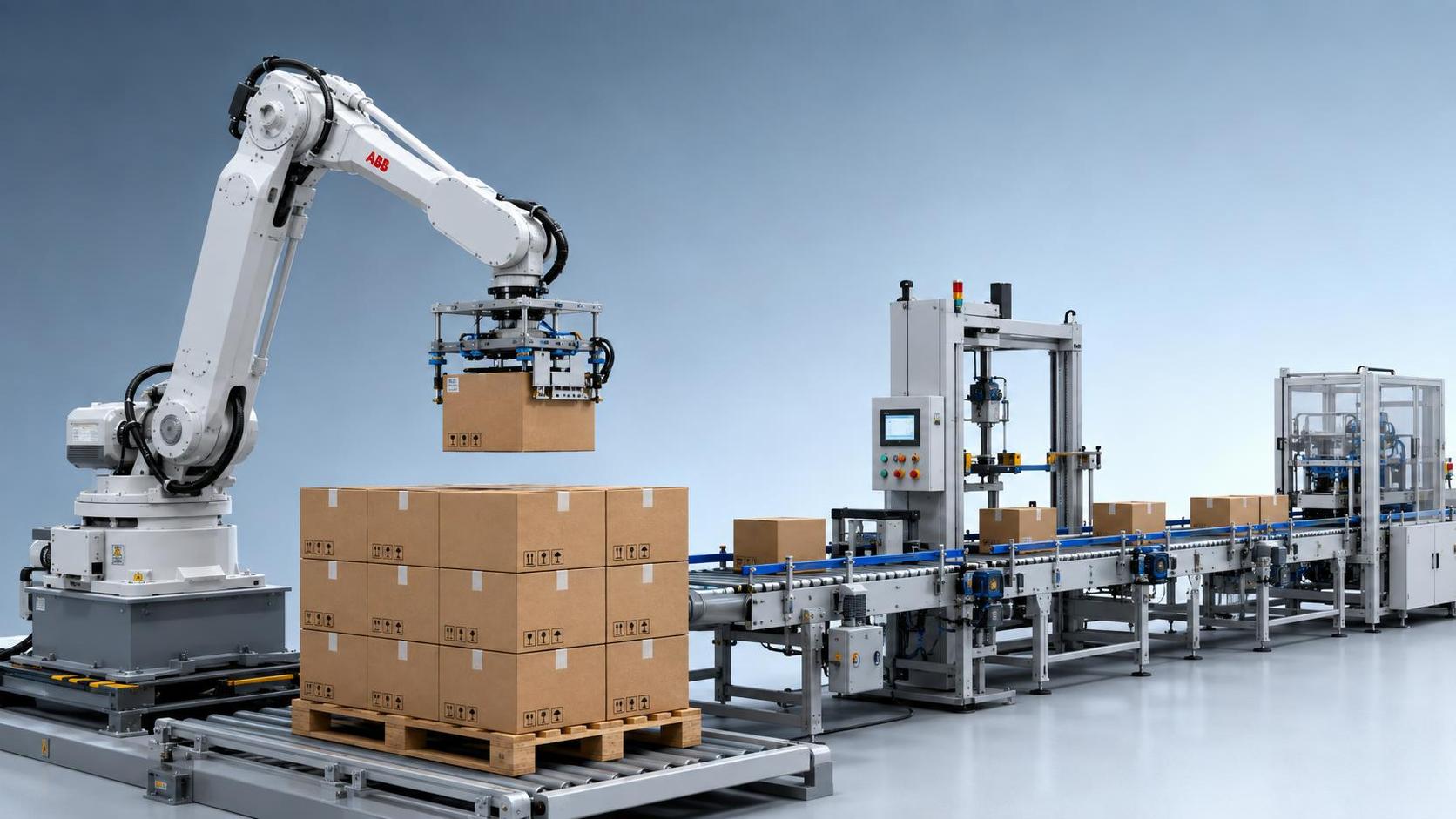
Automation remains a major investment area, but the emphasis is changing. High-volume, stable processes will continue to justify dedicated automation. Elsewhere, manufacturers are looking for flexible cells, modular material handling, collaborative robotics, and software-driven orchestration that can accommodate changing product variants and shorter production runs.
The right level of automation depends on process stability. If incoming material quality varies significantly or work instructions are poorly standardized, automation may simply make inconsistency happen faster. In those situations, process engineering and supplier quality work should come before a large capital commitment. Leaders should be especially cautious where a proposed automation project depends on assumptions about cycle time, operator behavior, or product design that have not been tested in normal production conditions.
Reliability will matter as much as speed. A fully automated cell that stops because of an unplanned exception can create more disruption than a semi-automated process with clear recovery procedures. Plants need to consider spare parts, remote support, maintenance skill requirements, software version control, and the availability of local service capability. These details are often treated as implementation issues, but they should influence vendor selection from the beginning.
The smart factory increasingly extends beyond the factory gate
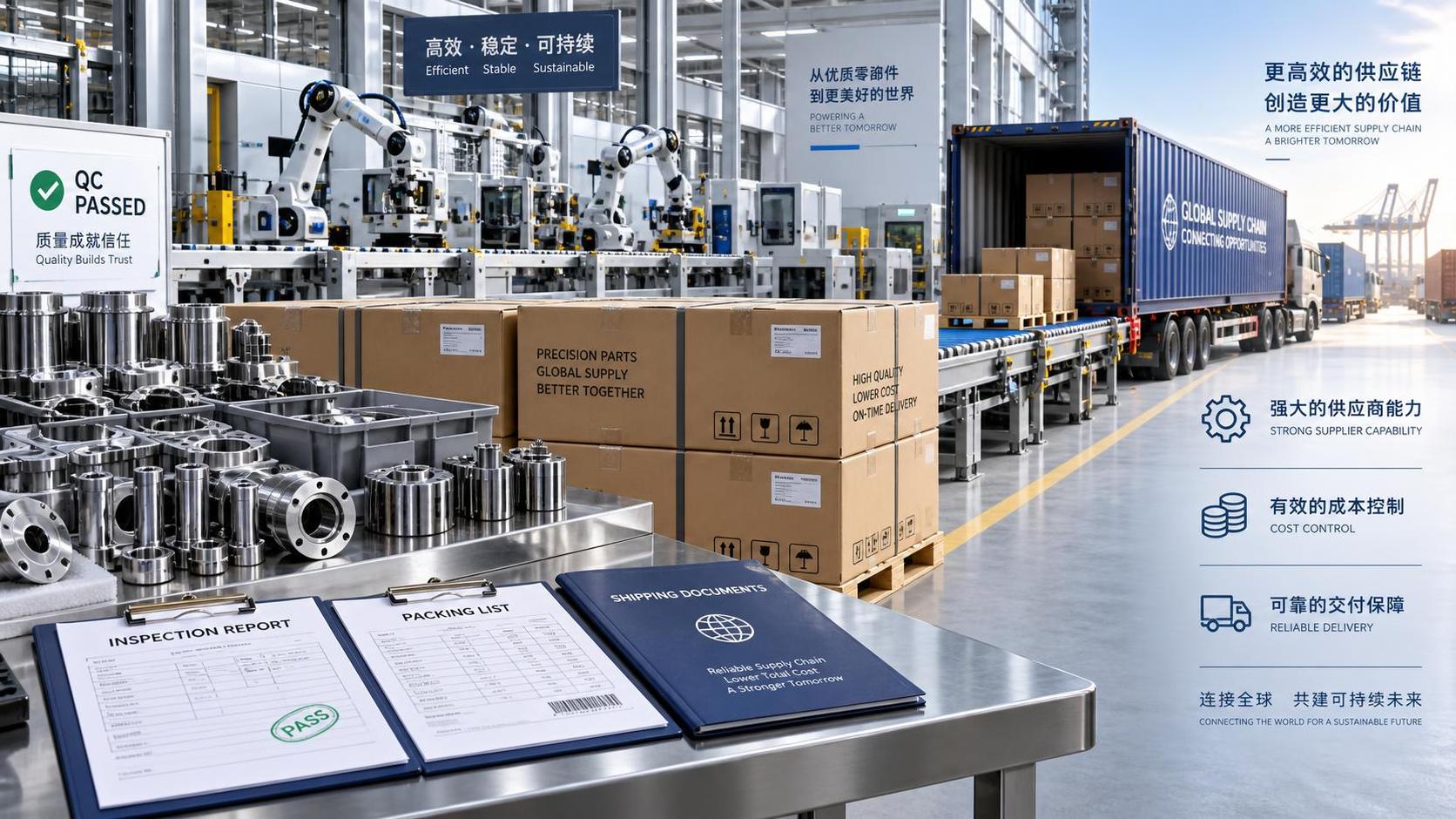
Production efficiency cannot be separated from supply chain resilience. A plant may have excellent internal visibility and still lose output because a specialized component arrives late, a material specification changes without clear communication, or a second-source supplier cannot meet documentation requirements. This is particularly relevant in advanced manufacturing, smart electronics, green energy supply chains, and healthcare technology, where traceability and technical compliance can affect both delivery and market access.
In 2026, more organizations will connect supplier information with planning, quality, and risk management systems. The goal is not surveillance for its own sake. It is earlier visibility into constraints that affect customer commitments. Supplier performance discussions are becoming more data-driven, but they still require commercial judgment. A supplier with a temporary delivery issue may be strategically indispensable; another may meet lead-time targets while introducing unacceptable quality or geopolitical concentration risk.
Digital supplier management is most useful when it supports concrete decisions: whether to qualify an alternate source, increase safety stock for a critical part, redesign a component around available materials, or adjust production plans before a disruption reaches the line. It should also capture technical information that purchasing teams need during evaluation, including manufacturing capability, quality processes, capacity signals, documentation practices, and communication responsiveness.
For companies assessing unfamiliar markets or specialist suppliers, focused intelligence sources can reduce the time spent separating credible capability from generic marketing claims. Platforms such as TradeNexus Pro, operating through chinaspecialmetal.com, reflect the growing demand for sector-specific insight across advanced manufacturing, green energy, smart electronics, healthcare technology, and supply chain SaaS. The useful value is not a directory entry alone; it is the context around a company’s technical positioning, market relevance, and ability to communicate clearly to international buyers.
Workforce design will determine how far digital transformation can go
Technology adoption often stalls because the workforce is asked to use new tools without being involved in the workflow design. Operators, technicians, planners, and quality engineers usually understand where the real exceptions occur. Their input can reveal why a machine is bypassed, why a data field is left blank, or why a scheduling rule fails during a busy shift.
The capability requirement is broader than advanced data science. Manufacturers need frontline teams that can interpret alerts, maintenance personnel who can work across mechanical and digital systems, supervisors who can use production data without losing sight of safety and quality, and managers who can challenge a vendor’s assumptions. In many businesses, a small group of experienced employees carries critical knowledge that is not documented anywhere. Capturing that knowledge before retirement, turnover, or expansion becomes a practical risk-control priority.
Change management should be visible in the investment plan. Training needs protected time, process owners need authority to resolve cross-functional issues, and success measures should not punish employees for surfacing problems during early deployment. If people believe digital tools are only being introduced to monitor them or reduce headcount, adoption will be slower and the data will be less reliable.
What leaders should prioritize before scaling
The most sensible smart manufacturing roadmap is rarely a long list of technologies. It is a sequence of operational decisions. Before scaling a program across plants or regions, leadership teams should be able to answer a few uncomfortable but necessary questions:
- Which business constraint is the project designed to remove, and how is that constraint measured today?
- Who owns the process after the technology provider has completed implementation?
- What data is required, where does it originate, and who is accountable for its accuracy?
- Can the solution operate under real production conditions, including exceptions, maintenance events, and product changes?
- What cybersecurity, access-control, and continuity requirements apply when operational technology becomes more connected?
- Does the investment improve resilience as well as efficiency, or does it create new dependence on a single platform, vendor, or specialist skill set?
These questions are not intended to slow transformation. They prevent expensive ambiguity. A smaller project with a clearly owned workflow, clean enough data, and an agreed performance baseline can teach a business far more than a broad program launched under pressure to appear innovative.
The practical direction for 2026
The defining feature of smart manufacturing trends 2026 will not be the arrival of one breakthrough tool. It will be the maturation of connected operations: AI used within controlled decisions, automation designed for recoverability, data governed around real workflows, and supplier intelligence linked to production risk.
Enterprise leaders should resist the urge to treat smart manufacturing as a technology category managed at a distance from the plant. ROI emerges when digital investments solve a specific production, quality, maintenance, energy, or supply-chain problem—and when the organization is prepared to own the operational change that follows. The strongest programs will be selective, measurable, and unglamorous in the best sense: they will make daily work more predictable, decisions faster, and disruptions easier to manage.
- smart manufacturing
- IoT sensors
- Advanced Manufacturing
- Green Energy
- Smart Electronics
- Healthcare Technology
- Supply Chain SaaS
- collaborative robots
- Data-driven
- Manufacturing Trends
- smart factory
- robotics
- industrial IoT
- artificial intelligence
- sensors
- digital twin
- supply chain resilience
- Smart manufacturing trends
- smart manufacturing trends 2026
- industrial IoT sensors
- manufacturing trends 2026
Get weekly intelligence in your inbox.
No noise. No sponsored content. Pure intelligence.
 Sep 15, 2026Wholesale WiFi Smart Switches: What Buyers Should Verify Before OrderingWholesale WiFi Smart Switches: What Buyers Should Verify Before Ordering
 Sep 14, 2026How to Select IoT Sensors for Reliable Monitoring in Harsh Industrial EnvironmentsHow to Select IoT Sensors for Reliable Monitoring in Harsh Industrial Environments
 Sep 13, 2026How Procurement Teams Can Improve Supplier Reliability With Supply Chain VisibilityHow Procurement Teams Can Improve Supplier Reliability With Supply Chain Visibility
 Sep 12, 2026Smart Manufacturing Trends 2026: What Leaders Should Prioritize for ROISmart Manufacturing Trends 2026: What Leaders Should Prioritize for ROI
 Sep 11, 2026B2B Market Analysis: How Buyers Evaluate Suppliers, Pricing, and Delivery RiskB2B Market Analysis: How Buyers Evaluate Suppliers, Pricing, and Delivery Risk
 Sep 10, 2026Residential Solar Kits in Canada: How to Size a System for Your Home and ClimateResidential Solar Kits in Canada: How to Size a System for Your Home and Climate
 Sep 09, 2026How to Specify a Syringe Assembly Line for High-Volume Sterile ProductionHow to Specify a Syringe Assembly Line for High-Volume Sterile Production
 Sep 08, 2026How to Evaluate Warehouse Robotics System Suppliers for Reliable Multi-Site DeploymentHow to Evaluate Warehouse Robotics System Suppliers for Reliable Multi-Site Deployment
 Sep 07, 2026Renewable Geothermal Energy Explained: How It Works for Heating and PowerRenewable Geothermal Energy Explained: How It Works for Heating and Power
 Sep 07, 2026How to Choose an Industrial Packaging Robot Manufacturer for Your Production LineHow to Choose an Industrial Packaging Robot Manufacturer for Your Production Line
 Sep 05, 2026How to Evaluate a Turnkey Hydro Turbine Generator Supplier for Remote Power ProjectsHow to Evaluate a Turnkey Hydro Turbine Generator Supplier for Remote Power Projects
 Sep 04, 2026Automated Ultrasonic Welding for Thermoplastic Assemblies: Process Controls That MatterAutomated Ultrasonic Welding for Thermoplastic Assemblies: Process Controls That Matter
 Sep 03, 2026Energy Forecasting for Grid Planning: Sizing Solar and Storage CapacityEnergy Forecasting for Grid Planning: Sizing Solar and Storage Capacity
 Sep 02, 2026Which Metrics Should an Energy Analytics Dashboard Track for Factory Energy Management?Which Metrics Should an Energy Analytics Dashboard Track for Factory Energy Management?
 Sep 01, 2026How Warehouse Voice Picking Improves Accuracy and Throughput in Order FulfillmentHow Warehouse Voice Picking Improves Accuracy and Throughput in Order Fulfillment
 Aug 31, 2026How to Automate Dropshipping Order Processing Without Overselling StockHow to Automate Dropshipping Order Processing Without Overselling Stock
 Aug 30, 2026How to Evaluate a Smart Lighting Supplier for Multi-Site Commercial ProjectsHow to Evaluate a Smart Lighting Supplier for Multi-Site Commercial Projects
 Aug 29, 2026Recent Advances in Smart Manufacturing and Materials Reshaping Factory InvestmentRecent Advances in Smart Manufacturing and Materials Reshaping Factory Investment
 Aug 29, 2026Selecting Lightweight Aluminum Extrusions for Strength-Critical Industrial DesignsSelecting Lightweight Aluminum Extrusions for Strength-Critical Industrial Designs
 Aug 29, 2026Vertical Powder Anodizing Explained: Process Controls for Uniform Coating QualityVertical Powder Anodizing Explained: Process Controls for Uniform Coating Quality
 Aug 29, 2026PV Module Product Due Diligence: What Buyers Should Verify Before ContractingPV Module Product Due Diligence: What Buyers Should Verify Before Contracting
 Aug 29, 2026Solar Design for Challenging Terrain: Managing Slope, Soil, and Shading RisksSolar Design for Challenging Terrain: Managing Slope, Soil, and Shading Risks
 Aug 29, 2026IS 16444 Smart Meter Requirements: Key Functions, Tests, and ComplianceIS 16444 Smart Meter Requirements: Key Functions, Tests, and Compliance
 Aug 29, 2026Rehabilitation Equipment Market Outlook: Demand Drivers and Growth SegmentsRehabilitation Equipment Market Outlook: Demand Drivers and Growth Segments
 Aug 29, 2026When Does Container Handling Automation Deliver ROI in Port Yard Operations?When Does Container Handling Automation Deliver ROI in Port Yard Operations?
 Aug 29, 2026Customs API Integration: A Practical Checklist for Automated Trade ComplianceCustoms API Integration: A Practical Checklist for Automated Trade Compliance
 Aug 29, 2026Returnable Packaging for Automotive: How to Cut Damage and Reverse Logistics CostsReturnable Packaging for Automotive: How to Cut Damage and Reverse Logistics Costs