How to Specify a Syringe Assembly Line for High-Volume Sterile Production
Specifying a syringe assembly line for high-volume sterile production requires more than comparing stated output rates and equipment prices.
Technical evaluators must determine whether the line can protect product quality, maintain validated performance, and support efficient long-term pharmaceutical operations.
The strongest specification process begins with the finished syringe, process risks, regulatory expectations, and required operating model before equipment configurations are discussed.
A production line that appears efficient during a factory acceptance test can become a persistent bottleneck if material variation, intervention frequency, or inspection rejects were underestimated.
Start With a Clear Production and Product Requirement Definition
The first task is translating commercial volume expectations into engineering requirements that define capacity, format range, quality targets, and realistic operating assumptions.
Do not specify capacity only as syringes per minute. Request output figures at defined efficiency levels, including planned stops, rejects, changeovers, and routine interventions.
A line rated for 600 units per minute may deliver substantially less saleable output when real component defects, sampling activities, cleaning requirements, and operator access are considered.
Define whether the syringe assembly line will handle ready-to-fill components, nest-and-tub configurations, bulk components, or integrated downstream packaging formats.
Component design directly affects feeding, orientation, insertion force, closure verification, and visual inspection. Suppliers need drawings, tolerances, material grades, and validated component samples early.
Technical evaluators should document all syringe variants, including barrel size, needle shield design, plunger rod geometry, stopper type, label position, and packaging configuration.
Format flexibility has a cost. A line designed for multiple syringe sizes requires tooling, recipes, change parts, validation effort, and additional controls that must be justified.
For high-volume sterile production, prioritize repeatability across the core product family rather than pursuing broad flexibility that compromises line speed or contamination control.
Specify Throughput Using OEE, Not Nameplate Speed
Nameplate speed is useful for comparison, but overall equipment effectiveness is the more meaningful measure for evaluating a high-volume syringe assembly line.
Ask suppliers to state their assumed availability, performance, and quality factors when presenting annual output models. These assumptions should be visible and contractually reviewable.
Availability losses include planned maintenance, component replenishment, changeovers, sterilization cycles, cleaning, breakdowns, and interventions caused by jams or rejected components.
Performance losses occur when machines run below nominal speed due to unstable feeding, micro-stops, synchronization problems, or inspection systems requiring repeated image processing.
Quality losses include defective syringes rejected for missing components, incorrect assembly, cosmetic defects, damaged needle shields, closure defects, and failed traceability checks.
Require a capacity model that calculates saleable annual output from actual production schedules. It should include shifts, planned downtime, batch sizes, and expected yield.
For example, a 24-hour operation may not be appropriate if cleaning, environmental monitoring, maintenance, and quality review require regular access to the equipment.
Also ask how output is sustained after component replenishment. Brief interruptions may appear minor individually but can materially reduce OEE over large annual volumes.
Evaluate the Automation Architecture and Material Flow
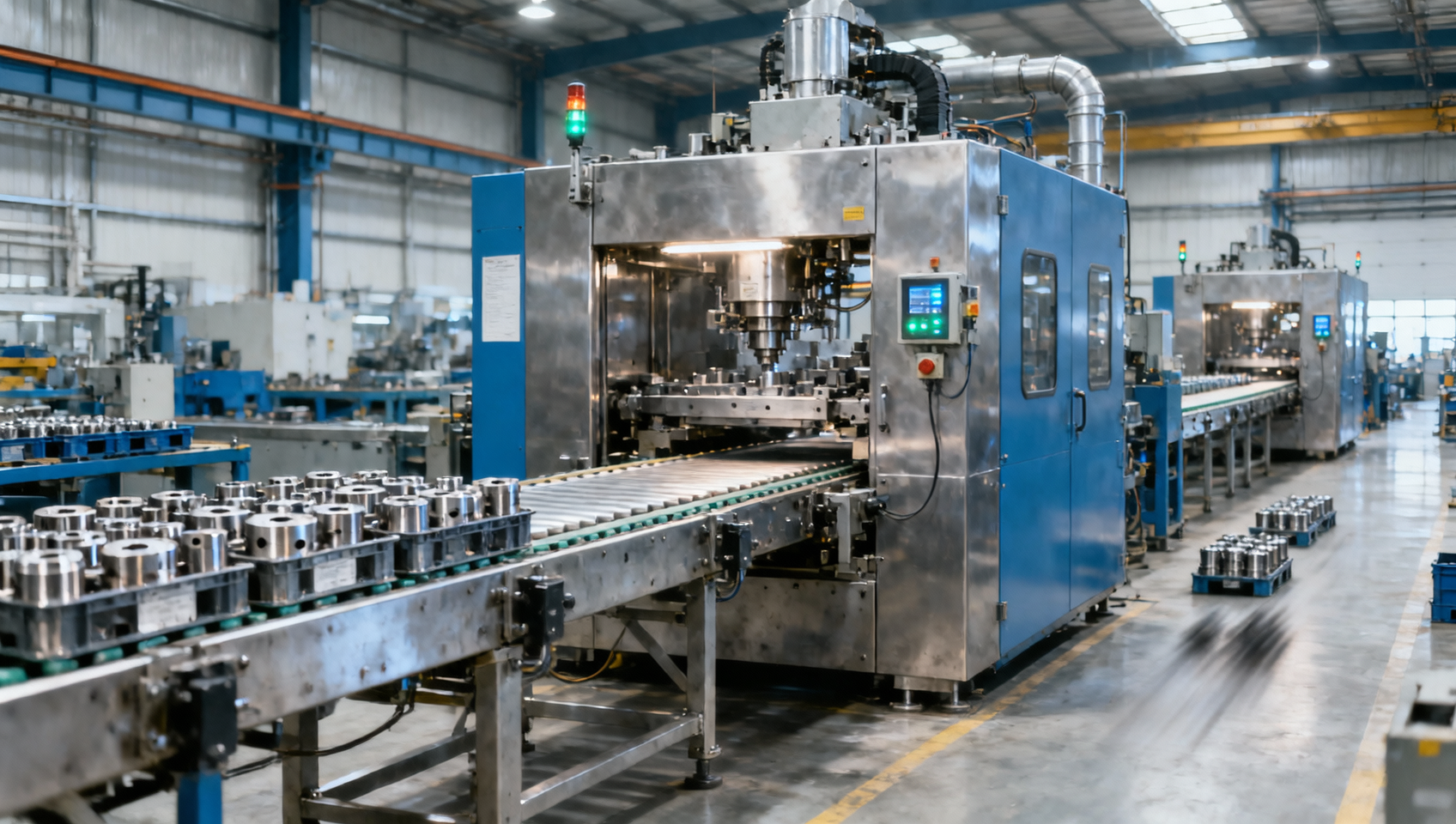
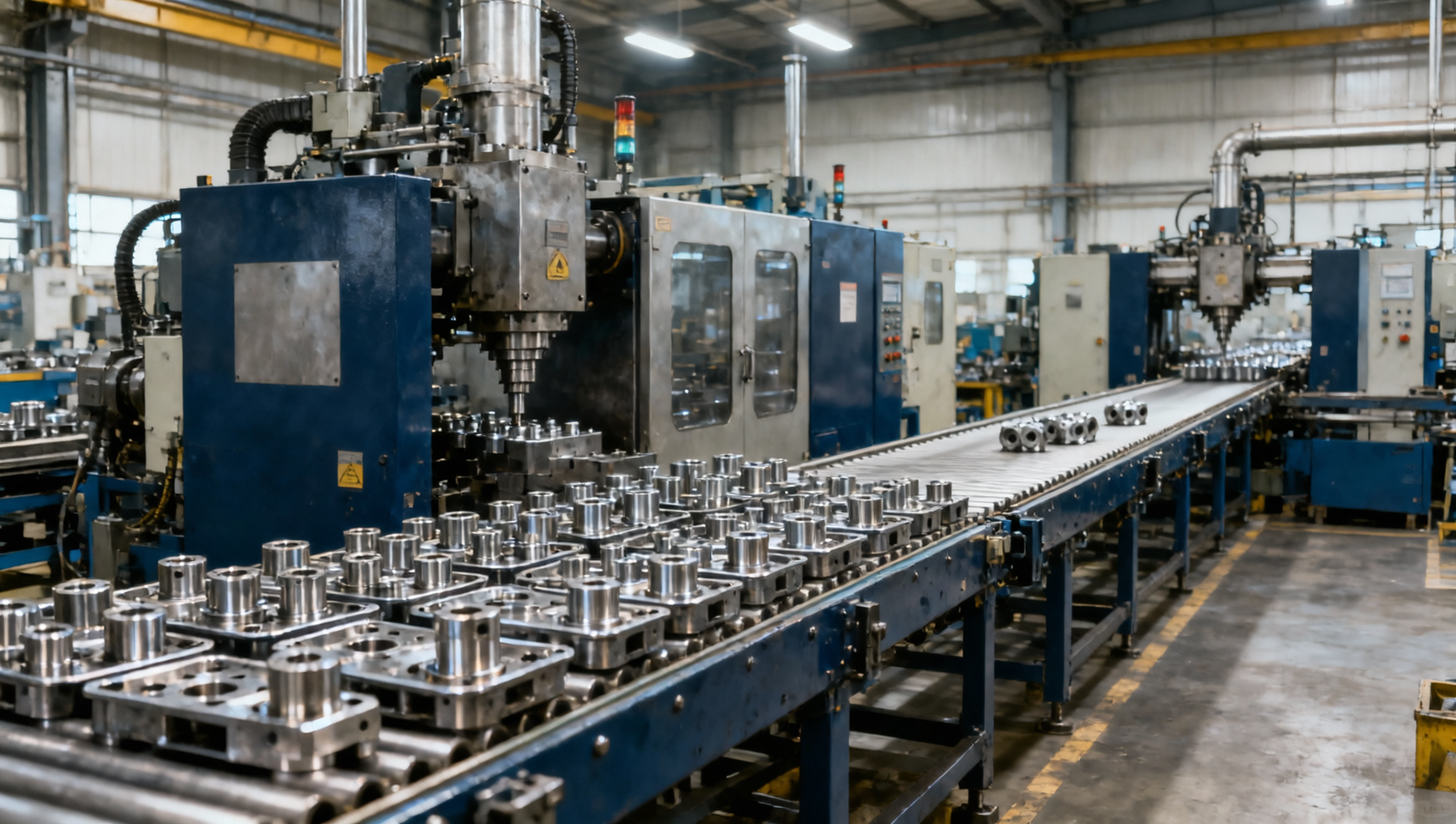
Automation architecture determines whether the assembly line can operate predictably at scale while protecting sterile components from unnecessary handling and contamination exposure.
Map every component flow from receipt through feeding, assembly, inspection, rejection, counting, and transfer to downstream packaging or serialization equipment.
Each transfer point introduces potential risks involving particle generation, component damage, loss of orientation, mixing, miscounts, or operator intervention.
Bulk-fed systems can offer high speed, but they require careful analysis of component-to-component contact, transport surfaces, vibration settings, and particle control.
Nested or tub-based processing may reduce handling exposure but can impose constraints on upstream preparation, format changes, and compatible downstream systems.
Specify whether robotic handling is required for sensitive components, restricted-access loading, automated replenishment, or controlled transfer between segregated process zones.
Robotics should be assessed for recoverability as well as speed. An inaccessible robot fault can create longer downtime than a simpler but well-designed mechanical solution.
Request a detailed sequence of operations, machine layout, buffer locations, transfer logic, and expected operator interactions for normal production and fault recovery.
Make Contamination Control a Design Requirement
For sterile healthcare manufacturing, contamination control cannot be treated as a cleanroom issue alone. The equipment itself must support the contamination control strategy.
Specify the intended cleanroom classification, pressure cascade, airflow direction, environmental monitoring access, and required barriers between operators and exposed sterile components.
Depending on the process, the preferred solution may involve open cleanroom processing, restricted access barrier systems, isolator integration, or a combination of contained zones.
Ask suppliers to identify all points where product-contact or critical components are exposed, transferred, accumulated, inspected, or touched during abnormal operating conditions.
Machine surfaces should be smooth, corrosion resistant, accessible for cleaning, and designed to minimize particle traps, horizontal ledges, exposed fasteners, and lubricant migration.
Pay particular attention to conveyor belts, guide rails, vibratory feeders, pneumatic actuators, vacuum systems, and reject paths because these areas can generate particles.
The syringe assembly line should provide clear segregation between accepted and rejected product. Reject bins, pathways, and reconciliation methods must prevent accidental reintroduction.
Define cleaning procedures during specification. If tools, prolonged disassembly, or difficult access are needed, routine sanitation may become inconsistent and operationally expensive.
Specify Assembly Accuracy and Process Controls
High throughput is only valuable when every syringe is assembled within defined functional, cosmetic, and dimensional requirements throughout the operating range.
Critical quality attributes should be converted into measurable machine controls, such as stopper insertion depth, plunger rod engagement, needle shield position, and assembly torque.
Where insertion force matters, specify force monitoring limits, sampling frequency, alarm handling, data retention, and the method used to manage borderline results.
For dimensional checks, determine whether sensors must verify component presence, location, orientation, height, color, code, or physical integrity before release downstream.
Do not assume that a presence sensor provides sufficient quality assurance. It may confirm an object exists without confirming correct engagement or assembly condition.
Require recipe-controlled setpoints with user access levels, electronic audit trails, and alarms that distinguish between warning conditions, controlled stops, and critical quality failures.
Critical process parameters should be protected from casual adjustment. The supplier should explain how settings are authorized, backed up, restored, and reviewed after deviations.
Evaluate line performance using the most difficult approved component combination, not only ideal components selected for a demonstration run or sales presentation.
Validate the Inspection System Beyond Defect Detection Claims
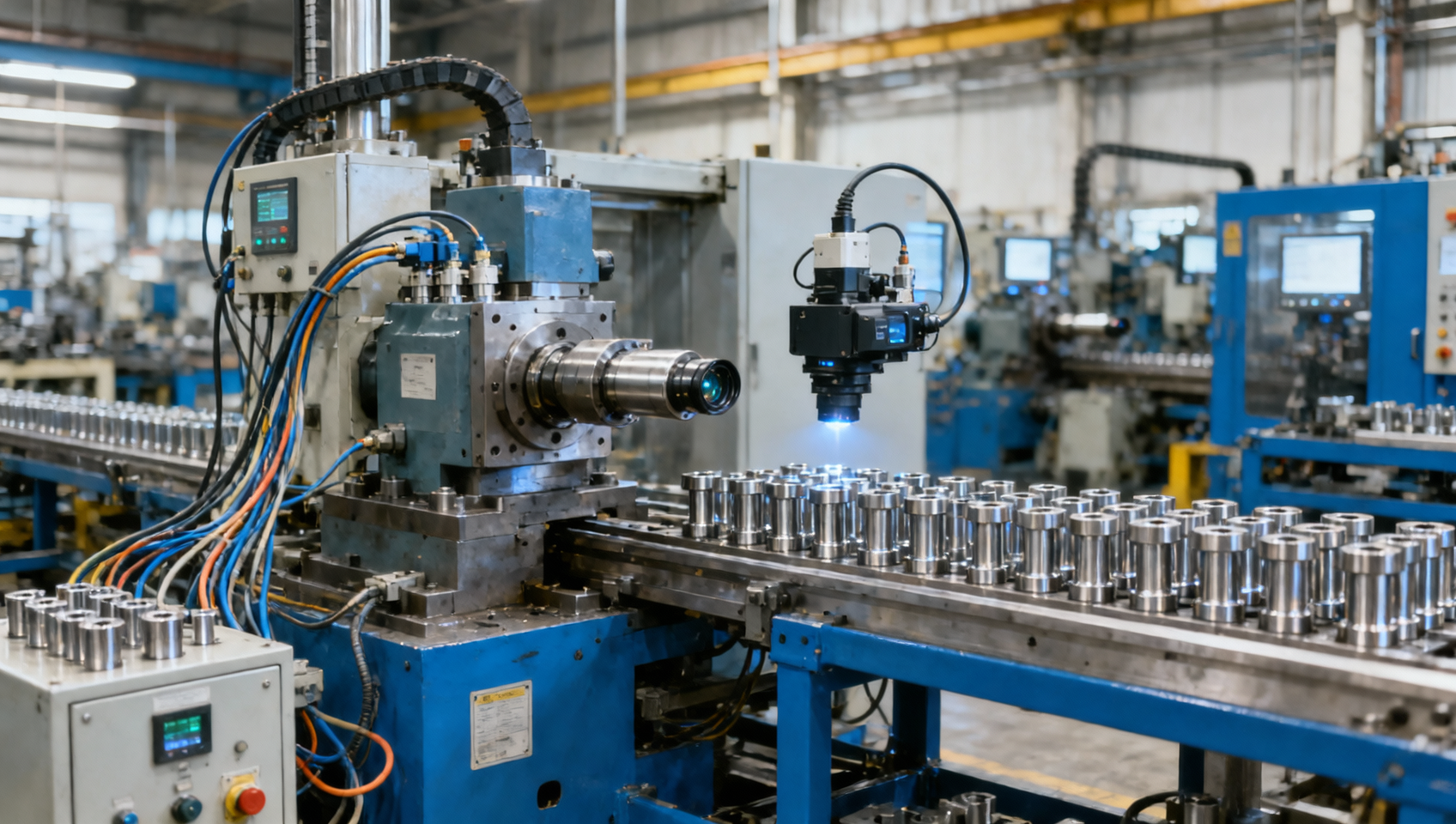
Inspection systems often determine whether a syringe assembly line can maintain quality at high speed without creating excessive false rejects or hidden escape risks.
Specify the defects that must be detected, their minimum size, expected appearance, location, contrast, orientation, and acceptance criteria for each syringe format.
Relevant defects may include missing needle shields, bent components, improper stopper placement, damaged flanges, particulate contamination, scratches, cosmetic defects, and incorrect labels.
Vision suppliers should provide a defect library based on representative production samples. Generic statements about artificial intelligence or high-resolution cameras are insufficient.
Ask for detection performance by defect category, including false acceptance rates, false rejection rates, repeatability, reproducibility, and performance at full operating speed.
False rejects can undermine productivity and create reconciliation work. False accepts are more serious because they can result in patient safety, compliance, and recall exposure.
Inspection stations should support secure image storage, defect classification, trend reporting, sample review, and controlled adjustment of algorithms or vision parameters.
For regulated production, clarify how inspection software changes will be documented, tested, approved, and included within the facility’s validation and change-control system.
Assess Data Integrity, Integration, and Validation Readiness
A modern syringe assembly line should provide reliable production data, but connectivity must be designed around validated use cases rather than generic digitalization claims.
Define which data must be captured, including production counts, rejects, alarm history, process parameters, batch records, maintenance events, user actions, and environmental conditions.
Determine whether the line must integrate with manufacturing execution systems, SCADA platforms, historian databases, serialization solutions, electronic batch records, or quality management software.
Communication protocols should be specified early. Common requirements may include OPC UA, Ethernet/IP, Profinet, secure remote access, and controlled data export capabilities.
For electronic records, technical evaluators should address audit trails, time synchronization, user authentication, role permissions, backup procedures, and protection against unauthorized data alteration.
Request a validation document package that includes user requirement specifications, functional design specifications, software design information, risk assessments, and test protocols.
The supplier’s FAT should test realistic operating scenarios, including alarms, faults, restarts, reject verification, data capture, recipe control, and safety interlock performance.
Site acceptance testing should then confirm that installation, utilities, cleanroom interfaces, operational procedures, and integrated data systems perform as intended in the final environment.
Examine Maintainability, Spare Parts, and Lifecycle Support
In high-volume production, maintainability is a capacity issue. Equipment that is difficult to clean, adjust, troubleshoot, or service will eventually reduce available output.
Ask for preventive maintenance schedules, estimated maintenance hours, lubrication requirements, calibration needs, recommended spare parts, and expected replacement intervals for wear components.
Critical spares should be identified according to lead time and production impact. A low-cost sensor can cause major downtime if it is unavailable locally.
Review access around motors, cameras, sensors, conveyors, and tooling. Maintenance tasks should be possible without compromising cleanroom controls or extensive equipment dismantling.
Changeover performance also requires scrutiny. Require documented steps, expected duration, adjustment points, verification checks, and operator skill requirements for each approved format.
Suppliers should provide remote support procedures, escalation paths, response-time commitments, software support policies, and a transparent approach to obsolete control hardware.
Evaluate local service coverage where possible. International support can be valuable, but time-zone delays and travel constraints can be costly during critical production interruptions.
Lifecycle cost should include utilities, consumables, spare parts, validation updates, training, service contracts, and the production losses associated with recurring maintenance activities.
Use Supplier Evaluation to Reduce Project and Compliance Risk
Equipment capability matters, but the supplier’s engineering discipline often determines whether a complex sterile production project reaches acceptance on schedule.
Assess experience with comparable syringe formats, sterile environments, regulated customers, automation complexity, vision inspection, and successful installation at similar output levels.
Reference visits are particularly valuable. They reveal how the equipment performs after commissioning, how operators interact with it, and how suppliers respond to recurring issues.
Request evidence of project management methods, design review processes, change-control procedures, quality systems, source code ownership terms, and subcontractor management practices.
A supplier should be able to explain technical limitations clearly. Overly broad performance promises without defined operating conditions are a warning sign for technical evaluators.
Commercial agreements should tie payment milestones to documented design approval, FAT completion, delivery, SAT, performance qualification support, and final acceptance criteria.
Define responsibility boundaries for utilities, cleanroom integration, installation, training, validation support, component trials, and downstream packaging connections before purchase order release.
When comparing bids, use a weighted technical scorecard rather than a price-only comparison. Quality assurance, serviceability, validation readiness, and risk controls deserve substantial weighting.
Build a Specification That Supports Confident Investment Decisions
A well-specified syringe assembly line is a controlled manufacturing system, not simply a collection of machines designed to meet a nominal speed target.
Technical evaluators should prioritize saleable output, contamination control, process verification, inspection reliability, data integrity, maintainability, and supplier execution capability.
The best investment decision comes from testing supplier claims against realistic components, production schedules, quality requirements, and the actual constraints of the intended facility.
By defining requirements early and treating validation, service, and operational recovery as core design criteria, manufacturers can reduce risk before equipment contracts are signed.
For high-volume sterile production, the right syringe assembly line creates more than capacity. It provides the repeatable control needed to protect patients, compliance, and long-term manufacturing performance.
Get weekly intelligence in your inbox.
No noise. No sponsored content. Pure intelligence.
 Oct 24, 2026Tesla Q3 2026 Storage Deployments Rank Second Highest as Revenue Falls 16%Tesla Q3 2026 Storage Deployments Rank Second Highest as Revenue Falls 16%
 Oct 24, 2026Freight Forwarding Services Pricing: Comparing Quotes Beyond Base RatesFreight Forwarding Services Pricing: Comparing Quotes Beyond Base Rates
 Oct 23, 2026IndexBox Issues Off-Grid Solar Outlook to 2035, Forecasting 8.2% CAGRIndexBox Issues Off-Grid Solar Outlook to 2035, Forecasting 8.2% CAGR
 Oct 23, 2026NSF/ANSI 49 Biosafety Cabinets: Product Certification vs. Field TestingNSF/ANSI 49 Biosafety Cabinets: Product Certification vs. Field Testing
 Oct 22, 2026Mitsubishi Electric Develops Industry-First Humanoid Robot–CNC Machining SystemMitsubishi Electric Develops Industry-First Humanoid Robot–CNC Machining System
 Oct 22, 2026Aerospace Aluminum Machining: How to Control Distortion in Thin-Wall PartsAerospace Aluminum Machining: How to Control Distortion in Thin-Wall Parts
 Oct 21, 2026Genesis Energy commissions 200 MWh battery storage system at HuntlyGenesis Energy commissions 200 MWh battery storage system at Huntly
 Oct 21, 2026Buying AMI Smart Meters Wholesale: Compatibility Checks and Total CostsBuying AMI Smart Meters Wholesale: Compatibility Checks and Total Costs
 Oct 20, 2026Werner Enterprises Issues Q3 Earnings Warning as Costs RiseWerner Enterprises Issues Q3 Earnings Warning as Costs Rise
 Oct 20, 2026Are Digital Twins Viable for SMEs? Costs, Use Cases, and Data RequirementsAre Digital Twins Viable for SMEs? Costs, Use Cases, and Data Requirements
 Oct 19, 2026Choosing a Wholesale Servo Motor Exporter: Traceability and Warranty ChecksChoosing a Wholesale Servo Motor Exporter: Traceability and Warranty Checks
 Oct 18, 2026Syringe Manufacturing Equipment: Evaluating Throughput and Assembly AccuracySyringe Manufacturing Equipment: Evaluating Throughput and Assembly Accuracy
 Oct 17, 2026Air Freight Forwarding Services: How to Compare Quotes for Urgent ShipmentsAir Freight Forwarding Services: How to Compare Quotes for Urgent Shipments
 Oct 16, 2026Wholesale Solar Panels: How to Compare Bulk Quotes by Total Landed CostWholesale Solar Panels: How to Compare Bulk Quotes by Total Landed Cost
 Oct 15, 2026Supply Chain Intelligence for Sourcing: How to Vet New SuppliersSupply Chain Intelligence for Sourcing: How to Vet New Suppliers
 Oct 14, 2026How energy costs shape smart manufacturing investment in EuropeHow energy costs shape smart manufacturing investment in Europe
 Oct 14, 2026How skills shortages slow smart manufacturing in Southeast AsiaHow skills shortages slow smart manufacturing in Southeast Asia
 Oct 14, 2026How CNC wire-cut machining maintains tight tolerances in thick partsHow CNC wire-cut machining maintains tight tolerances in thick parts
 Oct 14, 2026Can automated feeding stabilize metal forming in smart factories?Can automated feeding stabilize metal forming in smart factories?
 Oct 14, 2026Can CT inspection detect internal defects in metal additive parts?Can CT inspection detect internal defects in metal additive parts?
 Oct 14, 2026When does additive manufacturing reduce lead time for spare parts?When does additive manufacturing reduce lead time for spare parts?
 Oct 14, 2026How production volume affects ROI on an automated painting lineHow production volume affects ROI on an automated painting line
 Oct 14, 2026What data does manufacturing bottleneck analysis consulting need?What data does manufacturing bottleneck analysis consulting need?
 Oct 14, 2026When should you hire a consultant for manufacturing bottlenecks?When should you hire a consultant for manufacturing bottlenecks?
 Oct 14, 2026What Are Electronics Exporters' Top Supply Chain Resilience Gaps in 2026?What Are Electronics Exporters' Top Supply Chain Resilience Gaps in 2026?
 Oct 14, 2026How Do You Measure AI Adoption Maturity in a Traditional Factory?How Do You Measure AI Adoption Maturity in a Traditional Factory?
 Oct 14, 2026Are Chinese AI-Assisted Surgical Devices Gaining Global Trust?Are Chinese AI-Assisted Surgical Devices Gaining Global Trust?