How Procurement Teams Can Improve Supplier Reliability With Supply Chain Visibility
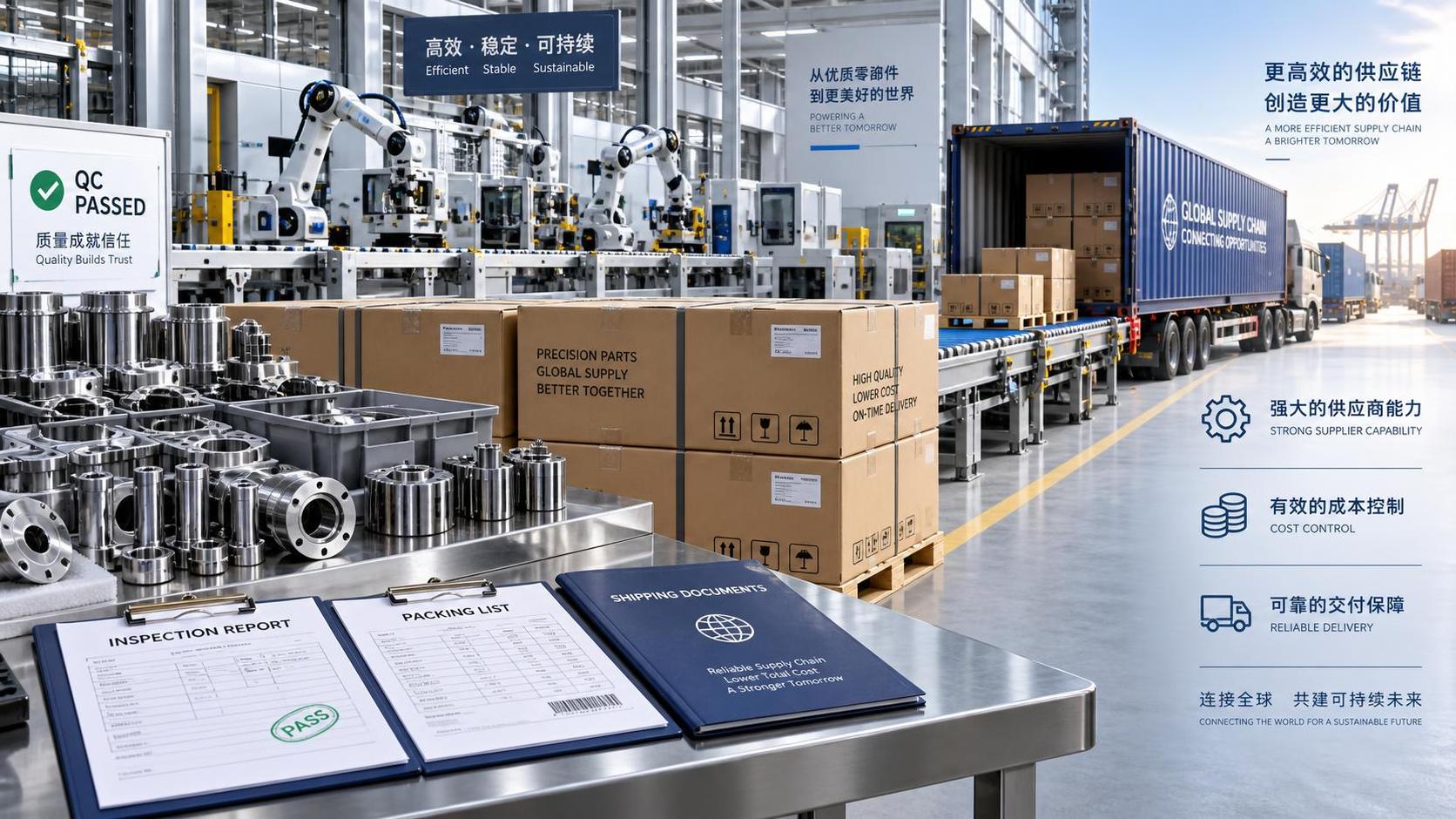
Supplier reliability is not established by a quoted lead time, a capacity statement, or a history of on-time deliveries viewed in isolation. It is established by whether a supplier can continue meeting agreed requirements when materials are delayed, demand changes, quality issues emerge, transport routes shift, or compliance documentation is challenged. Supply chain visibility gives procurement teams the evidence needed to assess that reliability before disruption becomes a missed delivery, an emergency purchase, or a production stoppage.
Used well, supply chain visibility for procurement is not simply a dashboard showing shipment locations. It is a decision system that connects supplier commitments to operational signals: purchase order status, component availability, production milestones, quality release, logistics handover, documentation completeness, and exception history. The practical objective is to replace late-stage surprises with earlier, actionable decisions.
Reliability fails before the delivery date
A supplier may appear dependable because finished goods arrive on time. Yet that result can conceal fragility. The supplier may be relying on expedited freight, consuming buffer inventory, prioritizing one customer over another, or accepting incoming materials with limited inspection. These actions can preserve one shipment while increasing risk in later orders.
For procurement, the relevant question is therefore not only, “Did the supplier deliver?” It is, “Can the supplier demonstrate control over the conditions required to deliver consistently?” Visibility makes this distinction measurable.
Consider a purchase order for a production-critical electronic component. A standard order-status update may show “in production” until the expected ship date. A visibility-oriented process examines the dependencies behind that status:
- Has the supplier received and confirmed the order without unresolved specification changes?
- Are critical raw materials and subcomponents physically available, allocated, and quality-approved?
- Has production started on the promised line, or is it waiting for tooling, engineering approval, or labor capacity?
- Has in-process inspection identified a defect or yield issue that could affect output?
- Are export documents, test reports, certifications, and packing requirements ready before dispatch?
- Has the carrier booking been secured, and does the selected route match the required delivery window?
Each signal answers a different reliability question. A shipment tracking feed cannot reveal whether materials were short at the factory. A supplier scorecard based only on delivery dates cannot show whether quality release was obtained under normal conditions or through a concession. Procurement needs linked visibility across these stages because supplier failure often begins upstream of the shipment itself.
Start with the commitments that matter commercially
Visibility programs become ineffective when they collect every available data point without identifying which commitments drive operational exposure. The right data model begins with the commercial and technical promises embedded in the purchasing process.
At minimum, each order should have a controlled baseline: item and revision level, quantity, agreed delivery terms, requested and confirmed dates, required inspection or test criteria, packaging requirements, certificates, destination, and escalation contacts. If this baseline is unclear, a visibility platform can only make confusion more visible.
From that baseline, procurement can identify the events that change risk. For a fabricated metal part, the meaningful events may include raw-material receipt with heat traceability, first-article approval, completion of machining, final inspection, packing, and export release. For a medical or regulated product, document completeness and batch traceability may be as important as production completion. For a software-enabled supply service, the critical milestones may concern onboarding, data integration, service-level performance, and access control rather than physical shipment.
The practical rule is simple: track the events that determine whether the order can be accepted and used, not merely whether it can be shipped.

Build a supplier view from evidence, not supplier self-reporting alone
Supplier updates remain necessary, but they should not be the sole source of operational truth. A supplier may report that an order is “on schedule” based on an internal target that differs from the buyer’s required date, or based on the assumption that an incoming material will arrive as expected. Procurement should distinguish between reported status and corroborated status.
Corroboration does not require intrusive monitoring of every supplier. It requires an appropriate evidence trail for the risk level of the purchase. Useful sources include purchase-order acknowledgements, production plans, advance shipping notices, quality records, material certificates, third-party inspection results, warehouse receipts, customs or carrier milestones, and internal receiving and rejection data.
Different data sources have different strengths:
A reliable supplier assessment emerges when these records agree over time. If supplier production updates repeatedly indicate completion before inspection records are available, that gap deserves attention. If logistics tracking shows frequent late handovers despite nominally acceptable factory completion dates, the issue may be booking discipline, export coordination, or packaging readiness rather than manufacturing capacity.
Use exception-based management instead of chasing every order
Visibility should reduce manual follow-up, not create another reporting burden. The most effective operating model is exception-based: routine orders move through agreed milestones with limited intervention, while defined deviations trigger review.
Exceptions should be tied to the actual risk of the order. A one-day delay in confirming a non-critical consumable may not require action. The same delay for a single-source component with a long qualification cycle may require an immediate supplier call, alternate-source review, or internal production-plan adjustment.
Useful exceptions are specific enough to support a decision. “Order delayed” is not sufficient. A better exception states that a named critical material has not been received by the supplier by the latest date compatible with the committed production schedule; or that final inspection is incomplete while the freight booking cutoff is approaching. This formulation identifies both the issue and the shrinking window for response.
Escalation rules also need ownership. Procurement may own the supplier communication, but quality must decide whether a conditional release is acceptable, engineering may need to approve a substitute material, and logistics may need to assess alternative transport options. Visibility does not eliminate cross-functional dependency; it makes that dependency visible early enough to manage.
Separate supplier risk from lane risk
Late delivery is often assigned entirely to the supplier even when the underlying issue sits elsewhere in the supply chain. This distorts supplier evaluations and leads to ineffective corrective actions. A supplier that completes product on time but repeatedly loses transit time through a poorly selected shipping lane has a different problem from a supplier that misses production completion dates.
Procurement should segment performance into at least three layers: supplier execution, logistics execution, and internal execution. Supplier execution covers order acknowledgement, material readiness, production, quality, and dispatch readiness. Logistics execution covers carrier handover, routing, customs clearance, transshipment, and final delivery. Internal execution includes forecast accuracy, specification stability, approval lead times, purchase-order release, and receiving capacity.
This separation matters during supplier reviews. If the supplier’s production completion is consistently late, capacity planning, subcontractor dependence, material sourcing, or factory controls need examination. If completion is stable but arrival is volatile, the transport model or Incoterms allocation may need revision. If orders are placed after the realistic manufacturing lead time has already been consumed, the buying organization has created the exposure itself.
Supplier reliability should be evaluated against the portion of the chain the supplier can actually control, while still accounting for the supplier’s ability to communicate and mitigate risks outside that control.
Make visibility part of sourcing decisions, not just order expediting
Many organizations use visibility only after a supplier has been awarded business. That is useful, but incomplete. The same capability should shape supplier selection and allocation decisions.
During qualification, procurement can ask what operational information a potential supplier can provide, how frequently it can be updated, who validates it, and whether the supplier can trace a finished batch to relevant production and material records. The issue is not whether a supplier uses a sophisticated digital system. A smaller manufacturer may have disciplined, auditable records and clear escalation practices. A larger supplier may have extensive systems but limited willingness to share meaningful order-level status.
The assessment should focus on information quality:
- Timeliness: Does status arrive early enough to change an outcome?
- Granularity: Does it identify the relevant order line, lot, revision, or milestone?
- Accuracy: Can reported milestones be reconciled with quality, shipping, and receiving evidence?
- Consistency: Are definitions of “ready,” “complete,” and “shipped” stable across sites and orders?
- Escalation capability: Is there a defined response when the expected plan cannot be met?
These factors are especially important for dual sourcing. Two suppliers may offer similar unit prices and nominal lead times, but the supplier that provides reliable milestone data, documented corrective action, and prompt exception disclosure can be easier to integrate into a resilient supply network. That does not make visibility a substitute for technical qualification, financial review, or quality audits. It makes the operational reliability component of sourcing more concrete.
Do not confuse more data with better visibility
Data volume can obscure risk when systems use inconsistent dates, part numbers, units of measure, or supplier identifiers. A common failure is connecting enterprise resource planning, supplier portals, quality systems, and logistics feeds without agreeing on a shared definition of the order lifecycle. One system may classify an order as complete when manufacturing ends; another may require inspection release; a third may use carrier pickup. The resulting dashboard appears precise while presenting incompatible states.
Before expanding integrations, establish a limited set of common definitions. Confirm the difference between requested date, confirmed date, planned completion date, actual completion date, dispatch date, estimated arrival, and actual receipt. Define what qualifies as a risk event. Determine which source is authoritative for each field. A visible status that cannot be trusted is worse than an unavailable status because it encourages decisions based on false certainty.
Data governance also applies to supplier access. Suppliers should see the demand, forecast, and order information needed to perform, but not necessarily sensitive sourcing comparisons, internal cost targets, or data belonging to other suppliers. Access rules, update responsibilities, record retention, and change-control procedures should be agreed before information is shared at scale.
Link visibility to corrective action and supplier development
A visibility system should not become a mechanism for documenting failure after the fact. Its value lies in creating a disciplined feedback loop. When a critical milestone is missed, the response should identify whether the cause was an isolated event, a recurring process weakness, an external disruption, or an inaccurate plan from the outset.
Corrective action is stronger when it is tied to observable evidence. A supplier asked to improve on-time delivery should not merely commit to “closer follow-up.” The underlying control may need to change: earlier material allocation, a different approval gate, capacity reservation, revised production sequencing, an additional inspection point, or a more realistic committed lead time. Procurement can then monitor whether the relevant milestone improves, rather than waiting for a future delivery score to reveal the result.
Repeated exceptions also reveal where supplier segmentation should change. A strategically important supplier with transparent communication and recoverable operational issues may justify joint improvement work. A supplier with limited traceability, inconsistent dates, and late disclosure creates a different kind of risk, even if its quoted cost remains attractive.
Reliability becomes manageable when uncertainty is visible
No supplier network can eliminate disruption. Material constraints, quality failures, regulatory holds, weather events, transport congestion, and demand changes remain part of cross-border trade. The procurement advantage comes from knowing which commitments are at risk, why they are at risk, who can act, and how much time remains before the impact reaches operations.
That is the practical role of supply chain visibility for procurement. It turns supplier reliability from a retrospective score into a live management process. When purchasing data, production evidence, quality status, and logistics events are connected to clear escalation rules, supplier performance can be assessed on more than promises—and managed before disruption becomes an unavoidable cost.
Get weekly intelligence in your inbox.
No noise. No sponsored content. Pure intelligence.
 Sep 15, 2026Wholesale WiFi Smart Switches: What Buyers Should Verify Before OrderingWholesale WiFi Smart Switches: What Buyers Should Verify Before Ordering
 Sep 14, 2026How to Select IoT Sensors for Reliable Monitoring in Harsh Industrial EnvironmentsHow to Select IoT Sensors for Reliable Monitoring in Harsh Industrial Environments
 Sep 13, 2026How Procurement Teams Can Improve Supplier Reliability With Supply Chain VisibilityHow Procurement Teams Can Improve Supplier Reliability With Supply Chain Visibility
 Sep 12, 2026Smart Manufacturing Trends 2026: What Leaders Should Prioritize for ROISmart Manufacturing Trends 2026: What Leaders Should Prioritize for ROI
 Sep 11, 2026B2B Market Analysis: How Buyers Evaluate Suppliers, Pricing, and Delivery RiskB2B Market Analysis: How Buyers Evaluate Suppliers, Pricing, and Delivery Risk
 Sep 10, 2026Residential Solar Kits in Canada: How to Size a System for Your Home and ClimateResidential Solar Kits in Canada: How to Size a System for Your Home and Climate
 Sep 09, 2026How to Specify a Syringe Assembly Line for High-Volume Sterile ProductionHow to Specify a Syringe Assembly Line for High-Volume Sterile Production
 Sep 08, 2026How to Evaluate Warehouse Robotics System Suppliers for Reliable Multi-Site DeploymentHow to Evaluate Warehouse Robotics System Suppliers for Reliable Multi-Site Deployment
 Sep 07, 2026Renewable Geothermal Energy Explained: How It Works for Heating and PowerRenewable Geothermal Energy Explained: How It Works for Heating and Power
 Sep 07, 2026How to Choose an Industrial Packaging Robot Manufacturer for Your Production LineHow to Choose an Industrial Packaging Robot Manufacturer for Your Production Line
 Sep 05, 2026How to Evaluate a Turnkey Hydro Turbine Generator Supplier for Remote Power ProjectsHow to Evaluate a Turnkey Hydro Turbine Generator Supplier for Remote Power Projects
 Sep 04, 2026Automated Ultrasonic Welding for Thermoplastic Assemblies: Process Controls That MatterAutomated Ultrasonic Welding for Thermoplastic Assemblies: Process Controls That Matter
 Sep 03, 2026Energy Forecasting for Grid Planning: Sizing Solar and Storage CapacityEnergy Forecasting for Grid Planning: Sizing Solar and Storage Capacity
 Sep 02, 2026Which Metrics Should an Energy Analytics Dashboard Track for Factory Energy Management?Which Metrics Should an Energy Analytics Dashboard Track for Factory Energy Management?
 Sep 01, 2026How Warehouse Voice Picking Improves Accuracy and Throughput in Order FulfillmentHow Warehouse Voice Picking Improves Accuracy and Throughput in Order Fulfillment
 Aug 31, 2026How to Automate Dropshipping Order Processing Without Overselling StockHow to Automate Dropshipping Order Processing Without Overselling Stock
 Aug 30, 2026How to Evaluate a Smart Lighting Supplier for Multi-Site Commercial ProjectsHow to Evaluate a Smart Lighting Supplier for Multi-Site Commercial Projects
 Aug 29, 2026Recent Advances in Smart Manufacturing and Materials Reshaping Factory InvestmentRecent Advances in Smart Manufacturing and Materials Reshaping Factory Investment
 Aug 29, 2026Selecting Lightweight Aluminum Extrusions for Strength-Critical Industrial DesignsSelecting Lightweight Aluminum Extrusions for Strength-Critical Industrial Designs
 Aug 29, 2026Vertical Powder Anodizing Explained: Process Controls for Uniform Coating QualityVertical Powder Anodizing Explained: Process Controls for Uniform Coating Quality
 Aug 29, 2026PV Module Product Due Diligence: What Buyers Should Verify Before ContractingPV Module Product Due Diligence: What Buyers Should Verify Before Contracting
 Aug 29, 2026Solar Design for Challenging Terrain: Managing Slope, Soil, and Shading RisksSolar Design for Challenging Terrain: Managing Slope, Soil, and Shading Risks
 Aug 29, 2026IS 16444 Smart Meter Requirements: Key Functions, Tests, and ComplianceIS 16444 Smart Meter Requirements: Key Functions, Tests, and Compliance
 Aug 29, 2026Rehabilitation Equipment Market Outlook: Demand Drivers and Growth SegmentsRehabilitation Equipment Market Outlook: Demand Drivers and Growth Segments
 Aug 29, 2026When Does Container Handling Automation Deliver ROI in Port Yard Operations?When Does Container Handling Automation Deliver ROI in Port Yard Operations?
 Aug 29, 2026Customs API Integration: A Practical Checklist for Automated Trade ComplianceCustoms API Integration: A Practical Checklist for Automated Trade Compliance
 Aug 29, 2026Returnable Packaging for Automotive: How to Cut Damage and Reverse Logistics CostsReturnable Packaging for Automotive: How to Cut Damage and Reverse Logistics Costs