Floating Solar Farm Costs: CAPEX, OPEX, and the Site Factors That Shape ROI
Understanding floating solar farms cost is essential for enterprise decision-makers evaluating renewable energy investments on reservoirs, ponds, and industrial water bodies.
Beyond headline CAPEX figures, project returns depend on anchoring design, grid access, water conditions, permitting, maintenance requirements, and local supply-chain costs.
This guide examines the key CAPEX and OPEX components shaping floating solar ROI, helping businesses assess feasibility, manage risk, and compare site-specific investment opportunities.
The Executive Question: Is Floating Solar Worth the Premium?
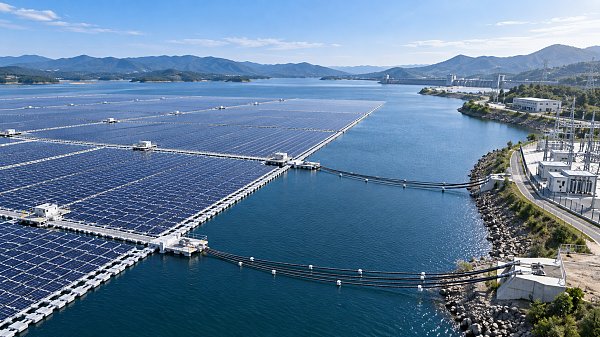
For most enterprises, floating solar is not automatically cheaper than ground-mounted solar. Its value comes from land avoidance, energy performance, water benefits, and strategic site utilization.
A credible investment decision should compare lifetime energy value rather than focusing only on installed cost per watt or the first-year project budget.
Floating systems usually require more specialized engineering than conventional solar arrays, particularly for floats, mooring, anchoring, electrical routing, and marine-grade components.
However, projects can become highly attractive where land is expensive, unavailable, environmentally constrained, operationally valuable, or difficult to permit for conventional development.
Industrial water bodies, wastewater ponds, reservoirs, irrigation basins, mining sites, and hydropower facilities may offer suitable locations when technical conditions are properly assessed.
Decision-makers should therefore treat floating solar farms cost as a site-specific commercial question, not as a single benchmark applicable across markets or project types.
What Typically Makes Up Floating Solar CAPEX?
Capital expenditure includes all costs required to develop, engineer, procure, install, connect, commission, and prepare the floating solar asset for commercial operation.
Modules, inverters, transformers, cables, and monitoring systems remain major cost categories, much like land-based photovoltaic projects of similar generating capacity.
The important difference is the floating platform system, which includes buoyant structures, walkways, connectors, brackets, mooring equipment, anchors, and installation accessories.
These components must withstand water movement, wind loads, temperature changes, ultraviolet exposure, wave action, corrosion risk, and the long-term fatigue of floating structures.
Engineering costs can rise quickly when water depth varies significantly, reservoir levels fluctuate, shoreline access is limited, or geotechnical data is incomplete.
Projects should also budget for bathymetric surveys, hydrological studies, wind assessments, environmental review, electrical studies, and structural design verification before procurement begins.
For enterprise buyers, the key issue is whether each technical cost is proportionate to the site’s expected energy output, avoided land expense, and revenue certainty.
Floating Structures, Anchoring, and Mooring Drive Cost Variation
The floating platform is usually the most distinctive CAPEX item because it must safely support modules and withstand local operating conditions for decades.
High-density polyethylene floats are widely used because they are durable, corrosion resistant, relatively lightweight, and compatible with modular installation methods.
Yet lower equipment prices do not guarantee lower project costs when transport distance, port handling, storage limitations, installation access, or local assembly requirements increase.
Mooring and anchoring systems often create the largest difference between early estimates and final project budgets, especially on large or complex water bodies.
A shallow lined pond may use comparatively simple anchoring arrangements, while a deep reservoir may require sophisticated systems designed for changing water levels.
Anchor selection depends on the lakebed, sediment profile, slope, depth, hydrology, seasonal variation, and the expected forces created by wind and wave exposure.
Projects with uncertain subsurface conditions should retain meaningful contingency because underwater construction changes can be expensive once installation has started.
Electrical Infrastructure Can Determine Whether ROI Works
Grid connection is frequently more important to returns than the difference between two floating platform suppliers or two module procurement quotations.
A site near an available substation, industrial load center, or existing hydropower connection can avoid substantial transmission, transformer, and interconnection expenditure.
Conversely, a technically suitable reservoir may produce weak economics if network upgrades, long cable routes, curtailment exposure, or delayed grid approvals are required.
Electrical design may also become more complex because floating arrays need flexible cable management that accommodates water movement and changing surface elevations.
Underwater, floating, and shoreline cable routes require robust protection against abrasion, mechanical stress, moisture ingress, accidental damage, and maintenance access limitations.
Enterprises should request a preliminary grid study early, including available capacity, expected connection timeline, curtailment assumptions, metering obligations, and upgrade responsibilities.
Without this evidence, apparent savings from a low-cost waterbody can conceal a connection risk that materially weakens project economics.
How Water Conditions Change Engineering Requirements
Waterbody characteristics affect nearly every major design decision, from float layout and anchor sizing to construction logistics, safety procedures, and insurance requirements.
Reservoirs with significant annual drawdown need systems that can follow changing water levels without overloading cables, moorings, or shoreline connections.
Open water sites may experience stronger winds and larger waves than protected ponds, requiring more conservative structural design and potentially higher installation costs.
Water quality also matters because salinity, chemical exposure, biological growth, and industrial contaminants can affect material selection and maintenance planning.
Industrial wastewater ponds may offer useful onsite generation opportunities, but they demand careful compatibility checks for floats, fasteners, cable insulation, and worker safety.
Flood risk, debris movement, ice formation, extreme heat, and storm intensity should be evaluated using local historical data rather than generic supplier assumptions.
Site conditions that appear minor during desktop screening can become the defining factors in a project’s long-term availability and repair costs.
Land Avoidance Is Often the Most Important Business Case
Floating solar can be commercially compelling when it preserves land for manufacturing expansion, agriculture, logistics, housing, conservation, or higher-value development.
For industrial operators, using an existing waterbody may reduce conflicts between energy projects and core operational space, security boundaries, or future capacity plans.
In regions with high land prices, complicated land acquisition, or limited available parcels, avoided land cost can offset a meaningful share of additional floating CAPEX.
Land avoidance should include more than purchase or lease expense. It should also consider permitting time, site preparation, grading, drainage, road construction, and opportunity cost.
A ground-mounted project may look cheaper on an equipment basis but become less attractive after accounting for land conversion, civil works, and lost operational flexibility.
Decision-makers should quantify the value of land retained for strategic use, then include that value transparently in the floating solar investment case.
Expected Energy Yield: Avoid Overstating Performance Benefits
Floating solar may benefit from lower module temperatures because water can create a cooler local environment, potentially improving generation under certain conditions.
Actual performance gains vary by climate, mounting configuration, wind conditions, module technology, spacing, humidity, and the thermal behavior of the specific waterbody.
Enterprises should not approve projects based on generalized claims that floating installations always produce substantially more energy than land-based systems.
A bankable yield assessment should model solar resource, shading, soiling, electrical losses, degradation, availability, curtailment, temperature effects, and expected downtime.
Water proximity may reduce dust in some locations, but it can also create challenges involving humidity, biofouling, bird activity, corrosion, and cleaning access.
Energy yield should be tested against conservative, base-case, and upside scenarios, particularly where projected revenue depends on merchant power pricing or uncertain demand profiles.
The best projects combine credible production assumptions with strong onsite consumption, predictable tariffs, or long-term power purchase agreements.
OPEX: What Will the Asset Cost to Operate?
Operating expenditure includes routine inspections, preventive maintenance, corrective repairs, cleaning, vegetation-free site management, monitoring, insurance, security, and asset administration.
Floating solar farms generally require specialized maintenance procedures because technicians must work on water, access floating platforms, and follow additional safety protocols.
OPEX can increase when access requires boats, pontoons, floating walkways, trained marine contractors, lifting equipment, or weather-dependent maintenance windows.
Module cleaning needs vary by local conditions, but operators should evaluate water-quality restrictions before assuming reservoir water can be used without treatment or permits.
Regular inspection of mooring lines, connectors, floats, electrical pathways, and shoreline interfaces is essential because small defects can develop into larger availability problems.
Insurance pricing may reflect wind exposure, storm history, structural design, navigational risk, and emergency response capability, particularly for larger reservoir installations.
A practical OPEX model should distinguish predictable annual maintenance from periodic lifecycle costs, including inverter replacement, component fatigue, and major storm recovery.
Permitting, Water Rights, and Stakeholder Risk
Permitting can be more complex than for conventional solar because floating installations may involve water authorities, environmental regulators, utility operators, local governments, and landowners.
Developers may need approvals related to reservoir use, water quality, navigation, fisheries, flood management, biodiversity, shoreline works, public access, and visual impact.
Waterbody ownership and operating rights must be confirmed early because a technically attractive site may have unclear authority over surface use or long-term access.
Hydropower reservoirs can offer strong synergies, but operators must consider dam safety rules, dispatch priorities, maintenance schedules, and operational control requirements.
Community engagement may also matter where a project changes recreational access, fishing activity, landscape views, or perceived water quality in public reservoirs.
Permitting delays affect ROI through development cost, financing carry, equipment price volatility, and the risk of missing tariff, tax incentive, or contract deadlines.
Experienced developers build regulatory timelines into the financial model instead of treating permits as an administrative task after technical feasibility has been established.
Supply Chain and Procurement Choices Affect Bankability
Procurement teams should evaluate suppliers on documented project experience, engineering capability, warranties, material traceability, installation support, and financial durability.
A low initial quotation may create higher lifecycle exposure if the supplier cannot support spare parts, technical documentation, defect investigations, or warranty obligations.
Floating systems should be assessed as integrated engineering packages rather than as unrelated components purchased solely on unit price.
Compatibility between floats, mounting structures, modules, cables, inverters, mooring systems, and monitoring platforms should be verified before contracts are finalized.
Local content requirements, import duties, shipping capacity, currency exposure, and port infrastructure can substantially alter the delivered floating solar farms cost.
Enterprise buyers should request transparent cost breakdowns that separate equipment, logistics, engineering, installation, grid works, development expenses, and contingency allowances.
This structure makes it easier to compare bids and identify whether a proposal is genuinely efficient or simply excludes risks that will emerge later.
A Practical Framework for Comparing Candidate Sites
Enterprise teams should screen candidate sites using a consistent scorecard that combines technical feasibility, commercial value, regulatory certainty, construction complexity, and operational risk.
Start with waterbody area, usable surface coverage limits, solar resource, proximity to load, grid capacity, water-level variation, wind exposure, and access conditions.
Then assess land alternatives, tariff structure, onsite electricity demand, available incentives, financing assumptions, permitting pathway, and expected project delivery timeline.
Projects should be modeled using levelized cost of energy, net present value, internal rate of return, payback period, and downside sensitivity analysis.
Sensitivity testing should include construction overruns, lower energy yield, delayed interconnection, higher interest rates, equipment replacement, curtailment, and insurance increases.
A site can remain attractive despite higher CAPEX when it has reliable energy offtake, favorable grid access, avoided land costs, and manageable operating conditions.
By contrast, a cheap waterbody may be a poor investment when it requires uncertain permits, extensive network upgrades, difficult access, or expensive long-term maintenance.
When Should an Enterprise Choose Floating Solar?
Floating solar is most suitable when water surface availability solves a genuine land, energy, operational, or regulatory constraint that conventional solar cannot address efficiently.
It is particularly relevant for industrial facilities with ponds or reservoirs, water utilities, mining operators, irrigation districts, hydropower owners, and land-constrained manufacturers.
Projects are stronger when electricity can be consumed onsite or contracted under a stable offtake arrangement that protects revenue from market price volatility.
They are weaker when the business case relies only on optimistic cooling assumptions, incomplete anchoring estimates, unconfirmed grid capacity, or vague permitting expectations.
Early-stage feasibility should therefore include technical studies, commercial modeling, legal review, stakeholder mapping, and supplier engagement before a final investment decision.
This disciplined process allows decision-makers to identify whether floating solar offers strategic value or simply introduces complexity without sufficient financial return.
Conclusion: Evaluate the Whole Asset, Not Just the Installed Price
Floating solar farms cost more than a module and a float. It reflects the combined impact of engineering, water conditions, grid connection, approvals, logistics, maintenance, and financing.
For enterprise decision-makers, the central question is whether the project converts an underused water surface into dependable, competitively priced electricity while protecting operational flexibility.
The strongest investment cases are built on conservative yield assumptions, transparent CAPEX estimates, realistic OPEX planning, confirmed site rights, and clearly defined grid economics.
When those fundamentals are in place, floating solar can provide a practical route to clean-power capacity where land-based development is constrained or commercially inferior.
When they are missing, a low headline price can conceal material risks that weaken returns long after construction is complete.