
TWS Earbuds in Vietnam: Demand Drivers, Price Tiers, and Retail Channel Opportunities
The opportunity in TWS earbuds Vietnam is not defined by a single “best-selling” product type. It is defined by how well a brand matches feature choices, retail economics, and after-sales support to a highly segmented consumer market. Low prices can create rapid volume, but they also expose sellers to return rates, counterfeit competition, and thin margins. Premium positioning can protect margin, yet it requires recognizable value in sound, calling performance, comfort, and service.
For market entry, the most practical view is to treat Vietnam as three connected but different markets: value-led replacement purchases, feature-conscious upgrades, and branded premium purchases. The same pair of earbuds will not compete on the same criteria in every channel. A product that performs well in a marketplace flash sale may struggle in a telecom store, while a premium model with credible warranties may be more effective in organized electronics retail than in price-led online listings.
Demand is being shaped by daily mobile use, not just audio preferences
TWS earbuds fit common everyday behavior: commuting, short-form video, mobile gaming, calls, online learning, and fitness use. Their appeal comes from convenience rather than audiophile positioning alone. Buyers often replace wired earphones after moving to a newer smartphone, losing an earlier device, or becoming dissatisfied with cable durability. This replacement dynamic creates room for frequent entry-level sales, particularly when products are easy to understand and immediately available through online and neighborhood retail channels.
At the same time, a portion of demand is moving beyond basic Bluetooth connectivity. Consumers who already own inexpensive wireless earbuds are more likely to compare microphone quality, battery convenience, fit, touch controls, low-latency modes, and noise reduction. This does not mean every shopper needs active noise cancellation or companion-app customization. It means a second purchase is often judged against the frustrations of a first one: unstable pairing, poor calls in traffic, uncomfortable ear tips, weak charging cases, or a battery that no longer lasts through a routine day.
That distinction matters for product planning. A launch built only around the phrase “wireless earbuds” can become interchangeable quickly. A more viable offer identifies a clear job: dependable calling for mobile workers, compact use for students, low-latency playback for gaming-oriented buyers, or a better listening and travel experience for customers willing to pay for recognizable upgrades.
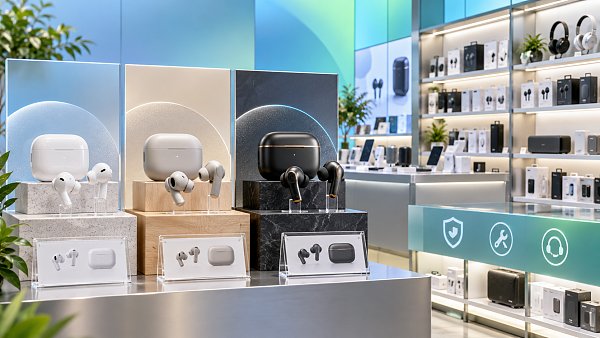
Why the entry tier remains important, and why it is difficult
The lower end of the TWS market is usually the volume engine. It attracts first-time buyers, replacement purchasers, gift buyers, and consumers who regard earbuds as a practical accessory rather than a long-term electronics purchase. In this tier, visual design, charging-case size, perceived battery convenience, and promotion visibility can influence purchase decisions as much as codec support or driver specifications.
However, low retail pricing is not a simple route to scale. Freight, platform fees, promotional subsidies, distributor margins, returns, and warranty handling can consume a large share of the available margin. A seller that sets pricing from factory cost alone can underestimate the operational cost of the Vietnamese market. The weakest point is often not the earbud itself, but the complete ownership experience: a case that does not charge consistently, confusing pairing instructions, poorly fitted tips, or a replacement process that feels harder than the original purchase.
For this tier, product simplification is usually more valuable than an overlong specification list. Reliable basic pairing, clear battery indicators, durable charging contacts, stable call performance, and packaging in appropriate local language can create a stronger offer than an attempt to imitate premium features at an unsustainable cost. Claims around sound quality or noise reduction should also be precise. Overpromising creates negative reviews quickly when a product is used in noisy streets, shared offices, or on public transport.
Price tiers should be managed as different propositions
Instead of treating price as a straight ladder from cheap to expensive, suppliers should define what changes materially at each level. Buyers accept a higher price when they can recognize the improvement in normal use. Extra features that are difficult to demonstrate, or that work inconsistently, do not create durable differentiation.
The mid-range is often where market entry becomes more defensible. It gives brands enough room to improve the parts consumers experience directly, while remaining accessible to buyers who are upgrading from basic models. But “mid-range” should not become a label for an unfocused product. A model positioned for calls should be tested around voice clarity and wind or street noise. A model positioned for entertainment should emphasize fit, synchronization, and sound balance. A product trying to be the strongest option for every use case can be difficult to explain at the point of sale.
Premium TWS earbuds require more than premium hardware. Retail staff, product pages, packaging, and support channels must communicate why the device costs more. Buyers need a credible answer to practical questions: Will it pair easily with my phone? Are replacement tips available? Can I get help if one earbud stops working? Is the warranty process local and understandable? The premium segment is therefore as much a service and distribution decision as a product decision.
Online marketplaces create reach, but not automatic brand control
Vietnam’s digital retail environment gives earbuds brands a fast way to test demand, introduce color variants, and compare response to different product bundles. Marketplace listings can surface search behavior and review patterns quickly. They are especially useful for testing whether consumers respond more strongly to a battery-led message, gaming mode, compact design, call clarity, or a recognizable compatibility claim.
Yet marketplaces can make a product appear commoditized. Search results place branded models next to lookalikes, unbranded imports, older inventory, and listings that use broad feature language without delivering the same experience. Price-led discount events can build sales volume while training consumers to wait for promotions. Unauthorized sellers can further complicate pricing and make authentic warranty coverage harder to communicate.
A sustainable marketplace approach needs more than a product upload. It needs controlled product information, consistent imagery, visible authenticity signals, realistic feature descriptions, and a process for monitoring duplicate or misleading listings. Review management also deserves attention. Repeated complaints about one issue, such as pairing instability or weak microphones, are product intelligence. Treating reviews only as a marketing metric misses a direct source of quality and positioning feedback.
Physical retail remains important when the product needs trust
Earbuds are compact, but they are not fully self-explanatory. Fit is personal, microphone performance is hard to judge from a specification table, and packaging cannot always convey whether an audio product feels durable. Physical channels help resolve these concerns. Electronics stores, mobile-phone retailers, telecom-related outlets, and local accessory shops can make a model easier to compare, demonstrate, and purchase immediately.
Each physical channel serves a different role. Large electronics retail can support recognizable brands, standardized displays, and better warranty confidence. Mobile-phone retailers can sell earbuds as an accessory at the moment a customer purchases or upgrades a handset. Smaller accessory outlets can provide geographical reach and impulse purchasing, but they require tighter control of product presentation, inventory rotation, and sales incentives.
The common mistake is assuming broad physical distribution is always better. A wide network without staff knowledge, replenishment discipline, or reliable warranty routing can damage a brand more than a focused launch. Start with channels where the product’s proposition can be demonstrated. For example, a call-focused model benefits from staff who can explain microphone use and multipoint behavior; a fashion-led entry model may need a visible display near phone accessories rather than a technical demonstration counter.
Omnichannel execution is an operating model, not a channel checklist
Consumers may discover an earbud model in a short video, compare prices on a marketplace, ask questions through social messaging, and complete the purchase in a store. The reverse can also happen: a shopper tries a display unit, then searches online for reviews and available colors. The commercial task is to make these steps reinforce each other rather than create mistrust.
That requires consistent naming, images, color information, warranty terms, and product bundles across channels. A model with different specifications in different listings will create confusion even when the product is identical. Channel-specific promotions can be useful, but large unexplained price gaps can undermine retail partners and encourage grey-market reselling. Inventory planning also matters. A launch campaign that drives shoppers to unavailable stock can reduce confidence faster than a smaller, coordinated release.
Supplier evaluation should focus on failure points consumers can feel
Product selection often starts with a feature matrix. It should also start with a failure matrix. Wireless earbuds have multiple components that can affect the ownership experience: earbud batteries, charging-case batteries, contacts, hinges, microphones, touch controls, firmware behavior, ear-tip fit, and charging cables. A supplier may offer an attractive sample while lacking consistency across production batches or a clear process for handling defective units.
Before committing to a range, assess how the supplier manages firmware versions, serial or batch traceability, replacement components, packaging revisions, and quality claims. Ask what happens when a single earbud fails, when cases arrive with charging problems, or when a new phone software version affects pairing behavior. These are not edge cases from a market-entry perspective. They are the issues that shape retailer confidence and online reviews.
Battery and charging communication require particular care. Consumers interpret battery claims as a promise about daily use, but actual usage changes with call time, volume, codec choice, and noise-control settings. Clear, restrained messaging is better than an aggressive claim that creates disappointment. The same principle applies to water resistance, gaming latency, and environmental noise reduction. Describe the use condition, not an idealized result.
What a practical Vietnam entry plan should validate first
Before expanding a catalog, validate one or two models that represent distinct jobs rather than a full range with minor differences. One could be a durable value model designed for dependable everyday use; another could provide an obvious upgrade through calls, comfort, or noise control. This creates clearer pricing boundaries and reduces inventory complexity.
- Define the primary purchase reason for each model in a single sentence that a retail worker can repeat accurately.
- Check that packaging, quick-start instructions, and support materials make pairing and warranty access easy to understand.
- Set channel rules for authorized sellers, minimum presentation standards, and promotion timing before stock is distributed widely.
- Build a return and replacement workflow that protects the end customer without leaving retail partners to absorb avoidable costs.
- Review customer feedback by defect type, use case, and channel instead of treating all negative reviews as the same issue.
Market intelligence platforms such as TradeNexus Pro can be useful at this stage because the decision is broader than finding an earbud factory. Smart-electronics entry requires a view of supplier credibility, channel structure, product differentiation, and the operating risks that sit between a factory quotation and a repeatable retail business. The most useful research connects those layers rather than evaluating each one in isolation.
Where the opportunity is most credible
The Vietnamese TWS earbuds market favors brands and distributors that can make a simple promise and fulfill it consistently. Entry-level demand remains commercially relevant, but it rewards operational discipline more than feature excess. The mid-range offers room for meaningful upgrades when they are visible in normal use. Premium models can succeed where local availability, authentic products, and after-sales care support the price.
A low factory cost, a large product catalog, or a high specification count does not by itself establish a market position. The stronger question is whether the selected model solves a recognizable use problem, can be explained clearly in its chosen channel, and has enough margin and support structure to survive returns, promotions, and competition. That is the basis for assessing TWS earbuds in Vietnam as a durable retail opportunity rather than a short-lived accessory trend.
Get weekly intelligence in your inbox.
No noise. No sponsored content. Pure intelligence.
 Oct 08, 2026How Digital Health Improves Diagnostic Accuracy and Workflow in Clinical LabsHow Digital Health Improves Diagnostic Accuracy and Workflow in Clinical Labs
 Oct 07, 2026Selecting Voice Picking Systems for German Warehouses: Integration, Languages and ROISelecting Voice Picking Systems for German Warehouses: Integration, Languages and ROI
 Oct 06, 2026How to Choose Last Mile Dispatch Software for On-Time Delivery at ScaleHow to Choose Last Mile Dispatch Software for On-Time Delivery at Scale
 Oct 05, 2026Vietnam’s Consumer Electronics Market: Demand Shifts and Sourcing OpportunitiesVietnam’s Consumer Electronics Market: Demand Shifts and Sourcing Opportunities
 Oct 04, 2026Digital Health Investment Priorities for Providers: Improving Access, Outcomes, and EfficiencyDigital Health Investment Priorities for Providers: Improving Access, Outcomes, and Efficiency
 Oct 03, 2026How to Specify an FR4 Custom PCB Board for High-Voltage and High-Heat DesignsHow to Specify an FR4 Custom PCB Board for High-Voltage and High-Heat Designs
 Oct 02, 2026ERP Software Market Intelligence: Adoption, Pricing, and Vendor Signals to WatchERP Software Market Intelligence: Adoption, Pricing, and Vendor Signals to Watch
 Oct 01, 2026How to Select Calibrated Temperature Data Loggers for GMP Cold Storage MonitoringHow to Select Calibrated Temperature Data Loggers for GMP Cold Storage Monitoring
 Sep 30, 2026Custom Molded Rubber Pricing: What Drives Unit Cost and Tooling Fees?Custom Molded Rubber Pricing: What Drives Unit Cost and Tooling Fees?
 Sep 29, 2026How to Evaluate Energy Management Software Vendors for Multi-Site OperationsHow to Evaluate Energy Management Software Vendors for Multi-Site Operations
 Sep 28, 2026How to Select a DIN Rail Smart Meter for Multi-Circuit Energy MonitoringHow to Select a DIN Rail Smart Meter for Multi-Circuit Energy Monitoring
 Sep 27, 2026TWS Earbuds in Vietnam: Demand Drivers, Price Tiers, and Retail Channel OpportunitiesTWS Earbuds in Vietnam: Demand Drivers, Price Tiers, and Retail Channel Opportunities
 Sep 26, 2026How UAE Clinics Can Qualify a Smart Glucometer Supplier for Accuracy and ComplianceHow UAE Clinics Can Qualify a Smart Glucometer Supplier for Accuracy and Compliance
 Sep 25, 2026Buying Aesthetic Lasers in the USA: FDA Status, Wavelengths, and Service SupportBuying Aesthetic Lasers in the USA: FDA Status, Wavelengths, and Service Support
 Sep 24, 2026Laser Cutting Brass Sheet: How to Prevent Burrs and Heat Marks on Thin PartsLaser Cutting Brass Sheet: How to Prevent Burrs and Heat Marks on Thin Parts
 Sep 23, 2026How to Choose Lightweight ANC Headphones for Comfortable All-Day TravelHow to Choose Lightweight ANC Headphones for Comfortable All-Day Travel
 Sep 22, 2026IPX5 TWS Bluetooth Earbuds: What Protection Do They Offer for Workouts?IPX5 TWS Bluetooth Earbuds: What Protection Do They Offer for Workouts?
 Sep 21, 2026What to Look for in a Grid Integration Company for Utility-Scale Solar ProjectsWhat to Look for in a Grid Integration Company for Utility-Scale Solar Projects
 Sep 20, 2026Microgrid Controller Pricing: What Drives Cost in Commercial Energy Projects?Microgrid Controller Pricing: What Drives Cost in Commercial Energy Projects?
 Sep 19, 2026How to Choose a GaN Charger for Laptops Without Compromising Power or PortabilityHow to Choose a GaN Charger for Laptops Without Compromising Power or Portability
 Sep 18, 2026Floating Solar Farm Costs: CAPEX, OPEX, and the Site Factors That Shape ROIFloating Solar Farm Costs: CAPEX, OPEX, and the Site Factors That Shape ROI
 Sep 17, 2026Drone Delivery Solutions for Last-Mile Routes: Site, Payload, and Range PlanningDrone Delivery Solutions for Last-Mile Routes: Site, Payload, and Range Planning
 Sep 16, 2026When Low-Volume Electronics Manufacturing Makes More Sense Than Mass ProductionWhen Low-Volume Electronics Manufacturing Makes More Sense Than Mass Production
 Sep 15, 2026Wholesale WiFi Smart Switches: What Buyers Should Verify Before OrderingWholesale WiFi Smart Switches: What Buyers Should Verify Before Ordering
 Sep 14, 2026How to Select IoT Sensors for Reliable Monitoring in Harsh Industrial EnvironmentsHow to Select IoT Sensors for Reliable Monitoring in Harsh Industrial Environments
 Sep 13, 2026How Procurement Teams Can Improve Supplier Reliability With Supply Chain VisibilityHow Procurement Teams Can Improve Supplier Reliability With Supply Chain Visibility
 Sep 12, 2026Smart Manufacturing Trends 2026: What Leaders Should Prioritize for ROISmart Manufacturing Trends 2026: What Leaders Should Prioritize for ROI



























