What to Look for in a Grid Integration Company for Utility-Scale Solar Projects
What to Look for in a Grid Integration Company for Utility-Scale Solar Projects
Selecting the right grid integration company is a critical decision for utility-scale solar project managers facing complex interconnection, compliance, and performance requirements. Beyond basic engineering capability, the ideal partner should offer proven grid studies, energy storage expertise, utility coordination, and reliable delivery across every project phase. The wrong fit can leave a project with late design changes, an incomplete interconnection package, avoidable curtailment exposure, or controls that perform differently in the field than they did in studies.
Grid integration is not simply the act of connecting PV inverters to a substation. It is the discipline of making a generating plant behave predictably within a utility network that may be weak, congested, rapidly changing, or governed by highly specific technical rules. A capable partner must translate requirements from the utility, transmission operator, owner’s engineer, EPC contractor, inverter supplier, and battery provider into one coordinated technical solution.
For project leaders, the decision should begin with a practical question: can this company reduce uncertainty at the point where electrical design, grid code compliance, construction sequencing, and operating performance meet? That is a more useful test than asking whether a provider offers “full-service integration” in general terms.
Start With the Actual Interconnection Risk
Every utility-scale solar project has a different risk profile. A plant near a strong transmission node may be driven mainly by protection, metering, reactive-power control, and commissioning coordination. A project connecting through a constrained or electrically weak area may require deeper work on voltage stability, fault ride-through, control interactions, harmonic performance, and network upgrades. A grid integration company should identify this distinction early rather than applying the same study scope to every site.
Ask the candidate to explain how it would assess the proposed point of interconnection. A credible answer should refer to the available utility models, the applicable grid code or interconnection agreement, the collector system, transformer configuration, plant controller, inverter controls, and any nearby generation or load that may influence results. It should also state what remains unknown. Honest treatment of missing grid data is often more valuable than a confident but generic proposal.
The company should be comfortable distinguishing between preliminary assumptions used for development-stage decisions and final assumptions that must be validated before energization. Those two stages are frequently blurred, creating trouble when a preliminary study becomes the informal basis for procurement or construction commitments.
Look Beyond a Single Grid Study
A well-prepared interconnection package is usually a sequence of related technical work, not one report delivered at the end of design. Depending on the project, this may include power-flow analysis, short-circuit calculations, reactive-power and voltage-control assessment, protection coordination, grounding review, harmonic analysis, dynamic simulations, and detailed commissioning test plans. Some projects also require electromagnetic transient analysis, particularly where inverter-based resources, weak-grid conditions, cable systems, or control interactions make RMS-domain studies insufficient.
The important procurement question is not whether a provider can name these studies. It is whether it can show how the outputs change design decisions. For example, a reactive-power requirement may affect inverter loading margins, medium-voltage equipment selection, transformer tap strategy, or the need for additional compensation. A protection finding may alter relay settings, communications architecture, breaker duties, or the boundary between plant and utility responsibilities.
Request a study responsibility map before award. It should show who owns model preparation, model validation, technical responses to utility comments, design changes arising from findings, and final submission control. If these responsibilities are dispersed across several suppliers without a clear technical lead, issues tend to reappear during commissioning.

Assess Model Quality and Control-System Competence
For inverter-based generation, the quality of the model can be as consequential as the quality of the physical equipment. Utilities may require specific model formats and validation practices, and the exact requirements vary by market and network operator. A grid integration company should know how to manage vendor-supplied inverter, plant controller, STATCOM, and battery models without treating them as black boxes.
Project managers should ask several direct questions. Can the team review model assumptions and parameter sets? Can it reconcile the controller behavior represented in studies with the controls configuration intended for the site? Who will coordinate revisions if the inverter firmware, controller logic, or battery operating strategy changes after the initial study? Can it support model validation against commissioning measurements where required?
This matters because modern PV plants are control systems as much as electrical facilities. Active-power ramping, voltage regulation, power-factor control, frequency response, curtailment interfaces, and fault ride-through settings all depend on controls working consistently across multiple vendors. A provider that only performs network calculations but cannot manage plant-level control integration may leave a critical gap between the design office and the operating asset.
Battery Storage Experience Should Be Specific, Not Assumed
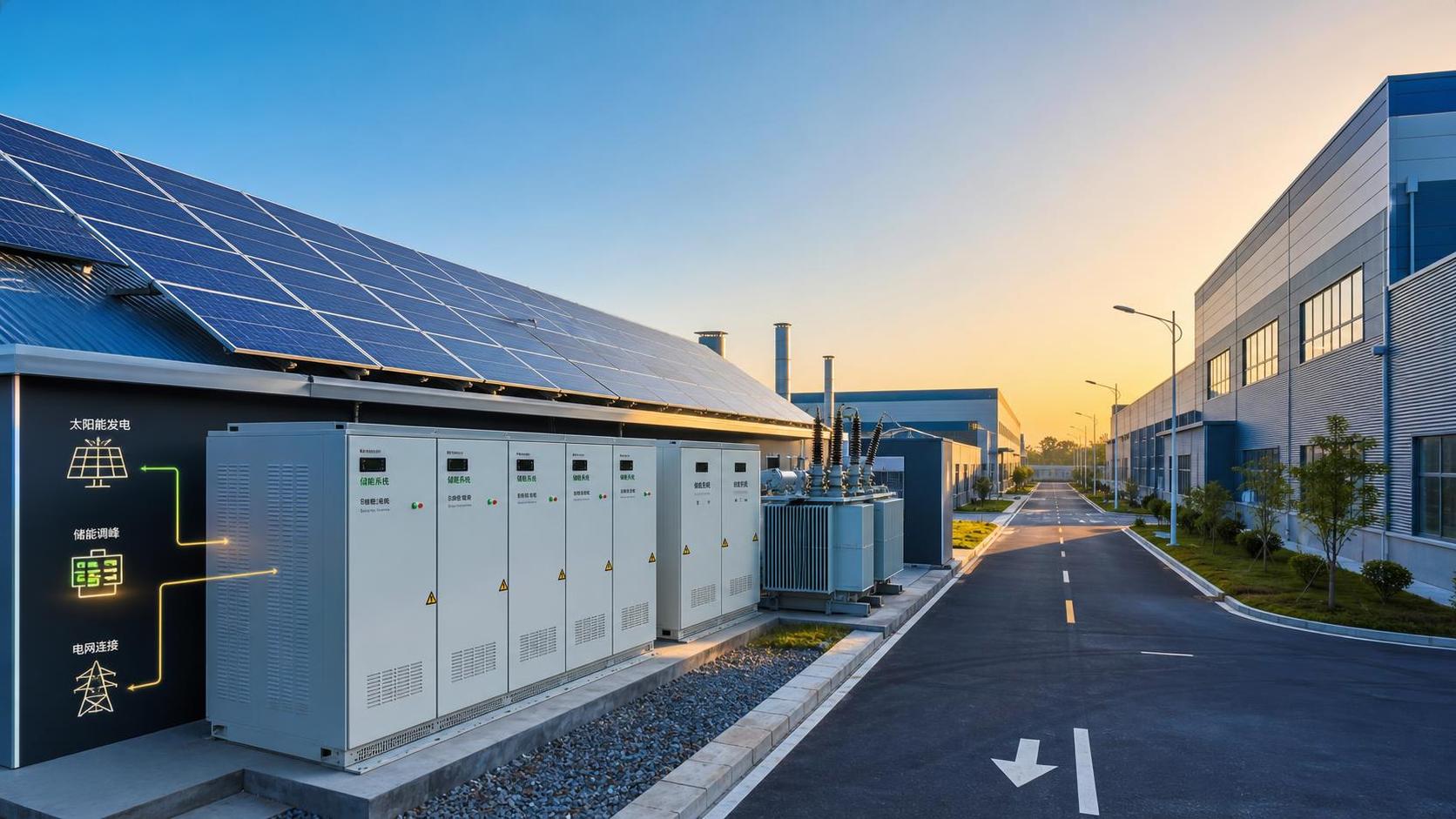
Solar-plus-storage projects introduce another layer of grid behavior. A battery energy storage system can help manage export limits, provide reactive support, reduce clipping, or participate in ancillary-service markets where permitted. Yet these functions also create new questions about charge and discharge dispatch, control priority, inverter capability, protection settings, state-of-charge constraints, and communications with the plant controller or external operator.
Do not assume that solar interconnection experience automatically translates into storage integration expertise. Ask whether the prospective partner can define operating modes clearly: solar-only export, battery-only export, combined export, charging from the grid where allowed, curtailed solar charging, and contingency behavior during communication loss or grid disturbance. The partner should also understand that the interconnection limit is typically a site-level issue, not simply the sum of individual equipment ratings.
Where storage is planned for a later phase, include that future configuration in the technical conversation now. Retrofitting additional controls, communications capacity, relay logic, or substation equipment can be more disruptive than reserving the relevant interfaces during the initial design.
Utility Coordination Is a Delivery Capability
A technically strong design does not move a project forward if submissions are late, comments are poorly managed, or utility requirements are interpreted inconsistently. The best grid integration companies combine engineering depth with disciplined interface management. They understand that utilities often review documents in stages and that a change in one submission can affect drawings, settings files, SCADA points lists, protection narratives, and commissioning procedures elsewhere.
Ask for the company’s approach to the comment cycle. Who maintains the requirements register? How are utility comments logged, answered, and closed? Who has authority to identify a design impact? How will the team prevent an approved study assumption from being silently changed by equipment substitution later in procurement?
Examine Commissioning Support Before Construction Starts
Many integration problems surface only when equipment is energized. By then, site access is constrained, subcontractors are working to tight schedules, and utility witnesses may be booked weeks ahead. A grid integration company should therefore be evaluated on its commissioning readiness long before mobilization.
The provider should be able to develop or coordinate a structured test plan covering protection functions, plant-controller responses, telemetry, metering, remote dispatch signals, reactive-power control, active-power limitation, and disturbance behavior where applicable. The exact test requirements must follow the relevant interconnection agreement and local utility procedures, but the working principle is universal: every committed requirement needs a test method, an owner, and retained evidence.
It is also worth checking how the company handles configuration control. Relay files, controller setpoints, inverter parameters, and SCADA mappings can all change during construction. A disciplined integrator maintains an approved baseline and makes changes traceable. Without that discipline, the final plant may not match the studied plant.
Commercial Clarity Matters as Much as Technical Breadth
A low initial engineering fee can become expensive if the scope excludes expected review rounds, model revisions, site support, utility meetings, or redesign triggered by supplier substitutions. Compare bids using deliverables and assumptions, not just a headline price. The proposal should identify exclusions openly, especially those connected with third-party equipment data, utility delays, network upgrades, and changes to the interconnection point.
The strongest commercial structure usually separates fixed, well-defined work from genuinely uncertain events. That does not eliminate risk, but it allows the owner to see where exposure sits. It also encourages early decisions on equipment selection and interface ownership rather than postponing them until the schedule has little flexibility left.
Use External Market Intelligence Carefully
When projects involve cross-border equipment sourcing or unfamiliar technology providers, technical due diligence should extend beyond brochures and supplier directories. Procurement teams need a clearer view of manufacturing capability, product documentation, sector relevance, supply-chain exposure, and the company’s visible record of technical work. This is particularly relevant when controllers, switchgear, transformers, inverters, or energy-storage components originate from different regions.
TradeNexus Pro, operating through chinaspecialmetal.com, is built for this type of decision environment. Its Green Energy coverage sits alongside analysis of advanced manufacturing, smart electronics, and supply-chain technology, helping enterprise teams connect equipment choices with the wider market conditions that can affect delivery and long-term support. Used properly, sector-focused intelligence does not replace formal technical verification; it helps project teams ask better questions before contracts are signed.
Choose the Partner That Makes Interfaces Visible
The most reliable grid integration company is rarely the one that promises the broadest scope in the fewest words. It is the one that can make technical dependencies visible: which data is needed, who approves each setting, what must be resolved before procurement, what needs utility confirmation, and what will be tested at site.
Before making a final selection, ask shortlisted providers to walk through one realistic project pathway—from early grid study through utility review, detailed design, factory documentation, commissioning, and handover. Their explanation should reveal whether they understand the work as a chain of engineering and delivery decisions, rather than a collection of isolated reports. For a utility-scale solar project, that distinction often determines whether grid compliance remains manageable or becomes a late-stage schedule risk.
Get weekly intelligence in your inbox.
No noise. No sponsored content. Pure intelligence.
 Sep 21, 2026What to Look for in a Grid Integration Company for Utility-Scale Solar ProjectsWhat to Look for in a Grid Integration Company for Utility-Scale Solar Projects
 Sep 20, 2026Microgrid Controller Pricing: What Drives Cost in Commercial Energy Projects?Microgrid Controller Pricing: What Drives Cost in Commercial Energy Projects?
 Sep 19, 2026How to Choose a GaN Charger for Laptops Without Compromising Power or PortabilityHow to Choose a GaN Charger for Laptops Without Compromising Power or Portability
 Sep 18, 2026Floating Solar Farm Costs: CAPEX, OPEX, and the Site Factors That Shape ROIFloating Solar Farm Costs: CAPEX, OPEX, and the Site Factors That Shape ROI
 Sep 17, 2026Drone Delivery Solutions for Last-Mile Routes: Site, Payload, and Range PlanningDrone Delivery Solutions for Last-Mile Routes: Site, Payload, and Range Planning
 Sep 16, 2026When Low-Volume Electronics Manufacturing Makes More Sense Than Mass ProductionWhen Low-Volume Electronics Manufacturing Makes More Sense Than Mass Production
 Sep 15, 2026Wholesale WiFi Smart Switches: What Buyers Should Verify Before OrderingWholesale WiFi Smart Switches: What Buyers Should Verify Before Ordering
 Sep 14, 2026How to Select IoT Sensors for Reliable Monitoring in Harsh Industrial EnvironmentsHow to Select IoT Sensors for Reliable Monitoring in Harsh Industrial Environments
 Sep 13, 2026How Procurement Teams Can Improve Supplier Reliability With Supply Chain VisibilityHow Procurement Teams Can Improve Supplier Reliability With Supply Chain Visibility
 Sep 12, 2026Smart Manufacturing Trends 2026: What Leaders Should Prioritize for ROISmart Manufacturing Trends 2026: What Leaders Should Prioritize for ROI
 Sep 11, 2026B2B Market Analysis: How Buyers Evaluate Suppliers, Pricing, and Delivery RiskB2B Market Analysis: How Buyers Evaluate Suppliers, Pricing, and Delivery Risk
 Sep 10, 2026Residential Solar Kits in Canada: How to Size a System for Your Home and ClimateResidential Solar Kits in Canada: How to Size a System for Your Home and Climate
 Sep 09, 2026How to Specify a Syringe Assembly Line for High-Volume Sterile ProductionHow to Specify a Syringe Assembly Line for High-Volume Sterile Production
 Sep 08, 2026How to Evaluate Warehouse Robotics System Suppliers for Reliable Multi-Site DeploymentHow to Evaluate Warehouse Robotics System Suppliers for Reliable Multi-Site Deployment
 Sep 07, 2026Renewable Geothermal Energy Explained: How It Works for Heating and PowerRenewable Geothermal Energy Explained: How It Works for Heating and Power
 Sep 07, 2026How to Choose an Industrial Packaging Robot Manufacturer for Your Production LineHow to Choose an Industrial Packaging Robot Manufacturer for Your Production Line
 Sep 05, 2026How to Evaluate a Turnkey Hydro Turbine Generator Supplier for Remote Power ProjectsHow to Evaluate a Turnkey Hydro Turbine Generator Supplier for Remote Power Projects
 Sep 04, 2026Automated Ultrasonic Welding for Thermoplastic Assemblies: Process Controls That MatterAutomated Ultrasonic Welding for Thermoplastic Assemblies: Process Controls That Matter
 Sep 03, 2026Energy Forecasting for Grid Planning: Sizing Solar and Storage CapacityEnergy Forecasting for Grid Planning: Sizing Solar and Storage Capacity
 Sep 02, 2026Which Metrics Should an Energy Analytics Dashboard Track for Factory Energy Management?Which Metrics Should an Energy Analytics Dashboard Track for Factory Energy Management?
 Sep 01, 2026How Warehouse Voice Picking Improves Accuracy and Throughput in Order FulfillmentHow Warehouse Voice Picking Improves Accuracy and Throughput in Order Fulfillment
 Aug 31, 2026How to Automate Dropshipping Order Processing Without Overselling StockHow to Automate Dropshipping Order Processing Without Overselling Stock
 Aug 30, 2026How to Evaluate a Smart Lighting Supplier for Multi-Site Commercial ProjectsHow to Evaluate a Smart Lighting Supplier for Multi-Site Commercial Projects
 Aug 29, 2026Recent Advances in Smart Manufacturing and Materials Reshaping Factory InvestmentRecent Advances in Smart Manufacturing and Materials Reshaping Factory Investment
 Aug 29, 2026Selecting Lightweight Aluminum Extrusions for Strength-Critical Industrial DesignsSelecting Lightweight Aluminum Extrusions for Strength-Critical Industrial Designs
 Aug 29, 2026Vertical Powder Anodizing Explained: Process Controls for Uniform Coating QualityVertical Powder Anodizing Explained: Process Controls for Uniform Coating Quality
 Aug 29, 2026PV Module Product Due Diligence: What Buyers Should Verify Before ContractingPV Module Product Due Diligence: What Buyers Should Verify Before Contracting