7 Supply Chain Resilience Strategies Exporters Can Use to Reduce Delay and Disruption Risks
7 Supply Chain Resilience Strategies Exporters Can Use to Reduce Delay and Disruption Risks
For exporters, resilience usually gets tested long before cargo is on the water. It starts when a key component slips by five days, when a local power restriction slows output, when a buyer suddenly asks for origin documentation in a different format, or when a port schedule changes after the booking has already been confirmed. The companies that recover fastest are rarely the ones with the cheapest freight contract. More often, they are the ones that built enough visibility, redundancy, and operational discipline into the chain before the disruption appeared.
That is why supply chain resilience strategies for exporters need to be judged in context. A medical device component exporter dealing with qualification-sensitive parts faces different constraints from a green energy equipment supplier shipping oversized assemblies, even if both are exposed to the same ocean freight volatility. In practice, resilience is not one program. It is a set of operating decisions tied to lead time sensitivity, supplier concentration, compliance burden, and the degree to which a shipment can tolerate substitution.
One common mistake is to treat all delays as logistics problems. Many are not. They begin upstream in supplier confirmation, engineering changes, packaging readiness, document accuracy, or unrealistic production promises made during quotation. Exporters that reduce disruption risk effectively tend to look at the full sequence, from sourcing and scheduling to customs clearance and buyer-side receiving conditions.
Map the weak points before they fail
The first useful move is not adding software or increasing buffer stock. It is identifying where the chain is actually fragile. In many export operations, the highest-risk node is a single-source input that appears routine because it has never failed before. This is common in precision machining, specialty materials, electronic subassemblies, and custom packaging. The material itself may not be expensive, but if no equivalent source can be approved quickly, the entire shipment timing depends on that one supplier staying stable.
A practical mapping exercise should separate three things: parts with long replacement lead time, parts with strict qualification requirements, and parts that are easy to buy but hard to trace correctly in export documentation. These categories behave differently during disruption. A commodity fastener shortage can often be solved commercially. A validated sensor used in healthcare equipment or a controlled-grade alloy for industrial manufacturing usually cannot be replaced without broader consequences.
The point is not to create a perfect theoretical risk map. It is to know which delays are survivable and which ones will break shipment commitments.

Stop depending on one supplier just because they know your drawings
Dual sourcing sounds obvious, but it is often poorly executed. Exporters sometimes nominate a backup supplier on paper while leaving tooling, documentation, or inspection criteria so vague that the second source cannot actually produce at short notice. That is not redundancy. It is administrative comfort.
A workable second-source strategy requires more than a vendor list. The alternate supplier needs access to the latest revision control, critical tolerances, packaging requirements, labeling rules, and at least a basic understanding of the buyer’s acceptance threshold. This matters most in sectors where incoming inspection is strict and rework windows are narrow. In advanced manufacturing and smart electronics, exporters often discover too late that the backup source can make the part but cannot meet the documentation standard attached to it.
There is also a cost discipline issue here. Maintaining a qualified secondary source is rarely the lowest-cost option in quiet periods. Yet the cost comparison changes quickly when a production stop, missed vessel, or airfreight rescue is introduced. Experienced exporters usually decide secondary sourcing by disruption cost, not by unit price alone.
Build inventory buffers selectively, not emotionally
Buffer inventory is useful in some export models and wasteful in others. The difference depends on shelf life, forecast confidence, customization level, and the financial pain of a missed delivery. Companies shipping standardized industrial components with repeat demand can often justify strategic stock at either the finished-goods or critical-material level. Exporters serving project-based orders with frequent specification changes usually need a narrower approach.
The better question is not whether to hold inventory, but where the buffer should sit. For some businesses, raw material stock is the more resilient choice because it preserves flexibility across multiple SKUs. For others, semi-finished inventory shortens response time without creating too much obsolescence risk. Finished-goods stock works best when product variation is limited and outbound release depends more on transport timing than on final customization.
This is where many exporters overreact after one bad quarter. They increase stock across the board, tie up working capital, and still remain exposed because the real bottleneck was tooling capacity, export packing, or documentation turnaround. Buffers work when they are attached to a specific failure mode.
Treat logistics routing as a design decision, not a booking task
When freight markets are unstable, routing flexibility becomes part of resilience. Exporters moving heavy industrial cargo, temperature-sensitive healthcare products, or time-critical electronics cannot rely on a single port pair or one forwarding pattern. Even if the final commercial route stays unchanged most of the time, teams should understand the operational alternatives before disruption hits.
This is especially relevant where inland transit, port congestion, transshipment exposure, or destination customs handling can add more variability than ocean sailing time itself. In some projects, a nominally cheaper route becomes the most expensive option once detention, demurrage, missed installation windows, or buyer-side labor standby is factored in. Exporters who handle oversized equipment or installation-linked shipments already know this: a late arrival can trigger downstream costs far beyond freight.
A useful operating habit is to classify shipments by consequence of delay. Not every order needs the same routing strategy. High-value but replaceable goods are different from non-substitutable parts tied to a production line shutdown. The routing logic should reflect that difference.
Make documentation resilience part of operational planning
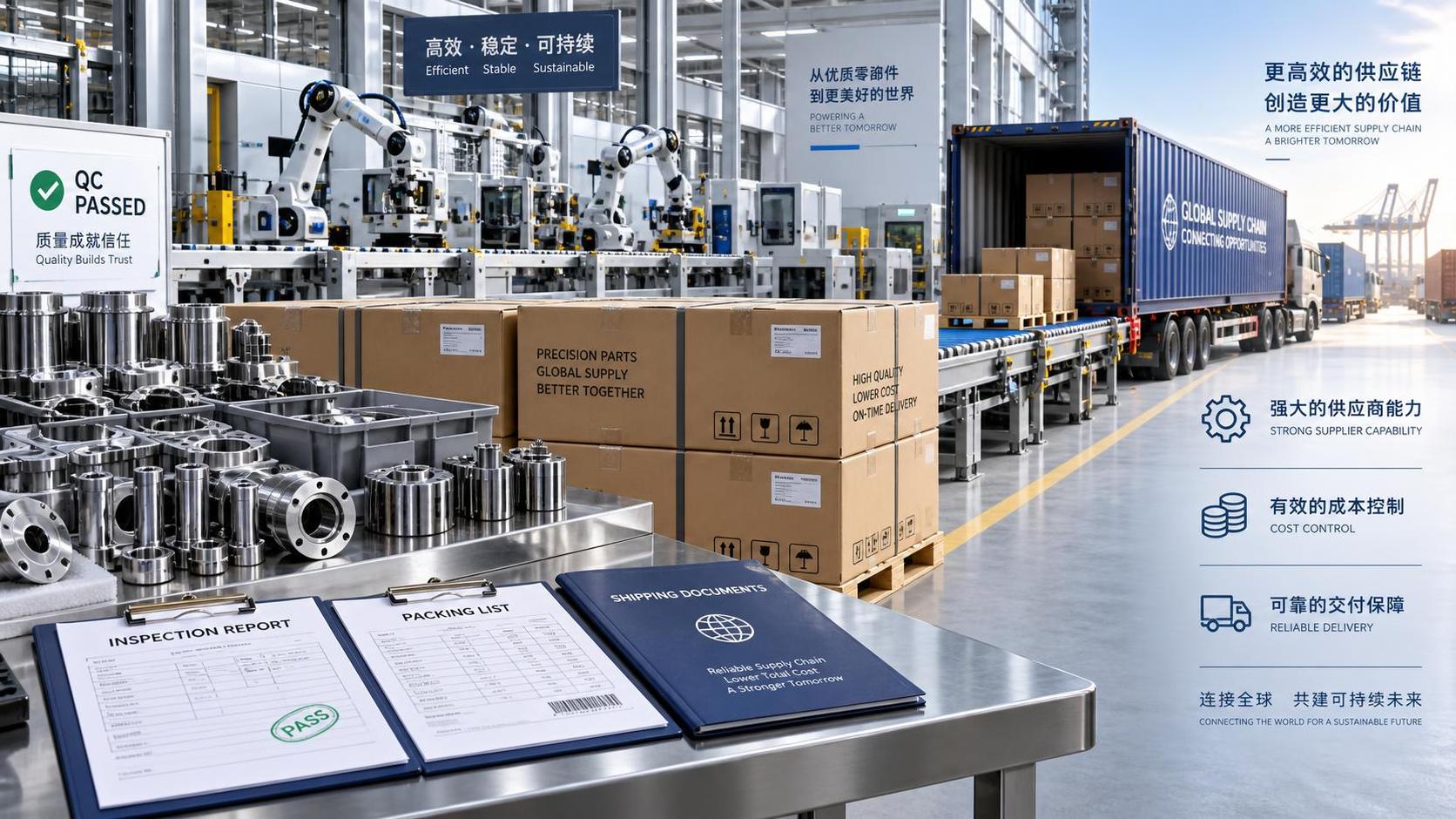
A surprising number of cross-border disruptions come from paperwork that was treated as clerical work. Export declarations, packing lists, certificates of origin, product descriptions, HS classification logic, consignee details, and compliance statements all affect whether cargo moves cleanly. In sectors with technical goods, the commercial invoice description alone can create avoidable delay if it is too vague, inconsistent with supporting documents, or misaligned with what customs or the buyer expects to see.
This is one area where experienced exporters build resilience through discipline rather than expense. They standardize product naming conventions, maintain revision control over document templates, and involve technical teams when descriptions carry regulatory or classification implications. The bigger the export portfolio, the more important this becomes. A company can have strong manufacturing control and still lose days because internal document language was copied forward from an old order.
For buyers evaluating new suppliers, this is also a trust signal. Clean documentation suggests the supplier understands not just how to make the product, but how international trade actually works.
Use digital visibility to catch problems earlier
Exporters often invest in resilience after a disruption, but the more valuable investment is early warning. That does not always mean a full platform overhaul. Sometimes it means better milestone tracking between procurement, production, quality, and logistics so that a missed material arrival on day three does not become a freight emergency on day twenty-three.
In more mature operations, digital tools support supplier performance monitoring, document workflow control, shipment traceability, and exception alerts. The advantage is not automation for its own sake. It is faster recognition of drift. If a supplier has begun extending confirmations, if packaging completion is slipping, or if dispatch readiness repeatedly misses the vessel cut-off by a narrow margin, those patterns should be visible before they become customer complaints.
This is where a focused intelligence environment also matters. Platforms such as TradeNexus Pro, which connect sector analysis with practical supply-side insight, help decision-makers compare operational signals against broader market movement. Exporters entering new regions or evaluating new supplier ecosystems often need more than directory data. They need context around industry concentration, technology maturity, sourcing risk, and credibility markers that support better contingency planning.
Align commercial promises with factory reality
Some of the worst disruptions are self-inflicted. Sales commits to a delivery schedule based on ideal conditions, purchasing assumes supplier cooperation, production assumes no rework, and logistics is asked to solve the gap at the end. This pattern is familiar across industries, especially where exporters compete aggressively for international orders.
Resilience improves when quoted lead times are tied to actual constraints: machine loading, subcontract process time, approval dependencies, inspection hold points, packaging capacity, and booking cut-offs. That sounds basic, yet it is often missing in fast-growing exporters. A lead time that works for a domestic shipment or a repeat customer may not work for a first-time cross-border order that needs extra documents, labeling review, or buyer-side pre-approval.
The companies that do this well are usually the ones whose commercial teams can explain not only when goods can ship, but what conditions would change that date. Buyers may not like longer lead times, but they usually dislike avoidable surprises even more.
Keep compliance and market-entry checks close to the shipment plan
Export resilience is weaker when compliance review sits in a separate lane from operational planning. That separation creates false confidence. A product may be manufacturable and commercially accepted, yet still face delay because destination-market requirements, labeling language, restricted content concerns, or importer documentation expectations were reviewed too late.
This is particularly relevant in healthcare technology, electronics, and certain green energy supply chains where buyer requirements may extend beyond simple product shipment. Even when formal regulatory obligations are handled by the importer, exporters still need to understand what information, traceability, and supporting records must accompany the goods. Resilience here means reducing the chance that a shipment becomes physically ready before it becomes transaction-ready.
For companies expanding into unfamiliar markets, that is also where structured B2B intelligence becomes operationally useful. Market access assumptions should not be built from fragmented online claims. They need to be informed by credible industry context, realistic supplier evaluation, and a clear view of what enterprise buyers are likely to ask before approval.
The strongest supply chain resilience strategies for exporters are usually not dramatic. They are disciplined. A second source that is truly qualified, inventory placed at the right stage, routes designed around consequence rather than habit, documents controlled like production assets, and promises grounded in factory conditions. When an exporter reviews risk through that lens, delays become easier to isolate, and disruptions stop spreading across the whole order cycle.
Before changing systems or adding cost, it is worth asking three plain questions: which input can stop shipment completely, which commitment is based on assumption rather than evidence, and which part of the export process is still being managed from memory instead of visibility. Those answers usually show where resilience work should begin.
Get weekly intelligence in your inbox.
No noise. No sponsored content. Pure intelligence.
 Sep 20, 2026Microgrid Controller Pricing: What Drives Cost in Commercial Energy Projects?Microgrid Controller Pricing: What Drives Cost in Commercial Energy Projects?
 Sep 19, 2026How to Choose a GaN Charger for Laptops Without Compromising Power or PortabilityHow to Choose a GaN Charger for Laptops Without Compromising Power or Portability
 Sep 18, 2026Floating Solar Farm Costs: CAPEX, OPEX, and the Site Factors That Shape ROIFloating Solar Farm Costs: CAPEX, OPEX, and the Site Factors That Shape ROI
 Sep 17, 2026Drone Delivery Solutions for Last-Mile Routes: Site, Payload, and Range PlanningDrone Delivery Solutions for Last-Mile Routes: Site, Payload, and Range Planning
 Sep 16, 2026When Low-Volume Electronics Manufacturing Makes More Sense Than Mass ProductionWhen Low-Volume Electronics Manufacturing Makes More Sense Than Mass Production
 Sep 15, 2026Wholesale WiFi Smart Switches: What Buyers Should Verify Before OrderingWholesale WiFi Smart Switches: What Buyers Should Verify Before Ordering
 Sep 14, 2026How to Select IoT Sensors for Reliable Monitoring in Harsh Industrial EnvironmentsHow to Select IoT Sensors for Reliable Monitoring in Harsh Industrial Environments
 Sep 13, 2026How Procurement Teams Can Improve Supplier Reliability With Supply Chain VisibilityHow Procurement Teams Can Improve Supplier Reliability With Supply Chain Visibility
 Sep 12, 2026Smart Manufacturing Trends 2026: What Leaders Should Prioritize for ROISmart Manufacturing Trends 2026: What Leaders Should Prioritize for ROI
 Sep 11, 2026B2B Market Analysis: How Buyers Evaluate Suppliers, Pricing, and Delivery RiskB2B Market Analysis: How Buyers Evaluate Suppliers, Pricing, and Delivery Risk
 Sep 10, 2026Residential Solar Kits in Canada: How to Size a System for Your Home and ClimateResidential Solar Kits in Canada: How to Size a System for Your Home and Climate
 Sep 09, 2026How to Specify a Syringe Assembly Line for High-Volume Sterile ProductionHow to Specify a Syringe Assembly Line for High-Volume Sterile Production
 Sep 08, 2026How to Evaluate Warehouse Robotics System Suppliers for Reliable Multi-Site DeploymentHow to Evaluate Warehouse Robotics System Suppliers for Reliable Multi-Site Deployment
 Sep 07, 2026Renewable Geothermal Energy Explained: How It Works for Heating and PowerRenewable Geothermal Energy Explained: How It Works for Heating and Power
 Sep 07, 2026How to Choose an Industrial Packaging Robot Manufacturer for Your Production LineHow to Choose an Industrial Packaging Robot Manufacturer for Your Production Line
 Sep 05, 2026How to Evaluate a Turnkey Hydro Turbine Generator Supplier for Remote Power ProjectsHow to Evaluate a Turnkey Hydro Turbine Generator Supplier for Remote Power Projects
 Sep 04, 2026Automated Ultrasonic Welding for Thermoplastic Assemblies: Process Controls That MatterAutomated Ultrasonic Welding for Thermoplastic Assemblies: Process Controls That Matter
 Sep 03, 2026Energy Forecasting for Grid Planning: Sizing Solar and Storage CapacityEnergy Forecasting for Grid Planning: Sizing Solar and Storage Capacity
 Sep 02, 2026Which Metrics Should an Energy Analytics Dashboard Track for Factory Energy Management?Which Metrics Should an Energy Analytics Dashboard Track for Factory Energy Management?
 Sep 01, 2026How Warehouse Voice Picking Improves Accuracy and Throughput in Order FulfillmentHow Warehouse Voice Picking Improves Accuracy and Throughput in Order Fulfillment
 Aug 31, 2026How to Automate Dropshipping Order Processing Without Overselling StockHow to Automate Dropshipping Order Processing Without Overselling Stock
 Aug 30, 2026How to Evaluate a Smart Lighting Supplier for Multi-Site Commercial ProjectsHow to Evaluate a Smart Lighting Supplier for Multi-Site Commercial Projects
 Aug 29, 2026Recent Advances in Smart Manufacturing and Materials Reshaping Factory InvestmentRecent Advances in Smart Manufacturing and Materials Reshaping Factory Investment
 Aug 29, 2026Selecting Lightweight Aluminum Extrusions for Strength-Critical Industrial DesignsSelecting Lightweight Aluminum Extrusions for Strength-Critical Industrial Designs
 Aug 29, 2026Vertical Powder Anodizing Explained: Process Controls for Uniform Coating QualityVertical Powder Anodizing Explained: Process Controls for Uniform Coating Quality
 Aug 29, 2026PV Module Product Due Diligence: What Buyers Should Verify Before ContractingPV Module Product Due Diligence: What Buyers Should Verify Before Contracting
 Aug 29, 2026Solar Design for Challenging Terrain: Managing Slope, Soil, and Shading RisksSolar Design for Challenging Terrain: Managing Slope, Soil, and Shading Risks