What Is Driving Solar Power Growth in Southeast Asia's Commercial and Utility Markets?
What Is Driving Solar Power Growth in Southeast Asia's Commercial and Utility Markets?
The most useful way to understand solar power Southeast Asia is not to treat it as a single market story. Commercial rooftops in Vietnam, industrial estates in Thailand, utility-scale parks in the Philippines, and hybrid projects in Indonesia do not move for exactly the same reasons. They share a direction, but the drivers differ by tariff structure, grid conditions, land availability, financing access, and how urgently power users need more predictable electricity costs.
That matters because “solar growth” can be misunderstood as a simple result of falling panel prices. Module costs have helped, certainly, but they do not explain why some markets accelerate after years of hesitation, why commercial and industrial buyers are becoming more active, or why developers remain selective even in countries with strong sunlight. The real story is a combination of demand pressure, policy evolution, grid economics, corporate procurement behavior, and the practical maturity of project delivery across the region.
For companies evaluating entry, sourcing, partnerships, or investment timing, the key question is less “Is solar growing?” and more “What kind of growth is happening, and who can actually capture value from it?” In Southeast Asia, that distinction is now more important than the headline narrative.
Why demand is pulling the market forward
Electricity demand across Southeast Asia has been rising alongside industrialization, urban expansion, digital infrastructure buildout, and the growth of export-oriented manufacturing. That creates pressure on existing generation systems, especially in markets where fossil fuel imports, transmission constraints, or reserve margins already shape power costs. Solar is attractive in this environment because it can be deployed at different scales: on factory roofs, on unused industrial land, or through large utility-connected projects that support national capacity targets.
Commercial buyers are particularly sensitive to one issue: power price visibility. Manufacturers and logistics operators do not look at solar only as a climate decision. They also look at it as a hedge against tariff volatility, fuel-linked cost exposure, and long-term uncertainty in operating expenses. In sectors where margins are under pressure, even partial control over daytime electricity costs changes the economics of a site.
Utility markets are being pulled by a different version of the same problem. Governments and power planners need additional capacity, but they also need options that can be built faster than many conventional plants and that reduce exposure to imported fuel markets. Solar is not a complete answer on its own because dispatchability still matters, yet it has become one of the fastest ways to add incremental generation volume when paired with grid upgrades, storage planning, or diversified generation portfolios.
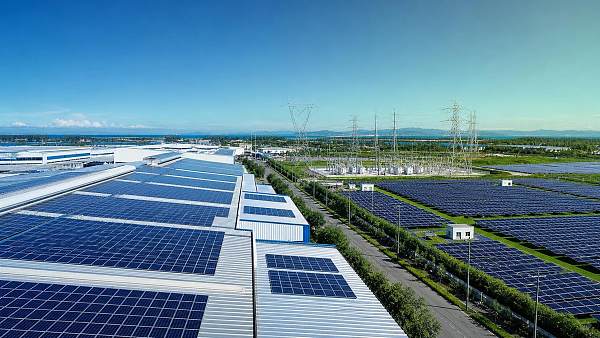
Commercial and industrial solar is no longer a niche procurement choice
A decade ago, many corporate solar discussions in the region were still framed around pilot projects, sustainability branding, or isolated facilities with unusually high power costs. That has changed. For export manufacturers, data centers, industrial parks, food processors, and electronics producers, renewable electricity is increasingly tied to customer requirements, financing expectations, and internal decarbonization targets.
This is where global supply chain pressure becomes a genuine market driver. Multinational buyers now ask more detailed questions about emissions intensity, renewable sourcing, and energy management. They may not require on-site solar in every case, but they increasingly expect suppliers to show a credible energy transition pathway. In Southeast Asia, where many factories serve overseas brands, that turns solar from a voluntary upgrade into part of commercial positioning.
Rooftop and behind-the-meter systems fit that need well because they are visible, operationally understandable, and often easier to align with site-level procurement decisions. The buyer does not need to wait for a national generation mix to change. They can act at facility level, sometimes through self-financing, sometimes through third-party ownership or power purchase structures, depending on local rules.
A common misunderstanding is that commercial adoption depends only on sunshine and available roof space. In practice, contract structure matters just as much. Credit quality of the offtaker, lease terms for the building, interconnection rules, net metering treatment, and curtailment risk can decide whether a project is bankable. This is why two factories with similar load profiles may face very different outcomes.
Policy support is helping, but not always in the obvious way
When people discuss policy support, they often focus narrowly on subsidies or feed-in tariffs. Those have been important in some markets and at certain stages, but they are only one part of the picture. In Southeast Asia, policy progress often matters more through market access clarity than through direct incentives. Developers and industrial users need to know whether private power purchase agreements are workable, how surplus generation is treated, what licensing is required, and whether grid connection procedures are realistic.
Some countries in the region have moved in cycles: strong project momentum under one framework, followed by pauses linked to tariff revisions, permitting bottlenecks, or transmission limitations. That pattern can mislead outside observers. A temporary slowdown does not necessarily mean demand has disappeared. It may simply indicate that the next phase of growth requires a different regulatory model, especially as markets move from incentive-led development to more competitive procurement or private-sector contracting.
For business evaluators, policy should be read less as a headline and more as a bankability environment. The practical questions are straightforward: Can projects reach financial close? Can developers connect and deliver on schedule? Can corporate buyers sign long-term arrangements with enforceable economics? Those answers matter more than broad declarations about renewable ambition.
Utility-scale growth is being shaped by land, grids, and procurement discipline
At utility scale, solar in Southeast Asia is expanding because it increasingly competes as a serious capacity option, but that growth is uneven. High irradiation alone does not create a strong utility market. Large projects need suitable land, transmission access, predictable tendering or offtake arrangements, and confidence that power can be absorbed without excessive curtailment.
This is where market quality starts to matter more than market excitement. A country can announce ambitious renewable goals, but if transmission expansion lags, project pipelines may crowd into the same connection zones. If land acquisition is fragmented or politically sensitive, development timelines stretch. If procurement rules shift late in the process, cost of capital rises. These are not secondary details. They shape who actually wins in the utility segment.
Developers that succeed in the region tend to be those that can manage local execution complexity as well as equipment sourcing. Engineering capability, permitting fluency, local partnerships, and understanding of grid studies often matter as much as module selection. In that sense, utility-scale solar in Southeast Asia is no longer just an equipment market. It is an execution market.
Technology costs are lower, but financing and system design still decide outcomes
Lower photovoltaic module prices, better inverter performance, and broader EPC experience have improved project economics across the region. But it would be too simplistic to say cheaper technology automatically means faster deployment. In commercial projects, financing terms and customer credit can outweigh marginal equipment savings. In utility projects, the weighted cost of capital, interconnection expenses, and land-related costs may define competitiveness more than module procurement alone.
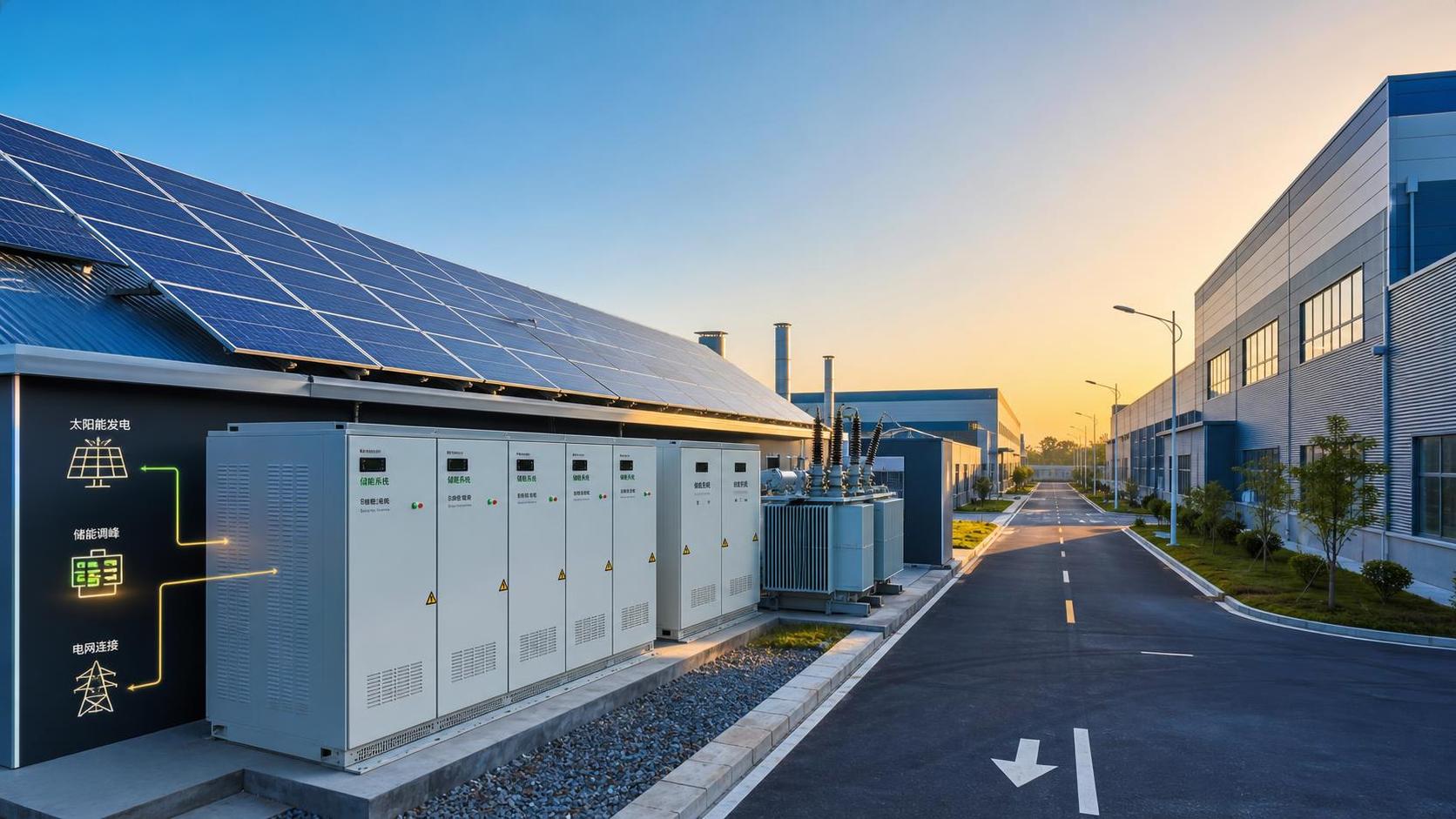
There is also a practical design shift underway. More buyers are evaluating solar together with storage, energy management systems, or load optimization rather than as a standalone asset. That does not mean batteries are always required. It means the conversation is maturing. Instead of asking only how many panels can fit, buyers are asking how solar interacts with peak load, backup resilience, production schedules, and power quality requirements.
This is especially relevant in Southeast Asia because climate conditions are harsh on equipment. Heat, humidity, salt exposure in coastal zones, and seasonal rainfall patterns affect design choices, maintenance planning, and performance assumptions. Serious procurement teams do not evaluate projects on nameplate capacity alone. They look at yield expectations, degradation assumptions, O&M capability, warranty credibility, and whether the system is engineered for local operating conditions.
What business evaluators should actually examine
When assessing solar power Southeast Asia, broad optimism is not enough. The more reliable approach is to separate visible growth from investable growth. A few filters are especially useful:
- Power market structure: regulated tariff environment, self-consumption rules, private PPA viability, and treatment of excess generation.
- Grid readiness: interconnection timelines, congestion risk, and the local likelihood of curtailment.
- Offtaker quality: tenant stability, industrial load consistency, and bankability of long-term payment obligations.
- Project delivery depth: whether the market has credible EPC, O&M, legal, and permitting capabilities at the required scale.
- Supply chain resilience: module sourcing strategy, inverter support, spare parts access, and exposure to import restrictions or logistics delays.
- Decarbonization pull: whether export-linked industries in that market face external pressure to adopt renewable electricity.
These filters help explain why some opportunities that look impressive in presentations are difficult in execution, while quieter sub-markets can be commercially attractive. A medium-sized commercial solar market with clear contracting rules may offer better near-term value than a larger pipeline burdened by policy uncertainty.
The next phase will reward selectivity, not just enthusiasm
Solar growth in Southeast Asia’s commercial and utility segments is being driven by a real structural shift: more electricity demand, stronger pressure to decarbonize production, wider acceptance of solar as a mainstream procurement tool, and improving economics across the value chain. But the region is not moving as one uniform solar market. It is a patchwork of energy systems, regulatory models, and buyer needs.
That is why the best market judgments tend to be specific. Which country? Which customer class? Which contracting mechanism? Which grid conditions? Which industrial cluster? Those questions reveal more than generic growth forecasts. For companies entering the market, sourcing partners, or evaluating project pipelines, the commercial edge now comes from reading local execution conditions with the same care used to read regional demand trends.
In practical terms, solar power Southeast Asia is expanding because it now sits at the intersection of energy security, manufacturing competitiveness, corporate procurement change, and infrastructure investment. The opportunity is substantial. The discipline lies in knowing where growth is merely visible and where it is durable enough to build a business around.
Get weekly intelligence in your inbox.
No noise. No sponsored content. Pure intelligence.
 Sep 20, 2026Microgrid Controller Pricing: What Drives Cost in Commercial Energy Projects?Microgrid Controller Pricing: What Drives Cost in Commercial Energy Projects?
 Sep 19, 2026How to Choose a GaN Charger for Laptops Without Compromising Power or PortabilityHow to Choose a GaN Charger for Laptops Without Compromising Power or Portability
 Sep 18, 2026Floating Solar Farm Costs: CAPEX, OPEX, and the Site Factors That Shape ROIFloating Solar Farm Costs: CAPEX, OPEX, and the Site Factors That Shape ROI
 Sep 17, 2026Drone Delivery Solutions for Last-Mile Routes: Site, Payload, and Range PlanningDrone Delivery Solutions for Last-Mile Routes: Site, Payload, and Range Planning
 Sep 16, 2026When Low-Volume Electronics Manufacturing Makes More Sense Than Mass ProductionWhen Low-Volume Electronics Manufacturing Makes More Sense Than Mass Production
 Sep 15, 2026Wholesale WiFi Smart Switches: What Buyers Should Verify Before OrderingWholesale WiFi Smart Switches: What Buyers Should Verify Before Ordering
 Sep 14, 2026How to Select IoT Sensors for Reliable Monitoring in Harsh Industrial EnvironmentsHow to Select IoT Sensors for Reliable Monitoring in Harsh Industrial Environments
 Sep 13, 2026How Procurement Teams Can Improve Supplier Reliability With Supply Chain VisibilityHow Procurement Teams Can Improve Supplier Reliability With Supply Chain Visibility
 Sep 12, 2026Smart Manufacturing Trends 2026: What Leaders Should Prioritize for ROISmart Manufacturing Trends 2026: What Leaders Should Prioritize for ROI
 Sep 11, 2026B2B Market Analysis: How Buyers Evaluate Suppliers, Pricing, and Delivery RiskB2B Market Analysis: How Buyers Evaluate Suppliers, Pricing, and Delivery Risk
 Sep 10, 2026Residential Solar Kits in Canada: How to Size a System for Your Home and ClimateResidential Solar Kits in Canada: How to Size a System for Your Home and Climate
 Sep 09, 2026How to Specify a Syringe Assembly Line for High-Volume Sterile ProductionHow to Specify a Syringe Assembly Line for High-Volume Sterile Production
 Sep 08, 2026How to Evaluate Warehouse Robotics System Suppliers for Reliable Multi-Site DeploymentHow to Evaluate Warehouse Robotics System Suppliers for Reliable Multi-Site Deployment
 Sep 07, 2026Renewable Geothermal Energy Explained: How It Works for Heating and PowerRenewable Geothermal Energy Explained: How It Works for Heating and Power
 Sep 07, 2026How to Choose an Industrial Packaging Robot Manufacturer for Your Production LineHow to Choose an Industrial Packaging Robot Manufacturer for Your Production Line
 Sep 05, 2026How to Evaluate a Turnkey Hydro Turbine Generator Supplier for Remote Power ProjectsHow to Evaluate a Turnkey Hydro Turbine Generator Supplier for Remote Power Projects
 Sep 04, 2026Automated Ultrasonic Welding for Thermoplastic Assemblies: Process Controls That MatterAutomated Ultrasonic Welding for Thermoplastic Assemblies: Process Controls That Matter
 Sep 03, 2026Energy Forecasting for Grid Planning: Sizing Solar and Storage CapacityEnergy Forecasting for Grid Planning: Sizing Solar and Storage Capacity
 Sep 02, 2026Which Metrics Should an Energy Analytics Dashboard Track for Factory Energy Management?Which Metrics Should an Energy Analytics Dashboard Track for Factory Energy Management?
 Sep 01, 2026How Warehouse Voice Picking Improves Accuracy and Throughput in Order FulfillmentHow Warehouse Voice Picking Improves Accuracy and Throughput in Order Fulfillment
 Aug 31, 2026How to Automate Dropshipping Order Processing Without Overselling StockHow to Automate Dropshipping Order Processing Without Overselling Stock
 Aug 30, 2026How to Evaluate a Smart Lighting Supplier for Multi-Site Commercial ProjectsHow to Evaluate a Smart Lighting Supplier for Multi-Site Commercial Projects
 Aug 29, 2026Recent Advances in Smart Manufacturing and Materials Reshaping Factory InvestmentRecent Advances in Smart Manufacturing and Materials Reshaping Factory Investment
 Aug 29, 2026Selecting Lightweight Aluminum Extrusions for Strength-Critical Industrial DesignsSelecting Lightweight Aluminum Extrusions for Strength-Critical Industrial Designs
 Aug 29, 2026Vertical Powder Anodizing Explained: Process Controls for Uniform Coating QualityVertical Powder Anodizing Explained: Process Controls for Uniform Coating Quality
 Aug 29, 2026PV Module Product Due Diligence: What Buyers Should Verify Before ContractingPV Module Product Due Diligence: What Buyers Should Verify Before Contracting
 Aug 29, 2026Solar Design for Challenging Terrain: Managing Slope, Soil, and Shading RisksSolar Design for Challenging Terrain: Managing Slope, Soil, and Shading Risks