CBP Requires UL 9540A Reports for Battery Storage Imports
Starting August 1, 2026, a new U.S. customs compliance requirement will directly affect battery storage products declared under HS code 8507.60. Following an emergency import compliance alert issued by U.S. Customs and Border Protection (CBP) on July 29, import shipments in this category must be accompanied by a UL 9540A thermal runaway propagation assessment report issued by an NRTL-certified body. For exporters, importers, and supply chain teams handling lithium-ion battery energy storage products, this is worth close attention because it changes the documentation threshold tied to customs clearance and market access.
What the new customs requirement confirms
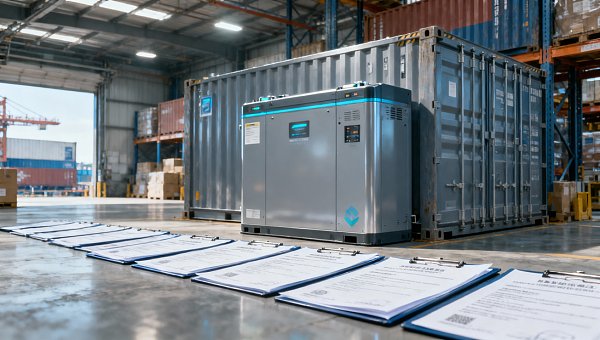
According to the information provided, CBP issued an emergency import compliance reminder on July 29, 2026. The requirement takes effect on August 1, 2026 and applies to Battery Storage products declared for entry under HS code 8507.60, identified here as lithium-ion battery energy storage systems.
The confirmed requirement is that these imports must include a UL 9540A thermal runaway propagation assessment report issued by an NRTL-certified institution. The information provided also states that non-compliant goods may face detention, return, or additional inspection during the customs process.
The same notice indicates that the change will directly affect customs clearance timing and market access qualification for Chinese exporters shipping these products into the United States.
Where the operational pressure is likely to appear
Export shipments facing a stricter document threshold
From an industry perspective, exporters of lithium-ion battery storage products are the first group likely to feel the impact because the rule is tied directly to import declaration and customs release. The practical issue is not only whether a product can be shipped, but whether the shipment file is complete at the point of entry. What deserves closer attention is the linkage between HS classification, product scope, and the supporting report required for clearance.
Import and procurement teams under delivery pressure
Importers and procurement teams may also be affected because the new requirement can influence shipment readiness, receiving schedules, and supplier qualification review. Analysis shows that purchase decisions for affected battery storage products may now require earlier confirmation of whether a valid UL 9540A report from an NRTL-certified body is available before dispatch, not only at the contract or technical review stage.
Testing and certification-related service providers drawn into the transaction cycle
Certification-related firms and testing service participants are likely to become more closely tied to shipment timing. Observably, once customs treatment is linked to a specific report, testing and certification documentation moves from a technical support role into a trade execution role. For companies in the supply chain, this raises the importance of report availability, document consistency, and review readiness before goods are presented for entry.
Logistics and compliance service partners facing higher review sensitivity
Supply chain service providers, including customs-facing compliance teams, may need to pay closer attention to pre-clearance document checks for affected cargo. The main exposure lies in whether the declared product category, accompanying report, and shipment file can support timely processing, especially where delivery windows are tight or downstream installation schedules depend on customs release.
What companies should review now
Check whether current product files meet the new entry condition
Analysis shows that companies shipping under HS code 8507.60 should first verify whether the products they plan to export fall within the scope described in the notice and whether a UL 9540A report issued by an NRTL-certified body is already available for the shipment. Where the document is missing or incomplete, the trade risk may arise before the goods reach final delivery.
Revisit document control before shipment release
What deserves closer attention is the position of the required report within the broader shipment file. Exporters, importers, and brokers may need to review whether technical documents, compliance files, and customs submission materials are aligned closely enough to avoid delays, extra inspection, or disputes over admissibility.
Monitor how the requirement is expressed in ongoing transactions
Because the information provided does not include detailed enforcement language beyond the emergency compliance alert, it is more appropriate to understand this as an active compliance change with execution details still worth watching. Companies should therefore pay attention to how the requirement is reflected in purchase specifications, delivery conditions, and internal release procedures for affected battery storage products.
Prepare for downstream effects on lead time and handover commitments
Observably, any customs-facing document requirement can affect delivery sequencing when shipments are already close to departure or arrival. For that reason, companies involved in export planning, order fulfillment, and after-sales coordination should pay attention to whether existing schedules assume uninterrupted clearance and whether customer-facing commitments need additional compliance review checkpoints.
How this change should be interpreted at this stage
Analysis shows that this development is better understood as a concrete execution signal rather than a distant policy discussion. The effective date is immediate, the affected HS code is specified, and the required supporting report is identified clearly in the information provided. At the same time, it would be premature to treat every downstream market effect as settled fact, because the provided information does not include fuller detail on inspection practice, documentary review depth, or any subsequent interpretive guidance.
From an industry perspective, the most important point is that certification evidence is being tied more directly to import admissibility for the specified battery storage category. That makes this relevant not only for compliance teams, but also for procurement, contract management, shipment planning, and customer delivery coordination.
A compliance signal with immediate trade relevance
In practical terms, this update points to an already effective customs compliance change for battery storage products declared under HS code 8507.60. It is more appropriate to understand the notice as an immediate market-entry requirement with direct implications for clearance preparation, rather than as a general policy direction without operational effect.
At the same time, a measured reading remains necessary. The confirmed facts establish the document requirement and the potential customs consequences of non-compliance. The broader impact on transaction flow, supplier screening, and market response should still be observed through actual implementation, follow-up guidance, and feedback from affected trade participants.
Basis of this article and what still needs verification
This article is based on the user-provided news title, event date, and event summary. The confirmed factual basis used here is limited to the stated CBP emergency import compliance alert, its August 1, 2026 effective date, the affected HS code 8507.60, the requirement for a UL 9540A report issued by an NRTL-certified body, and the stated customs consequences for non-compliant goods.
For this type of development, commonly relevant source categories may include official notices, regulatory agency releases, customs or trade authority information, industry association updates, standards organization documents, and reporting by authoritative trade media. A specific official source link was not provided in the input, so the precise original publication and any later clarification still need ongoing verification.
What should continue to be monitored includes any further official wording, enforcement interpretation, certification handling expectations, changes in bid or procurement documents, and market feedback from companies implementing the requirement in actual export and import operations.
Get weekly intelligence in your inbox.
No noise. No sponsored content. Pure intelligence.
 Sep 15, 2026Wholesale WiFi Smart Switches: What Buyers Should Verify Before OrderingWholesale WiFi Smart Switches: What Buyers Should Verify Before Ordering
 Sep 14, 2026How to Select IoT Sensors for Reliable Monitoring in Harsh Industrial EnvironmentsHow to Select IoT Sensors for Reliable Monitoring in Harsh Industrial Environments
 Sep 13, 2026How Procurement Teams Can Improve Supplier Reliability With Supply Chain VisibilityHow Procurement Teams Can Improve Supplier Reliability With Supply Chain Visibility
 Sep 12, 2026Smart Manufacturing Trends 2026: What Leaders Should Prioritize for ROISmart Manufacturing Trends 2026: What Leaders Should Prioritize for ROI
 Sep 11, 2026B2B Market Analysis: How Buyers Evaluate Suppliers, Pricing, and Delivery RiskB2B Market Analysis: How Buyers Evaluate Suppliers, Pricing, and Delivery Risk
 Sep 10, 2026Residential Solar Kits in Canada: How to Size a System for Your Home and ClimateResidential Solar Kits in Canada: How to Size a System for Your Home and Climate
 Sep 09, 2026How to Specify a Syringe Assembly Line for High-Volume Sterile ProductionHow to Specify a Syringe Assembly Line for High-Volume Sterile Production
 Sep 08, 2026How to Evaluate Warehouse Robotics System Suppliers for Reliable Multi-Site DeploymentHow to Evaluate Warehouse Robotics System Suppliers for Reliable Multi-Site Deployment
 Sep 07, 2026Renewable Geothermal Energy Explained: How It Works for Heating and PowerRenewable Geothermal Energy Explained: How It Works for Heating and Power
 Sep 07, 2026How to Choose an Industrial Packaging Robot Manufacturer for Your Production LineHow to Choose an Industrial Packaging Robot Manufacturer for Your Production Line
 Sep 05, 2026How to Evaluate a Turnkey Hydro Turbine Generator Supplier for Remote Power ProjectsHow to Evaluate a Turnkey Hydro Turbine Generator Supplier for Remote Power Projects
 Sep 04, 2026Automated Ultrasonic Welding for Thermoplastic Assemblies: Process Controls That MatterAutomated Ultrasonic Welding for Thermoplastic Assemblies: Process Controls That Matter
 Sep 03, 2026Energy Forecasting for Grid Planning: Sizing Solar and Storage CapacityEnergy Forecasting for Grid Planning: Sizing Solar and Storage Capacity
 Sep 02, 2026Which Metrics Should an Energy Analytics Dashboard Track for Factory Energy Management?Which Metrics Should an Energy Analytics Dashboard Track for Factory Energy Management?
 Sep 01, 2026How Warehouse Voice Picking Improves Accuracy and Throughput in Order FulfillmentHow Warehouse Voice Picking Improves Accuracy and Throughput in Order Fulfillment
 Aug 31, 2026How to Automate Dropshipping Order Processing Without Overselling StockHow to Automate Dropshipping Order Processing Without Overselling Stock
 Aug 30, 2026How to Evaluate a Smart Lighting Supplier for Multi-Site Commercial ProjectsHow to Evaluate a Smart Lighting Supplier for Multi-Site Commercial Projects
 Aug 29, 2026Recent Advances in Smart Manufacturing and Materials Reshaping Factory InvestmentRecent Advances in Smart Manufacturing and Materials Reshaping Factory Investment
 Aug 29, 2026Selecting Lightweight Aluminum Extrusions for Strength-Critical Industrial DesignsSelecting Lightweight Aluminum Extrusions for Strength-Critical Industrial Designs
 Aug 29, 2026Vertical Powder Anodizing Explained: Process Controls for Uniform Coating QualityVertical Powder Anodizing Explained: Process Controls for Uniform Coating Quality
 Aug 29, 2026PV Module Product Due Diligence: What Buyers Should Verify Before ContractingPV Module Product Due Diligence: What Buyers Should Verify Before Contracting
 Aug 29, 2026Solar Design for Challenging Terrain: Managing Slope, Soil, and Shading RisksSolar Design for Challenging Terrain: Managing Slope, Soil, and Shading Risks
 Aug 29, 2026IS 16444 Smart Meter Requirements: Key Functions, Tests, and ComplianceIS 16444 Smart Meter Requirements: Key Functions, Tests, and Compliance
 Aug 29, 2026Rehabilitation Equipment Market Outlook: Demand Drivers and Growth SegmentsRehabilitation Equipment Market Outlook: Demand Drivers and Growth Segments
 Aug 29, 2026When Does Container Handling Automation Deliver ROI in Port Yard Operations?When Does Container Handling Automation Deliver ROI in Port Yard Operations?
 Aug 29, 2026Customs API Integration: A Practical Checklist for Automated Trade ComplianceCustoms API Integration: A Practical Checklist for Automated Trade Compliance
 Aug 29, 2026Returnable Packaging for Automotive: How to Cut Damage and Reverse Logistics CostsReturnable Packaging for Automotive: How to Cut Damage and Reverse Logistics Costs