
What Is Medical Imaging and Which Modalities Are Used for Different Diagnoses?
Medical imaging sits at the center of modern diagnosis because it turns hidden anatomy, tissue change, and physiological activity into visible clinical evidence.
That matters not only in hospitals, but across the wider healthcare technology chain, where equipment selection, software integration, compliance, and long-term service capability shape real business decisions.
For anyone tracking healthcare innovation through platforms such as TradeNexus Pro, medical imaging is a practical topic. It connects diagnostic accuracy, device manufacturing, digital health systems, and cross-border technology adoption.
What medical imaging actually means
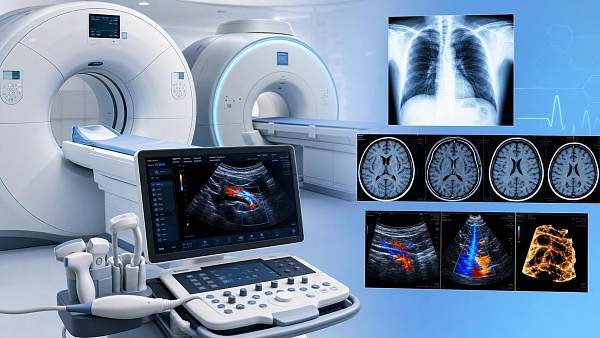
In simple terms, medical imaging refers to technologies that create visual representations of structures or functions inside the body.
Some methods show bones and organs. Others reveal blood flow, metabolic activity, or subtle changes in soft tissue that would otherwise be hard to assess.
The value of medical imaging is not the image alone. Its value comes from how that image supports diagnosis, treatment planning, intervention guidance, and follow-up.
A chest X-ray may confirm pneumonia. An MRI may clarify a ligament tear. A PET scan may help stage cancer and evaluate response to therapy.
That range explains why no single modality is sufficient for every case. Each system has its own strengths, limits, cost profile, and workflow implications.
Why the topic deserves attention now
Healthcare systems are under pressure to diagnose earlier, reduce unnecessary procedures, and manage growing patient volumes without compromising clinical quality.
Medical imaging supports that shift because it improves decision speed and reduces diagnostic uncertainty when used in the right setting.
There is also an industry dimension. Imaging equipment now depends on advanced sensors, precision components, image processing software, AI-assisted workflows, and secure data exchange.
This makes medical imaging relevant beyond clinical practice. It is tied to manufacturing capability, supply chain resilience, regulatory documentation, and service network quality.
From a market intelligence perspective, the sector is watched closely because adoption patterns often signal where investment, procurement, and healthcare digitization are moving next.
How the main modalities differ
The easiest way to understand medical imaging is to compare what each modality is designed to do best.
This comparison shows a basic rule. The right modality depends on the diagnostic question, not on which machine appears most advanced.
Which modalities are used for different diagnoses
In practice, medical imaging is chosen according to urgency, anatomy, suspected disease, and whether structural or functional detail is needed.
Bone and trauma assessment
X-ray remains the first step for fractures, dislocations, and many orthopedic evaluations because it is quick, affordable, and easy to access.
CT is often preferred when complex fractures, internal injuries, or emergency trauma mapping require more precise cross-sectional detail.
Chest and lung conditions
Chest X-ray is commonly used for pneumonia, fluid buildup, or initial respiratory assessment.
CT becomes more useful when clinicians need to investigate nodules, pulmonary embolism, interstitial lung disease, or detailed thoracic anatomy.
Brain and neurological diagnosis
CT is often the urgent choice for suspected stroke or head trauma because time matters and bleeding must be identified quickly.
MRI is typically stronger for evaluating tumors, multiple sclerosis, spinal cord problems, and subtle soft tissue changes in the brain.
Abdominal and pelvic imaging
Ultrasound is widely used for gallbladder disease, liver screening, kidney obstruction, pelvic organs, and pregnancy monitoring.
CT often follows when there is suspected appendicitis, internal infection, cancer spread, or unclear acute abdominal pain.
Cancer detection and follow-up
Medical imaging in oncology usually combines modalities rather than relying on one exam type.
CT and MRI define anatomy and tumor extent. PET or other nuclear medicine studies help evaluate metabolic activity, staging, and treatment response.
What makes one imaging choice better than another
The best imaging decision balances clinical fit with operational reality. That is especially relevant when comparing systems, suppliers, or technology roadmaps.
- Diagnostic objective: Is the question about anatomy, motion, blood flow, or metabolic activity?
- Speed requirement: Emergency care often prioritizes fast acquisition over maximum soft tissue detail.
- Patient factors: Age, pregnancy, implants, claustrophobia, and renal function can affect modality choice.
- Radiation exposure: This remains important for repeat studies and pediatric care.
- Workflow and serviceability: Downtime, training needs, and parts availability directly influence long-term value.
- Data integration: Imaging systems now need reliable connectivity with PACS, RIS, EHR, and AI tools.
In other words, medical imaging decisions should not be reduced to image resolution alone. Total performance depends on the whole diagnostic environment.
Why medical imaging matters in the broader industry chain
The healthcare technology sector no longer treats imaging as an isolated equipment category. It is part of a connected ecosystem.
Scanner hardware depends on advanced manufacturing and precision materials. Detectors, chips, and control systems connect it to smart electronics.
Image archives, reporting workflows, and interoperability bring in supply chain SaaS and health data infrastructure. Maintenance strategy adds another layer of risk management.
This is where a platform like TradeNexus Pro becomes relevant. Structured intelligence helps clarify which technologies are gaining traction, where supplier credibility is stronger, and which compliance issues need closer review.
For cross-border evaluation, medical imaging also raises practical questions about certification, installation support, training coverage, software updates, and local service continuity.
How to assess imaging solutions more effectively
A useful starting point is to define the diagnostic workload before comparing brands or specifications.
If the main demand is emergency triage, speed and uptime may matter more than advanced specialty features. If oncology is the focus, integration and multi-modality capability may carry more weight.
It also helps to separate headline claims from operational evidence.
- Review image quality in the context of target diagnoses.
- Check regulatory status for intended markets.
- Ask how software, storage, and cybersecurity are handled.
- Verify training, maintenance response, and spare parts planning.
- Consider total lifecycle cost, not only acquisition price.
That approach makes medical imaging easier to evaluate as a long-term capability rather than a one-time equipment purchase.
A practical next step for deeper evaluation
Understanding what medical imaging is starts with the modalities, but useful judgment comes from matching each modality to a real diagnostic purpose.
The next step is to map common diagnoses, workflow needs, integration requirements, and supplier evidence into one decision framework.
That is usually where stronger conclusions emerge: which imaging technology fits the clinical scenario, which service model is sustainable, and which market signals deserve closer attention.
For ongoing research, it is worth tracking not just modality performance, but also regulatory readiness, interoperability, and the credibility of the companies behind the systems.
Get weekly intelligence in your inbox.
No noise. No sponsored content. Pure intelligence.
 Oct 08, 2026How Digital Health Improves Diagnostic Accuracy and Workflow in Clinical LabsHow Digital Health Improves Diagnostic Accuracy and Workflow in Clinical Labs
 Oct 07, 2026Selecting Voice Picking Systems for German Warehouses: Integration, Languages and ROISelecting Voice Picking Systems for German Warehouses: Integration, Languages and ROI
 Oct 06, 2026How to Choose Last Mile Dispatch Software for On-Time Delivery at ScaleHow to Choose Last Mile Dispatch Software for On-Time Delivery at Scale
 Oct 05, 2026Vietnam’s Consumer Electronics Market: Demand Shifts and Sourcing OpportunitiesVietnam’s Consumer Electronics Market: Demand Shifts and Sourcing Opportunities
 Oct 04, 2026Digital Health Investment Priorities for Providers: Improving Access, Outcomes, and EfficiencyDigital Health Investment Priorities for Providers: Improving Access, Outcomes, and Efficiency
 Oct 03, 2026How to Specify an FR4 Custom PCB Board for High-Voltage and High-Heat DesignsHow to Specify an FR4 Custom PCB Board for High-Voltage and High-Heat Designs
 Oct 02, 2026ERP Software Market Intelligence: Adoption, Pricing, and Vendor Signals to WatchERP Software Market Intelligence: Adoption, Pricing, and Vendor Signals to Watch
 Oct 01, 2026How to Select Calibrated Temperature Data Loggers for GMP Cold Storage MonitoringHow to Select Calibrated Temperature Data Loggers for GMP Cold Storage Monitoring
 Sep 30, 2026Custom Molded Rubber Pricing: What Drives Unit Cost and Tooling Fees?Custom Molded Rubber Pricing: What Drives Unit Cost and Tooling Fees?
 Sep 29, 2026How to Evaluate Energy Management Software Vendors for Multi-Site OperationsHow to Evaluate Energy Management Software Vendors for Multi-Site Operations
 Sep 28, 2026How to Select a DIN Rail Smart Meter for Multi-Circuit Energy MonitoringHow to Select a DIN Rail Smart Meter for Multi-Circuit Energy Monitoring
 Sep 27, 2026TWS Earbuds in Vietnam: Demand Drivers, Price Tiers, and Retail Channel OpportunitiesTWS Earbuds in Vietnam: Demand Drivers, Price Tiers, and Retail Channel Opportunities
 Sep 26, 2026How UAE Clinics Can Qualify a Smart Glucometer Supplier for Accuracy and ComplianceHow UAE Clinics Can Qualify a Smart Glucometer Supplier for Accuracy and Compliance
 Sep 25, 2026Buying Aesthetic Lasers in the USA: FDA Status, Wavelengths, and Service SupportBuying Aesthetic Lasers in the USA: FDA Status, Wavelengths, and Service Support
 Sep 24, 2026Laser Cutting Brass Sheet: How to Prevent Burrs and Heat Marks on Thin PartsLaser Cutting Brass Sheet: How to Prevent Burrs and Heat Marks on Thin Parts
 Sep 23, 2026How to Choose Lightweight ANC Headphones for Comfortable All-Day TravelHow to Choose Lightweight ANC Headphones for Comfortable All-Day Travel
 Sep 22, 2026IPX5 TWS Bluetooth Earbuds: What Protection Do They Offer for Workouts?IPX5 TWS Bluetooth Earbuds: What Protection Do They Offer for Workouts?
 Sep 21, 2026What to Look for in a Grid Integration Company for Utility-Scale Solar ProjectsWhat to Look for in a Grid Integration Company for Utility-Scale Solar Projects
 Sep 20, 2026Microgrid Controller Pricing: What Drives Cost in Commercial Energy Projects?Microgrid Controller Pricing: What Drives Cost in Commercial Energy Projects?
 Sep 19, 2026How to Choose a GaN Charger for Laptops Without Compromising Power or PortabilityHow to Choose a GaN Charger for Laptops Without Compromising Power or Portability
 Sep 18, 2026Floating Solar Farm Costs: CAPEX, OPEX, and the Site Factors That Shape ROIFloating Solar Farm Costs: CAPEX, OPEX, and the Site Factors That Shape ROI
 Sep 17, 2026Drone Delivery Solutions for Last-Mile Routes: Site, Payload, and Range PlanningDrone Delivery Solutions for Last-Mile Routes: Site, Payload, and Range Planning
 Sep 16, 2026When Low-Volume Electronics Manufacturing Makes More Sense Than Mass ProductionWhen Low-Volume Electronics Manufacturing Makes More Sense Than Mass Production
 Sep 15, 2026Wholesale WiFi Smart Switches: What Buyers Should Verify Before OrderingWholesale WiFi Smart Switches: What Buyers Should Verify Before Ordering
 Sep 14, 2026How to Select IoT Sensors for Reliable Monitoring in Harsh Industrial EnvironmentsHow to Select IoT Sensors for Reliable Monitoring in Harsh Industrial Environments
 Sep 13, 2026How Procurement Teams Can Improve Supplier Reliability With Supply Chain VisibilityHow Procurement Teams Can Improve Supplier Reliability With Supply Chain Visibility
 Sep 12, 2026Smart Manufacturing Trends 2026: What Leaders Should Prioritize for ROISmart Manufacturing Trends 2026: What Leaders Should Prioritize for ROI



























