
Custom Metal Fabrication in the USA: How to Compare Shops, Capabilities, and Lead Times
Custom Metal Fabrication in the USA: How to Compare Shops, Capabilities, and Lead Times
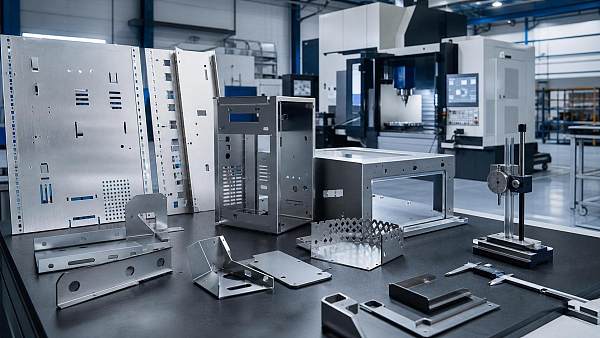
Choosing the right partner for custom metal fabrication USA projects can directly affect cost, quality, compliance, and delivery reliability.
For procurement teams, comparing shops goes far beyond pricing.
It requires a clear view of process capabilities, material knowledge, certifications, capacity, and realistic lead times.
That is especially true when part complexity, tolerances, and delivery windows leave little room for supplier error.
This guide breaks down how to compare U.S. fabrication shops in a practical, decision-ready way.
Start with the real scope of the job
Before requesting quotes, define what the project actually demands.
Many sourcing mistakes happen because buyers compare shops before defining the manufacturing challenge.
A custom metal fabrication USA supplier that fits a simple bracket order may fail on a welded enclosure or medical frame.
In practical terms, build your comparison around five variables:
- Material type, thickness, and grade
- Part geometry and tolerance requirements
- Secondary operations and finishing needs
- Order volume, forecast, and release schedule
- Compliance, traceability, and documentation expectations
Once those points are clear, supplier comparison becomes much more objective.
It also reduces the chance of choosing a shop that looks competitive only on paper.
Compare process capabilities, not just equipment lists
A long machine list does not automatically mean strong capability.
The better question is whether the shop repeatedly produces parts like yours at the required quality level.
For custom metal fabrication USA sourcing, evaluate the full manufacturing path.
Core processes to verify
- Laser cutting, plasma cutting, or waterjet cutting
- CNC punching and precision bending
- MIG, TIG, spot, or robotic welding
- Machining, tapping, countersinking, and hardware insertion
- Powder coating, anodizing, plating, or passivation
- Assembly, kitting, packaging, and labeling
More importantly, ask where work is performed.
Some shops cut and form in-house but outsource welding, finishing, or inspection.
That can still work, but it changes lead time risk and quality control responsibility.
A reliable custom metal fabrication USA partner should explain this flow clearly.
Check material expertise and industry fit
Material knowledge matters as much as machine capability.
Stainless steel, aluminum, carbon steel, copper, and specialty alloys behave differently during cutting, bending, and welding.
A shop experienced in architectural steel may not be ideal for clean-finish stainless assemblies.
The same applies to sectors with tighter standards, including healthcare, electronics, energy, and food equipment.
Useful qualification questions
- Which materials make up most of current production?
- What thickness ranges are routine, not occasional?
- How does the shop prevent cosmetic damage or heat distortion?
- Can it manage lot traceability and material certifications?
- Has it supplied similar parts into the same end market?
These questions quickly reveal whether a supplier’s experience is broad or truly relevant.
Review quality systems and compliance depth
For selection and decision work, certifications should be treated as evidence, not as the whole answer.
ISO 9001 is common in custom metal fabrication USA markets, but execution still varies widely.
Look at how the shop controls revisions, inspections, nonconformance, and corrective action.
If the parts are regulated or safety-critical, ask for more than a certificate PDF.
What good control usually includes
- Documented first article inspection
- In-process checks on critical dimensions
- Calibration records for measurement tools
- Weld procedure and welder qualification records
- Material cert retention and lot tracking
- Clear NCR and CAPA handling
The stronger the quality system, the less procurement has to manage by exception later.
Understand capacity and lead times in operational terms
Lead time is one of the most misunderstood parts of custom metal fabrication USA sourcing.
A quoted delivery date may reflect current backlog, not stable long-term capacity.
In actual operations, two suppliers can quote the same lead time for very different reasons.
One may have balanced planning. Another may be filling gaps between delayed jobs.
To compare properly, ask how lead time is built.
A credible supplier usually offers a range, assumptions, and known constraints.
That is more useful than an aggressive date with no planning logic behind it.
Look closely at quoting quality and engineering support
The quote itself tells you a lot about the shop.
A strong custom metal fabrication USA supplier usually flags drawing issues, tolerance conflicts, and cost drivers early.
That kind of feedback is valuable because it prevents expensive surprises after release.
Good quote signals
- Exceptions and assumptions are clearly stated
- Revision level is confirmed
- Tooling, setup, and finish costs are separated
- Commercial terms and freight basis are defined
- Technical questions are raised before award
Weak quotes often look cheaper because important work has not been accounted for.
That can distort supplier comparison and push risk downstream into production.
Use a weighted scorecard before awarding business
When several shops appear qualified, a scorecard keeps the decision grounded.
This is especially useful for custom metal fabrication USA categories where quality failures or delayed launches are expensive.
A simple model can include:
- Technical fit and process capability
- Material expertise and industry relevance
- Quality system maturity
- Lead time realism and schedule flexibility
- Quote clarity and engineering responsiveness
- Total cost, including logistics and rework exposure
This approach also helps explain the decision internally when the lowest unit price is not the best choice.
Final sourcing takeaways
The best custom metal fabrication USA supplier is rarely the one with the fastest promise or the lowest quote alone.
It is usually the shop that matches your part profile, communicates clearly, and manages production in a disciplined way.
In today’s market, supplier evaluation also benefits from stronger external intelligence.
Platforms such as TradeNexus Pro help decision-makers compare market signals, supplier positioning, sector developments, and sourcing risk with more context.
That broader view makes custom metal fabrication USA decisions less reactive and more strategic.
Before awarding the next project, review drawings, verify capability depth, challenge lead time assumptions, and score suppliers against business-critical criteria. That is where better sourcing outcomes usually begin.
Get weekly intelligence in your inbox.
No noise. No sponsored content. Pure intelligence.
 Oct 08, 2026How Digital Health Improves Diagnostic Accuracy and Workflow in Clinical LabsHow Digital Health Improves Diagnostic Accuracy and Workflow in Clinical Labs
 Oct 07, 2026Selecting Voice Picking Systems for German Warehouses: Integration, Languages and ROISelecting Voice Picking Systems for German Warehouses: Integration, Languages and ROI
 Oct 06, 2026How to Choose Last Mile Dispatch Software for On-Time Delivery at ScaleHow to Choose Last Mile Dispatch Software for On-Time Delivery at Scale
 Oct 05, 2026Vietnam’s Consumer Electronics Market: Demand Shifts and Sourcing OpportunitiesVietnam’s Consumer Electronics Market: Demand Shifts and Sourcing Opportunities
 Oct 04, 2026Digital Health Investment Priorities for Providers: Improving Access, Outcomes, and EfficiencyDigital Health Investment Priorities for Providers: Improving Access, Outcomes, and Efficiency
 Oct 03, 2026How to Specify an FR4 Custom PCB Board for High-Voltage and High-Heat DesignsHow to Specify an FR4 Custom PCB Board for High-Voltage and High-Heat Designs
 Oct 02, 2026ERP Software Market Intelligence: Adoption, Pricing, and Vendor Signals to WatchERP Software Market Intelligence: Adoption, Pricing, and Vendor Signals to Watch
 Oct 01, 2026How to Select Calibrated Temperature Data Loggers for GMP Cold Storage MonitoringHow to Select Calibrated Temperature Data Loggers for GMP Cold Storage Monitoring
 Sep 30, 2026Custom Molded Rubber Pricing: What Drives Unit Cost and Tooling Fees?Custom Molded Rubber Pricing: What Drives Unit Cost and Tooling Fees?
 Sep 29, 2026How to Evaluate Energy Management Software Vendors for Multi-Site OperationsHow to Evaluate Energy Management Software Vendors for Multi-Site Operations
 Sep 28, 2026How to Select a DIN Rail Smart Meter for Multi-Circuit Energy MonitoringHow to Select a DIN Rail Smart Meter for Multi-Circuit Energy Monitoring
 Sep 27, 2026TWS Earbuds in Vietnam: Demand Drivers, Price Tiers, and Retail Channel OpportunitiesTWS Earbuds in Vietnam: Demand Drivers, Price Tiers, and Retail Channel Opportunities
 Sep 26, 2026How UAE Clinics Can Qualify a Smart Glucometer Supplier for Accuracy and ComplianceHow UAE Clinics Can Qualify a Smart Glucometer Supplier for Accuracy and Compliance
 Sep 25, 2026Buying Aesthetic Lasers in the USA: FDA Status, Wavelengths, and Service SupportBuying Aesthetic Lasers in the USA: FDA Status, Wavelengths, and Service Support
 Sep 24, 2026Laser Cutting Brass Sheet: How to Prevent Burrs and Heat Marks on Thin PartsLaser Cutting Brass Sheet: How to Prevent Burrs and Heat Marks on Thin Parts
 Sep 23, 2026How to Choose Lightweight ANC Headphones for Comfortable All-Day TravelHow to Choose Lightweight ANC Headphones for Comfortable All-Day Travel
 Sep 22, 2026IPX5 TWS Bluetooth Earbuds: What Protection Do They Offer for Workouts?IPX5 TWS Bluetooth Earbuds: What Protection Do They Offer for Workouts?
 Sep 21, 2026What to Look for in a Grid Integration Company for Utility-Scale Solar ProjectsWhat to Look for in a Grid Integration Company for Utility-Scale Solar Projects
 Sep 20, 2026Microgrid Controller Pricing: What Drives Cost in Commercial Energy Projects?Microgrid Controller Pricing: What Drives Cost in Commercial Energy Projects?
 Sep 19, 2026How to Choose a GaN Charger for Laptops Without Compromising Power or PortabilityHow to Choose a GaN Charger for Laptops Without Compromising Power or Portability
 Sep 18, 2026Floating Solar Farm Costs: CAPEX, OPEX, and the Site Factors That Shape ROIFloating Solar Farm Costs: CAPEX, OPEX, and the Site Factors That Shape ROI
 Sep 17, 2026Drone Delivery Solutions for Last-Mile Routes: Site, Payload, and Range PlanningDrone Delivery Solutions for Last-Mile Routes: Site, Payload, and Range Planning
 Sep 16, 2026When Low-Volume Electronics Manufacturing Makes More Sense Than Mass ProductionWhen Low-Volume Electronics Manufacturing Makes More Sense Than Mass Production
 Sep 15, 2026Wholesale WiFi Smart Switches: What Buyers Should Verify Before OrderingWholesale WiFi Smart Switches: What Buyers Should Verify Before Ordering
 Sep 14, 2026How to Select IoT Sensors for Reliable Monitoring in Harsh Industrial EnvironmentsHow to Select IoT Sensors for Reliable Monitoring in Harsh Industrial Environments
 Sep 13, 2026How Procurement Teams Can Improve Supplier Reliability With Supply Chain VisibilityHow Procurement Teams Can Improve Supplier Reliability With Supply Chain Visibility
 Sep 12, 2026Smart Manufacturing Trends 2026: What Leaders Should Prioritize for ROISmart Manufacturing Trends 2026: What Leaders Should Prioritize for ROI



























