
Portable Solar Panels Buying Guide: Power Output, Weight, Battery Compatibility, and Use Cases
Portable solar panels have moved from niche camping gear to a practical power option for travel, home backup, and light off-grid use. Interest is rising for a simple reason: people want flexible electricity without depending entirely on fuel, fixed wiring, or crowded charging points.
That shift also reflects a wider green energy market. As TradeNexus Pro tracks across clean technology, storage, and supply chain trends, portable energy products stand out because they connect manufacturing quality, battery systems, and everyday consumer decisions in one category.
Choosing between portable solar panels can still be confusing. Rated wattage, carry weight, connector types, and battery compatibility all shape real-world performance. A panel that looks powerful on paper may still feel inconvenient, slow, or mismatched once it leaves the product page.
What portable solar panels actually do
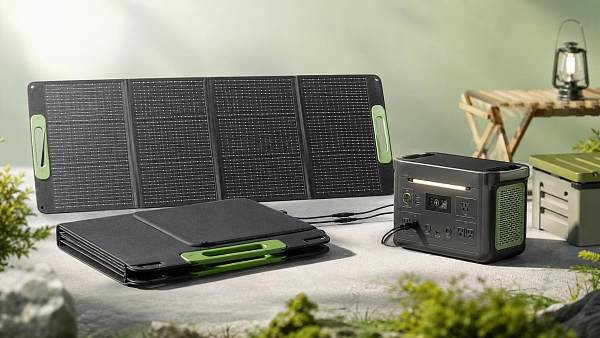
Portable solar panels convert sunlight into electricity that can charge devices directly or feed stored power into a battery station. Most foldable models are designed for mobility, not permanent rooftop installation.
In practice, they sit between two needs. One is convenience for phones, lights, laptops, and compact appliances. The other is resilience when grid power is unavailable during travel, storms, or remote work.
This is why the category now overlaps outdoor recreation, emergency planning, van life, and small-scale energy independence. The buying decision is less about chasing the highest number and more about matching a realistic power routine.
Power output matters, but usable output matters more
The first number most buyers see is wattage. Common portable solar panels range from 40W to 400W. Higher wattage usually means faster charging, but only under strong sun, good angle placement, and limited cloud cover.
A 100W panel rarely delivers 100W all day. Real output changes with temperature, panel orientation, season, dust, and shading. Even partial shade across one section can reduce the full panel’s production more than expected.
A practical buying rule is to start with daily energy use, not marketing claims. If a power station runs a fridge, fan, lights, and phone charging, estimate that load first. Then choose panel capacity with a margin for weak sunlight.
For many households, 100W sounds sufficient until cloudy weather or short winter daylight enters the picture. That is where comparing output expectations against actual use cases becomes more important than reading one headline specification.
Weight, folded size, and setup effort shape the experience
A panel can test well and still be the wrong product if it is awkward to carry or deploy. Portable solar panels are often bought for mobility, so weight deserves the same attention as electrical performance.
Lightweight units are easier for day trips, beach use, and tent camping. Larger foldable panels usually deliver better charging rates, but they take more space in a vehicle and often need careful positioning stands.
Folded dimensions also matter. Long, rigid formats can be hard to store in compact trunks or shared cargo areas. A slightly lower-output panel may be more useful if it sets up in one minute and packs flat.
- Check total carry weight, not panel weight alone.
- Look for kickstands that stay stable in wind.
- Review handle placement and folded thickness.
- Confirm the weather rating for outdoor exposure.
Setup effort is often overlooked. If re-aiming the panel through the day feels tedious, actual charging gains may be lower than expected because the product is used less often or placed poorly.
Battery compatibility is where many buying mistakes happen
Portable solar panels do not work the same way with every battery or power station. Voltage range, current limits, connector type, and charge controller design all affect whether a system will charge safely and efficiently.
Some panels are built for plug-and-play solar generators. Others are better suited for separate batteries, especially lithium iron phosphate systems paired with an MPPT controller. Direct USB output is useful, but it should not be confused with full storage compatibility.
This compatibility issue matters more as portable energy products become part of a wider consumer electronics ecosystem. Green energy now intersects with smart devices, battery management systems, and portable inverters, not just solar cells.
Key checks before buying
- Open-circuit voltage must fit the battery or power station input range.
- Connector standards should match, or supported adapters should be included.
- The charging controller should support the battery chemistry in use.
- Series or parallel expansion limits should be clear for future upgrades.
When specifications are vague, that is a warning sign. Reliable brands usually publish input ranges, test conditions, connector details, and charging recommendations clearly. Better documentation often reflects better product discipline across the supply chain.
Where portable solar panels make the most sense
Use case should lead the selection process. The best portable solar panels for weekend camping are rarely the best choice for RV backup power or semi-permanent off-grid use.
Camping and short outdoor trips
Portability and speed matter most here. A 60W to 120W panel often covers lights, phones, camera batteries, and compact power stations without becoming a burden during transport.
RV travel and van setups
Larger foldable portable solar panels help top up onboard storage when parked. The key is balancing output with storage space and making sure connectors fit the existing battery setup.
Home backup during outages
These panels are useful for recharging power stations that run communications, medical support accessories, small fans, routers, or lighting. They are less suitable for heavy appliances unless paired with large storage systems.
Off-grid cabins and longer stays
In this case, portable solar panels can work as flexible supplemental generation. They are especially useful where fixed installation is difficult, seasonal, or not yet justified.
How to compare products without getting lost in marketing
The market is crowded, and claims are often simplified. A more disciplined comparison looks at how the product is built, how well it is documented, and whether the brand explains performance limits honestly.
This is where broader market intelligence becomes useful. Platforms such as TradeNexus Pro follow how renewable energy products, battery systems, and electronics sourcing evolve across regions. That context helps separate durable design from short-term listing noise.
For individual buyers, the practical takeaway is straightforward. Look beyond marketplace rankings. Compare warranty terms, junction box quality, cell efficiency claims, certification references, and after-sales support visibility.
A smarter way to narrow your choice
The most useful buying process starts with three questions. How much energy is needed each day? How much weight and storage space are acceptable? What battery or power station will the panel charge?
Once those answers are clear, many options drop out quickly. That makes it easier to compare portable solar panels by fit rather than by hype. The right product is usually the one that works reliably in your actual conditions, not the one with the boldest listing.
A final shortlist should include real sunlight expectations, cable needs, seasonal use, and expansion plans. That approach turns a crowded product category into a manageable decision and makes each specification more meaningful before money is spent.
Get weekly intelligence in your inbox.
No noise. No sponsored content. Pure intelligence.
 Oct 08, 2026How Digital Health Improves Diagnostic Accuracy and Workflow in Clinical LabsHow Digital Health Improves Diagnostic Accuracy and Workflow in Clinical Labs
 Oct 07, 2026Selecting Voice Picking Systems for German Warehouses: Integration, Languages and ROISelecting Voice Picking Systems for German Warehouses: Integration, Languages and ROI
 Oct 06, 2026How to Choose Last Mile Dispatch Software for On-Time Delivery at ScaleHow to Choose Last Mile Dispatch Software for On-Time Delivery at Scale
 Oct 05, 2026Vietnam’s Consumer Electronics Market: Demand Shifts and Sourcing OpportunitiesVietnam’s Consumer Electronics Market: Demand Shifts and Sourcing Opportunities
 Oct 04, 2026Digital Health Investment Priorities for Providers: Improving Access, Outcomes, and EfficiencyDigital Health Investment Priorities for Providers: Improving Access, Outcomes, and Efficiency
 Oct 03, 2026How to Specify an FR4 Custom PCB Board for High-Voltage and High-Heat DesignsHow to Specify an FR4 Custom PCB Board for High-Voltage and High-Heat Designs
 Oct 02, 2026ERP Software Market Intelligence: Adoption, Pricing, and Vendor Signals to WatchERP Software Market Intelligence: Adoption, Pricing, and Vendor Signals to Watch
 Oct 01, 2026How to Select Calibrated Temperature Data Loggers for GMP Cold Storage MonitoringHow to Select Calibrated Temperature Data Loggers for GMP Cold Storage Monitoring
 Sep 30, 2026Custom Molded Rubber Pricing: What Drives Unit Cost and Tooling Fees?Custom Molded Rubber Pricing: What Drives Unit Cost and Tooling Fees?
 Sep 29, 2026How to Evaluate Energy Management Software Vendors for Multi-Site OperationsHow to Evaluate Energy Management Software Vendors for Multi-Site Operations
 Sep 28, 2026How to Select a DIN Rail Smart Meter for Multi-Circuit Energy MonitoringHow to Select a DIN Rail Smart Meter for Multi-Circuit Energy Monitoring
 Sep 27, 2026TWS Earbuds in Vietnam: Demand Drivers, Price Tiers, and Retail Channel OpportunitiesTWS Earbuds in Vietnam: Demand Drivers, Price Tiers, and Retail Channel Opportunities
 Sep 26, 2026How UAE Clinics Can Qualify a Smart Glucometer Supplier for Accuracy and ComplianceHow UAE Clinics Can Qualify a Smart Glucometer Supplier for Accuracy and Compliance
 Sep 25, 2026Buying Aesthetic Lasers in the USA: FDA Status, Wavelengths, and Service SupportBuying Aesthetic Lasers in the USA: FDA Status, Wavelengths, and Service Support
 Sep 24, 2026Laser Cutting Brass Sheet: How to Prevent Burrs and Heat Marks on Thin PartsLaser Cutting Brass Sheet: How to Prevent Burrs and Heat Marks on Thin Parts
 Sep 23, 2026How to Choose Lightweight ANC Headphones for Comfortable All-Day TravelHow to Choose Lightweight ANC Headphones for Comfortable All-Day Travel
 Sep 22, 2026IPX5 TWS Bluetooth Earbuds: What Protection Do They Offer for Workouts?IPX5 TWS Bluetooth Earbuds: What Protection Do They Offer for Workouts?
 Sep 21, 2026What to Look for in a Grid Integration Company for Utility-Scale Solar ProjectsWhat to Look for in a Grid Integration Company for Utility-Scale Solar Projects
 Sep 20, 2026Microgrid Controller Pricing: What Drives Cost in Commercial Energy Projects?Microgrid Controller Pricing: What Drives Cost in Commercial Energy Projects?
 Sep 19, 2026How to Choose a GaN Charger for Laptops Without Compromising Power or PortabilityHow to Choose a GaN Charger for Laptops Without Compromising Power or Portability
 Sep 18, 2026Floating Solar Farm Costs: CAPEX, OPEX, and the Site Factors That Shape ROIFloating Solar Farm Costs: CAPEX, OPEX, and the Site Factors That Shape ROI
 Sep 17, 2026Drone Delivery Solutions for Last-Mile Routes: Site, Payload, and Range PlanningDrone Delivery Solutions for Last-Mile Routes: Site, Payload, and Range Planning
 Sep 16, 2026When Low-Volume Electronics Manufacturing Makes More Sense Than Mass ProductionWhen Low-Volume Electronics Manufacturing Makes More Sense Than Mass Production
 Sep 15, 2026Wholesale WiFi Smart Switches: What Buyers Should Verify Before OrderingWholesale WiFi Smart Switches: What Buyers Should Verify Before Ordering
 Sep 14, 2026How to Select IoT Sensors for Reliable Monitoring in Harsh Industrial EnvironmentsHow to Select IoT Sensors for Reliable Monitoring in Harsh Industrial Environments
 Sep 13, 2026How Procurement Teams Can Improve Supplier Reliability With Supply Chain VisibilityHow Procurement Teams Can Improve Supplier Reliability With Supply Chain Visibility
 Sep 12, 2026Smart Manufacturing Trends 2026: What Leaders Should Prioritize for ROISmart Manufacturing Trends 2026: What Leaders Should Prioritize for ROI



























