
Market Trends for Green Energy: What Is Driving Solar, Storage, and Grid Investment?
Market trends for green energy now sit at the intersection of industrial policy, capital allocation, and supply chain strategy. Solar, storage, and grid investment is accelerating because energy is no longer viewed only as a utility cost. It is becoming a resilience issue, a competitiveness issue, and in many sectors, a market access issue.
That shift matters across manufacturing, trade, technology, and infrastructure. When companies assess new markets or suppliers, the energy system behind those decisions increasingly shapes cost stability, compliance risk, and long-term operating flexibility. This is why market trends for green energy deserve close attention beyond the power sector itself.
Why green energy investment is expanding across industries
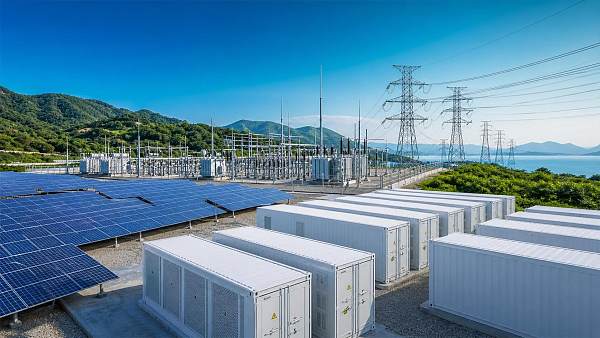
The current investment cycle is being driven by several forces at once. Public policy still matters, but it is no longer the only catalyst. Commercial logic has become stronger and more visible.
Falling technology costs remain important. Solar module prices, battery system design, inverter efficiency, and digital controls have improved enough to make many projects easier to finance and scale.
Energy security is another major factor. Fuel price shocks, geopolitical tension, and grid instability have pushed companies and governments to reduce dependence on concentrated energy sources.
At the same time, decarbonization targets are becoming operational requirements. In export-oriented sectors, emissions performance increasingly affects customer approval, financing conditions, and even supplier selection.
Seen together, market trends for green energy are not only about sustainability. They reflect a broader industrial realignment toward cleaner, more flexible, and more digitally managed energy systems.
Solar is moving from low-cost generation to strategic infrastructure
Solar remains the most visible part of the story, but the business case has become more nuanced. Earlier investment focused heavily on capacity growth and headline installation numbers.
Now the discussion is shifting toward project quality, integration, and location. A low module price alone is not enough. Developers and buyers are paying closer attention to land constraints, interconnection timelines, performance guarantees, and local grid conditions.
Distributed solar is gaining ground in industrial parks, logistics facilities, data-heavy operations, and commercial sites with predictable daytime loads. Utility-scale solar still attracts capital, but permitting and transmission constraints can delay value realization.
This makes solar procurement more strategic. The relevant question is not simply whether solar is cheap. It is whether a solar asset fits the operating profile, regional policy environment, and risk tolerance of the business behind it.
What buyers now evaluate more carefully
- Module origin, traceability, and trade compliance exposure
- Balance-of-system reliability and after-sales service depth
- Expected degradation, yield assumptions, and warranty structure
- Connection risk, curtailment risk, and local permitting complexity
- Compatibility with storage, microgrid, or energy management systems
Why storage has become central to market trends for green energy
Energy storage has moved from a supporting technology to a core investment category. That change reflects a simple market reality: renewable generation has more value when it can be timed, controlled, and dispatched.
Battery systems help solve several problems at once. They smooth intermittent supply, reduce peak demand charges, support backup power needs, and improve grid balancing. In some markets, they also open access to new revenue streams.
Not all storage demand comes from utilities. Industrial users, campuses, transport infrastructure, and commercial facilities are adopting storage for resilience and cost management, especially where tariffs are volatile or outages are expensive.
For this reason, market trends for green energy increasingly depend on how well storage economics evolve. The best opportunities often come from stacked value rather than one single use case.
Typical storage value layers
Grid investment is the less visible but decisive factor
Solar and storage attract attention, yet grid modernization may be the most critical enabler. Without stronger transmission, smarter distribution systems, and better digital control, renewable capacity cannot scale efficiently.
Many electricity networks were built for centralized generation and one-way power flow. The new energy system requires bidirectional flows, faster balancing, and higher visibility at the edge of the grid.
This is why investment is rising in substations, power electronics, advanced transformers, grid software, metering, and demand response infrastructure. These upgrades are not as visible as a solar farm, but they determine connection speed and system performance.
From a cross-sector perspective, grid capability affects factory siting, data center expansion, EV charging deployment, and regional manufacturing policy. In practical terms, weak grids can delay otherwise attractive investment plans.
What these market shifts mean for commercial decision-making
For companies evaluating technologies or counterparties, market trends for green energy should be read as a system, not as isolated product categories. A solar supplier may look competitive, but the real project outcome depends on storage design, grid readiness, and service capability.
The same applies to market entry. Regions with strong renewable targets may still face interconnection bottlenecks, land restrictions, or inconsistent permitting. High demand alone does not guarantee efficient execution.
This is where structured intelligence matters. Platforms such as TradeNexus Pro are relevant because they connect sector reporting with practical evaluation. In markets shaped by policy, technology change, and supplier risk, surface-level visibility is rarely enough.
Reliable analysis helps clarify which technologies are moving into mainstream adoption, which suppliers signal long-term credibility, and which regions offer durable opportunity rather than temporary hype.
Useful evaluation angles
- Technology maturity versus marketing claims
- Supply chain concentration and geographic exposure
- Bankability, certification, and operating track record
- Integration risk across hardware, software, and grid interfaces
- Local policy durability and infrastructure readiness
Where the strongest opportunities are emerging
The next wave of opportunity is likely to appear where energy, industry, and digital systems converge. Industrial decarbonization, electrified transport, smart facilities, and resilient logistics networks all create demand for better energy architecture.
In that environment, the winners are rarely defined by the lowest equipment price alone. They are more often defined by system integration, documented performance, and the ability to support cross-border trust.
That is also why content quality matters in B2B discovery. Buyers increasingly assess companies through searchable expertise, technical clarity, and sector relevance before any formal engagement begins. Strong digital authority now supports commercial authority.
The broader lesson from market trends for green energy is clear: investment is expanding because clean power now supports competitiveness, resilience, compliance, and strategic positioning at the same time.
A practical next step
A useful starting point is to map energy decisions against business exposure. That means reviewing load profile, outage sensitivity, regional policy direction, supplier concentration, and future reporting obligations together rather than separately.
From there, compare solar, storage, and grid-related options as parts of one operating model. The most valuable decisions usually come from matching technology choice with site conditions, financial logic, and long-term market access needs.
For anyone tracking market trends for green energy, the priority is not to chase every headline. It is to build a clearer framework for judging where investment is genuinely bankable, scalable, and commercially relevant.
Get weekly intelligence in your inbox.
No noise. No sponsored content. Pure intelligence.
 Oct 08, 2026How Digital Health Improves Diagnostic Accuracy and Workflow in Clinical LabsHow Digital Health Improves Diagnostic Accuracy and Workflow in Clinical Labs
 Oct 07, 2026Selecting Voice Picking Systems for German Warehouses: Integration, Languages and ROISelecting Voice Picking Systems for German Warehouses: Integration, Languages and ROI
 Oct 06, 2026How to Choose Last Mile Dispatch Software for On-Time Delivery at ScaleHow to Choose Last Mile Dispatch Software for On-Time Delivery at Scale
 Oct 05, 2026Vietnam’s Consumer Electronics Market: Demand Shifts and Sourcing OpportunitiesVietnam’s Consumer Electronics Market: Demand Shifts and Sourcing Opportunities
 Oct 04, 2026Digital Health Investment Priorities for Providers: Improving Access, Outcomes, and EfficiencyDigital Health Investment Priorities for Providers: Improving Access, Outcomes, and Efficiency
 Oct 03, 2026How to Specify an FR4 Custom PCB Board for High-Voltage and High-Heat DesignsHow to Specify an FR4 Custom PCB Board for High-Voltage and High-Heat Designs
 Oct 02, 2026ERP Software Market Intelligence: Adoption, Pricing, and Vendor Signals to WatchERP Software Market Intelligence: Adoption, Pricing, and Vendor Signals to Watch
 Oct 01, 2026How to Select Calibrated Temperature Data Loggers for GMP Cold Storage MonitoringHow to Select Calibrated Temperature Data Loggers for GMP Cold Storage Monitoring
 Sep 30, 2026Custom Molded Rubber Pricing: What Drives Unit Cost and Tooling Fees?Custom Molded Rubber Pricing: What Drives Unit Cost and Tooling Fees?
 Sep 29, 2026How to Evaluate Energy Management Software Vendors for Multi-Site OperationsHow to Evaluate Energy Management Software Vendors for Multi-Site Operations
 Sep 28, 2026How to Select a DIN Rail Smart Meter for Multi-Circuit Energy MonitoringHow to Select a DIN Rail Smart Meter for Multi-Circuit Energy Monitoring
 Sep 27, 2026TWS Earbuds in Vietnam: Demand Drivers, Price Tiers, and Retail Channel OpportunitiesTWS Earbuds in Vietnam: Demand Drivers, Price Tiers, and Retail Channel Opportunities
 Sep 26, 2026How UAE Clinics Can Qualify a Smart Glucometer Supplier for Accuracy and ComplianceHow UAE Clinics Can Qualify a Smart Glucometer Supplier for Accuracy and Compliance
 Sep 25, 2026Buying Aesthetic Lasers in the USA: FDA Status, Wavelengths, and Service SupportBuying Aesthetic Lasers in the USA: FDA Status, Wavelengths, and Service Support
 Sep 24, 2026Laser Cutting Brass Sheet: How to Prevent Burrs and Heat Marks on Thin PartsLaser Cutting Brass Sheet: How to Prevent Burrs and Heat Marks on Thin Parts
 Sep 23, 2026How to Choose Lightweight ANC Headphones for Comfortable All-Day TravelHow to Choose Lightweight ANC Headphones for Comfortable All-Day Travel
 Sep 22, 2026IPX5 TWS Bluetooth Earbuds: What Protection Do They Offer for Workouts?IPX5 TWS Bluetooth Earbuds: What Protection Do They Offer for Workouts?
 Sep 21, 2026What to Look for in a Grid Integration Company for Utility-Scale Solar ProjectsWhat to Look for in a Grid Integration Company for Utility-Scale Solar Projects
 Sep 20, 2026Microgrid Controller Pricing: What Drives Cost in Commercial Energy Projects?Microgrid Controller Pricing: What Drives Cost in Commercial Energy Projects?
 Sep 19, 2026How to Choose a GaN Charger for Laptops Without Compromising Power or PortabilityHow to Choose a GaN Charger for Laptops Without Compromising Power or Portability
 Sep 18, 2026Floating Solar Farm Costs: CAPEX, OPEX, and the Site Factors That Shape ROIFloating Solar Farm Costs: CAPEX, OPEX, and the Site Factors That Shape ROI
 Sep 17, 2026Drone Delivery Solutions for Last-Mile Routes: Site, Payload, and Range PlanningDrone Delivery Solutions for Last-Mile Routes: Site, Payload, and Range Planning
 Sep 16, 2026When Low-Volume Electronics Manufacturing Makes More Sense Than Mass ProductionWhen Low-Volume Electronics Manufacturing Makes More Sense Than Mass Production
 Sep 15, 2026Wholesale WiFi Smart Switches: What Buyers Should Verify Before OrderingWholesale WiFi Smart Switches: What Buyers Should Verify Before Ordering
 Sep 14, 2026How to Select IoT Sensors for Reliable Monitoring in Harsh Industrial EnvironmentsHow to Select IoT Sensors for Reliable Monitoring in Harsh Industrial Environments
 Sep 13, 2026How Procurement Teams Can Improve Supplier Reliability With Supply Chain VisibilityHow Procurement Teams Can Improve Supplier Reliability With Supply Chain Visibility
 Sep 12, 2026Smart Manufacturing Trends 2026: What Leaders Should Prioritize for ROISmart Manufacturing Trends 2026: What Leaders Should Prioritize for ROI



























