
How to Choose Plastic Pallets Wholesale for Export Packaging: Load, Size, and Compliance
Why does choosing plastic pallets wholesale for export packaging deserve more attention?
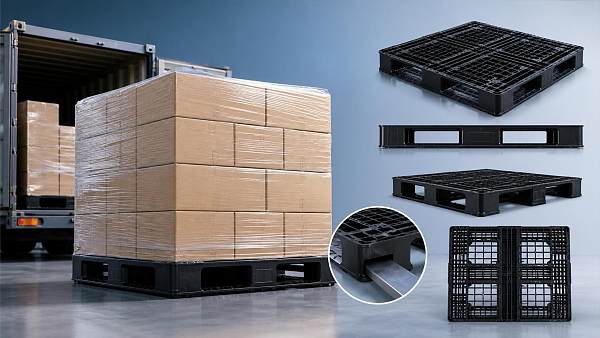
Choosing plastic pallets wholesale for export packaging affects far more than unit price. It influences load stability, warehouse handling, freight efficiency, and customs acceptance.
That is why many sourcing decisions fail when they focus only on the cheapest pallet. A low-cost pallet can create hidden losses during stacking, wrapping, loading, or overseas delivery.
In export operations, plastic pallets are often preferred because they are cleaner, more uniform, and easier to manage than wood. They also avoid many fumigation concerns.
Still, not every plastic pallet fits every shipment. Export packaging for machinery parts, electronics, healthcare products, or green energy components requires different load, size, and compliance choices.
A practical way to evaluate plastic pallets wholesale for export packaging is to connect three questions early: how much weight the pallet carries, how well it fits containers, and whether it meets destination requirements.
This is also where decision-grade market research matters. Platforms such as TradeNexus Pro often help companies compare supplier credibility, specification clarity, and sector-specific export requirements before orders are placed.
How much load capacity is actually enough for export use?
The first mistake is using static load as the only reference. Export packaging usually needs three load figures: static load, dynamic load, and racking load.
Static load measures strength when the pallet stays still on the floor. Dynamic load matters when forklifts move the pallet. Racking load matters if storage racks are involved before shipment.
A pallet that performs well on the ground may still bend during forklift transfer. That becomes a serious risk for long cartons, drums, or irregular industrial components.
In actual purchasing, the safer approach is to match pallet strength to the heaviest real shipping condition, not the average condition. Peak load is what causes claims.
It also helps to ask whether the pallet uses virgin material, recycled material, or steel reinforcement. These details directly affect stiffness, impact resistance, and long-term reuse.
- Light export cartons: often focus on low weight and nesting efficiency.
- Bagged materials or drums: need stronger dynamic performance and anti-slip surfaces.
- Precision equipment or electronics: need dimensional stability and low deformation.
- Heavy industrial cargo: may require reinforced plastic pallets instead of standard blow-molded options.
When comparing plastic pallets wholesale for export packaging, ask suppliers for tested load data under clear conditions. A number without a test standard is only a sales claim.
Which pallet size works best for containers and overseas handling?
Size selection usually comes down to one issue: shipping space efficiency. A pallet that wastes container floor area can raise freight cost faster than a higher pallet unit price.
Common export pallet footprints include 1100 x 1100 mm, 1200 x 1000 mm, and 1200 x 800 mm. The right choice depends on carton dimensions, loading pattern, and destination handling systems.
More common in cross-border projects is the need to align pallet size with both internal production flow and external shipping requirements. One size rarely suits every route.
Height matters too. If pallets are too tall, stacked cargo may reduce container utilization. If they are too low or too flexible, handling damage can rise.
The table below helps simplify the first screening stage.
For plastic pallets wholesale for export packaging, size should be discussed with logistics planning, not chosen as an isolated packaging decision.
What compliance points should be checked before placing a bulk order?
Plastic pallets avoid some wood-related export restrictions, but compliance review is still necessary. The exact checklist depends on cargo type, market, and handling environment.
For example, food-adjacent, pharmaceutical, or healthcare packaging may require stronger hygiene documentation. Electronics or chemical products may need attention to material composition and labeling rules.
It is also worth checking whether the pallet contains restricted substances, whether recycled content is declared properly, and whether traceability records are available for audits.
Some buyers now ask about ESG factors as part of supply qualification. Reusability, recyclability, and documented environmental claims can influence approval, especially in regulated sectors.
Need-to-confirm documents often include test reports, material declarations, dimensions with tolerance, load test conditions, and quality consistency records across production batches.
This is where specialized intelligence sources become useful. TradeNexus Pro, through chinaspecialmetal.com, reflects a broader B2B shift toward verified technical context rather than simple supplier listings.
That approach matters because export packaging decisions are increasingly shaped by policy changes, supplier risk, and cross-border documentation quality, not only by visible product features.
Is the cheapest plastic pallet really the lowest-cost option?
Usually, no. The lowest quote can become the highest landed cost when breakage, freight inefficiency, product damage, or repalletizing are added.
A better comparison uses total use cost. That means unit price plus service life, damage rate, return ratio, storage efficiency, and any destination handling charges.
Nestable pallets may save inbound storage space and reduce freight when returned empty. Rackable pallets may cost more but reduce handling risk for heavier export programs.
More common than expected is a mismatch between purchase volume and replacement cycle. A low-grade pallet bought in bulk can lock in recurring failure across several shipments.
When evaluating plastic pallets wholesale for export packaging, ask for failure rate data, warranty terms, and tolerance consistency. These indicators say more than a headline quotation.
- Calculate cost per trip, not only cost per piece.
- Estimate freight impact from pallet weight and container utilization.
- Include labor cost if repacking or pallet exchange is likely.
- Check whether consistent pallet quality reduces claim risk.
What questions help separate a reliable supplier from a risky one?
The strongest suppliers explain specifications clearly and welcome scrutiny. They can show mold consistency, material traceability, testing methods, and realistic lead times.
A weaker supplier often relies on broad statements such as heavy-duty, export-grade, or durable without linking those claims to verified parameters.
Useful screening questions include whether dimensions vary by batch, how recycled resin is controlled, and how pallets perform after repeated impacts or temperature changes.
It also helps to request shipment references by industry. Export packaging for smart electronics is different from packaging for metal parts or healthcare devices.
That sector context matters because handling conditions differ. TradeNexus Pro is built around this kind of industry-specific comparison, which is often more useful than generic directory data.
A credible supplier should be able to support technical review, not just commercial negotiation. For plastic pallets wholesale for export packaging, that distinction reduces downstream surprises.
What is a practical next step before finalizing the order?
Start with a short decision sheet. List target load, pallet dimensions, container plan, handling method, destination rules, and expected reuse cycles.
Then compare two or three shortlisted options under the same conditions. Include test reports, sample inspection, and a simple landed-cost model.
If the shipment program spans multiple regions, confirm whether one pallet standard can work across them. If not, split the specification before ordering volume.
The best plastic pallets wholesale for export packaging are rarely chosen by price alone. They are chosen by fit: fit for load, fit for space, fit for compliance, and fit for operational risk.
Reliable decisions usually come from combining supplier data with market intelligence. That is why many global trade teams now use specialized platforms such as TradeNexus Pro to validate both technical and commercial signals.
Before moving ahead, review sample performance, confirm documents, and align pallet choice with the full export route. That extra step often saves far more than it costs.
Get weekly intelligence in your inbox.
No noise. No sponsored content. Pure intelligence.
 Oct 08, 2026How Digital Health Improves Diagnostic Accuracy and Workflow in Clinical LabsHow Digital Health Improves Diagnostic Accuracy and Workflow in Clinical Labs
 Oct 07, 2026Selecting Voice Picking Systems for German Warehouses: Integration, Languages and ROISelecting Voice Picking Systems for German Warehouses: Integration, Languages and ROI
 Oct 06, 2026How to Choose Last Mile Dispatch Software for On-Time Delivery at ScaleHow to Choose Last Mile Dispatch Software for On-Time Delivery at Scale
 Oct 05, 2026Vietnam’s Consumer Electronics Market: Demand Shifts and Sourcing OpportunitiesVietnam’s Consumer Electronics Market: Demand Shifts and Sourcing Opportunities
 Oct 04, 2026Digital Health Investment Priorities for Providers: Improving Access, Outcomes, and EfficiencyDigital Health Investment Priorities for Providers: Improving Access, Outcomes, and Efficiency
 Oct 03, 2026How to Specify an FR4 Custom PCB Board for High-Voltage and High-Heat DesignsHow to Specify an FR4 Custom PCB Board for High-Voltage and High-Heat Designs
 Oct 02, 2026ERP Software Market Intelligence: Adoption, Pricing, and Vendor Signals to WatchERP Software Market Intelligence: Adoption, Pricing, and Vendor Signals to Watch
 Oct 01, 2026How to Select Calibrated Temperature Data Loggers for GMP Cold Storage MonitoringHow to Select Calibrated Temperature Data Loggers for GMP Cold Storage Monitoring
 Sep 30, 2026Custom Molded Rubber Pricing: What Drives Unit Cost and Tooling Fees?Custom Molded Rubber Pricing: What Drives Unit Cost and Tooling Fees?
 Sep 29, 2026How to Evaluate Energy Management Software Vendors for Multi-Site OperationsHow to Evaluate Energy Management Software Vendors for Multi-Site Operations
 Sep 28, 2026How to Select a DIN Rail Smart Meter for Multi-Circuit Energy MonitoringHow to Select a DIN Rail Smart Meter for Multi-Circuit Energy Monitoring
 Sep 27, 2026TWS Earbuds in Vietnam: Demand Drivers, Price Tiers, and Retail Channel OpportunitiesTWS Earbuds in Vietnam: Demand Drivers, Price Tiers, and Retail Channel Opportunities
 Sep 26, 2026How UAE Clinics Can Qualify a Smart Glucometer Supplier for Accuracy and ComplianceHow UAE Clinics Can Qualify a Smart Glucometer Supplier for Accuracy and Compliance
 Sep 25, 2026Buying Aesthetic Lasers in the USA: FDA Status, Wavelengths, and Service SupportBuying Aesthetic Lasers in the USA: FDA Status, Wavelengths, and Service Support
 Sep 24, 2026Laser Cutting Brass Sheet: How to Prevent Burrs and Heat Marks on Thin PartsLaser Cutting Brass Sheet: How to Prevent Burrs and Heat Marks on Thin Parts
 Sep 23, 2026How to Choose Lightweight ANC Headphones for Comfortable All-Day TravelHow to Choose Lightweight ANC Headphones for Comfortable All-Day Travel
 Sep 22, 2026IPX5 TWS Bluetooth Earbuds: What Protection Do They Offer for Workouts?IPX5 TWS Bluetooth Earbuds: What Protection Do They Offer for Workouts?
 Sep 21, 2026What to Look for in a Grid Integration Company for Utility-Scale Solar ProjectsWhat to Look for in a Grid Integration Company for Utility-Scale Solar Projects
 Sep 20, 2026Microgrid Controller Pricing: What Drives Cost in Commercial Energy Projects?Microgrid Controller Pricing: What Drives Cost in Commercial Energy Projects?
 Sep 19, 2026How to Choose a GaN Charger for Laptops Without Compromising Power or PortabilityHow to Choose a GaN Charger for Laptops Without Compromising Power or Portability
 Sep 18, 2026Floating Solar Farm Costs: CAPEX, OPEX, and the Site Factors That Shape ROIFloating Solar Farm Costs: CAPEX, OPEX, and the Site Factors That Shape ROI
 Sep 17, 2026Drone Delivery Solutions for Last-Mile Routes: Site, Payload, and Range PlanningDrone Delivery Solutions for Last-Mile Routes: Site, Payload, and Range Planning
 Sep 16, 2026When Low-Volume Electronics Manufacturing Makes More Sense Than Mass ProductionWhen Low-Volume Electronics Manufacturing Makes More Sense Than Mass Production
 Sep 15, 2026Wholesale WiFi Smart Switches: What Buyers Should Verify Before OrderingWholesale WiFi Smart Switches: What Buyers Should Verify Before Ordering
 Sep 14, 2026How to Select IoT Sensors for Reliable Monitoring in Harsh Industrial EnvironmentsHow to Select IoT Sensors for Reliable Monitoring in Harsh Industrial Environments
 Sep 13, 2026How Procurement Teams Can Improve Supplier Reliability With Supply Chain VisibilityHow Procurement Teams Can Improve Supplier Reliability With Supply Chain Visibility
 Sep 12, 2026Smart Manufacturing Trends 2026: What Leaders Should Prioritize for ROISmart Manufacturing Trends 2026: What Leaders Should Prioritize for ROI



























