
What Should Be in Emergency Medical Kits for Worksites, Fleets, and Field Teams?
What Should Be in Emergency Medical Kits for Worksites, Fleets, and Field Teams?
For quality control and safety managers, choosing the right emergency medical kits is not just about compliance. It directly affects response speed, injury outcomes, and operational continuity.
Across worksites, vehicle fleets, and field teams, kit contents should match real risk exposure, workforce size, and deployment conditions. A generic box rarely works well in demanding environments.
The most effective emergency medical kits are practical, clearly organized, and easy to inspect. They also reflect how people actually work, travel, and respond during incidents.
Why Emergency Medical Kits Need a Risk-Based Design
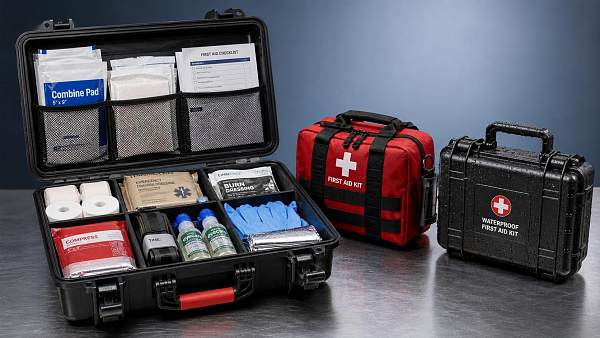
Not every workplace faces the same hazards. A warehouse, a utility vehicle, and a remote inspection crew deal with very different injury patterns.
That is why emergency medical kits should be built around likely incidents, not just a standard shopping list. The goal is faster, more useful first response.
In practical terms, kit planning should consider these factors:
- Workforce size and shift coverage
- Type and severity of likely injuries
- Distance from clinics or hospitals
- Vehicle-based or fixed-location deployment
- Weather, dust, moisture, and temperature exposure
- Training level of available responders
This risk-based approach makes emergency medical kits more than a compliance item. It turns them into a working part of the site safety system.
Core Items Every Emergency Medical Kit Should Include
Most emergency medical kits should begin with a reliable core set of supplies. These items support common injuries seen across industrial and field operations.
Wound Care Essentials
- Adhesive bandages in multiple sizes
- Sterile gauze pads and gauze rolls
- Trauma dressings for larger bleeding injuries
- Medical tape that holds in humid or dusty conditions
- Antiseptic wipes or wound cleansing solution
- Antibiotic ointment where local policy allows
Barrier and Protection Supplies
- Nitrile gloves in several sizes
- CPR face shield or breathing barrier
- Eye protection for responders if needed
- Biohazard disposal bags
Stabilization and Minor Injury Items
- Elastic bandages for sprains and compression
- Triangular bandages for slings or securing splints
- Burn dressings or burn gel packets
- Instant cold packs
- Tweezers and blunt-tip scissors
Instructions and Identification
- Simple first aid instruction sheet
- Emergency contact list
- Inventory checklist with refill dates
These basics form the foundation of emergency medical kits for most business settings. From there, contents should be adjusted by scenario.
What Worksite Emergency Medical Kits Should Add
Fixed worksites often see cuts, crush injuries, burns, slips, and eye exposure. Emergency medical kits at these locations usually need broader trauma support.
Useful additions may include:
- Large trauma pads for heavy bleeding
- Hemostatic dressings if risk assessment supports them
- Tourniquets where severe bleeding hazards exist
- Sterile saline eye wash pods
- Finger cots and fingertip bandages
- Splinting materials for hand or limb injuries
For sites with chemical handling, emergency medical kits should sit alongside dedicated decontamination equipment. A first aid kit alone is not enough for chemical splash response.
If machinery, metalwork, or hot surfaces are common, burn care and bleeding control become much more important. That is where kit customization has real value.
What Fleet Emergency Medical Kits Should Include
Fleet vehicles need compact emergency medical kits that stay organized during motion. They must also support road incidents, loading injuries, and delayed access to care.
A vehicle-ready kit should emphasize portability and quick access. Typical additions include:
- Compact trauma bandages
- Reflective emergency blanket
- Motion sickness bags
- Seatbelt cutter and window breaker if policy permits
- Extra gloves for multi-person incidents
- Waterproof packaging to prevent moisture damage
Temperature swings matter in vehicles. Emergency medical kits stored in hot cabins or cold cargo spaces may suffer adhesive failure, packaging damage, or shortened shelf life.
That means inspection frequency should be higher for fleets. It also makes product durability a purchasing factor, not just a nice extra.
What Field Team Emergency Medical Kits Need Most
Field teams often work away from immediate support. Their emergency medical kits should cover stabilization needs for a longer period.
Common priorities for remote or mobile crews include:
- More gauze, dressings, and gloves than a standard kit
- Blister care for long walking or site movement
- Tick removal tools where relevant
- Rehydration salts if heat exposure is possible
- Thermal blanket for cold or shock management
- Water-resistant case with clear internal labeling
In remote operations, communication matters as much as supplies. Emergency medical kits should be paired with location reporting and escalation instructions.
This is especially relevant for utility crews, inspection teams, service technicians, and temporary project personnel moving across multiple sites in one day.
How to Choose the Right Emergency Medical Kits for Your Operation
Buying emergency medical kits becomes easier when selection follows a clear process. A few structured questions can prevent under-specifying or overspending.
- List your most common injury types by location and task.
- Map how many people each kit must support.
- Check response time to professional medical care.
- Confirm local standards, customer requirements, and internal policy.
- Match kit size, durability, and labeling to the environment.
- Train users on where kits are stored and what they contain.
A good supplier should also provide refill support, shelf-life visibility, and straightforward product documentation. Those details reduce inspection friction later.
A Practical Checklist for Inspection and Restocking
Even well-designed emergency medical kits fail when contents are missing, expired, or hard to find. Regular checks are part of effective deployment.
Monthly checks are common for stable indoor sites. Vehicle and remote-use emergency medical kits may need more frequent review because wear conditions are harsher.
Final Takeaway for Safer Deployment
The best emergency medical kits are not the biggest ones. They are the kits that fit your injury profile, response time, workforce pattern, and operating environment.
For worksites, that usually means stronger bleeding, burn, and eye care support. For fleets, it means compact durability. For field teams, it means extended stabilization capability.
If your current emergency medical kits were chosen years ago, now is a good time to review them against actual incident data. That simple step often reveals clear gaps.
Start with your highest-risk locations, compare kit contents against real exposure, and build a restocking routine that people can sustain. That is how emergency medical kits become genuinely useful on the job.
Get weekly intelligence in your inbox.
No noise. No sponsored content. Pure intelligence.
 Oct 08, 2026How Digital Health Improves Diagnostic Accuracy and Workflow in Clinical LabsHow Digital Health Improves Diagnostic Accuracy and Workflow in Clinical Labs
 Oct 07, 2026Selecting Voice Picking Systems for German Warehouses: Integration, Languages and ROISelecting Voice Picking Systems for German Warehouses: Integration, Languages and ROI
 Oct 06, 2026How to Choose Last Mile Dispatch Software for On-Time Delivery at ScaleHow to Choose Last Mile Dispatch Software for On-Time Delivery at Scale
 Oct 05, 2026Vietnam’s Consumer Electronics Market: Demand Shifts and Sourcing OpportunitiesVietnam’s Consumer Electronics Market: Demand Shifts and Sourcing Opportunities
 Oct 04, 2026Digital Health Investment Priorities for Providers: Improving Access, Outcomes, and EfficiencyDigital Health Investment Priorities for Providers: Improving Access, Outcomes, and Efficiency
 Oct 03, 2026How to Specify an FR4 Custom PCB Board for High-Voltage and High-Heat DesignsHow to Specify an FR4 Custom PCB Board for High-Voltage and High-Heat Designs
 Oct 02, 2026ERP Software Market Intelligence: Adoption, Pricing, and Vendor Signals to WatchERP Software Market Intelligence: Adoption, Pricing, and Vendor Signals to Watch
 Oct 01, 2026How to Select Calibrated Temperature Data Loggers for GMP Cold Storage MonitoringHow to Select Calibrated Temperature Data Loggers for GMP Cold Storage Monitoring
 Sep 30, 2026Custom Molded Rubber Pricing: What Drives Unit Cost and Tooling Fees?Custom Molded Rubber Pricing: What Drives Unit Cost and Tooling Fees?
 Sep 29, 2026How to Evaluate Energy Management Software Vendors for Multi-Site OperationsHow to Evaluate Energy Management Software Vendors for Multi-Site Operations
 Sep 28, 2026How to Select a DIN Rail Smart Meter for Multi-Circuit Energy MonitoringHow to Select a DIN Rail Smart Meter for Multi-Circuit Energy Monitoring
 Sep 27, 2026TWS Earbuds in Vietnam: Demand Drivers, Price Tiers, and Retail Channel OpportunitiesTWS Earbuds in Vietnam: Demand Drivers, Price Tiers, and Retail Channel Opportunities
 Sep 26, 2026How UAE Clinics Can Qualify a Smart Glucometer Supplier for Accuracy and ComplianceHow UAE Clinics Can Qualify a Smart Glucometer Supplier for Accuracy and Compliance
 Sep 25, 2026Buying Aesthetic Lasers in the USA: FDA Status, Wavelengths, and Service SupportBuying Aesthetic Lasers in the USA: FDA Status, Wavelengths, and Service Support
 Sep 24, 2026Laser Cutting Brass Sheet: How to Prevent Burrs and Heat Marks on Thin PartsLaser Cutting Brass Sheet: How to Prevent Burrs and Heat Marks on Thin Parts
 Sep 23, 2026How to Choose Lightweight ANC Headphones for Comfortable All-Day TravelHow to Choose Lightweight ANC Headphones for Comfortable All-Day Travel
 Sep 22, 2026IPX5 TWS Bluetooth Earbuds: What Protection Do They Offer for Workouts?IPX5 TWS Bluetooth Earbuds: What Protection Do They Offer for Workouts?
 Sep 21, 2026What to Look for in a Grid Integration Company for Utility-Scale Solar ProjectsWhat to Look for in a Grid Integration Company for Utility-Scale Solar Projects
 Sep 20, 2026Microgrid Controller Pricing: What Drives Cost in Commercial Energy Projects?Microgrid Controller Pricing: What Drives Cost in Commercial Energy Projects?
 Sep 19, 2026How to Choose a GaN Charger for Laptops Without Compromising Power or PortabilityHow to Choose a GaN Charger for Laptops Without Compromising Power or Portability
 Sep 18, 2026Floating Solar Farm Costs: CAPEX, OPEX, and the Site Factors That Shape ROIFloating Solar Farm Costs: CAPEX, OPEX, and the Site Factors That Shape ROI
 Sep 17, 2026Drone Delivery Solutions for Last-Mile Routes: Site, Payload, and Range PlanningDrone Delivery Solutions for Last-Mile Routes: Site, Payload, and Range Planning
 Sep 16, 2026When Low-Volume Electronics Manufacturing Makes More Sense Than Mass ProductionWhen Low-Volume Electronics Manufacturing Makes More Sense Than Mass Production
 Sep 15, 2026Wholesale WiFi Smart Switches: What Buyers Should Verify Before OrderingWholesale WiFi Smart Switches: What Buyers Should Verify Before Ordering
 Sep 14, 2026How to Select IoT Sensors for Reliable Monitoring in Harsh Industrial EnvironmentsHow to Select IoT Sensors for Reliable Monitoring in Harsh Industrial Environments
 Sep 13, 2026How Procurement Teams Can Improve Supplier Reliability With Supply Chain VisibilityHow Procurement Teams Can Improve Supplier Reliability With Supply Chain Visibility
 Sep 12, 2026Smart Manufacturing Trends 2026: What Leaders Should Prioritize for ROISmart Manufacturing Trends 2026: What Leaders Should Prioritize for ROI



























