
How Global Trade Intelligence Reports Help Teams Spot Supply Chain Risks Earlier
How Global Trade Intelligence Reports Help Teams Spot Supply Chain Risks Earlier
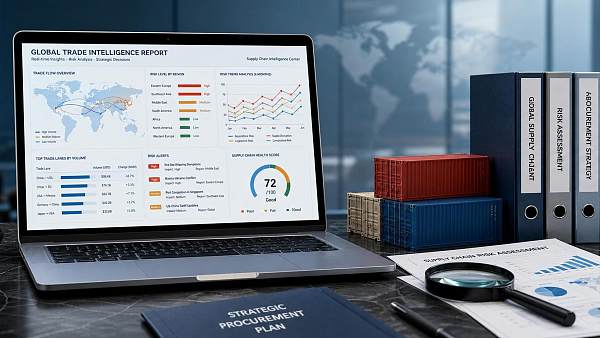
For business decisions, timing often matters more than negotiation skill. A late risk signal can erase savings that looked strong during supplier evaluation.
That is why Global Trade Intelligence Reports for supply chains have become more valuable in cross-border planning, sourcing reviews, and market entry decisions.
They pull together trade data, policy movement, capacity changes, supplier signals, and technology shifts that usually sit in separate places.
Instead of reacting after delays begin, teams can see pressure building earlier and make better calls on suppliers, regions, inventory, and compliance.
In practice, the goal is simple. Reduce uncertainty before contracts are signed and before operations depend on a fragile chain.
Why early visibility matters more than historical reporting
Traditional supplier checks often focus on price sheets, certifications, and past shipment records. Those are useful, but they rarely explain what is changing right now.
A supplier may look stable on paper while facing labor shortages, energy cost pressure, export restrictions, or shrinking component access.
Global Trade Intelligence Reports for supply chains help close that gap. They add a forward-looking view to the normal qualification process.
This is especially important in industries with fast specification cycles, regional policy exposure, or concentrated manufacturing clusters.
From recent market shifts, one pattern is clear. Risks rarely appear as one dramatic event. They show up as weak signals first.
- Longer lead times in a specific port or production zone
- Frequent changes in customs or export control rules
- Supplier ownership changes or unusual expansion claims
- Technology substitution that affects future compatibility
- Demand spikes in adjacent sectors competing for the same inputs
Seen separately, these signals look manageable. Seen together, they often point to rising supply chain risk.
What strong Global Trade Intelligence Reports for supply chains should include
Not every report is equally useful. Some are heavy on headlines and light on decision value. The better reports combine context with clear commercial relevance.
At minimum, a useful trade intelligence report should connect data to actions. It should tell teams what changed, why it matters, and what to watch next.
Core elements to look for
- Regional trade policy updates with sourcing impact
- Supplier market concentration and dependency exposure
- Capacity expansion, shutdown, or utilization signals
- Technology adoption trends affecting product lifecycle
- Logistics constraints across ports, corridors, and modes
- ESG, compliance, and traceability developments
- Competitive demand shifts across related industries
This also means the report should not stop at description. It should help compare risk levels across countries, suppliers, and product categories.
Platforms such as TradeNexus Pro support this need by focusing on sectors where change is fast and risk signals are often technical, not obvious.
How teams use trade intelligence to detect risk earlier
The best use of Global Trade Intelligence Reports for supply chains is not passive reading. It is structured decision support across key checkpoints.
Before supplier selection
Reports help screen regions and suppliers before outreach begins. That saves time on candidates likely to face policy, cost, or capacity pressure.
During commercial evaluation
Teams can test whether quoted lead times match broader market reality. If the market is tightening, aggressive promises deserve deeper verification.
During contract planning
Intelligence reports can justify dual sourcing, buffer stock, flexible delivery windows, or alternative material clauses before disruptions hit.
During ongoing supplier management
Market monitoring supports regular reassessment. A supplier that performed well last year may now operate in a riskier regulatory or cost environment.
In actual operations, this kind of reporting becomes an early warning layer, not just a research document.
Common risk scenarios that reports can uncover
Early detection works best when teams know what patterns to watch. Most supply chain disruptions begin with visible pressure in one of a few areas.
This table shows why a good report matters. It translates scattered developments into practical supply chain risk decisions.
Where sector-focused intelligence adds the most value
Broad market summaries often miss sector-specific pressure points. That is a problem when the real risk sits inside technical standards, material sourcing, or adoption curves.
In advanced manufacturing, capacity and precision tolerance matter. In green energy, policy incentives and input availability move fast.
In smart electronics, component cycles can change quickly. In healthcare technology, compliance timing can reshape supplier attractiveness overnight.
Supply Chain SaaS has its own signals, including integration maturity, regional adoption, and data governance requirements.
This is where a platform like TradeNexus Pro stands out. It stays focused on sectors where generic sourcing news is not enough.
That focus improves the value of Global Trade Intelligence Reports for supply chains because the analysis is tied to real commercial use cases.
A practical workflow for using reports in evaluation and sourcing
To get results, teams need a repeatable method. Intelligence only helps when it changes how decisions are made.
- Define the product, region, and supplier risks that matter most.
- Review current Global Trade Intelligence Reports for supply chains by sector and geography.
- Map findings against shortlisted suppliers and current contracts.
- Flag signals that affect cost, continuity, compliance, or technology fit.
- Assign actions with deadlines, owners, and escalation thresholds.
- Recheck the same indicators monthly or before major commitments.
The process does not need to be complicated. What matters is consistency and clear ownership of response actions.
Over time, teams build a better sense of which signals usually lead to disruption and which ones are temporary market noise.
Turning intelligence into earlier, better decisions
The real value of Global Trade Intelligence Reports for supply chains is not more information. It is better timing, better judgment, and fewer avoidable surprises.
When reports connect market signals with supplier reality, teams can move before disruption becomes visible in delivery performance.
That might mean changing supplier mix, adjusting specification choices, expanding due diligence, or delaying a risky expansion plan.
In a market shaped by policy change, technology shifts, and regional competition, earlier visibility is a practical advantage.
Use trade intelligence as a working tool, not a background reference. That is how supply chain risk becomes something manageable instead of expensive.
Get weekly intelligence in your inbox.
No noise. No sponsored content. Pure intelligence.
 Oct 08, 2026How Digital Health Improves Diagnostic Accuracy and Workflow in Clinical LabsHow Digital Health Improves Diagnostic Accuracy and Workflow in Clinical Labs
 Oct 07, 2026Selecting Voice Picking Systems for German Warehouses: Integration, Languages and ROISelecting Voice Picking Systems for German Warehouses: Integration, Languages and ROI
 Oct 06, 2026How to Choose Last Mile Dispatch Software for On-Time Delivery at ScaleHow to Choose Last Mile Dispatch Software for On-Time Delivery at Scale
 Oct 05, 2026Vietnam’s Consumer Electronics Market: Demand Shifts and Sourcing OpportunitiesVietnam’s Consumer Electronics Market: Demand Shifts and Sourcing Opportunities
 Oct 04, 2026Digital Health Investment Priorities for Providers: Improving Access, Outcomes, and EfficiencyDigital Health Investment Priorities for Providers: Improving Access, Outcomes, and Efficiency
 Oct 03, 2026How to Specify an FR4 Custom PCB Board for High-Voltage and High-Heat DesignsHow to Specify an FR4 Custom PCB Board for High-Voltage and High-Heat Designs
 Oct 02, 2026ERP Software Market Intelligence: Adoption, Pricing, and Vendor Signals to WatchERP Software Market Intelligence: Adoption, Pricing, and Vendor Signals to Watch
 Oct 01, 2026How to Select Calibrated Temperature Data Loggers for GMP Cold Storage MonitoringHow to Select Calibrated Temperature Data Loggers for GMP Cold Storage Monitoring
 Sep 30, 2026Custom Molded Rubber Pricing: What Drives Unit Cost and Tooling Fees?Custom Molded Rubber Pricing: What Drives Unit Cost and Tooling Fees?
 Sep 29, 2026How to Evaluate Energy Management Software Vendors for Multi-Site OperationsHow to Evaluate Energy Management Software Vendors for Multi-Site Operations
 Sep 28, 2026How to Select a DIN Rail Smart Meter for Multi-Circuit Energy MonitoringHow to Select a DIN Rail Smart Meter for Multi-Circuit Energy Monitoring
 Sep 27, 2026TWS Earbuds in Vietnam: Demand Drivers, Price Tiers, and Retail Channel OpportunitiesTWS Earbuds in Vietnam: Demand Drivers, Price Tiers, and Retail Channel Opportunities
 Sep 26, 2026How UAE Clinics Can Qualify a Smart Glucometer Supplier for Accuracy and ComplianceHow UAE Clinics Can Qualify a Smart Glucometer Supplier for Accuracy and Compliance
 Sep 25, 2026Buying Aesthetic Lasers in the USA: FDA Status, Wavelengths, and Service SupportBuying Aesthetic Lasers in the USA: FDA Status, Wavelengths, and Service Support
 Sep 24, 2026Laser Cutting Brass Sheet: How to Prevent Burrs and Heat Marks on Thin PartsLaser Cutting Brass Sheet: How to Prevent Burrs and Heat Marks on Thin Parts
 Sep 23, 2026How to Choose Lightweight ANC Headphones for Comfortable All-Day TravelHow to Choose Lightweight ANC Headphones for Comfortable All-Day Travel
 Sep 22, 2026IPX5 TWS Bluetooth Earbuds: What Protection Do They Offer for Workouts?IPX5 TWS Bluetooth Earbuds: What Protection Do They Offer for Workouts?
 Sep 21, 2026What to Look for in a Grid Integration Company for Utility-Scale Solar ProjectsWhat to Look for in a Grid Integration Company for Utility-Scale Solar Projects
 Sep 20, 2026Microgrid Controller Pricing: What Drives Cost in Commercial Energy Projects?Microgrid Controller Pricing: What Drives Cost in Commercial Energy Projects?
 Sep 19, 2026How to Choose a GaN Charger for Laptops Without Compromising Power or PortabilityHow to Choose a GaN Charger for Laptops Without Compromising Power or Portability
 Sep 18, 2026Floating Solar Farm Costs: CAPEX, OPEX, and the Site Factors That Shape ROIFloating Solar Farm Costs: CAPEX, OPEX, and the Site Factors That Shape ROI
 Sep 17, 2026Drone Delivery Solutions for Last-Mile Routes: Site, Payload, and Range PlanningDrone Delivery Solutions for Last-Mile Routes: Site, Payload, and Range Planning
 Sep 16, 2026When Low-Volume Electronics Manufacturing Makes More Sense Than Mass ProductionWhen Low-Volume Electronics Manufacturing Makes More Sense Than Mass Production
 Sep 15, 2026Wholesale WiFi Smart Switches: What Buyers Should Verify Before OrderingWholesale WiFi Smart Switches: What Buyers Should Verify Before Ordering
 Sep 14, 2026How to Select IoT Sensors for Reliable Monitoring in Harsh Industrial EnvironmentsHow to Select IoT Sensors for Reliable Monitoring in Harsh Industrial Environments
 Sep 13, 2026How Procurement Teams Can Improve Supplier Reliability With Supply Chain VisibilityHow Procurement Teams Can Improve Supplier Reliability With Supply Chain Visibility
 Sep 12, 2026Smart Manufacturing Trends 2026: What Leaders Should Prioritize for ROISmart Manufacturing Trends 2026: What Leaders Should Prioritize for ROI



























