U.S. Tariff Cut Eases Factory Automation Exports
On June 1, 2026, the White House signed a document under Section 232 of the Trade Expansion Act of 1962 to reduce applicable steel and aluminum tariffs on agricultural machinery, including harvesters, from 25% to 15%, while easing the local content recognition threshold from 95% to 85%. The change is particularly relevant to exporters of automated agricultural equipment, smart irrigation systems, and industrial actuator units serving the U.S. market, because it may lower compliance filing pressure and end-import cost for related Factory Automation products.
Event Overview
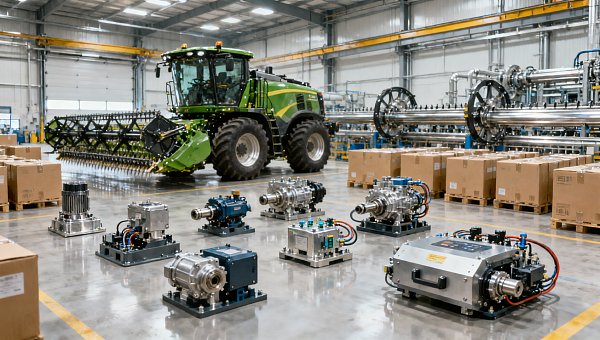
According to the available information, the White House signed the relevant document on June 1, 2026. The adjustment was made under Section 232 of the Trade Expansion Act of 1962 and applies to steel and aluminum tariffs for agricultural machinery such as harvesters.
The tariff rate for applicable imported steel and aluminum used in these agricultural machinery categories was reduced from 25% to 15%. At the same time, the local content recognition standard was relaxed from 95% to 85%.
The publicly available information indicates that the adjustment directly affects Factory Automation products that depend on exports to the U.S. market, including automated agricultural machinery, smart irrigation systems, and industrial execution units. The stated impact is a reduction in compliance declaration thresholds and terminal import costs.
Affected Industry Segments
Exporters Serving the U.S. Agricultural Machinery Market
Exporters of automated agricultural machinery are among the most directly affected because the tariff adjustment is linked to agricultural machinery categories such as harvesters. The reduction from 25% to 15% may lower the import cost pressure faced at the U.S. end market.
From an industry perspective, the main impact for these companies is likely to appear in quotation review, customs declaration preparation, and customer communication. However, companies still need to confirm whether each product model falls within the applicable scope before reflecting the change in commercial terms.
Smart Irrigation System Suppliers
Smart irrigation systems are identified in the available information as part of the Factory Automation products affected by the adjustment. These suppliers may be influenced where their products or integrated systems are connected to agricultural machinery applications and exports to the U.S. market.
Analysis shows that the key impact is not limited to the tariff rate itself. The relaxed local content recognition threshold may also reduce the compliance burden for companies preparing supporting documents for U.S.-bound shipments, provided that the relevant products meet the applicable criteria.
Industrial Actuator and Execution Unit Manufacturers
Industrial execution units used in automated agricultural equipment may also be affected. These products often serve as functional components within broader Factory Automation systems, and the tariff adjustment may influence their landed cost when exported into relevant U.S. applications.
Observably, component suppliers should pay attention to how their products are classified in export documentation and how customers define the final application. The impact may differ depending on whether the product is shipped as a standalone unit or as part of a larger agricultural automation system.
Compliance, Logistics, and Supply Chain Service Providers
Service providers supporting customs filing, trade compliance, logistics coordination, and export documentation may see changes in customer requirements. The reduced tariff rate and relaxed local content standard may alter the type and volume of documentation that exporters need to prepare.
What deserves closer attention now is the operational interpretation of the new threshold. Service providers should help companies distinguish between confirmed policy changes and the practical requirements that may still depend on official implementation details.
What Companies Should Watch and How to Respond
Track Further Official Clarification
Companies should continue monitoring official statements related to the June 1, 2026 document, especially any clarification on product scope, declaration procedures, and the application of the 85% local content recognition standard.
Analysis shows that the tariff reduction is already a clear policy adjustment based on the available information, but product-level execution may still require careful confirmation before companies revise pricing, contracts, or delivery plans.
Review Product Categories and U.S.-Bound Business Lines
Exporters should identify which U.S.-bound products are connected to agricultural machinery, automated farm equipment, smart irrigation systems, or industrial execution units. This review should be conducted by product type, application scenario, and customer market rather than by broad industry label alone.
From an industry perspective, companies with multiple product lines should avoid applying the tariff change across all Factory Automation exports without verification. The more practical approach is to build a product-by-product checklist based on the confirmed policy scope.
Separate Policy Signal from Business Execution
The reduction from 25% to 15% and the adjustment from 95% to 85% are important changes, but companies should not treat them as automatically completed cost reductions in every transaction. Import costs may still depend on classification, documentation, customer responsibility, and shipment timing.
It is more appropriate to understand this as a policy change that creates room for lower costs and easier compliance, rather than as a uniform result already reflected across all contracts and supply chains.
Prepare Documentation and Customer Communication in Advance
Companies exporting affected products to the U.S. market should prepare updated documentation packages, including product descriptions, material information, local content evidence, and application details where relevant. Sales, compliance, and logistics teams should align their explanations before communicating with customers.
Observably, this is especially important for suppliers of modules and execution units whose products may be incorporated into larger agricultural automation systems. Clear documentation can help reduce uncertainty in customs declaration and customer-side cost calculation.
Editor’s View / Industry Observation
From an industry perspective, this adjustment matters because it connects trade policy directly with the export cost structure of agricultural Factory Automation products. The lower steel and aluminum tariff rate may improve cost conditions for U.S.-bound automated farm machinery and related systems, while the lower local content threshold may reduce part of the compliance burden.
Analysis shows that the change is more than a simple tariff update for machinery exporters. It may influence quotation logic, supply chain documentation, and the way component suppliers position their products in U.S.-oriented agricultural automation projects.
At the same time, it is more appropriate to understand this as a policy signal with practical cost implications, rather than as a fully settled business outcome for every company. The actual benefit will depend on whether a product falls within the applicable category and whether the required compliance materials can support the claim.
Conclusion
The June 1, 2026 U.S. tariff adjustment reduces applicable steel and aluminum tariffs for agricultural machinery from 25% to 15% and lowers the local content recognition threshold from 95% to 85%. For exporters of automated agricultural equipment, smart irrigation systems, and industrial execution units, the change may reduce import cost pressure and simplify part of the compliance process.
Current more suitable understanding is that this development provides a clearer cost-relief signal for Factory Automation products tied to agricultural machinery exports, while companies still need to verify product scope, documentation requirements, and customer-level implementation before making commercial decisions.
Source Note
Main source: White House document signed on June 1, 2026, under Section 232 of the Trade Expansion Act of 1962, as described in the provided event information.
Items requiring continued observation: subsequent official clarification on applicable product categories, customs declaration procedures, local content recognition details, and how the adjustment is implemented in specific U.S.-bound Factory Automation shipments.
Get weekly intelligence in your inbox.
No noise. No sponsored content. Pure intelligence.
 Oct 24, 2026Tesla Q3 2026 Storage Deployments Rank Second Highest as Revenue Falls 16%Tesla Q3 2026 Storage Deployments Rank Second Highest as Revenue Falls 16%
 Oct 24, 2026Freight Forwarding Services Pricing: Comparing Quotes Beyond Base RatesFreight Forwarding Services Pricing: Comparing Quotes Beyond Base Rates
 Oct 23, 2026IndexBox Issues Off-Grid Solar Outlook to 2035, Forecasting 8.2% CAGRIndexBox Issues Off-Grid Solar Outlook to 2035, Forecasting 8.2% CAGR
 Oct 23, 2026NSF/ANSI 49 Biosafety Cabinets: Product Certification vs. Field TestingNSF/ANSI 49 Biosafety Cabinets: Product Certification vs. Field Testing
 Oct 22, 2026Mitsubishi Electric Develops Industry-First Humanoid Robot–CNC Machining SystemMitsubishi Electric Develops Industry-First Humanoid Robot–CNC Machining System
 Oct 22, 2026Aerospace Aluminum Machining: How to Control Distortion in Thin-Wall PartsAerospace Aluminum Machining: How to Control Distortion in Thin-Wall Parts
 Oct 21, 2026Genesis Energy commissions 200 MWh battery storage system at HuntlyGenesis Energy commissions 200 MWh battery storage system at Huntly
 Oct 21, 2026Buying AMI Smart Meters Wholesale: Compatibility Checks and Total CostsBuying AMI Smart Meters Wholesale: Compatibility Checks and Total Costs
 Oct 20, 2026Werner Enterprises Issues Q3 Earnings Warning as Costs RiseWerner Enterprises Issues Q3 Earnings Warning as Costs Rise
 Oct 20, 2026Are Digital Twins Viable for SMEs? Costs, Use Cases, and Data RequirementsAre Digital Twins Viable for SMEs? Costs, Use Cases, and Data Requirements
 Oct 19, 2026Choosing a Wholesale Servo Motor Exporter: Traceability and Warranty ChecksChoosing a Wholesale Servo Motor Exporter: Traceability and Warranty Checks
 Oct 18, 2026Syringe Manufacturing Equipment: Evaluating Throughput and Assembly AccuracySyringe Manufacturing Equipment: Evaluating Throughput and Assembly Accuracy
 Oct 17, 2026Air Freight Forwarding Services: How to Compare Quotes for Urgent ShipmentsAir Freight Forwarding Services: How to Compare Quotes for Urgent Shipments
 Oct 16, 2026Wholesale Solar Panels: How to Compare Bulk Quotes by Total Landed CostWholesale Solar Panels: How to Compare Bulk Quotes by Total Landed Cost
 Oct 15, 2026Supply Chain Intelligence for Sourcing: How to Vet New SuppliersSupply Chain Intelligence for Sourcing: How to Vet New Suppliers
 Oct 14, 2026How energy costs shape smart manufacturing investment in EuropeHow energy costs shape smart manufacturing investment in Europe
 Oct 14, 2026How skills shortages slow smart manufacturing in Southeast AsiaHow skills shortages slow smart manufacturing in Southeast Asia
 Oct 14, 2026How CNC wire-cut machining maintains tight tolerances in thick partsHow CNC wire-cut machining maintains tight tolerances in thick parts
 Oct 14, 2026Can automated feeding stabilize metal forming in smart factories?Can automated feeding stabilize metal forming in smart factories?
 Oct 14, 2026Can CT inspection detect internal defects in metal additive parts?Can CT inspection detect internal defects in metal additive parts?
 Oct 14, 2026When does additive manufacturing reduce lead time for spare parts?When does additive manufacturing reduce lead time for spare parts?
 Oct 14, 2026How production volume affects ROI on an automated painting lineHow production volume affects ROI on an automated painting line
 Oct 14, 2026What data does manufacturing bottleneck analysis consulting need?What data does manufacturing bottleneck analysis consulting need?
 Oct 14, 2026When should you hire a consultant for manufacturing bottlenecks?When should you hire a consultant for manufacturing bottlenecks?
 Oct 14, 2026What Are Electronics Exporters' Top Supply Chain Resilience Gaps in 2026?What Are Electronics Exporters' Top Supply Chain Resilience Gaps in 2026?
 Oct 14, 2026How Do You Measure AI Adoption Maturity in a Traditional Factory?How Do You Measure AI Adoption Maturity in a Traditional Factory?
 Oct 14, 2026Are Chinese AI-Assisted Surgical Devices Gaining Global Trust?Are Chinese AI-Assisted Surgical Devices Gaining Global Trust?