When port automation tech for bulk terminals pays off
For business evaluators, deciding when port automation tech for bulk terminals pays off requires more than comparing equipment costs. The real value emerges from measurable gains in vessel turnaround, labor safety, stockyard accuracy, energy efficiency, and data-driven planning across complex cargo flows. As bulk terminals face tighter margins, volatile demand, and rising sustainability expectations, automation becomes a strategic investment question: where can technology reduce operational risk, unlock capacity, and deliver a defensible return on capital?
Where port automation tech for bulk terminals creates measurable business value

Bulk terminals operate under pressure from vessel queues, fluctuating commodity volumes, demurrage exposure, safety risks, and limited yard space. Automation is valuable when it improves these constraints, not when it merely modernizes equipment.
For evaluators, port automation tech for bulk terminals should be judged as an operating system across quay, conveyor, storage, reclaiming, weighing, sampling, gate, and planning workflows.
The strongest payback signals
- Vessel waiting time is rising because manual dispatching cannot match berthing windows, tide restrictions, and equipment availability.
- Stockyard visibility is poor, causing grade contamination, inaccurate inventory records, or excessive rehandling movements.
- Safety incidents or near misses occur around mobile equipment, conveyor transfer points, stacker-reclaimers, and truck traffic.
- Energy consumption per handled tonne is difficult to track, making sustainability targets hard to convert into operating decisions.
- Terminal managers rely on spreadsheets instead of integrated data from sensors, PLCs, weighbridges, and terminal operating systems.
When several of these signals appear together, port automation tech for bulk terminals becomes a capacity, resilience, and governance investment rather than a discretionary upgrade.
How to compare manual, semi-automated, and automated terminal models
A practical comparison should separate technology ambition from operational fit. Some terminals gain strong returns from targeted automation, while others need deeper integration across control rooms and enterprise systems.
The table below helps evaluators compare typical operating models before committing to port automation tech for bulk terminals.
The best model is rarely the most sophisticated one on paper. It is the model that removes the terminal’s binding constraint while fitting available capital, skills, and implementation windows.
Which operational scenarios justify port automation tech for bulk terminals?
Business evaluators should connect automation to specific cargo flows. Bulk terminals vary widely by commodity, contamination tolerance, moisture sensitivity, dust risk, vessel size, and inland transport mode.
Scenario 1: high vessel delay cost
If demurrage, berth clashes, or tidal constraints materially affect margin, automation in scheduling, shiploader positioning, conveyor routing, and equipment health can shorten decision cycles.
Scenario 2: complex stockyard blending
For coal, iron ore, fertilizers, and agricultural commodities, stockpile mapping and reclaim sequencing reduce quality disputes and help planners meet contract specifications.
Scenario 3: safety-critical material handling
Remote operation, collision avoidance, access control, and video analytics can reduce exposure in areas with mobile equipment, suspended loads, dust, and rotating machinery.
- For exporters, the priority is often predictable loading performance and defensible shipment documentation.
- For import terminals, the main value may come from yard recovery, truck appointment control, and inventory accuracy.
- For multi-user terminals, automation supports transparent allocation of berths, storage, equipment time, and service charges.
In these settings, port automation tech for bulk terminals strengthens both operating discipline and commercial confidence, especially when contracts depend on throughput guarantees.
What parameters should evaluators request before approving investment?
A strong business case needs comparable parameters. Suppliers may emphasize different benefits, so procurement teams should normalize data into operational, financial, safety, and integration metrics.
The following evaluation table can help structure requests for information when assessing port automation tech for bulk terminals.
Evaluators should ask vendors to explain not only expected performance, but also the assumptions behind it. A credible proposal defines baselines, constraints, and operating responsibilities.
How to calculate payback without oversimplifying the business case
The payback of port automation tech for bulk terminals depends on avoided losses as much as visible productivity gains. A narrow equipment-only model may miss several decisive value drivers.
Include both direct and indirect benefits
- Direct gains include higher loading rates, lower overtime, fewer manual surveys, reduced equipment idle time, and lower energy waste.
- Indirect gains include better customer service, fewer quality claims, stronger audit trails, and improved contract negotiation confidence.
- Risk reductions include fewer safety exposures, lower unplanned downtime, and reduced dependency on undocumented operator knowledge.
Cost modeling should also include software subscriptions, sensor maintenance, spare parts, training, cybersecurity monitoring, integration engineering, and planned downtime during commissioning.
A phased approach often improves financial control. Start with bottleneck diagnostics, then automate the workflow with the highest verified value leakage.
Procurement checklist for reducing selection risk
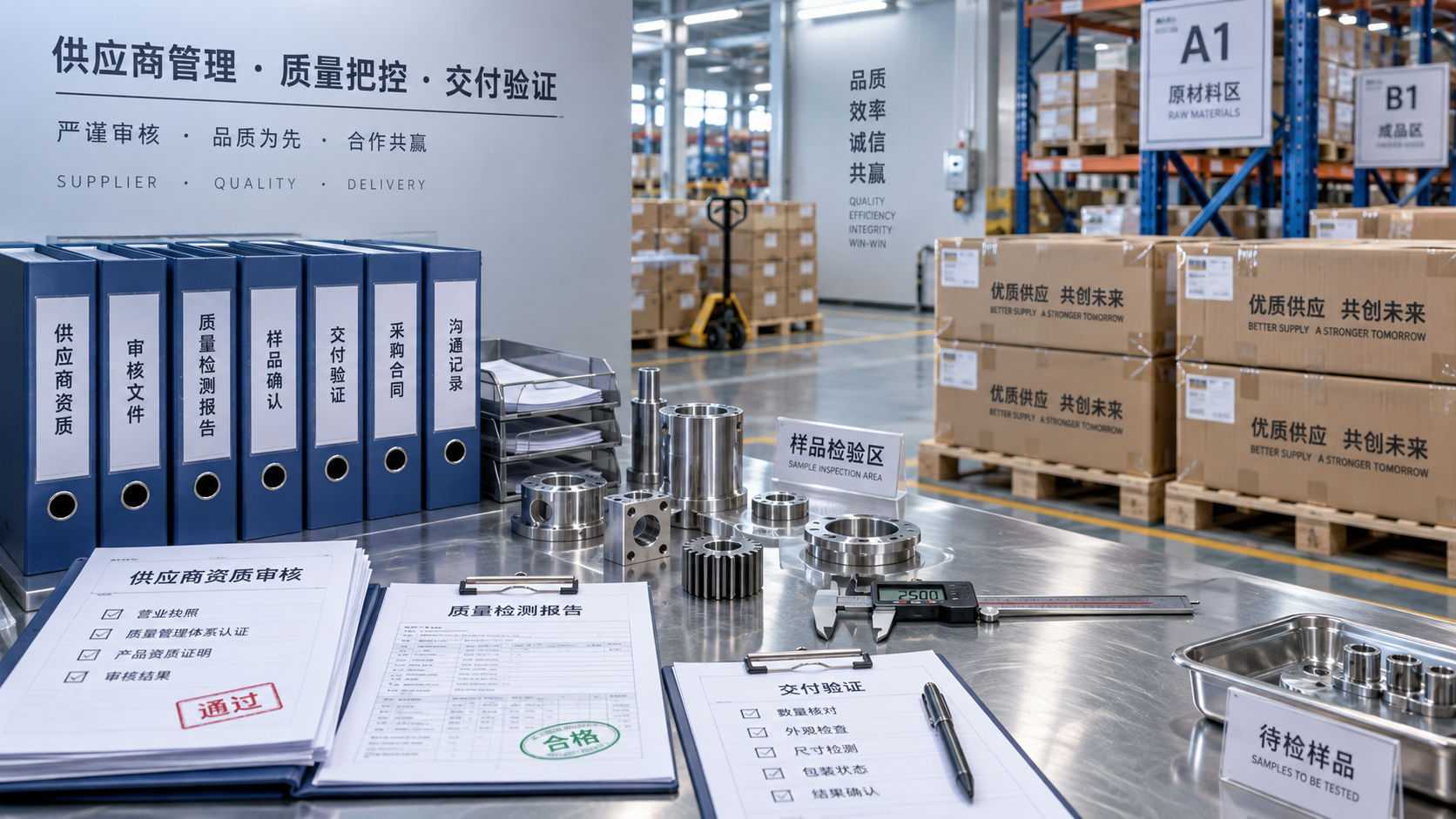
Buying automation is not the same as buying a single machine. The procurement team must evaluate technical architecture, supplier delivery capacity, operational adoption, and long-term support.
- Define the target constraint first: berth productivity, yard accuracy, truck flow, safety exposure, energy use, or maintenance reliability.
- Request a site-specific automation roadmap instead of accepting a generic product presentation.
- Confirm integration responsibilities across control systems, terminal operating software, ERP, and data visualization tools.
- Set acceptance tests that reflect real cargo, real shifts, real weather impacts, and realistic operator behavior.
- Review training, documentation, spare parts strategy, remote support, cybersecurity, and lifecycle upgrade terms.
For business evaluators, the key question is not whether port automation tech for bulk terminals is advanced. The question is whether it can be implemented without disrupting revenue-critical operations.
Compliance, cybersecurity, and data governance should not be afterthoughts
Automated terminals depend on connected assets. That creates operational intelligence, but it also introduces cybersecurity, access control, data ownership, and safety validation responsibilities.
The table below outlines common governance areas that should be reviewed during commercial and technical due diligence.
Standards such as ISO 55000 for asset management, IEC 62443 for industrial cybersecurity, and ISO 14001 for environmental management can provide useful reference points.
Common mistakes when evaluating port automation tech for bulk terminals
Automation projects fail to meet expectations when the commercial case is separated from field reality. Evaluators should look for assumptions that are too clean or too vendor-dependent.
Mistake 1: using average throughput as the only KPI
Average tonnes per hour can hide delays caused by cargo changes, cleanup, equipment conflicts, quality sampling, and truck or rail interruptions.
Mistake 2: ignoring operator adoption
Control-room tools need usable screens, clear exception rules, and training. If operators distrust recommendations, automation becomes a reporting layer instead of a decision engine.
Mistake 3: underestimating brownfield integration
Older conveyors, PLCs, drives, weighbridges, and legacy databases may require interface engineering. Brownfield constraints should be priced before approval.
- Avoid proposals that do not identify commissioning risks or operational downtime requirements.
- Avoid comparing vendors only on capital expenditure when lifecycle support differs significantly.
- Avoid assuming one terminal’s success automatically applies to a different commodity, climate, or labor model.
FAQ for business evaluators
How do I know if port automation tech for bulk terminals is financially justified?
Start with bottleneck economics. Quantify demurrage, idle equipment, rehandling, inventory errors, overtime, safety exposure, and energy waste before estimating automation benefits.
Is full automation always better than phased automation?
Not necessarily. Phased automation may deliver faster learning and lower implementation risk, especially for brownfield terminals with mixed legacy systems and limited shutdown windows.
What should be included in vendor due diligence?
Review integration scope, cybersecurity approach, acceptance testing, operator training, spare parts support, data ownership, and references for similar commodity handling conditions.
How long does implementation usually take?
Timelines vary by scope. A monitoring layer may be faster, while integrated control, equipment retrofits, and enterprise software connections require more planning and staged commissioning.
Why choose TradeNexus Pro for automation investment intelligence?
TradeNexus Pro helps procurement directors, supply chain managers, exporters, and enterprise decision-makers interpret port automation tech for bulk terminals through a cross-sector business lens.
Our coverage connects advanced manufacturing, green energy, smart electronics, healthcare technology, and supply chain SaaS, giving evaluators a broader view of automation maturity and supplier ecosystems.
Business teams can consult TNP when comparing parameters, clarifying selection criteria, mapping implementation risks, assessing certification expectations, or preparing supplier shortlists for complex terminal projects.
If your organization is evaluating port automation tech for bulk terminals, use TNP as a strategic intelligence resource for requirement framing, solution comparison, delivery-cycle questions, customization discussions, and quotation preparation.
Get weekly intelligence in your inbox.
No noise. No sponsored content. Pure intelligence.
 Oct 24, 2026Tesla Q3 2026 Storage Deployments Rank Second Highest as Revenue Falls 16%Tesla Q3 2026 Storage Deployments Rank Second Highest as Revenue Falls 16%
 Oct 24, 2026Freight Forwarding Services Pricing: Comparing Quotes Beyond Base RatesFreight Forwarding Services Pricing: Comparing Quotes Beyond Base Rates
 Oct 23, 2026IndexBox Issues Off-Grid Solar Outlook to 2035, Forecasting 8.2% CAGRIndexBox Issues Off-Grid Solar Outlook to 2035, Forecasting 8.2% CAGR
 Oct 23, 2026NSF/ANSI 49 Biosafety Cabinets: Product Certification vs. Field TestingNSF/ANSI 49 Biosafety Cabinets: Product Certification vs. Field Testing
 Oct 22, 2026Mitsubishi Electric Develops Industry-First Humanoid Robot–CNC Machining SystemMitsubishi Electric Develops Industry-First Humanoid Robot–CNC Machining System
 Oct 22, 2026Aerospace Aluminum Machining: How to Control Distortion in Thin-Wall PartsAerospace Aluminum Machining: How to Control Distortion in Thin-Wall Parts
 Oct 21, 2026Genesis Energy commissions 200 MWh battery storage system at HuntlyGenesis Energy commissions 200 MWh battery storage system at Huntly
 Oct 21, 2026Buying AMI Smart Meters Wholesale: Compatibility Checks and Total CostsBuying AMI Smart Meters Wholesale: Compatibility Checks and Total Costs
 Oct 20, 2026Werner Enterprises Issues Q3 Earnings Warning as Costs RiseWerner Enterprises Issues Q3 Earnings Warning as Costs Rise
 Oct 20, 2026Are Digital Twins Viable for SMEs? Costs, Use Cases, and Data RequirementsAre Digital Twins Viable for SMEs? Costs, Use Cases, and Data Requirements
 Oct 19, 2026Choosing a Wholesale Servo Motor Exporter: Traceability and Warranty ChecksChoosing a Wholesale Servo Motor Exporter: Traceability and Warranty Checks
 Oct 18, 2026Syringe Manufacturing Equipment: Evaluating Throughput and Assembly AccuracySyringe Manufacturing Equipment: Evaluating Throughput and Assembly Accuracy
 Oct 17, 2026Air Freight Forwarding Services: How to Compare Quotes for Urgent ShipmentsAir Freight Forwarding Services: How to Compare Quotes for Urgent Shipments
 Oct 16, 2026Wholesale Solar Panels: How to Compare Bulk Quotes by Total Landed CostWholesale Solar Panels: How to Compare Bulk Quotes by Total Landed Cost
 Oct 15, 2026Supply Chain Intelligence for Sourcing: How to Vet New SuppliersSupply Chain Intelligence for Sourcing: How to Vet New Suppliers
 Oct 14, 2026How energy costs shape smart manufacturing investment in EuropeHow energy costs shape smart manufacturing investment in Europe
 Oct 14, 2026How skills shortages slow smart manufacturing in Southeast AsiaHow skills shortages slow smart manufacturing in Southeast Asia
 Oct 14, 2026How CNC wire-cut machining maintains tight tolerances in thick partsHow CNC wire-cut machining maintains tight tolerances in thick parts
 Oct 14, 2026Can automated feeding stabilize metal forming in smart factories?Can automated feeding stabilize metal forming in smart factories?
 Oct 14, 2026Can CT inspection detect internal defects in metal additive parts?Can CT inspection detect internal defects in metal additive parts?
 Oct 14, 2026When does additive manufacturing reduce lead time for spare parts?When does additive manufacturing reduce lead time for spare parts?
 Oct 14, 2026How production volume affects ROI on an automated painting lineHow production volume affects ROI on an automated painting line
 Oct 14, 2026What data does manufacturing bottleneck analysis consulting need?What data does manufacturing bottleneck analysis consulting need?
 Oct 14, 2026When should you hire a consultant for manufacturing bottlenecks?When should you hire a consultant for manufacturing bottlenecks?
 Oct 14, 2026What Are Electronics Exporters' Top Supply Chain Resilience Gaps in 2026?What Are Electronics Exporters' Top Supply Chain Resilience Gaps in 2026?
 Oct 14, 2026How Do You Measure AI Adoption Maturity in a Traditional Factory?How Do You Measure AI Adoption Maturity in a Traditional Factory?
 Oct 14, 2026Are Chinese AI-Assisted Surgical Devices Gaining Global Trust?Are Chinese AI-Assisted Surgical Devices Gaining Global Trust?