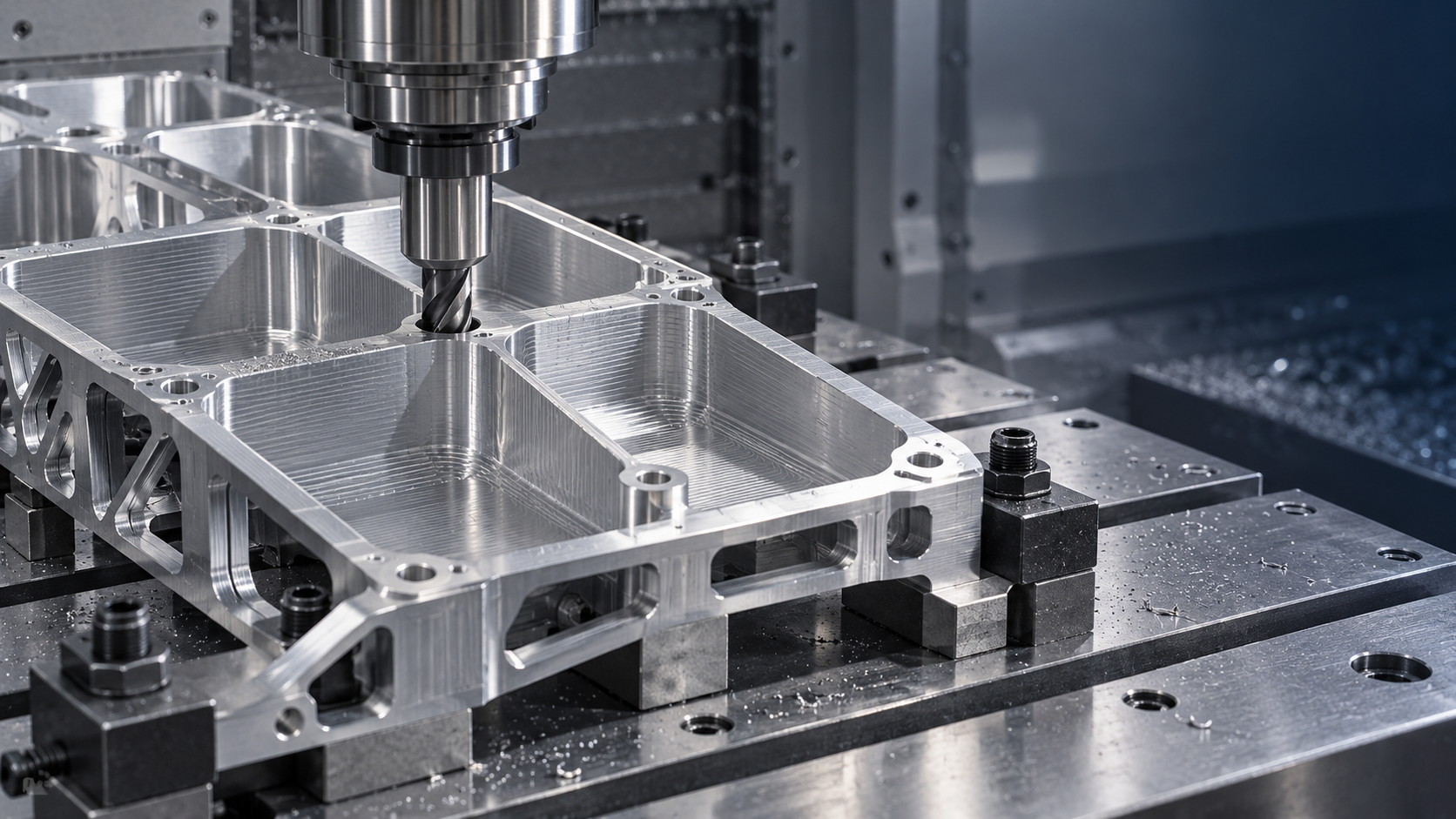
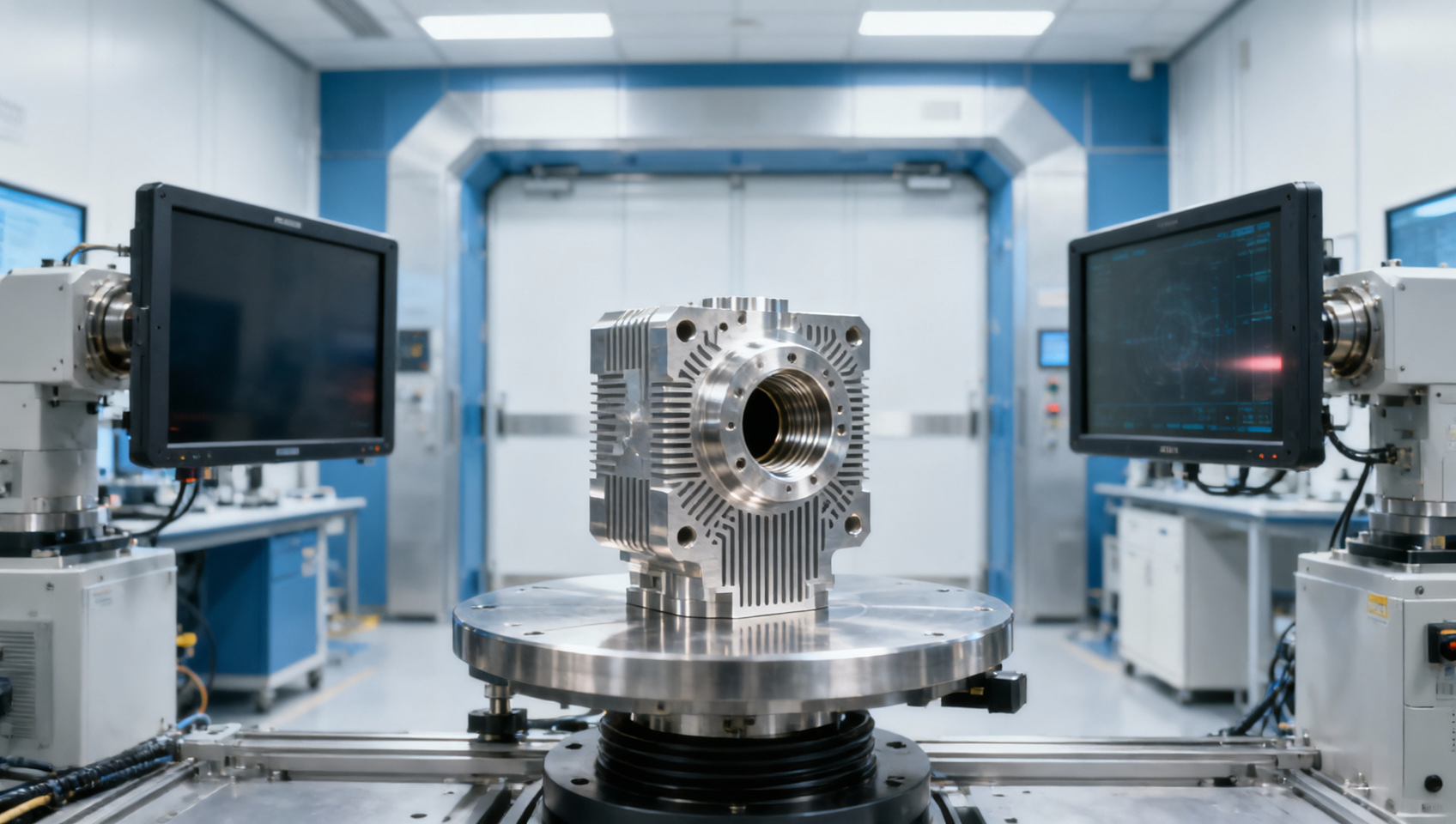
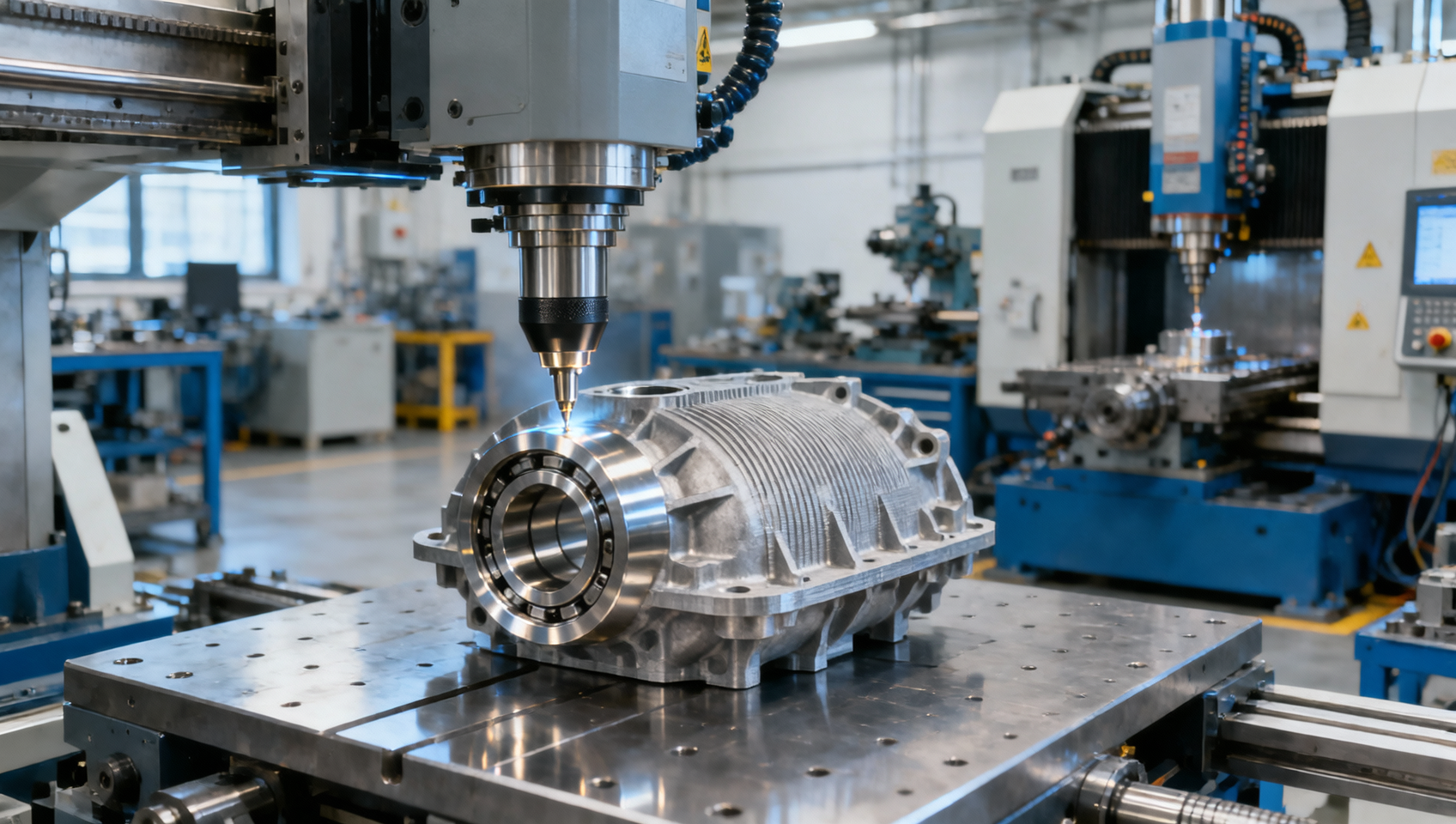
Why CNC machining for aerospace components needs QA checks
In aerospace production, even microscopic deviations can affect flight safety, compliance, and long-term component performance.
That is why CNC machining for aerospace components must be supported by rigorous QA checks at every stage.
From material verification to final documentation, each inspection step reduces risk and protects mission-critical reliability.
Why CNC machining for aerospace components needs structured QA checks
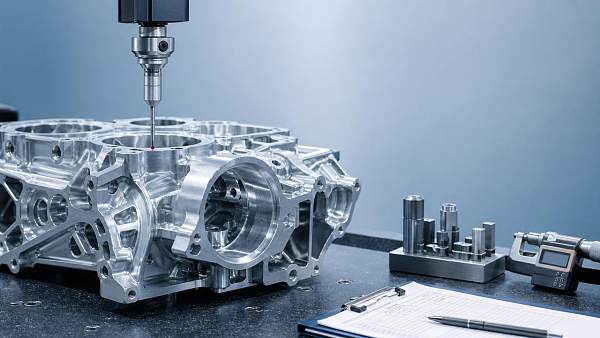
Aerospace parts operate under vibration, heat, pressure changes, and fatigue loading.
A small burr, tool mark, or dimensional shift can become a failure point after repeated cycles.
CNC machining for aerospace components depends on process discipline, not only machine capability.
A checklist-based QA approach converts complex requirements into repeatable actions.
It also helps align machining, inspection, documentation, and release decisions under one controlled workflow.
What makes aerospace QA different
General precision machining often focuses on dimensional conformity and cosmetic finish.
Aerospace quality control adds traceability, process validation, risk assessment, and full record retention.
CNC machining for aerospace components must prove that each part was made correctly and controlled consistently.
That proof matters during audits, supplier reviews, failure analysis, and airworthiness evaluations.
Core QA checklist for CNC machining for aerospace components
The following checklist supports practical control from incoming material through final release.
- Verify material certificates against drawing requirements, including alloy grade, heat lot, condition, and approved source before machining begins.
- Confirm revision control for drawings, 3D models, specifications, and work instructions before programming or releasing any operation.
- Validate CNC programs through simulation, dry runs, and controlled first-article cutting before moving into production quantities.
- Inspect critical dimensions using calibrated CMM, optical systems, gauges, or probing methods matched to tolerance severity.
- Control tool wear by setting replacement limits, monitoring cutting forces, and reviewing surface changes during long machining cycles.
- Check surface finish, edge breaks, deburring quality, and tool marks where fatigue resistance or sealing performance may be affected.
- Monitor temperature, coolant condition, fixture stability, and machine offsets during production to prevent hidden dimensional drift.
- Separate conforming, suspect, and nonconforming parts immediately, then document disposition with controlled approval and traceable records.
- Review special process requirements, such as anodizing, passivation, heat treatment, coating, or nondestructive testing, before final acceptance.
- Package finished parts with protection against corrosion, impact, contamination, and mix-up during storage or shipment.
This checklist is not a substitute for AS9100, customer specifications, or engineering drawings.
It acts as a practical control layer for CNC machining for aerospace components.
Material verification before aerospace machining
Material errors are among the most serious risks in CNC machining for aerospace components.
Aluminum, titanium, stainless steel, Inconel, and engineering plastics can look similar in raw form.
However, each material behaves differently under cutting, heat, stress, and corrosion exposure.
QA should verify mill certificates, chemical composition, mechanical properties, and heat treatment condition.
Positive material identification may be required when risk is high or customer specifications demand it.
Traceability must start early
Traceability should not begin after machining is complete.
It should begin when raw stock enters the controlled production area.
Lot numbers, batch records, traveler documents, and part markings should remain linked throughout every operation.
For CNC machining for aerospace components, broken traceability can make an otherwise acceptable part unusable.
Dimensional inspection and first article validation
First article inspection proves that the process can meet every defined requirement.
It should cover dimensions, tolerances, surface finish, threads, holes, features, and drawing notes.
CNC machining for aerospace components often involves tight GD&T controls and complex geometries.
Coordinate measuring machines are useful for profiles, positional tolerances, flatness, perpendicularity, and complex datum structures.
Manual gauges still matter when they are faster, validated, and suitable for the feature being checked.
Inspection frequency should follow risk
Not every feature needs identical inspection frequency.
Critical-to-function features require more frequent monitoring than noncritical surfaces.
Stable processes can use statistical sampling when approved by procedure and customer requirements.
Unstable or new operations need closer checks until capability is demonstrated.
Process controls that prevent hidden defects
QA checks are not limited to final inspection.
The strongest systems prevent defects before parts reach final release.
In CNC machining for aerospace components, prevention depends on disciplined process controls.
- Lock approved CNC programs and require authorization before edits, reposting, or machine-side parameter changes.
- Use verified fixtures, torque settings, soft jaws, and locating surfaces to prevent distortion during clamping.
- Track tool life by operation, material, coating, and cutting condition instead of relying on operator judgment alone.
- Record in-process measurements near critical operations, especially after roughing, finishing, drilling, boring, and threading.
- Review machine maintenance logs, spindle condition, axis accuracy, and calibration status before accepting high-risk work.
These controls make CNC machining for aerospace components more predictable across repeated production runs.
Scenario checks for different aerospace applications
Structural brackets and load-bearing parts
Structural parts require strong attention to material condition, grain direction, wall thickness, radii, and fastener-hole quality.
QA should focus on fatigue-sensitive features and any geometry that concentrates stress.
Engine-adjacent and thermal-zone components
Thermal-zone parts may use nickel alloys, titanium, or heat-resistant steels.
CNC machining for aerospace components in these areas requires surface integrity checks and strict tool-wear control.
Avionics housings and precision enclosures
Avionics housings often demand flatness, sealing surfaces, EMI control, and cosmetic consistency.
Inspection should include gasket grooves, threaded inserts, connector openings, and coating compatibility.
Hydraulic and fluid-control parts
Fluid-control components need careful checks for ports, threads, bores, sealing lands, and internal cleanliness.
Burrs and chips can damage systems, even when dimensional inspection appears acceptable.
Common QA gaps in CNC machining for aerospace components
Several risks appear repeatedly in aerospace machining programs.
They are often avoidable when checklists, audits, and corrective actions are applied consistently.
Assuming machine accuracy equals part quality
A high-end CNC machine does not automatically guarantee conforming parts.
Setup, fixturing, thermal growth, tool wear, and programming errors can still create deviations.
Treating deburring as a cosmetic step
Deburring affects fatigue life, assembly fit, sealing performance, and contamination control.
For CNC machining for aerospace components, edge condition should be inspected like any other requirement.
Ignoring documentation until shipment
Late documentation creates missing records, mismatched revisions, and incomplete traceability.
Inspection reports, certificates, concessions, and process records should be maintained throughout production.
Underestimating subcontracted special processes
Anodizing, coating, heat treatment, cleaning, and nondestructive testing can change part condition.
Approved sources, process certificates, and post-process inspections are essential.
Practical execution recommendations
QA execution should be visible, documented, and connected to real production risks.
A checklist works best when it is specific to the part family and process route.
- Build inspection plans directly from drawings, specifications, risk rankings, and previous nonconformance history.
- Use first article results to adjust fixture design, tool strategy, inspection frequency, and operator instructions.
- Review measurement system capability before trusting data from gauges, probes, fixtures, or automated inspection software.
- Link each nonconformance to root cause analysis, corrective action, and verified prevention measures.
- Digitize quality records where possible, but keep approvals, revisions, and access control clearly governed.
For CNC machining for aerospace components, consistency is the main quality advantage.
TradeNexus Pro emphasizes data-driven manufacturing intelligence because quality decisions now depend on connected evidence.
Reliable suppliers, verified process data, and disciplined QA systems create stronger aerospace production networks.
Summary and next-step checklist
CNC machining for aerospace components requires more than precision cutting.
It requires verified materials, controlled programs, validated inspections, traceable records, and disciplined release decisions.
The most effective next step is to audit the current QA flow against the full production route.
- Map each operation from raw material receipt to packaging and final documentation.
- Identify where inspection evidence is missing, delayed, duplicated, or disconnected from traceability.
- Prioritize high-risk features, special processes, and recurring defects for immediate control improvement.
- Standardize checklists for repeat parts while preserving engineering review for new or changed designs.
When QA is integrated into every stage, CNC machining for aerospace components becomes safer, more compliant, and more predictable.
That discipline supports stronger performance in the demanding environments where aerospace parts must never fail.
Get weekly intelligence in your inbox.
No noise. No sponsored content. Pure intelligence.
 Oct 24, 2026Tesla Q3 2026 Storage Deployments Rank Second Highest as Revenue Falls 16%Tesla Q3 2026 Storage Deployments Rank Second Highest as Revenue Falls 16%
 Oct 24, 2026Freight Forwarding Services Pricing: Comparing Quotes Beyond Base RatesFreight Forwarding Services Pricing: Comparing Quotes Beyond Base Rates
 Oct 23, 2026IndexBox Issues Off-Grid Solar Outlook to 2035, Forecasting 8.2% CAGRIndexBox Issues Off-Grid Solar Outlook to 2035, Forecasting 8.2% CAGR
 Oct 23, 2026NSF/ANSI 49 Biosafety Cabinets: Product Certification vs. Field TestingNSF/ANSI 49 Biosafety Cabinets: Product Certification vs. Field Testing
 Oct 22, 2026Mitsubishi Electric Develops Industry-First Humanoid Robot–CNC Machining SystemMitsubishi Electric Develops Industry-First Humanoid Robot–CNC Machining System
 Oct 22, 2026Aerospace Aluminum Machining: How to Control Distortion in Thin-Wall PartsAerospace Aluminum Machining: How to Control Distortion in Thin-Wall Parts
 Oct 21, 2026Genesis Energy commissions 200 MWh battery storage system at HuntlyGenesis Energy commissions 200 MWh battery storage system at Huntly
 Oct 21, 2026Buying AMI Smart Meters Wholesale: Compatibility Checks and Total CostsBuying AMI Smart Meters Wholesale: Compatibility Checks and Total Costs
 Oct 20, 2026Werner Enterprises Issues Q3 Earnings Warning as Costs RiseWerner Enterprises Issues Q3 Earnings Warning as Costs Rise
 Oct 20, 2026Are Digital Twins Viable for SMEs? Costs, Use Cases, and Data RequirementsAre Digital Twins Viable for SMEs? Costs, Use Cases, and Data Requirements
 Oct 19, 2026Choosing a Wholesale Servo Motor Exporter: Traceability and Warranty ChecksChoosing a Wholesale Servo Motor Exporter: Traceability and Warranty Checks
 Oct 18, 2026Syringe Manufacturing Equipment: Evaluating Throughput and Assembly AccuracySyringe Manufacturing Equipment: Evaluating Throughput and Assembly Accuracy
 Oct 17, 2026Air Freight Forwarding Services: How to Compare Quotes for Urgent ShipmentsAir Freight Forwarding Services: How to Compare Quotes for Urgent Shipments
 Oct 16, 2026Wholesale Solar Panels: How to Compare Bulk Quotes by Total Landed CostWholesale Solar Panels: How to Compare Bulk Quotes by Total Landed Cost
 Oct 15, 2026Supply Chain Intelligence for Sourcing: How to Vet New SuppliersSupply Chain Intelligence for Sourcing: How to Vet New Suppliers
 Oct 14, 2026How energy costs shape smart manufacturing investment in EuropeHow energy costs shape smart manufacturing investment in Europe
 Oct 14, 2026How skills shortages slow smart manufacturing in Southeast AsiaHow skills shortages slow smart manufacturing in Southeast Asia
 Oct 14, 2026How CNC wire-cut machining maintains tight tolerances in thick partsHow CNC wire-cut machining maintains tight tolerances in thick parts
 Oct 14, 2026Can automated feeding stabilize metal forming in smart factories?Can automated feeding stabilize metal forming in smart factories?
 Oct 14, 2026Can CT inspection detect internal defects in metal additive parts?Can CT inspection detect internal defects in metal additive parts?
 Oct 14, 2026When does additive manufacturing reduce lead time for spare parts?When does additive manufacturing reduce lead time for spare parts?
 Oct 14, 2026How production volume affects ROI on an automated painting lineHow production volume affects ROI on an automated painting line
 Oct 14, 2026What data does manufacturing bottleneck analysis consulting need?What data does manufacturing bottleneck analysis consulting need?
 Oct 14, 2026When should you hire a consultant for manufacturing bottlenecks?When should you hire a consultant for manufacturing bottlenecks?
 Oct 14, 2026What Are Electronics Exporters' Top Supply Chain Resilience Gaps in 2026?What Are Electronics Exporters' Top Supply Chain Resilience Gaps in 2026?
 Oct 14, 2026How Do You Measure AI Adoption Maturity in a Traditional Factory?How Do You Measure AI Adoption Maturity in a Traditional Factory?
 Oct 14, 2026Are Chinese AI-Assisted Surgical Devices Gaining Global Trust?Are Chinese AI-Assisted Surgical Devices Gaining Global Trust?