Intermediate Bulk Containers: Types, Capacities, and Safe Use Cases
Intermediate Bulk Containers: Types, Capacities, and Safe Use Cases
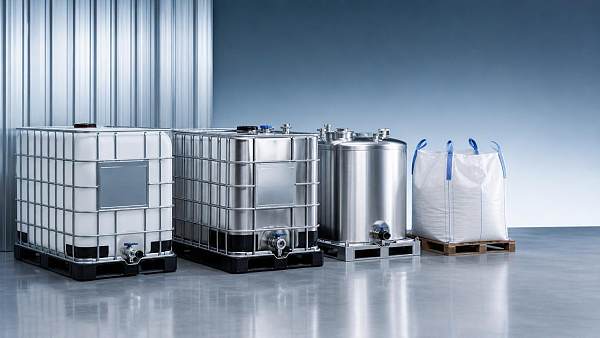
Intermediate bulk containers play a critical role in moving, storing, and dispensing liquids, granules, and semi-solid materials across regulated supply chains.
Choosing the right IBC type, capacity, and handling process affects contamination control, workplace safety, compliance, and total logistics cost.
This guide explains common IBC formats, volume options, safe use cases, and inspection checks for efficient bulk material operations.
Why Intermediate Bulk Containers Need Checklist-Based Decisions
Intermediate bulk containers sit between drums and tankers in capacity, handling flexibility, and cost efficiency.
That middle position creates practical advantages, but it also creates selection risks.
A container may look suitable while failing product compatibility, stackability, venting, cleaning, or transport requirements.
A checklist helps compare intermediate bulk containers by material, certification, valve design, filling method, storage environment, and reuse policy.
It also supports consistent decisions across chemicals, food ingredients, pharmaceuticals, coatings, agriculture, and industrial maintenance workflows.
Main Types of Intermediate Bulk Containers
Composite IBCs
Composite intermediate bulk containers use a plastic inner bottle inside a metal cage, usually mounted on a pallet base.
They are widely used for water-based chemicals, lubricants, liquid food ingredients, detergents, adhesives, and non-hazardous industrial liquids.
Their popularity comes from visibility, moderate cost, forklift handling, and efficient cubed storage.
Rigid Plastic IBCs
Rigid plastic intermediate bulk containers are often made from high-density polyethylene and may use integrated pallet structures.
They suit corrosive liquids, certain food products, and applications requiring lighter equipment than stainless steel.
Compatibility with the stored product must be validated before long storage cycles.
Stainless Steel IBCs
Stainless steel intermediate bulk containers provide high durability, cleanability, pressure resistance, and strong reuse economics.
They are common in pharmaceuticals, fine chemicals, solvents, cosmetics, high-value food products, and closed-loop industrial programs.
They require higher upfront investment, but lifecycle cost can be attractive when cleaning and return logistics are controlled.
Flexible IBCs
Flexible intermediate bulk containers, often called bulk bags or FIBCs, store dry granules, powders, flakes, and seeds.
They are not substitutes for liquid IBC totes, but they are essential in dry bulk supply chains.
Selection depends on lifting loops, liner requirements, electrostatic risk, discharge design, and safe working load.
Common Capacities and Selection Factors
Intermediate bulk containers are commonly supplied in 275-gallon and 330-gallon sizes in North American logistics.
In metric markets, 600-liter, 800-liter, and 1,000-liter intermediate bulk containers are frequently used.
Capacity should never be chosen by volume alone.
Product density directly changes the filled weight of intermediate bulk containers.
A 1,000-liter tote filled with a dense material can exceed handling or transport limits.
Freeboard, thermal expansion, and sloshing behavior must also be considered during filling.
Core Checklist for Safe IBC Selection and Use
- Verify product compatibility by reviewing chemical resistance data, temperature exposure, storage duration, and any additive that may affect the liner or gasket.
- Confirm regulatory markings before shipment, including UN approval, packaging group suitability, test dates, and permitted hazardous material categories.
- Inspect the pallet base, cage, bottle, welds, labels, caps, valves, and corner protectors before filling or dispatch.
- Control fill levels according to product density, thermal expansion, transport route, and required headspace for safe movement.
- Select valves that match dispensing speed, sealing performance, tamper evidence, cleaning access, and connection standards used onsite.
- Separate food-grade, pharmaceutical, hazardous, and general industrial intermediate bulk containers to prevent cross-contamination and documentation errors.
- Document cleaning, reconditioning, reuse cycles, prior contents, inspection findings, and disposal decisions for traceability and audit readiness.
- Train operators to lift from approved points, avoid dragging, secure loads, and recognize damage before moving filled containers.
Safe Use Cases Across Industries
Chemicals and Industrial Fluids
Chemical operations rely on intermediate bulk containers for acids, alkalis, solvents, coatings, additives, and treatment fluids.
The main concerns are compatibility, vapor control, static electricity, hazardous labels, and spill containment.
Secondary containment is essential when intermediate bulk containers hold hazardous or environmentally sensitive materials.
Food Ingredients and Beverage Inputs
Food-grade intermediate bulk containers support syrups, oils, sweeteners, concentrates, sauces, and liquid additives.
The container must protect product integrity through sanitary closures, clean interiors, traceable cleaning records, and approved materials.
Never place food-grade IBC totes into mixed-use service after hazardous contents.
Pharmaceuticals and Healthcare Technology
Stainless steel intermediate bulk containers are preferred when high cleanliness, validated cleaning, and controlled transfer are required.
Closed dispensing systems help reduce contamination risk, operator exposure, and batch inconsistency.
Documentation should link each container to prior contents, cleaning status, inspection date, and batch movement.
Agriculture and Green Energy Materials
Agriculture uses intermediate bulk containers for fertilizers, crop treatments, molasses, and water-based formulations.
Green energy supply chains may use IBCs for coolants, electrolytes, specialty chemicals, and process fluids.
Outdoor storage requires UV resistance, protected valves, stable surfaces, and containment for leakage events.
Commonly Overlooked Risks
Assuming every tote is reusable. Some intermediate bulk containers are single-use, while others require certified reconditioning before reuse.
Ignoring previous contents. Residue from prior use can contaminate new products or create dangerous reactions.
Overlooking valve damage. A small crack, missing seal, or misaligned thread can cause leaks during handling.
Stacking without verification. Filled intermediate bulk containers require approved stack ratings, level flooring, and stable load distribution.
Using water-rinsed containers carelessly. Rinsing does not guarantee decontamination, especially after oils, solvents, allergens, or hazardous chemicals.
Neglecting temperature effects. Heat can increase internal pressure, expand contents, weaken plastics, and stress gaskets.
Practical Execution Steps
- Create a material profile that lists product density, viscosity, hazard class, temperature range, shelf life, and cleaning sensitivity.
- Match the profile against approved intermediate bulk containers, including construction material, capacity, valve style, and certification status.
- Run a pre-fill inspection using a written checklist, photographs, seal verification, and rejection criteria for damaged units.
- Define filling limits and dispensing procedures, then align them with pumps, hoses, grounding needs, and spill response tools.
- Apply labels immediately after filling, including contents, hazards, batch code, weight, date, owner, and handling instructions.
- Review performance after each cycle by tracking leaks, cleaning failures, damage patterns, and transport claims.
Digital tracking can improve IBC fleet visibility when returnable assets move through multiple facilities.
Barcodes, RFID tags, and inspection records help connect intermediate bulk containers to service history and compliance evidence.
How to Compare Suppliers and Reconditioners
Supplier evaluation should go beyond unit price.
Ask for material specifications, certification documents, pressure test data, cleaning methods, and chain-of-custody controls.
For reconditioned intermediate bulk containers, confirm whether the inner bottle, valve, gasket, and labels were replaced or validated.
A reliable source should provide consistent documentation, visible grading standards, and clear limits for each container category.
Low-cost containers can become expensive when leakage, contamination, downtime, or regulatory penalties occur.
Summary and Next Actions
Intermediate bulk containers improve bulk handling when the container design matches the product, process, regulation, and storage environment.
The safest decisions combine compatibility checks, capacity planning, inspection discipline, traceability, and operator training.
Before approving new intermediate bulk containers, build a short checklist for material profile, certification, cleaning status, valve integrity, and handling limits.
Then test the checklist on one product family before expanding it across broader liquid, powder, or semi-solid operations.
For global B2B operations, this disciplined approach reduces risk while supporting safer, more transparent bulk material movement.
Get weekly intelligence in your inbox.
No noise. No sponsored content. Pure intelligence.
 Oct 24, 2026Tesla Q3 2026 Storage Deployments Rank Second Highest as Revenue Falls 16%Tesla Q3 2026 Storage Deployments Rank Second Highest as Revenue Falls 16%
 Oct 24, 2026Freight Forwarding Services Pricing: Comparing Quotes Beyond Base RatesFreight Forwarding Services Pricing: Comparing Quotes Beyond Base Rates
 Oct 23, 2026IndexBox Issues Off-Grid Solar Outlook to 2035, Forecasting 8.2% CAGRIndexBox Issues Off-Grid Solar Outlook to 2035, Forecasting 8.2% CAGR
 Oct 23, 2026NSF/ANSI 49 Biosafety Cabinets: Product Certification vs. Field TestingNSF/ANSI 49 Biosafety Cabinets: Product Certification vs. Field Testing
 Oct 22, 2026Mitsubishi Electric Develops Industry-First Humanoid Robot–CNC Machining SystemMitsubishi Electric Develops Industry-First Humanoid Robot–CNC Machining System
 Oct 22, 2026Aerospace Aluminum Machining: How to Control Distortion in Thin-Wall PartsAerospace Aluminum Machining: How to Control Distortion in Thin-Wall Parts
 Oct 21, 2026Genesis Energy commissions 200 MWh battery storage system at HuntlyGenesis Energy commissions 200 MWh battery storage system at Huntly
 Oct 21, 2026Buying AMI Smart Meters Wholesale: Compatibility Checks and Total CostsBuying AMI Smart Meters Wholesale: Compatibility Checks and Total Costs
 Oct 20, 2026Werner Enterprises Issues Q3 Earnings Warning as Costs RiseWerner Enterprises Issues Q3 Earnings Warning as Costs Rise
 Oct 20, 2026Are Digital Twins Viable for SMEs? Costs, Use Cases, and Data RequirementsAre Digital Twins Viable for SMEs? Costs, Use Cases, and Data Requirements
 Oct 19, 2026Choosing a Wholesale Servo Motor Exporter: Traceability and Warranty ChecksChoosing a Wholesale Servo Motor Exporter: Traceability and Warranty Checks
 Oct 18, 2026Syringe Manufacturing Equipment: Evaluating Throughput and Assembly AccuracySyringe Manufacturing Equipment: Evaluating Throughput and Assembly Accuracy
 Oct 17, 2026Air Freight Forwarding Services: How to Compare Quotes for Urgent ShipmentsAir Freight Forwarding Services: How to Compare Quotes for Urgent Shipments
 Oct 16, 2026Wholesale Solar Panels: How to Compare Bulk Quotes by Total Landed CostWholesale Solar Panels: How to Compare Bulk Quotes by Total Landed Cost
 Oct 15, 2026Supply Chain Intelligence for Sourcing: How to Vet New SuppliersSupply Chain Intelligence for Sourcing: How to Vet New Suppliers
 Oct 14, 2026How energy costs shape smart manufacturing investment in EuropeHow energy costs shape smart manufacturing investment in Europe
 Oct 14, 2026How skills shortages slow smart manufacturing in Southeast AsiaHow skills shortages slow smart manufacturing in Southeast Asia
 Oct 14, 2026How CNC wire-cut machining maintains tight tolerances in thick partsHow CNC wire-cut machining maintains tight tolerances in thick parts
 Oct 14, 2026Can automated feeding stabilize metal forming in smart factories?Can automated feeding stabilize metal forming in smart factories?
 Oct 14, 2026Can CT inspection detect internal defects in metal additive parts?Can CT inspection detect internal defects in metal additive parts?
 Oct 14, 2026When does additive manufacturing reduce lead time for spare parts?When does additive manufacturing reduce lead time for spare parts?
 Oct 14, 2026How production volume affects ROI on an automated painting lineHow production volume affects ROI on an automated painting line
 Oct 14, 2026What data does manufacturing bottleneck analysis consulting need?What data does manufacturing bottleneck analysis consulting need?
 Oct 14, 2026When should you hire a consultant for manufacturing bottlenecks?When should you hire a consultant for manufacturing bottlenecks?
 Oct 14, 2026What Are Electronics Exporters' Top Supply Chain Resilience Gaps in 2026?What Are Electronics Exporters' Top Supply Chain Resilience Gaps in 2026?
 Oct 14, 2026How Do You Measure AI Adoption Maturity in a Traditional Factory?How Do You Measure AI Adoption Maturity in a Traditional Factory?
 Oct 14, 2026Are Chinese AI-Assisted Surgical Devices Gaining Global Trust?Are Chinese AI-Assisted Surgical Devices Gaining Global Trust?