Warehouse Pallet Racking Selection: Load Ratings, Layout, and Safety
Warehouse Pallet Racking Selection: Load Ratings, Layout, and Safety
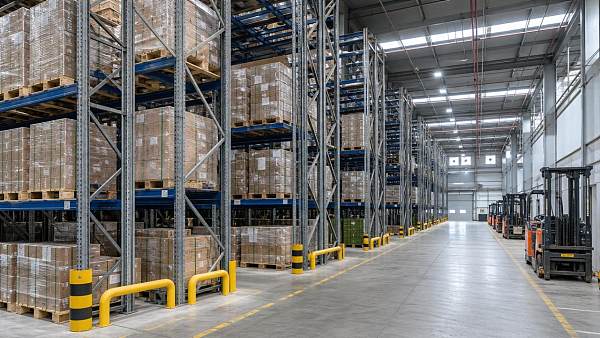
Selecting the right warehouse pallet racking is now a high-impact operational decision, not a simple storage purchase.
Storage density, workflow speed, capital discipline, and safety compliance increasingly depend on accurate racking specifications.
Beyond rack type, teams must validate load ratings, aisle layouts, forklift fit, code requirements, and future scalability.
A well-planned warehouse pallet racking system improves inventory flow, reduces handling waste, and lowers operational risk.
Poor specification can cause retrofits, downtime, damaged goods, and avoidable safety incidents.
Racking Decisions Are Becoming More Data-Driven
Warehouses are changing under pressure from faster order cycles, SKU growth, and tighter labor availability.
This shift is making warehouse pallet racking a core planning variable in distribution and manufacturing networks.
Static storage assumptions no longer work when inventory profiles, pallet dimensions, and replenishment patterns change frequently.
Facilities increasingly require racking systems that support both density and fast access without compromising inspection visibility.
The trend favors documented engineering, layout simulation, and clearer accountability for rack loading behavior.
Visible Signals in Modern Storage Projects
- More projects request certified load data before installation begins.
- Aisle design is reviewed alongside labor flow and equipment productivity.
- Seismic, fire, and impact protection requirements are considered earlier.
- Warehouse pallet racking is evaluated with automation readiness in mind.
- Maintenance planning is becoming part of the original design scope.
Load Ratings Are Moving From Assumption to Verification
Load rating is the first technical checkpoint for warehouse pallet racking selection.
It defines what each beam level, upright frame, bay, and overall structure can safely support.
The rating must reflect real pallet weights, load distribution, beam spacing, floor conditions, and rack configuration.
A common mistake is treating maximum pallet weight as the only calculation point.
Actual risk also depends on uneven loading, damaged pallets, overhanging goods, and operator placement errors.
Key Load Rating Checks
Reliable warehouse pallet racking design should include stamped drawings where local rules require them.
Any later change to beam height, pallet weight, or rack extension should trigger revalidation.
Layout Strategy Is Shifting Toward Flow Efficiency
Layout decisions determine whether warehouse pallet racking supports fast movement or creates daily congestion.
The best layout balances cube utilization, travel distance, picking frequency, receiving flow, and shipping sequence.
Narrow aisles can improve storage density, but they may require specialized lift trucks.
Wider aisles improve flexibility, yet they reduce pallet positions per square foot.
The right decision depends on throughput, SKU velocity, pallet turnover, and equipment availability.
Common Layout Options and Use Cases
- Selective racking: high accessibility for many SKUs and mixed inventory.
- Drive-in racking: higher density for low-SKU, high-volume storage.
- Push-back racking: dense storage with better access than deep lane systems.
- Pallet flow racking: first-in, first-out movement for dated or batch-controlled goods.
- Very narrow aisle racking: maximum cube use with dedicated equipment control.
Warehouse pallet racking layout should also protect staging areas, dock access, emergency routes, and inspection zones.
Ignoring these spaces often shifts hidden costs into labor time and operational friction.
Safety Requirements Are Becoming a Selection Driver
Safety expectations are rising as facilities store higher loads in denser layouts.
Warehouse pallet racking must be evaluated for impact resistance, anchoring, bracing, rack protection, and inspection access.
Local building codes, fire regulations, and seismic provisions can significantly influence system design.
Sprinkler clearance, flue spaces, and product overhang should be reviewed before finalizing rack height.
Operational safety also depends on training, signage, load discipline, and damage reporting habits.
Safety Controls Worth Prioritizing
- Install column guards where forklift contact risk is high.
- Use end-of-aisle protection in traffic-heavy zones.
- Anchor racks according to engineered requirements.
- Maintain flue spaces for fire suppression performance.
- Inspect beams, connectors, uprights, and anchors regularly.
- Remove damaged components from service promptly.
A safe warehouse pallet racking program treats inspection as a continuous process, not a yearly formality.
Several Forces Are Driving Better Racking Standards
The move toward more disciplined warehouse pallet racking selection is driven by operational and regulatory forces.
These factors make warehouse pallet racking a strategic infrastructure choice across supply chain, manufacturing, and service environments.
Business Impact Extends Beyond Storage Capacity
The immediate benefit of warehouse pallet racking is organized storage, but the broader impact is operational resilience.
A stable layout reduces search time, improves cycle counting, and supports cleaner inventory governance.
It also improves safety performance by making traffic patterns and pallet positions more predictable.
When racking is poorly matched, problems appear across receiving, replenishment, picking, shipping, and maintenance.
Effects by Operational Area
- Receiving: better rack planning reduces staging overflow and product misplacement.
- Storage: verified capacity lowers overload risk and improves space discipline.
- Picking: logical slotting shortens travel and reduces handling errors.
- Shipping: cleaner flow supports faster consolidation and dispatch.
- Maintenance: accessible aisles simplify inspections and damage response.
These effects explain why warehouse pallet racking is increasingly reviewed during network redesign and facility expansion.
Selection Criteria Should Reflect Future Operating Conditions
A racking system should be specified for current needs and realistic growth scenarios.
Future pallet weights, packaging changes, new product lines, and automation plans can alter capacity requirements.
Warehouse pallet racking that cannot adapt may become a constraint before its physical service life ends.
Core Points to Review Before Approval
- Confirm pallet dimensions, including overhang and irregular loads.
- Validate maximum, average, and changing pallet weights.
- Match aisle width to actual forklift turning radius.
- Check clear height, lighting, sprinklers, and building columns.
- Review floor loading and slab condition before installation.
- Plan for rack protection in high-contact areas.
- Ensure configuration changes require engineering review.
This disciplined approach reduces the chance of buying warehouse pallet racking that solves one problem but creates another.
A Practical Decision Framework Reduces Project Risk
The strongest warehouse pallet racking projects follow a structured sequence from data collection to post-installation control.
This framework supports better comparison between suppliers, layouts, and investment options.
It also makes hidden assumptions visible before they become installation or operating problems.
Next Steps for Confident Racking Decisions
Start by building a factual profile of every load type that will enter the facility.
Then compare warehouse pallet racking options against capacity, access, safety, compliance, and expansion requirements.
Request technical drawings, load tables, installation requirements, and inspection guidance before committing capital.
Review layouts with actual equipment paths, not only storage position counts.
Finally, document rules for loading, maintenance, damage reporting, and future rack modification.
TradeNexus Pro tracks infrastructure decisions where storage systems, supply chain software, and operational risk intersect.
Use these insights to evaluate warehouse pallet racking with stronger evidence, clearer priorities, and safer long-term execution.
Get weekly intelligence in your inbox.
No noise. No sponsored content. Pure intelligence.
 Oct 24, 2026Tesla Q3 2026 Storage Deployments Rank Second Highest as Revenue Falls 16%Tesla Q3 2026 Storage Deployments Rank Second Highest as Revenue Falls 16%
 Oct 24, 2026Freight Forwarding Services Pricing: Comparing Quotes Beyond Base RatesFreight Forwarding Services Pricing: Comparing Quotes Beyond Base Rates
 Oct 23, 2026IndexBox Issues Off-Grid Solar Outlook to 2035, Forecasting 8.2% CAGRIndexBox Issues Off-Grid Solar Outlook to 2035, Forecasting 8.2% CAGR
 Oct 23, 2026NSF/ANSI 49 Biosafety Cabinets: Product Certification vs. Field TestingNSF/ANSI 49 Biosafety Cabinets: Product Certification vs. Field Testing
 Oct 22, 2026Mitsubishi Electric Develops Industry-First Humanoid Robot–CNC Machining SystemMitsubishi Electric Develops Industry-First Humanoid Robot–CNC Machining System
 Oct 22, 2026Aerospace Aluminum Machining: How to Control Distortion in Thin-Wall PartsAerospace Aluminum Machining: How to Control Distortion in Thin-Wall Parts
 Oct 21, 2026Genesis Energy commissions 200 MWh battery storage system at HuntlyGenesis Energy commissions 200 MWh battery storage system at Huntly
 Oct 21, 2026Buying AMI Smart Meters Wholesale: Compatibility Checks and Total CostsBuying AMI Smart Meters Wholesale: Compatibility Checks and Total Costs
 Oct 20, 2026Werner Enterprises Issues Q3 Earnings Warning as Costs RiseWerner Enterprises Issues Q3 Earnings Warning as Costs Rise
 Oct 20, 2026Are Digital Twins Viable for SMEs? Costs, Use Cases, and Data RequirementsAre Digital Twins Viable for SMEs? Costs, Use Cases, and Data Requirements
 Oct 19, 2026Choosing a Wholesale Servo Motor Exporter: Traceability and Warranty ChecksChoosing a Wholesale Servo Motor Exporter: Traceability and Warranty Checks
 Oct 18, 2026Syringe Manufacturing Equipment: Evaluating Throughput and Assembly AccuracySyringe Manufacturing Equipment: Evaluating Throughput and Assembly Accuracy
 Oct 17, 2026Air Freight Forwarding Services: How to Compare Quotes for Urgent ShipmentsAir Freight Forwarding Services: How to Compare Quotes for Urgent Shipments
 Oct 16, 2026Wholesale Solar Panels: How to Compare Bulk Quotes by Total Landed CostWholesale Solar Panels: How to Compare Bulk Quotes by Total Landed Cost
 Oct 15, 2026Supply Chain Intelligence for Sourcing: How to Vet New SuppliersSupply Chain Intelligence for Sourcing: How to Vet New Suppliers
 Oct 14, 2026How energy costs shape smart manufacturing investment in EuropeHow energy costs shape smart manufacturing investment in Europe
 Oct 14, 2026How skills shortages slow smart manufacturing in Southeast AsiaHow skills shortages slow smart manufacturing in Southeast Asia
 Oct 14, 2026How CNC wire-cut machining maintains tight tolerances in thick partsHow CNC wire-cut machining maintains tight tolerances in thick parts
 Oct 14, 2026Can automated feeding stabilize metal forming in smart factories?Can automated feeding stabilize metal forming in smart factories?
 Oct 14, 2026Can CT inspection detect internal defects in metal additive parts?Can CT inspection detect internal defects in metal additive parts?
 Oct 14, 2026When does additive manufacturing reduce lead time for spare parts?When does additive manufacturing reduce lead time for spare parts?
 Oct 14, 2026How production volume affects ROI on an automated painting lineHow production volume affects ROI on an automated painting line
 Oct 14, 2026What data does manufacturing bottleneck analysis consulting need?What data does manufacturing bottleneck analysis consulting need?
 Oct 14, 2026When should you hire a consultant for manufacturing bottlenecks?When should you hire a consultant for manufacturing bottlenecks?
 Oct 14, 2026What Are Electronics Exporters' Top Supply Chain Resilience Gaps in 2026?What Are Electronics Exporters' Top Supply Chain Resilience Gaps in 2026?
 Oct 14, 2026How Do You Measure AI Adoption Maturity in a Traditional Factory?How Do You Measure AI Adoption Maturity in a Traditional Factory?
 Oct 14, 2026Are Chinese AI-Assisted Surgical Devices Gaining Global Trust?Are Chinese AI-Assisted Surgical Devices Gaining Global Trust?