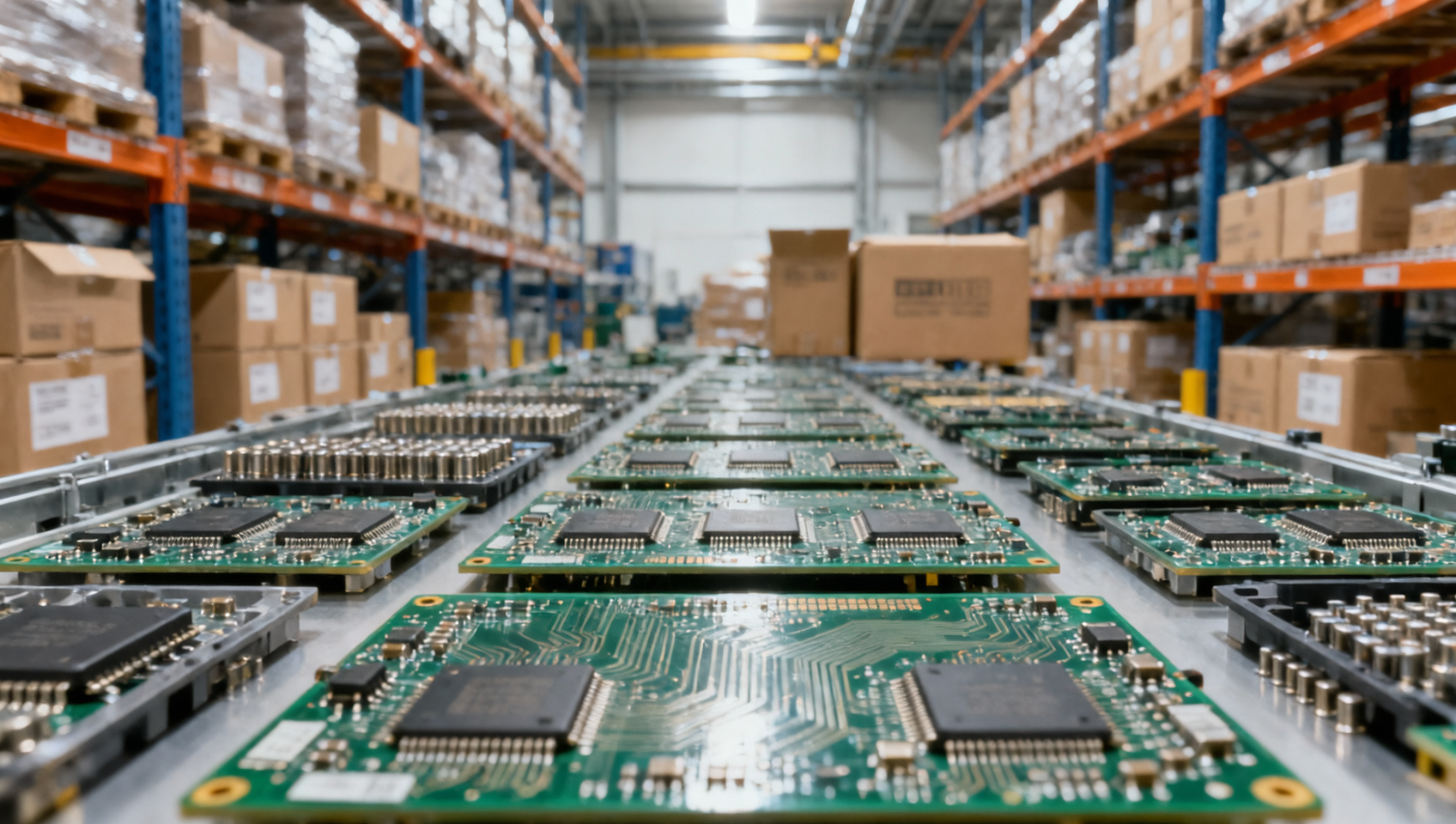
Customs Tightens Sampling for Infant Products & Low-Voltage Equipment from June 1
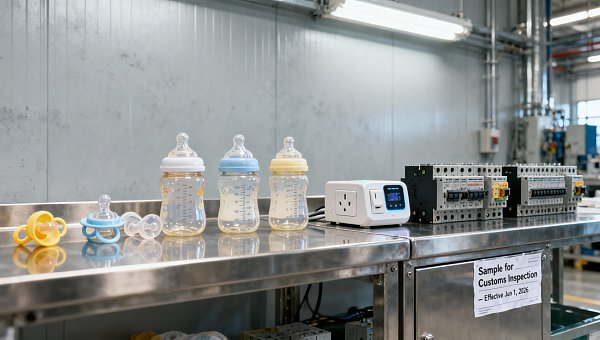
Effective June 1, 2026, China Customs will implement enhanced routine sampling inspections on imported infant and child products, low-voltage electrical equipment, and four other categories of imported goods—as well as two categories of exported goods—under General Administration of Customs Announcement No. 57 of 2026. The measure directly affects exporters of electronic components, smart home appliances, and industrial control devices, introducing new compliance prerequisites, delivery timeline constraints, and overseas market access risks.
Key Regulatory Changes Effective June 1, 2026
General Administration of Customs Announcement No. 57 (2026) enters into force on June 1, 2026. It establishes a routine sampling inspection regime for six categories of imported goods—including infant and child products and low-voltage electrical equipment—and two categories of exported goods. For exports, sampling must be conducted at the manufacturing facility prior to customs declaration; shipments failing inspection will be subject to return or technical rectification.
Impact Across Supply Chain Roles
Direct Trading Enterprises
These firms face tighter pre-shipment compliance gates: export clearance now depends on factory-level sampling results. Delays in sample testing or nonconformities may trigger shipment hold-ups, contract penalties, or loss of buyer trust—especially where delivery windows are tightly bound to overseas retail or regulatory cycles.
Raw Material & Component Suppliers
Suppliers to manufacturers of covered products must ensure traceability and consistency of inputs (e.g., flame-retardant plastics, insulated wiring, battery cells), as deviations may cascade into final-product sampling failures. Documentation alignment—such as RoHS declarations or material safety data sheets—becomes critical for upstream verification.
Contract Manufacturers & OEMs
Manufacturers now bear primary responsibility for pre-declaration sampling readiness. Production scheduling must integrate lab capacity, test turnaround time, and rework buffers. Internal quality control protocols—particularly for batch homogeneity and labeling accuracy—require formal validation against sampling criteria.
Logistics & Compliance Service Providers
Third-party inspection agencies, customs brokers, and certification consultants will see increased demand for factory-based sampling coordination, documentation review, and post-failure technical remediation support. Clarity on sampling frequency, acceptance criteria, and appeal procedures remains pending—and thus introduces service scope uncertainty.
Strategic Priorities for Exporters
Pre-Declaration Sampling Readiness
Establish dedicated sampling workflows aligned with Announcement No. 57 requirements—not just for finished goods but also for critical subassemblies. Maintain documented evidence of sampling plans, lab accreditation status (e.g., CNAS), and pass/fail records accessible for customs audit.
Supply Chain Traceability & Documentation Control
Ensure full bill-of-materials traceability, especially for regulated substances (e.g., phthalates in infant products, lead content in low-voltage connectors). Update technical files—including test reports, conformity declarations, and user manuals—to reflect sampling-compliant versions prior to production release.
Delivery Planning & Contract Clause Review
Reassess lead times: allocate additional 5–10 working days for sampling, analysis, and potential rework. Revise Incoterms and commercial contracts to clarify liability for sampling-related delays or rejections—particularly under FOB or EXW arrangements where the exporter controls factory-level compliance.
Overseas Market Access Alignment
Map how Announcement No. 57’s sampling outcomes interact with destination-market requirements (e.g., CE marking for EU, CPSIA testing for US). A domestic sampling failure may signal broader conformity gaps affecting parallel certifications—making cross-regulatory technical alignment essential.
Industry Perspective: Beyond Compliance Toward Systemic Resilience
Analysis shows this policy shift reflects a broader trend: regulatory authorities are moving from post-entry verification toward upstream process assurance. What deserves closer attention is not merely the added inspection step—but how it reshapes accountability across tiers of the supply chain. From an industry perspective, manufacturers with mature quality management systems (e.g., ISO 9001, IATF 16949) and digital traceability platforms are better positioned to absorb sampling integration without significant cost inflation. Observably, the policy may accelerate consolidation among smaller exporters lacking in-house testing infrastructure or technical documentation capacity—raising the de facto compliance threshold for market participation.
Why This Matters for Long-Term Market Positioning
This measure does not introduce new safety standards—but rather strengthens enforcement rigor at the point of customs clearance. Its significance lies in converting long-standing regulatory expectations into binding operational checkpoints. For global buyers, it signals greater confidence in the reliability of China-sourced goods within these categories; for exporters, it underscores that regulatory preparedness must now be embedded in product development, procurement, and production planning—not treated as a final-step administrative task.
Source & Verification Notes
This article is generated based solely on the provided title, effective date (June 1, 2026), and event summary. Specific official source links were not provided in the input and should be verified continuously. Stakeholders are advised to monitor upcoming implementation guidelines, sampling protocol details, and customs authority FAQs—particularly regarding scope clarification (e.g., exact HS codes covered), laboratory accreditation requirements, and appeals mechanisms for rejected batches.
Get weekly intelligence in your inbox.
No noise. No sponsored content. Pure intelligence.
 Oct 24, 2026Tesla Q3 2026 Storage Deployments Rank Second Highest as Revenue Falls 16%Tesla Q3 2026 Storage Deployments Rank Second Highest as Revenue Falls 16%
 Oct 24, 2026Freight Forwarding Services Pricing: Comparing Quotes Beyond Base RatesFreight Forwarding Services Pricing: Comparing Quotes Beyond Base Rates
 Oct 23, 2026IndexBox Issues Off-Grid Solar Outlook to 2035, Forecasting 8.2% CAGRIndexBox Issues Off-Grid Solar Outlook to 2035, Forecasting 8.2% CAGR
 Oct 23, 2026NSF/ANSI 49 Biosafety Cabinets: Product Certification vs. Field TestingNSF/ANSI 49 Biosafety Cabinets: Product Certification vs. Field Testing
 Oct 22, 2026Mitsubishi Electric Develops Industry-First Humanoid Robot–CNC Machining SystemMitsubishi Electric Develops Industry-First Humanoid Robot–CNC Machining System
 Oct 22, 2026Aerospace Aluminum Machining: How to Control Distortion in Thin-Wall PartsAerospace Aluminum Machining: How to Control Distortion in Thin-Wall Parts
 Oct 21, 2026Genesis Energy commissions 200 MWh battery storage system at HuntlyGenesis Energy commissions 200 MWh battery storage system at Huntly
 Oct 21, 2026Buying AMI Smart Meters Wholesale: Compatibility Checks and Total CostsBuying AMI Smart Meters Wholesale: Compatibility Checks and Total Costs
 Oct 20, 2026Werner Enterprises Issues Q3 Earnings Warning as Costs RiseWerner Enterprises Issues Q3 Earnings Warning as Costs Rise
 Oct 20, 2026Are Digital Twins Viable for SMEs? Costs, Use Cases, and Data RequirementsAre Digital Twins Viable for SMEs? Costs, Use Cases, and Data Requirements
 Oct 19, 2026Choosing a Wholesale Servo Motor Exporter: Traceability and Warranty ChecksChoosing a Wholesale Servo Motor Exporter: Traceability and Warranty Checks
 Oct 18, 2026Syringe Manufacturing Equipment: Evaluating Throughput and Assembly AccuracySyringe Manufacturing Equipment: Evaluating Throughput and Assembly Accuracy
 Oct 17, 2026Air Freight Forwarding Services: How to Compare Quotes for Urgent ShipmentsAir Freight Forwarding Services: How to Compare Quotes for Urgent Shipments
 Oct 16, 2026Wholesale Solar Panels: How to Compare Bulk Quotes by Total Landed CostWholesale Solar Panels: How to Compare Bulk Quotes by Total Landed Cost
 Oct 15, 2026Supply Chain Intelligence for Sourcing: How to Vet New SuppliersSupply Chain Intelligence for Sourcing: How to Vet New Suppliers
 Oct 14, 2026How energy costs shape smart manufacturing investment in EuropeHow energy costs shape smart manufacturing investment in Europe
 Oct 14, 2026How skills shortages slow smart manufacturing in Southeast AsiaHow skills shortages slow smart manufacturing in Southeast Asia
 Oct 14, 2026How CNC wire-cut machining maintains tight tolerances in thick partsHow CNC wire-cut machining maintains tight tolerances in thick parts
 Oct 14, 2026Can automated feeding stabilize metal forming in smart factories?Can automated feeding stabilize metal forming in smart factories?
 Oct 14, 2026Can CT inspection detect internal defects in metal additive parts?Can CT inspection detect internal defects in metal additive parts?
 Oct 14, 2026When does additive manufacturing reduce lead time for spare parts?When does additive manufacturing reduce lead time for spare parts?
 Oct 14, 2026How production volume affects ROI on an automated painting lineHow production volume affects ROI on an automated painting line
 Oct 14, 2026What data does manufacturing bottleneck analysis consulting need?What data does manufacturing bottleneck analysis consulting need?
 Oct 14, 2026When should you hire a consultant for manufacturing bottlenecks?When should you hire a consultant for manufacturing bottlenecks?
 Oct 14, 2026What Are Electronics Exporters' Top Supply Chain Resilience Gaps in 2026?What Are Electronics Exporters' Top Supply Chain Resilience Gaps in 2026?
 Oct 14, 2026How Do You Measure AI Adoption Maturity in a Traditional Factory?How Do You Measure AI Adoption Maturity in a Traditional Factory?
 Oct 14, 2026Are Chinese AI-Assisted Surgical Devices Gaining Global Trust?Are Chinese AI-Assisted Surgical Devices Gaining Global Trust?