
Industrial IoT Gateways for Machine Monitoring: Which Protocols and Edge Functions Matter?
Industrial IoT Gateways for Machine Monitoring: Which Protocols and Edge Functions Matter?
Selecting industrial IoT gateways for machine monitoring is no longer just about connectivity.
The real question is whether the gateway can turn raw machine signals into dependable operational intelligence.
In most plants, data already exists.
What is missing is a practical bridge between legacy equipment, modern software, and secure decision-making.
That is where industrial IoT gateways for machine monitoring become strategically important.
A strong gateway does four things well.
It speaks the right industrial protocols, processes data at the edge, protects the network, and integrates cleanly with upstream systems.
If any one of those areas is weak, machine monitoring programs usually stall after pilot deployment.
Why Protocol Support Shapes Real-World Performance
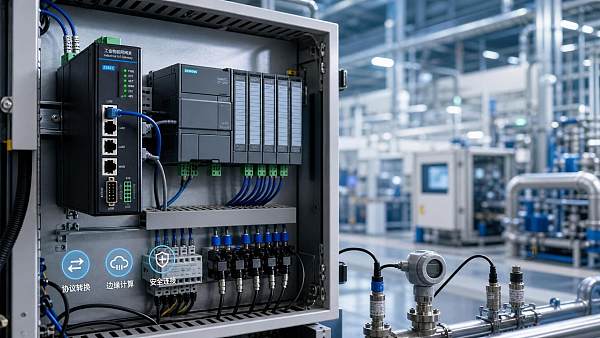
Protocol compatibility is often the first screening factor for industrial IoT gateways for machine monitoring.
However, basic compatibility is not enough.
The gateway must support the protocols that matter inside mixed production environments, not just on a product datasheet.
In practice, machine fleets are rarely uniform.
One line may use PLCs with Modbus TCP, another may rely on PROFINET, and older assets may still expose serial Modbus RTU.
Newer machines may publish through OPC UA, while cloud-facing applications prefer MQTT.
That mix changes the evaluation criteria immediately.
Protocols That Usually Matter Most
- Modbus RTU and Modbus TCP for legacy and widely deployed industrial assets.
- OPC UA for structured industrial data models and secure interoperability.
- MQTT for lightweight, event-driven communication to cloud or central platforms.
- EtherNet/IP and PROFINET where line integration depends on specific automation ecosystems.
- BACnet or CAN-based support when monitoring extends into facilities or mobile equipment.
From a technical assessment perspective, protocol support should be reviewed in three layers.
First, can the gateway connect physically and logically?
Second, can it normalize tags, timestamps, and metadata?
Third, can it preserve context when data moves into MES, SCADA, historians, or cloud dashboards?
This is where many industrial IoT gateways for machine monitoring start to separate from one another.
Edge Functions That Actually Reduce Monitoring Friction
Protocol translation gets the data out.
Edge functions determine whether that data becomes useful quickly enough to improve operations.
For machine monitoring, edge capability matters because not every signal needs to travel upstream in raw form.
Sending everything creates noise, bandwidth costs, and integration headaches.
A better gateway filters, structures, and responds locally.
High-Value Edge Functions
- Data filtering to remove redundant signals and reduce upstream load.
- Local buffering so machine data is not lost during network interruptions.
- Rule-based alarms for threshold breaches, downtime, or abnormal cycles.
- Edge aggregation to combine multiple machine tags into production indicators.
- Protocol conversion between OT networks and IT analytics platforms.
- Basic analytics such as anomaly detection, trend compression, or OEE pre-calculation.
The most practical industrial IoT gateways for machine monitoring support low-latency decisions without requiring a full edge server stack.
That balance matters.
Overbuilt devices increase complexity.
Underpowered devices force teams to push too much logic into cloud applications.
In actual deployment, local store-and-forward and event handling are often more valuable than flashy AI claims.
Cybersecurity and Lifecycle Control Cannot Be Secondary
Machine monitoring creates a new path between shop-floor assets and enterprise systems.
That path must be secure from day one.
For this reason, cybersecurity should be evaluated alongside protocol support, not after selection.
Industrial IoT gateways for machine monitoring often sit in exposed positions between OT and IT environments.
That makes them both useful and risky.
Security Features Worth Checking
- Secure boot and signed firmware updates.
- Role-based access control and strong password policy support.
- TLS for data in transit and certificate management.
- VPN support for remote maintenance.
- Audit logs and centralized device management.
- Patchability over a realistic multi-year lifecycle.
Another overlooked factor is segmentation.
A gateway should help isolate machine networks rather than flatten them.
This reduces lateral movement risk and simplifies compliance reviews.
The broader signal is clear.
As industrial environments become more connected, gateways are no longer neutral pass-through devices.
They are part of the security architecture.
Integration with SCADA, MES, ERP, and Cloud Platforms
A gateway that gathers data but complicates integration will not scale.
This is why integration readiness is central when comparing industrial IoT gateways for machine monitoring.
The goal is not simply machine visibility.
The goal is operational context.
That means machine states must connect with maintenance workflows, production records, quality data, and business reporting.
What Good Integration Looks Like
- Consistent tag mapping across machines and production lines.
- Time synchronization that supports root-cause analysis.
- Open APIs or connectors for historians, cloud IoT hubs, and analytics platforms.
- Template-based deployment for repeated machine types.
- Central management for remote updates and configuration governance.
In many cases, the best industrial IoT gateways for machine monitoring are the ones that simplify standardization across sites.
That reduces commissioning time and makes data comparable across regions, plants, and supplier ecosystems.
It also creates a stronger base for predictive maintenance and capacity planning later on.
A Practical Evaluation Framework for Gateway Selection
When the shortlist gets serious, broad marketing claims are not enough.
A structured evaluation model helps compare industrial IoT gateways for machine monitoring on measurable criteria.
One useful step is to test with actual machine data before final selection.
That pilot should include at least one legacy asset, one modern controller, and one unstable network condition.
This reveals whether the gateway performs well outside ideal lab scenarios.
What Matters Most in the End
The best industrial IoT gateways for machine monitoring are not defined by the longest feature list.
They are defined by fit.
Fit with existing protocols, fit with plant security policy, fit with data architecture, and fit with operational goals.
That is the more reliable path to scalable machine monitoring.
If protocol support is shallow, integration will be fragile.
If edge functions are weak, data will become expensive and slow to use.
If cybersecurity is treated lightly, rollout risk increases fast.
And if lifecycle control is missing, pilot success will not translate into enterprise value.
For teams evaluating the next deployment phase, start with the machine environment, map the protocol reality, define the edge logic needed locally, and validate security before scaling.
That approach keeps industrial IoT gateways for machine monitoring aligned with real production outcomes rather than vendor promises.
Get weekly intelligence in your inbox.
No noise. No sponsored content. Pure intelligence.
 Oct 08, 2026How Digital Health Improves Diagnostic Accuracy and Workflow in Clinical LabsHow Digital Health Improves Diagnostic Accuracy and Workflow in Clinical Labs
 Oct 07, 2026Selecting Voice Picking Systems for German Warehouses: Integration, Languages and ROISelecting Voice Picking Systems for German Warehouses: Integration, Languages and ROI
 Oct 06, 2026How to Choose Last Mile Dispatch Software for On-Time Delivery at ScaleHow to Choose Last Mile Dispatch Software for On-Time Delivery at Scale
 Oct 05, 2026Vietnam’s Consumer Electronics Market: Demand Shifts and Sourcing OpportunitiesVietnam’s Consumer Electronics Market: Demand Shifts and Sourcing Opportunities
 Oct 04, 2026Digital Health Investment Priorities for Providers: Improving Access, Outcomes, and EfficiencyDigital Health Investment Priorities for Providers: Improving Access, Outcomes, and Efficiency
 Oct 03, 2026How to Specify an FR4 Custom PCB Board for High-Voltage and High-Heat DesignsHow to Specify an FR4 Custom PCB Board for High-Voltage and High-Heat Designs
 Oct 02, 2026ERP Software Market Intelligence: Adoption, Pricing, and Vendor Signals to WatchERP Software Market Intelligence: Adoption, Pricing, and Vendor Signals to Watch
 Oct 01, 2026How to Select Calibrated Temperature Data Loggers for GMP Cold Storage MonitoringHow to Select Calibrated Temperature Data Loggers for GMP Cold Storage Monitoring
 Sep 30, 2026Custom Molded Rubber Pricing: What Drives Unit Cost and Tooling Fees?Custom Molded Rubber Pricing: What Drives Unit Cost and Tooling Fees?
 Sep 29, 2026How to Evaluate Energy Management Software Vendors for Multi-Site OperationsHow to Evaluate Energy Management Software Vendors for Multi-Site Operations
 Sep 28, 2026How to Select a DIN Rail Smart Meter for Multi-Circuit Energy MonitoringHow to Select a DIN Rail Smart Meter for Multi-Circuit Energy Monitoring
 Sep 27, 2026TWS Earbuds in Vietnam: Demand Drivers, Price Tiers, and Retail Channel OpportunitiesTWS Earbuds in Vietnam: Demand Drivers, Price Tiers, and Retail Channel Opportunities
 Sep 26, 2026How UAE Clinics Can Qualify a Smart Glucometer Supplier for Accuracy and ComplianceHow UAE Clinics Can Qualify a Smart Glucometer Supplier for Accuracy and Compliance
 Sep 25, 2026Buying Aesthetic Lasers in the USA: FDA Status, Wavelengths, and Service SupportBuying Aesthetic Lasers in the USA: FDA Status, Wavelengths, and Service Support
 Sep 24, 2026Laser Cutting Brass Sheet: How to Prevent Burrs and Heat Marks on Thin PartsLaser Cutting Brass Sheet: How to Prevent Burrs and Heat Marks on Thin Parts
 Sep 23, 2026How to Choose Lightweight ANC Headphones for Comfortable All-Day TravelHow to Choose Lightweight ANC Headphones for Comfortable All-Day Travel
 Sep 22, 2026IPX5 TWS Bluetooth Earbuds: What Protection Do They Offer for Workouts?IPX5 TWS Bluetooth Earbuds: What Protection Do They Offer for Workouts?
 Sep 21, 2026What to Look for in a Grid Integration Company for Utility-Scale Solar ProjectsWhat to Look for in a Grid Integration Company for Utility-Scale Solar Projects
 Sep 20, 2026Microgrid Controller Pricing: What Drives Cost in Commercial Energy Projects?Microgrid Controller Pricing: What Drives Cost in Commercial Energy Projects?
 Sep 19, 2026How to Choose a GaN Charger for Laptops Without Compromising Power or PortabilityHow to Choose a GaN Charger for Laptops Without Compromising Power or Portability
 Sep 18, 2026Floating Solar Farm Costs: CAPEX, OPEX, and the Site Factors That Shape ROIFloating Solar Farm Costs: CAPEX, OPEX, and the Site Factors That Shape ROI
 Sep 17, 2026Drone Delivery Solutions for Last-Mile Routes: Site, Payload, and Range PlanningDrone Delivery Solutions for Last-Mile Routes: Site, Payload, and Range Planning
 Sep 16, 2026When Low-Volume Electronics Manufacturing Makes More Sense Than Mass ProductionWhen Low-Volume Electronics Manufacturing Makes More Sense Than Mass Production
 Sep 15, 2026Wholesale WiFi Smart Switches: What Buyers Should Verify Before OrderingWholesale WiFi Smart Switches: What Buyers Should Verify Before Ordering
 Sep 14, 2026How to Select IoT Sensors for Reliable Monitoring in Harsh Industrial EnvironmentsHow to Select IoT Sensors for Reliable Monitoring in Harsh Industrial Environments
 Sep 13, 2026How Procurement Teams Can Improve Supplier Reliability With Supply Chain VisibilityHow Procurement Teams Can Improve Supplier Reliability With Supply Chain Visibility
 Sep 12, 2026Smart Manufacturing Trends 2026: What Leaders Should Prioritize for ROISmart Manufacturing Trends 2026: What Leaders Should Prioritize for ROI



























