
Surgical Microscope Price Guide: What Affects Cost and Which Features Are Worth Paying For?
Surgical Microscope Price Guide: What Affects Cost and Which Features Are Worth Paying For?
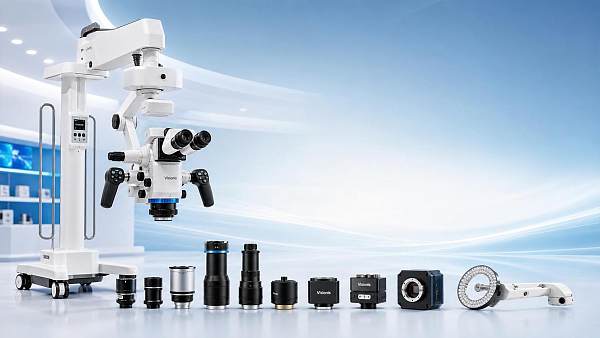
Understanding surgical microscope price is a practical starting point for any sourcing process.
In healthcare procurement, cost alone rarely tells the full story.
A lower quote may hide weaker optics, shorter service coverage, or limited imaging compatibility.
A higher quote may include features that improve workflow and reduce lifetime ownership cost.
That is why comparing surgical microscope price requires more than reading a supplier list.
It requires a clear view of clinical use, technical specifications, service support, and upgrade potential.
This guide breaks down the main cost drivers and shows which features usually justify the spend.
It also helps structure vendor comparisons before a final buying decision.
Typical Surgical Microscope Price Ranges
The surgical microscope price range is wide because product categories vary sharply.
Entry-level systems often start around the lower tens of thousands of dollars.
These units may suit basic ENT, dental, or minor procedure environments.
Mid-range systems usually include stronger optics, better illumination, and improved ergonomics.
Advanced neurosurgery or ophthalmology platforms can move much higher.
Once digital imaging, fluorescence, navigation links, or robotic positioning are added, pricing rises quickly.
Refurbished equipment can reduce initial spend, but only when inspection and service history are transparent.
In practical terms, the surgical microscope price should be assessed against use case, not category label.
Quick comparison view
What Drives Surgical Microscope Price Most
Several technical factors shape surgical microscope price more than buyers first expect.
Optics quality is usually the biggest one.
High-end glass, better depth perception, and edge-to-edge clarity directly affect procedural precision.
Magnification system design also matters.
Motorized zoom and smooth focal control add convenience, but they also raise system complexity.
Illumination is another major cost driver.
LED systems may lower maintenance needs, while xenon or advanced lighting modules may improve tissue visibility.
Integrated cameras, recording tools, and monitor outputs can substantially increase surgical microscope price.
The same is true for assistant scopes, suspension arms, and digital workflow software.
Brand reputation also influences cost, especially when service networks and training support are included.
Main cost drivers to verify
- Optical resolution, brightness, and working distance
- Manual versus motorized magnification control
- Illumination type and lamp life
- Imaging capture, display, and storage functions
- Service agreement, installation, and user training
Which Features Are Usually Worth Paying For
Not every premium option brings equal value.
In many cases, better optics are worth paying for before advanced software modules.
Clear visualization affects every procedure, every user, and every shift.
Ergonomics also deserve serious attention.
A balanced arm, smooth positioning, and comfortable binocular design support surgeon endurance.
That has direct workflow value in longer procedures.
Reliable LED illumination is often a smart investment.
It can reduce downtime, replacement frequency, and heat-related concerns.
If documentation or teaching is important, integrated imaging can justify a higher surgical microscope price.
But if imaging will rarely be used, a basic output option may be enough.
Fluorescence and navigation integration are valuable only when the clinical department will actually use them.
Features that often deliver strong return
- High-quality optics with stable illumination
- Ergonomic movement and positioning control
- Reliable service package and spare parts access
- Imaging functions tied to real teaching or documentation needs
Where Buyers Commonly Overspend
Overspending often happens when specifications are copied from top-tier hospitals without adjustment.
A facility may request premium imaging, multiple assistant tubes, and advanced overlays for routine procedures.
That pushes surgical microscope price higher without improving daily outcomes.
Another common issue is paying for software licenses that remain unused after installation.
In some deals, bundled accessories also blur cost visibility.
A lower base unit may become expensive once required accessories are added later.
More recently, buyers have also faced hidden service costs.
These include calibration visits, lamp replacements, software updates, and delayed spare parts availability.
This means the best surgical microscope price is not always the lowest quote on day one.
Questions that reduce unnecessary spend
- Which functions are used in at least 70% of procedures?
- Which accessories are mandatory at installation?
- What maintenance costs apply over three to five years?
- Can modules be upgraded later without replacing the core unit?
How To Compare Suppliers Beyond the Price Tag
A serious sourcing review should compare full ownership value.
That starts with technical documentation.
Suppliers should clearly define optical specs, illumination output, camera resolution, and configuration limits.
Compliance evidence matters as well.
Check registration status, quality certifications, and regional approval requirements before comparing surgical microscope price.
From a procurement standpoint, response time is another strong indicator.
A supplier that answers technical questions quickly is usually easier to work with after delivery.
Reference installations can also reveal practical reliability.
In actual business, service reach often matters more than brochure polish.
This is especially true when uptime and surgeon acceptance are critical.
Useful comparison criteria
A Practical Buying Framework
A structured process makes surgical microscope price easier to judge and defend internally.
Start with procedure mapping.
List the main specialties, case volume, and required visualization standards.
Then define must-have features and separate them from optional upgrades.
Request itemized quotations, not bundled totals.
That makes it easier to compare surgical microscope price across brands and configurations.
Next, review total cost over the expected service life.
Include maintenance, consumables, software, training, and downtime exposure.
Finally, ask for demonstrations or user feedback from similar institutions.
That step often reveals whether a quoted premium is truly justified.
The right decision comes from matching surgical microscope price to real clinical demand, service reliability, and long-term value.
When the evaluation stays disciplined, buyers can avoid both under-specification and unnecessary overspending.
That creates a stronger sourcing outcome and a more defensible capital purchase.
Get weekly intelligence in your inbox.
No noise. No sponsored content. Pure intelligence.
 Oct 08, 2026How Digital Health Improves Diagnostic Accuracy and Workflow in Clinical LabsHow Digital Health Improves Diagnostic Accuracy and Workflow in Clinical Labs
 Oct 07, 2026Selecting Voice Picking Systems for German Warehouses: Integration, Languages and ROISelecting Voice Picking Systems for German Warehouses: Integration, Languages and ROI
 Oct 06, 2026How to Choose Last Mile Dispatch Software for On-Time Delivery at ScaleHow to Choose Last Mile Dispatch Software for On-Time Delivery at Scale
 Oct 05, 2026Vietnam’s Consumer Electronics Market: Demand Shifts and Sourcing OpportunitiesVietnam’s Consumer Electronics Market: Demand Shifts and Sourcing Opportunities
 Oct 04, 2026Digital Health Investment Priorities for Providers: Improving Access, Outcomes, and EfficiencyDigital Health Investment Priorities for Providers: Improving Access, Outcomes, and Efficiency
 Oct 03, 2026How to Specify an FR4 Custom PCB Board for High-Voltage and High-Heat DesignsHow to Specify an FR4 Custom PCB Board for High-Voltage and High-Heat Designs
 Oct 02, 2026ERP Software Market Intelligence: Adoption, Pricing, and Vendor Signals to WatchERP Software Market Intelligence: Adoption, Pricing, and Vendor Signals to Watch
 Oct 01, 2026How to Select Calibrated Temperature Data Loggers for GMP Cold Storage MonitoringHow to Select Calibrated Temperature Data Loggers for GMP Cold Storage Monitoring
 Sep 30, 2026Custom Molded Rubber Pricing: What Drives Unit Cost and Tooling Fees?Custom Molded Rubber Pricing: What Drives Unit Cost and Tooling Fees?
 Sep 29, 2026How to Evaluate Energy Management Software Vendors for Multi-Site OperationsHow to Evaluate Energy Management Software Vendors for Multi-Site Operations
 Sep 28, 2026How to Select a DIN Rail Smart Meter for Multi-Circuit Energy MonitoringHow to Select a DIN Rail Smart Meter for Multi-Circuit Energy Monitoring
 Sep 27, 2026TWS Earbuds in Vietnam: Demand Drivers, Price Tiers, and Retail Channel OpportunitiesTWS Earbuds in Vietnam: Demand Drivers, Price Tiers, and Retail Channel Opportunities
 Sep 26, 2026How UAE Clinics Can Qualify a Smart Glucometer Supplier for Accuracy and ComplianceHow UAE Clinics Can Qualify a Smart Glucometer Supplier for Accuracy and Compliance
 Sep 25, 2026Buying Aesthetic Lasers in the USA: FDA Status, Wavelengths, and Service SupportBuying Aesthetic Lasers in the USA: FDA Status, Wavelengths, and Service Support
 Sep 24, 2026Laser Cutting Brass Sheet: How to Prevent Burrs and Heat Marks on Thin PartsLaser Cutting Brass Sheet: How to Prevent Burrs and Heat Marks on Thin Parts
 Sep 23, 2026How to Choose Lightweight ANC Headphones for Comfortable All-Day TravelHow to Choose Lightweight ANC Headphones for Comfortable All-Day Travel
 Sep 22, 2026IPX5 TWS Bluetooth Earbuds: What Protection Do They Offer for Workouts?IPX5 TWS Bluetooth Earbuds: What Protection Do They Offer for Workouts?
 Sep 21, 2026What to Look for in a Grid Integration Company for Utility-Scale Solar ProjectsWhat to Look for in a Grid Integration Company for Utility-Scale Solar Projects
 Sep 20, 2026Microgrid Controller Pricing: What Drives Cost in Commercial Energy Projects?Microgrid Controller Pricing: What Drives Cost in Commercial Energy Projects?
 Sep 19, 2026How to Choose a GaN Charger for Laptops Without Compromising Power or PortabilityHow to Choose a GaN Charger for Laptops Without Compromising Power or Portability
 Sep 18, 2026Floating Solar Farm Costs: CAPEX, OPEX, and the Site Factors That Shape ROIFloating Solar Farm Costs: CAPEX, OPEX, and the Site Factors That Shape ROI
 Sep 17, 2026Drone Delivery Solutions for Last-Mile Routes: Site, Payload, and Range PlanningDrone Delivery Solutions for Last-Mile Routes: Site, Payload, and Range Planning
 Sep 16, 2026When Low-Volume Electronics Manufacturing Makes More Sense Than Mass ProductionWhen Low-Volume Electronics Manufacturing Makes More Sense Than Mass Production
 Sep 15, 2026Wholesale WiFi Smart Switches: What Buyers Should Verify Before OrderingWholesale WiFi Smart Switches: What Buyers Should Verify Before Ordering
 Sep 14, 2026How to Select IoT Sensors for Reliable Monitoring in Harsh Industrial EnvironmentsHow to Select IoT Sensors for Reliable Monitoring in Harsh Industrial Environments
 Sep 13, 2026How Procurement Teams Can Improve Supplier Reliability With Supply Chain VisibilityHow Procurement Teams Can Improve Supplier Reliability With Supply Chain Visibility
 Sep 12, 2026Smart Manufacturing Trends 2026: What Leaders Should Prioritize for ROISmart Manufacturing Trends 2026: What Leaders Should Prioritize for ROI



























