
Next Generation Battery Technology Explained: Solid-State, Sodium-Ion, and Other Options
Next generation battery technology is no longer a distant research topic. It is becoming a practical business issue across energy storage, mobility, electronics, medical devices, and industrial systems.
What makes the discussion urgent is not only performance. Cost structure, raw material exposure, manufacturing readiness, safety expectations, and regional supply chains now shape adoption just as much as laboratory results.
That is why solid-state, sodium-ion, lithium-sulfur, and other alternatives are attracting serious attention. They represent different answers to the same question: how should future storage balance energy density, resilience, and scale?
For a platform like TradeNexus Pro, this topic sits at the intersection of green energy, advanced manufacturing, smart electronics, and supply chain strategy. Battery choices increasingly influence technology evaluation and cross-border competitiveness.
Why the battery conversation has shifted
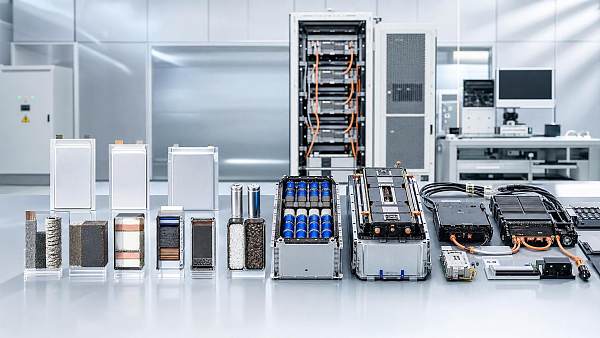
Energy storage used to be framed mainly around electric vehicles. Now the market includes grid balancing, renewable integration, backup power, factory automation, portable electronics, and high-reliability equipment.
At the same time, lithium-ion has reached a level of maturity that exposes its limits more clearly. Incremental improvement continues, but many industries are asking whether the next gains require different chemistries.
The phrase next generation battery technology covers that broader search. It refers to batteries designed to improve one or more of five pressure points: safety, energy density, charging speed, material availability, or lifecycle economics.
In practice, no single option wins on every metric. The market is moving toward segmentation, where each chemistry fits a specific operating environment and procurement logic.
Solid-state batteries: high promise, difficult scale-up
Solid-state batteries replace the liquid electrolyte found in conventional lithium-ion systems with a solid material. The concept has attracted attention because it may enable higher energy density and improved thermal stability.
That matters in applications where space, weight, and safety margins are tightly constrained. Premium electric vehicles, aerospace systems, specialty electronics, and certain medical technologies are often cited first.
Still, the path to mass production remains demanding. Interface stability, dendrite control, manufacturing yield, and material cost continue to slow broad commercialization.
This is where market intelligence becomes more valuable than headline claims. A prototype with strong lab data is not the same as a bankable supply option with consistent throughput and quality assurance.
For that reason, next generation battery technology analysis should separate technical potential from industrial readiness. Solid-state may become a premium category first, before moving into higher-volume markets.
Where solid-state makes the most sense
- Applications that reward higher energy density over lowest upfront cost
- Use cases with strict safety or thermal management requirements
- Programs able to tolerate longer qualification and supplier validation cycles
Sodium-ion batteries: a practical alternative with different strengths
Sodium-ion has gained momentum for a different reason. It does not aim to outperform every lithium-ion variant on energy density. Instead, it offers a route toward lower material risk and potentially lower system cost.
Sodium is more abundant than lithium, and the chemistry reduces dependence on some constrained inputs. That makes sodium-ion relevant in an environment shaped by price volatility, regional policy, and supply security concerns.
Its current profile often fits stationary storage, low-speed mobility, short-range vehicles, and cost-sensitive systems where ultra-high energy density is not essential.
This is an important reminder that next generation battery technology is not only about maximum technical performance. In many commercial settings, the better battery is the one that is available, affordable, and easier to source reliably.
Sodium-ion also appeals to regions building domestic battery ecosystems. It can support diversification strategies where resilience matters as much as benchmark efficiency.
Typical sodium-ion evaluation points
- Performance in cold or variable environments
- Cycle life under real operating conditions
- Compatibility with target pack architecture
- Supplier maturity and production expansion plans
Other emerging options worth tracking
Beyond solid-state and sodium-ion, several chemistries remain under active development. Not all will reach broad market adoption, but each highlights a different direction for next generation battery technology.
The commercial lesson is straightforward. A chemistry can be strategically relevant even before it becomes mainstream, especially when it fits a narrow but high-value operational need.
What industries should actually compare
Battery discussions often get reduced to headline metrics. That creates weak decisions. The better approach is to compare technical fit, business fit, and supply fit at the same time.
For example, a higher energy density cell may still be the wrong choice if certification cycles are slow, cell formats are unstable, or regional service support is limited.
This is especially relevant in the TNP editorial environment, where technology choices connect directly to sourcing credibility, industrial scale, and market-entry timing.
Core comparison dimensions
- Energy density versus total pack design requirements
- Cycle life under the intended duty profile
- Safety behavior, thermal control, and compliance exposure
- Raw material concentration and geopolitical sensitivity
- Manufacturing scale, yield stability, and expansion capacity
- Integration cost, not only cell-level price
When these dimensions are reviewed together, next generation battery technology becomes easier to evaluate with business discipline rather than hype.
How this affects sourcing, investment, and market positioning
Battery innovation now influences supplier assessment far beyond the cell itself. Materials processing, separator quality, thermal systems, battery management software, testing capability, and recycling pathways all matter.
That is why next generation battery technology has become a cross-sector issue. It shapes advanced manufacturing capacity, clean energy economics, electronics product design, and digital supply chain visibility.
For exporters and technology firms, the strategic question is also narrative clarity. It is no longer enough to claim innovation. Buyers increasingly expect clear evidence of readiness, certification status, use-case fit, and supply continuity.
This is where specialized intelligence platforms add value. Curated reporting, supplier context, and market analysis help separate credible capability from broad promotional language.
A practical way to move from interest to evaluation
The next step is usually not choosing a chemistry immediately. It is building a better decision frame around the operating scenario.
Start with the real constraint. Is the main pressure energy density, long-duration storage, low-temperature stability, safety certification, or sourcing resilience?
Then compare candidate technologies against deployment timing. Some options are suitable for near-term procurement. Others belong in a watchlist, pilot program, or partnership discussion.
It also helps to review the supporting ecosystem. The strength of next generation battery technology depends on upstream materials, cell engineering, pack integration, testing infrastructure, and after-sales support.
A disciplined shortlist should include chemistry fit, supplier credibility, regional capacity, and total commercial risk. That creates a more durable basis for planning than relying on performance headlines alone.
As battery markets keep evolving, the most useful perspective is comparative rather than absolute. Track which technology solves the right problem, which supply chain can support it, and which signals suggest real adoption momentum.
Get weekly intelligence in your inbox.
No noise. No sponsored content. Pure intelligence.
 Oct 08, 2026How Digital Health Improves Diagnostic Accuracy and Workflow in Clinical LabsHow Digital Health Improves Diagnostic Accuracy and Workflow in Clinical Labs
 Oct 07, 2026Selecting Voice Picking Systems for German Warehouses: Integration, Languages and ROISelecting Voice Picking Systems for German Warehouses: Integration, Languages and ROI
 Oct 06, 2026How to Choose Last Mile Dispatch Software for On-Time Delivery at ScaleHow to Choose Last Mile Dispatch Software for On-Time Delivery at Scale
 Oct 05, 2026Vietnam’s Consumer Electronics Market: Demand Shifts and Sourcing OpportunitiesVietnam’s Consumer Electronics Market: Demand Shifts and Sourcing Opportunities
 Oct 04, 2026Digital Health Investment Priorities for Providers: Improving Access, Outcomes, and EfficiencyDigital Health Investment Priorities for Providers: Improving Access, Outcomes, and Efficiency
 Oct 03, 2026How to Specify an FR4 Custom PCB Board for High-Voltage and High-Heat DesignsHow to Specify an FR4 Custom PCB Board for High-Voltage and High-Heat Designs
 Oct 02, 2026ERP Software Market Intelligence: Adoption, Pricing, and Vendor Signals to WatchERP Software Market Intelligence: Adoption, Pricing, and Vendor Signals to Watch
 Oct 01, 2026How to Select Calibrated Temperature Data Loggers for GMP Cold Storage MonitoringHow to Select Calibrated Temperature Data Loggers for GMP Cold Storage Monitoring
 Sep 30, 2026Custom Molded Rubber Pricing: What Drives Unit Cost and Tooling Fees?Custom Molded Rubber Pricing: What Drives Unit Cost and Tooling Fees?
 Sep 29, 2026How to Evaluate Energy Management Software Vendors for Multi-Site OperationsHow to Evaluate Energy Management Software Vendors for Multi-Site Operations
 Sep 28, 2026How to Select a DIN Rail Smart Meter for Multi-Circuit Energy MonitoringHow to Select a DIN Rail Smart Meter for Multi-Circuit Energy Monitoring
 Sep 27, 2026TWS Earbuds in Vietnam: Demand Drivers, Price Tiers, and Retail Channel OpportunitiesTWS Earbuds in Vietnam: Demand Drivers, Price Tiers, and Retail Channel Opportunities
 Sep 26, 2026How UAE Clinics Can Qualify a Smart Glucometer Supplier for Accuracy and ComplianceHow UAE Clinics Can Qualify a Smart Glucometer Supplier for Accuracy and Compliance
 Sep 25, 2026Buying Aesthetic Lasers in the USA: FDA Status, Wavelengths, and Service SupportBuying Aesthetic Lasers in the USA: FDA Status, Wavelengths, and Service Support
 Sep 24, 2026Laser Cutting Brass Sheet: How to Prevent Burrs and Heat Marks on Thin PartsLaser Cutting Brass Sheet: How to Prevent Burrs and Heat Marks on Thin Parts
 Sep 23, 2026How to Choose Lightweight ANC Headphones for Comfortable All-Day TravelHow to Choose Lightweight ANC Headphones for Comfortable All-Day Travel
 Sep 22, 2026IPX5 TWS Bluetooth Earbuds: What Protection Do They Offer for Workouts?IPX5 TWS Bluetooth Earbuds: What Protection Do They Offer for Workouts?
 Sep 21, 2026What to Look for in a Grid Integration Company for Utility-Scale Solar ProjectsWhat to Look for in a Grid Integration Company for Utility-Scale Solar Projects
 Sep 20, 2026Microgrid Controller Pricing: What Drives Cost in Commercial Energy Projects?Microgrid Controller Pricing: What Drives Cost in Commercial Energy Projects?
 Sep 19, 2026How to Choose a GaN Charger for Laptops Without Compromising Power or PortabilityHow to Choose a GaN Charger for Laptops Without Compromising Power or Portability
 Sep 18, 2026Floating Solar Farm Costs: CAPEX, OPEX, and the Site Factors That Shape ROIFloating Solar Farm Costs: CAPEX, OPEX, and the Site Factors That Shape ROI
 Sep 17, 2026Drone Delivery Solutions for Last-Mile Routes: Site, Payload, and Range PlanningDrone Delivery Solutions for Last-Mile Routes: Site, Payload, and Range Planning
 Sep 16, 2026When Low-Volume Electronics Manufacturing Makes More Sense Than Mass ProductionWhen Low-Volume Electronics Manufacturing Makes More Sense Than Mass Production
 Sep 15, 2026Wholesale WiFi Smart Switches: What Buyers Should Verify Before OrderingWholesale WiFi Smart Switches: What Buyers Should Verify Before Ordering
 Sep 14, 2026How to Select IoT Sensors for Reliable Monitoring in Harsh Industrial EnvironmentsHow to Select IoT Sensors for Reliable Monitoring in Harsh Industrial Environments
 Sep 13, 2026How Procurement Teams Can Improve Supplier Reliability With Supply Chain VisibilityHow Procurement Teams Can Improve Supplier Reliability With Supply Chain Visibility
 Sep 12, 2026Smart Manufacturing Trends 2026: What Leaders Should Prioritize for ROISmart Manufacturing Trends 2026: What Leaders Should Prioritize for ROI



























