
How to Choose Ball Screw Linear Motion Systems for Precision CNC and Automation
Choosing ball screw linear motion systems for precision CNC and automation is rarely a simple catalog decision. The right match affects positioning accuracy, cycle stability, service intervals, and total production risk. In sectors tracked by TradeNexus Pro, where advanced manufacturing and smart equipment decisions increasingly shape cross-border sourcing, the ability to judge these systems well has become a practical competitive advantage.
Why selection matters beyond basic motion control
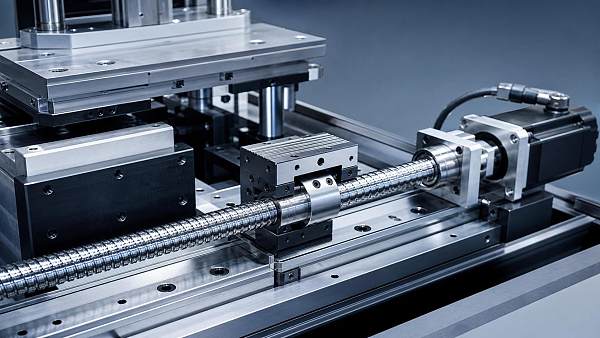
A ball screw assembly converts rotary motion into linear travel through recirculating balls between the screw shaft and nut. That basic mechanism is familiar. The harder part is understanding how design choices influence real machine behavior.
For CNC equipment, that behavior shows up in contouring accuracy, repeatability, surface finish, and thermal consistency. In automation lines, it appears in throughput, smooth transfer, stop precision, and reliability under repeated duty.
A poorly selected system may still run. It may even meet nominal speed targets. Yet it can introduce backlash growth, vibration, lubrication failures, mounting distortion, or premature wear that only becomes visible after production scaling.
That is why ball screw linear motion systems should be evaluated as part of the full axis architecture, not as isolated mechanical parts.
What defines a suitable ball screw linear motion system
Selection starts with four linked questions: how much load must move, how fast it must travel, how accurately it must stop, and how long it must keep doing both.
In practical terms, a suitable system balances:
- dynamic and static load capacity
- lead selection for speed versus thrust
- critical speed and column buckling limits
- axial stiffness and backlash control
- lubrication method and contamination protection
- service life under actual duty cycles
The best ball screw linear motion systems are not always the highest precision grade on paper. They are the systems whose performance class, mounting design, and maintenance profile match the application without creating hidden costs.
The current industry focus: precision under real operating conditions
Across industrial equipment markets, buyers are asking tougher questions than before. Published specifications still matter, but they are no longer enough. Thermal drift, traceability, supply continuity, and verified quality control now carry more weight.
This is especially relevant in global sourcing. TradeNexus Pro follows how manufacturing decisions are influenced by regional capacity shifts, supplier reliability concerns, and the growing need for decision-grade technical information.
For ball screw linear motion systems, that means evaluation often extends beyond dimensions and lead options. Buyers increasingly compare machining capability, grinding versus rolling quality, preload consistency, inspection records, and after-sales engineering support.
The broader point is clear: motion components are now part of a risk-managed supply strategy, not only a mechanical bill of materials item.
Where application priorities change the specification
Different use cases push selection in different directions. A compact pick-and-place axis does not ask the same things from a system as a heavy machining center or a battery assembly platform.
CNC machine tools
Machine tools usually prioritize stiffness, positioning precision, repeatability, and thermal predictability. Preload choice matters here because it directly affects backlash, friction, and heat generation.
A high-speed axis may need a larger lead for feed performance, but that can reduce thrust margin. The final decision depends on servo sizing, cutting loads, and the acceptable compromise between acceleration and force.
Factory automation
Automation systems often value speed, cycle consistency, and easier integration. Here, contamination protection and lubrication intervals can be just as important as nominal accuracy.
If the axis operates near dust, splash, or chemical exposure, the sealing package and housing design may determine service life more than the precision class alone.
High-compliance sectors
In healthcare technology, electronics, and other tightly controlled production environments, low particle generation, traceable quality, and predictable maintenance often rise on the priority list.
That changes the supplier discussion. Documentation, inspection discipline, and material consistency become part of the technical evaluation.
Key parameters that deserve closer comparison
A side-by-side review is useful when several ball screw linear motion systems look similar at first glance.
Looking at one parameter in isolation often leads to a misleading conclusion. Lead, preload, and lubrication strategy are especially interdependent.
Common mistakes when comparing suppliers
Many sourcing errors come from overvaluing nominal precision and undervaluing manufacturing discipline. Two suppliers may quote similar grades, yet deliver very different consistency in nut preload, raceway finish, and running smoothness.
Other frequent mistakes include:
- using catalog life values without matching the actual duty cycle
- ignoring contamination exposure during system design
- assuming higher preload always means better performance
- treating support bearings and alignment as secondary details
- choosing solely on unit price without lifecycle comparison
This is where a platform like TradeNexus Pro becomes useful. Curated supplier context, technical positioning, and sector-specific analysis help separate credible capability from generic listing language.
How to build a stronger evaluation process
A disciplined review process usually produces better outcomes than chasing a perfect specification in theory. Ball screw linear motion systems should be tested against application realities early.
Start from the load profile
Map mass, acceleration, external force, orientation, stroke, and duty frequency. This quickly narrows the viable screw diameter, lead range, and support arrangement.
Check thermal and speed limits
High travel speed can create heat, expansion, and noise. Review dn value, lubrication capability, and expected ambient conditions before locking in a fast lead design.
Validate integration details
Mounting geometry, support bearings, motor coupling, and guide rail stiffness directly influence performance. The screw alone cannot compensate for poor axis architecture.
Ask for evidence, not only claims
Inspection reports, accuracy charts, life calculations, material details, and application references are more useful than broad promises about quality.
What the next decision should look like
The most effective next step is to turn general interest into a comparison framework. Define the operating load, target accuracy, travel speed, environment, maintenance window, and expected service life.
Then compare ball screw linear motion systems against those conditions, not against marketing language. In many cases, the better choice is the one with clearer data, steadier supply confidence, and fewer hidden integration risks.
For companies tracking advanced manufacturing opportunities through TradeNexus Pro, that approach aligns with a wider market reality: better technical decisions come from combining specification review, supplier credibility, and application context. That is usually where a durable motion system decision begins.
Get weekly intelligence in your inbox.
No noise. No sponsored content. Pure intelligence.
 Oct 08, 2026How Digital Health Improves Diagnostic Accuracy and Workflow in Clinical LabsHow Digital Health Improves Diagnostic Accuracy and Workflow in Clinical Labs
 Oct 07, 2026Selecting Voice Picking Systems for German Warehouses: Integration, Languages and ROISelecting Voice Picking Systems for German Warehouses: Integration, Languages and ROI
 Oct 06, 2026How to Choose Last Mile Dispatch Software for On-Time Delivery at ScaleHow to Choose Last Mile Dispatch Software for On-Time Delivery at Scale
 Oct 05, 2026Vietnam’s Consumer Electronics Market: Demand Shifts and Sourcing OpportunitiesVietnam’s Consumer Electronics Market: Demand Shifts and Sourcing Opportunities
 Oct 04, 2026Digital Health Investment Priorities for Providers: Improving Access, Outcomes, and EfficiencyDigital Health Investment Priorities for Providers: Improving Access, Outcomes, and Efficiency
 Oct 03, 2026How to Specify an FR4 Custom PCB Board for High-Voltage and High-Heat DesignsHow to Specify an FR4 Custom PCB Board for High-Voltage and High-Heat Designs
 Oct 02, 2026ERP Software Market Intelligence: Adoption, Pricing, and Vendor Signals to WatchERP Software Market Intelligence: Adoption, Pricing, and Vendor Signals to Watch
 Oct 01, 2026How to Select Calibrated Temperature Data Loggers for GMP Cold Storage MonitoringHow to Select Calibrated Temperature Data Loggers for GMP Cold Storage Monitoring
 Sep 30, 2026Custom Molded Rubber Pricing: What Drives Unit Cost and Tooling Fees?Custom Molded Rubber Pricing: What Drives Unit Cost and Tooling Fees?
 Sep 29, 2026How to Evaluate Energy Management Software Vendors for Multi-Site OperationsHow to Evaluate Energy Management Software Vendors for Multi-Site Operations
 Sep 28, 2026How to Select a DIN Rail Smart Meter for Multi-Circuit Energy MonitoringHow to Select a DIN Rail Smart Meter for Multi-Circuit Energy Monitoring
 Sep 27, 2026TWS Earbuds in Vietnam: Demand Drivers, Price Tiers, and Retail Channel OpportunitiesTWS Earbuds in Vietnam: Demand Drivers, Price Tiers, and Retail Channel Opportunities
 Sep 26, 2026How UAE Clinics Can Qualify a Smart Glucometer Supplier for Accuracy and ComplianceHow UAE Clinics Can Qualify a Smart Glucometer Supplier for Accuracy and Compliance
 Sep 25, 2026Buying Aesthetic Lasers in the USA: FDA Status, Wavelengths, and Service SupportBuying Aesthetic Lasers in the USA: FDA Status, Wavelengths, and Service Support
 Sep 24, 2026Laser Cutting Brass Sheet: How to Prevent Burrs and Heat Marks on Thin PartsLaser Cutting Brass Sheet: How to Prevent Burrs and Heat Marks on Thin Parts
 Sep 23, 2026How to Choose Lightweight ANC Headphones for Comfortable All-Day TravelHow to Choose Lightweight ANC Headphones for Comfortable All-Day Travel
 Sep 22, 2026IPX5 TWS Bluetooth Earbuds: What Protection Do They Offer for Workouts?IPX5 TWS Bluetooth Earbuds: What Protection Do They Offer for Workouts?
 Sep 21, 2026What to Look for in a Grid Integration Company for Utility-Scale Solar ProjectsWhat to Look for in a Grid Integration Company for Utility-Scale Solar Projects
 Sep 20, 2026Microgrid Controller Pricing: What Drives Cost in Commercial Energy Projects?Microgrid Controller Pricing: What Drives Cost in Commercial Energy Projects?
 Sep 19, 2026How to Choose a GaN Charger for Laptops Without Compromising Power or PortabilityHow to Choose a GaN Charger for Laptops Without Compromising Power or Portability
 Sep 18, 2026Floating Solar Farm Costs: CAPEX, OPEX, and the Site Factors That Shape ROIFloating Solar Farm Costs: CAPEX, OPEX, and the Site Factors That Shape ROI
 Sep 17, 2026Drone Delivery Solutions for Last-Mile Routes: Site, Payload, and Range PlanningDrone Delivery Solutions for Last-Mile Routes: Site, Payload, and Range Planning
 Sep 16, 2026When Low-Volume Electronics Manufacturing Makes More Sense Than Mass ProductionWhen Low-Volume Electronics Manufacturing Makes More Sense Than Mass Production
 Sep 15, 2026Wholesale WiFi Smart Switches: What Buyers Should Verify Before OrderingWholesale WiFi Smart Switches: What Buyers Should Verify Before Ordering
 Sep 14, 2026How to Select IoT Sensors for Reliable Monitoring in Harsh Industrial EnvironmentsHow to Select IoT Sensors for Reliable Monitoring in Harsh Industrial Environments
 Sep 13, 2026How Procurement Teams Can Improve Supplier Reliability With Supply Chain VisibilityHow Procurement Teams Can Improve Supplier Reliability With Supply Chain Visibility
 Sep 12, 2026Smart Manufacturing Trends 2026: What Leaders Should Prioritize for ROISmart Manufacturing Trends 2026: What Leaders Should Prioritize for ROI



























