How Photovoltaic Modules Waterproof Technology Stops Leaks
Leaks in solar installations rarely start with the module alone. They emerge where materials, interfaces, mounting loads, and long-term weather exposure meet.
For technical evaluators, understanding photovoltaic modules waterproof technology is essential to assessing reliability, warranty risk, and lifecycle performance.
This article examines how encapsulation, edge sealing, junction box protection, frame design, and installation practices prevent moisture ingress, corrosion, faults, and power loss.
Where PV “Leaks” Actually Begin in Real Projects
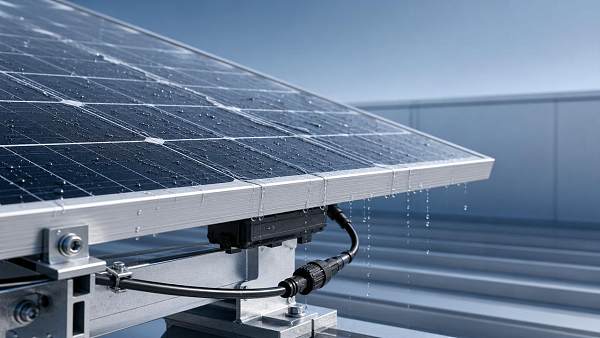
The central question is not whether a module is waterproof in isolation. It is whether the full assembly resists water under stress.
Modern PV modules are designed to survive rain, condensation, washing, snowmelt, humidity, and thermal cycling without allowing moisture into sensitive layers.
Failures usually start at edges, junction boxes, cable entries, frame corners, cracked backsheets, microcracks, or roof penetrations around mounting hardware.
For evaluators, the most useful approach is to separate module-level waterproofing from system-level water management and installation workmanship.
A well-built module can still be part of a leaking rooftop system if flashing, clamps, rails, or cable routing are poorly executed.
How Encapsulation Blocks Moisture Before It Reaches Cells
Encapsulation is the first technical barrier inside a photovoltaic module. It bonds glass, cells, interconnects, and the back layer into one protected laminate.
Common encapsulants include EVA, POE, and advanced co-extruded materials. Their function is mechanical bonding, electrical insulation, and moisture resistance.
Moisture ingress becomes dangerous when water vapor reaches cell metallization, solder joints, ribbons, or conductive pathways and accelerates corrosion.
Good encapsulation reduces voids, bubbles, delamination risk, and channels where vapor can migrate under repeated heating and cooling cycles.
For technical evaluation, lamination quality matters as much as material choice. Poor vacuum control or curing can weaken long-term waterproof performance.
POE-based encapsulation is often valued in high-humidity or bifacial applications because it offers stronger resistance to water vapor and potential-induced degradation.
EVA remains widely used, but evaluators should check formulation quality, acetic acid generation risk, and compatibility with cells and backsheets.
Why Edge Sealing Is Often the Critical Weak Point
The edge of a PV module is where different materials terminate, making it a natural pathway for humidity if sealing is insufficient.
Edge sealing technology stops lateral moisture migration between glass, encapsulant, backsheet, and frame, especially during years of temperature expansion.
Sealants must remain elastic, adhesive, UV-resistant, and chemically stable. Hardening, cracking, or debonding can create invisible water channels.
Framed modules commonly depend on silicone or similar sealants between laminate edges and aluminum frames to prevent capillary water entry.
Frameless glass-glass modules depend more heavily on laminate integrity and edge seal design because there is no surrounding frame cavity.
Evaluators should review damp heat testing, thermal cycling results, and field evidence from coastal, tropical, desert, and freeze-thaw environments.
Strong photovoltaic modules waterproof technology does not only repel liquid water. It slows vapor movement across the module’s lifetime.
Junction Boxes, Cable Entries, and Connectors Need Equal Attention
Many water-related electrical failures occur around the junction box, not through the central glass surface or front laminate structure.
The junction box protects bypass diodes, solder connections, potting compounds, and cable exits from water, dust, UV, and mechanical stress.
Ingress protection ratings, such as IP67 or IP68, indicate resistance to dust and temporary or prolonged immersion under defined conditions.
However, an IP rating is only meaningful when installation, connector mating, strain relief, and cable bending radius are properly controlled.
Poorly seated connectors can admit water, increase contact resistance, create arcing risk, or trigger intermittent faults during wet operating conditions.
Technical evaluators should confirm connector compatibility, crimp quality, potting material stability, and pull-test performance under thermal cycling.
Field inspections should also look for cables resting in standing water, stretched leads, damaged jackets, or connectors lying directly on roofs.
Frame and Drainage Design Prevent Water from Becoming a Load
Aluminum frames provide mechanical support, but they also influence how water collects, drains, freezes, and deposits contaminants around the module.
Frame corners, drain holes, and sealant geometry determine whether water escapes quickly or remains trapped near sensitive edges.
Blocked drainage can increase corrosion, freeze expansion, algae growth, soiling, and capillary pressure against seals during long wet periods.
In cold climates, trapped water can freeze inside frame channels, expanding repeatedly and stressing corners, sealants, and laminate edges.
In coastal regions, salt-laden moisture makes drainage even more important because residue can accelerate galvanic corrosion and insulation degradation.
Evaluators should compare frame anodizing quality, corner assembly methods, drainage pathways, mechanical load ratings, and compatibility with mounting clamps.
A waterproof module is not necessarily one that holds water out forever. It is often one that prevents water retention effectively.
Backsheet and Glass-Glass Structures: Different Waterproof Strategies
Traditional glass-backsheet modules rely on polymer backsheets to provide electrical insulation and environmental protection behind the encapsulated cells.
Backsheet cracks, chalking, yellowing, or hydrolysis can expose internal layers, allowing moisture to penetrate and reduce insulation resistance.
High-quality backsheets use multilayer structures designed for UV stability, low water vapor transmission, and resistance to mechanical abrasion.
Glass-glass modules replace the polymer backsheet with rear glass, improving moisture barrier performance and reducing some aging pathways.
However, glass-glass designs are not automatically risk-free. Edge sealing, weight, handling, microcrack control, and mounting compatibility remain crucial.
For utility-scale or high-humidity projects, glass-glass may reduce moisture-related degradation when paired with robust edge seals and qualified installation.
For rooftop projects, evaluators should balance waterproof performance with weight limits, wind loads, racking design, and maintenance accessibility.
How Testing Standards Reveal Waterproof Reliability
Laboratory certifications do not guarantee perfect field performance, but they provide useful evidence about module resistance under accelerated stress.
IEC 61215 evaluates design qualification through damp heat, thermal cycling, humidity freeze, mechanical load, UV exposure, and related stress tests.
IEC 61730 addresses safety, including insulation, fire performance, electrical shock protection, and construction requirements under defined operating conditions.
Damp heat testing is especially relevant because modules are exposed to high temperature and high humidity for extended periods.
Insulation resistance and wet leakage current tests show whether moisture compromises electrical separation between active circuits and accessible conductive parts.
Technical buyers should ask for test reports, bill-of-material consistency, retesting policies, and evidence from production batches, not only marketing summaries.
Extended reliability data, such as PID resistance, salt mist testing, ammonia testing, and hail testing, may be vital for specific sites.
Installation Quality Determines Whether Waterproof Technology Performs
Even the best photovoltaic modules waterproof technology can fail to deliver value if the installation creates new water pathways or mechanical stress.
Common mistakes include over-tightened clamps, incorrect clamp zones, scratched backsheets, trapped cables, missing flashing, and incompatible sealants.
Roof penetrations are a separate risk from module waterproofing. They require proper flashing, membranes, torque control, and long-term inspection access.
On carports, agrivoltaic structures, and building-integrated PV, water management must be engineered as part of the structural envelope.
Module orientation and tilt influence drainage. Low-slope installations may increase standing water, soiling, edge wetting, and freeze-thaw exposure.
Evaluators should review installation manuals, racking certifications, clamp placement diagrams, grounding details, and maintenance procedures before procurement approval.
Waterproofing succeeds when module design, mounting system, roof interface, and workmanship are evaluated as one integrated reliability chain.
Procurement Checklist for Technical Evaluators
A practical evaluation should begin with the operating environment: humidity, rainfall intensity, snow load, salt exposure, temperature range, and roof type.
Next, compare module construction: encapsulant type, edge sealing method, backsheet or glass-glass design, frame drainage, junction box rating, and connector system.
Request verified test documentation, including damp heat results, wet leakage current data, insulation resistance values, and any extended environmental testing.
Review manufacturer quality controls, including lamination monitoring, sealant dispensing control, EL inspection, peel strength testing, and traceability procedures.
Ask whether the same bill of materials used in certification will be used in mass production for your specific project order.
For high-risk sites, prioritize suppliers that can provide field references from similar climates rather than relying only on standard certificates.
Finally, align module warranties with installation responsibilities. A water-related claim may be disputed if mounting or roof interfaces caused damage.
Warning Signs During Operation and Maintenance
Waterproofing performance should be monitored after commissioning because early detection can prevent insulation failures, corrosion, and avoidable power loss.
Visual warning signs include frame corrosion, delamination, bubbles, snail trails, backsheet cracking, fogging, junction box discoloration, and connector damage.
Electrical warning signs include declining insulation resistance, ground faults, string underperformance, intermittent inverter alarms, and abnormal thermal images.
Inspection frequency should increase after hail, storms, flooding, roof work, heavy snow, or unusual inverter fault events during wet conditions.
Cleaning teams should avoid high-pressure water directed at module edges, junction boxes, connectors, and backsheets unless manufacturer procedures allow it.
Maintenance records should connect visible symptoms with electrical data, weather events, serial numbers, and installation zones to identify repeat failure patterns.
What Good Waterproof Technology Ultimately Delivers
The value of waterproof module design is measured in stable power output, lower failure rates, safer operation, and fewer warranty disputes.
Moisture intrusion can trigger corrosion, delamination, PID, insulation faults, diode failure, connector heating, and accelerated degradation across the array.
Strong waterproofing reduces these pathways through coordinated material barriers, precise manufacturing, durable interfaces, and compatible installation practices.
For technical evaluators, the best decision is not choosing the most impressive single feature, but verifying the complete moisture-control system.
Photovoltaic modules waterproof technology stops leaks by managing every route water can take: through edges, boxes, frames, backsheets, connectors, and mounting interfaces.
A reliable PV project therefore depends on product design, supplier discipline, site-specific engineering, and inspection practices working together throughout the asset life.
When these elements are evaluated together, waterproofing becomes more than a specification. It becomes a measurable foundation for long-term solar reliability.