How to Choose Hybrid Inverters for Industrial Applications: Key Specs and Load Scenarios
Choosing hybrid inverters for industrial applications is not just about power ratings—it requires matching technical specs to real load scenarios, energy goals, and operational risks. For procurement teams, the right inverter can improve system stability, support renewable integration, and reduce long-term costs. This guide outlines the key specifications and application factors that matter most in industrial decision-making.
In industrial buying cycles, inverter selection often sits between engineering requirements, budget controls, grid rules, and uptime targets. A unit that looks sufficient on a datasheet may underperform when exposed to motor starting currents, partial-load operation, battery cycling, dust, heat, or unstable utility supply.
For procurement directors and sourcing teams evaluating hybrid inverters for industrial applications, the goal is not to buy the highest nominal capacity. The goal is to specify an inverter architecture that fits actual operating loads, supports future expansion, and reduces lifecycle risk across 5 to 10 years of plant use.
Why Hybrid Inverter Selection Is Different in Industrial Settings

Industrial energy systems are rarely simple. A factory, warehouse, workshop, cold storage site, or processing line may combine solar PV, batteries, diesel backup, and grid supply in one system. Hybrid inverters for industrial applications must coordinate these sources while keeping voltage, frequency, and load transfer within acceptable limits.
Unlike residential projects, industrial installations often involve 3-phase power, variable-frequency drives, compressors, pumps, HVAC systems, welding equipment, or intermittent peak loads. A 100kW load profile may still create a short surge of 150% to 300% for a few seconds, which directly affects inverter sizing and overload tolerance.
Typical Industrial Decision Drivers
- Target operating continuity, often measured in 8-hour, 16-hour, or 24/7 production cycles
- Battery charging and discharging strategy across peak and off-peak tariff windows
- Renewable penetration goals, such as 20% to 60% solar contribution
- Power quality requirements for sensitive electronic or automated equipment
- Expansion planning for added production lines within 12 to 36 months
Where Procurement Mistakes Usually Happen
A frequent mistake is selecting by rated kilowatts alone. Another is ignoring battery compatibility, ambient temperature derating, communications protocol limits, or service access. In industrial procurement, the hidden cost of a poor selection is not just replacement expense. It can include line stoppage, unstable switching, poor battery utilization, and delayed commissioning.
A practical rule for early screening
Before comparing suppliers, ask for 4 baseline documents: a single-line diagram, 24-hour load profile, list of largest motor or inductive loads, and planned battery chemistry. Without these 4 items, it is difficult to assess whether hybrid inverters for industrial applications are technically aligned with the site.
Key Specifications Procurement Teams Should Compare
Specification reviews should move beyond brochure claims and focus on parameters that affect real operating performance. For industrial buyers, at least 8 specification areas deserve side-by-side comparison during tender review, technical clarification, and supplier negotiation.
Core Technical Parameters
The table below highlights the most relevant specification categories when assessing hybrid inverters for industrial applications. These are not fixed values for every project, but they represent common industrial evaluation thresholds used during procurement and engineering review.
A procurement team should not treat all six parameters equally. In a clean indoor electronics site, efficiency and communications may outrank enclosure protection. In a mining, metals, or agro-processing setting, overload tolerance, cooling design, and IP rating may be more important than a small efficiency difference of 0.5% to 1%.
Battery and Control Compatibility
Battery compatibility is often the deciding factor in long-term flexibility. Some hybrid inverters for industrial applications work best with lithium iron phosphate systems and integrated BMS communication, while others allow broader third-party battery integration. Ask whether the inverter supports closed-loop control, state-of-charge management, black-start capability, and parallel battery strings.
Communication options also matter. Industrial users commonly need Modbus TCP, RS485, CAN, dry contacts, or SCADA integration. If a site already uses a building management system or energy management platform, protocol compatibility can save 2 to 6 weeks during commissioning and software adjustment.
Questions to include in RFQs
- What is the maximum number of units that can operate in parallel?
- How does output derate above 40°C ambient temperature?
- What are the supported battery chemistries and BMS interfaces?
- What is the transfer time between grid and backup mode?
- Can the inverter prioritize self-consumption, demand shaving, and backup reserve at the same time?
How to Match Hybrid Inverters to Real Industrial Load Scenarios
Selecting hybrid inverters for industrial applications becomes easier when procurement teams categorize the facility by load behavior rather than industry label alone. Two plants with the same 200kW average consumption may need very different inverter setups if one has high inrush motors and the other runs stable electronic loads.
Scenario 1: Manufacturing with High Motor Starting Currents
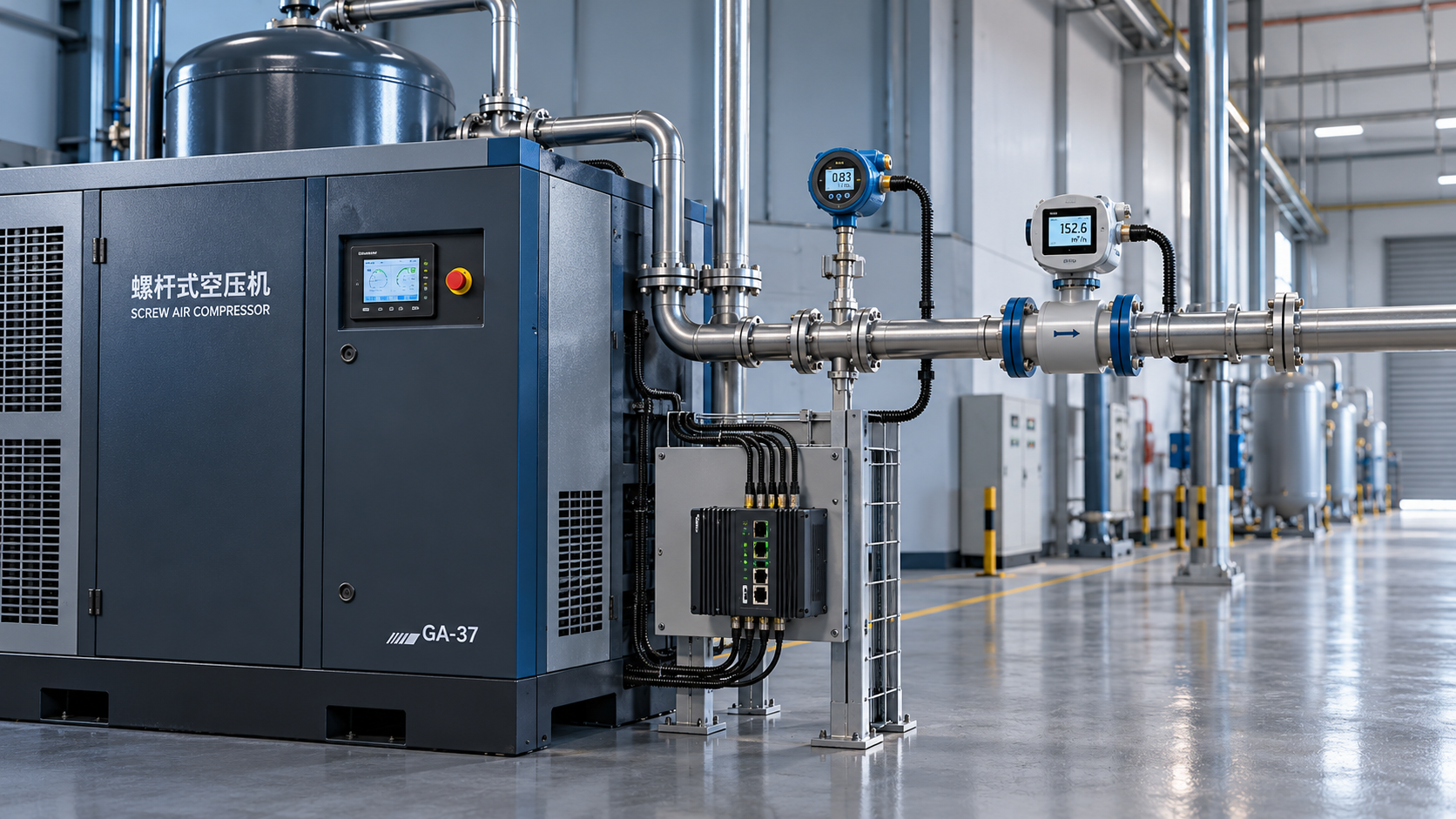
Metalworking shops, packaging lines, and general manufacturing often include air compressors, conveyors, pumps, and process fans. In these environments, momentary surge demand can exceed continuous load by 1.5x to 3x. Procurement should prioritize overload capacity, short-term surge response, and stable 3-phase output.
If the largest motor starts direct-on-line, the inverter and battery system may need additional headroom or soft-start coordination. A common purchasing error is sizing only to average load, such as 120kW, without accounting for a startup event that briefly reaches 180kW or more.
Scenario 2: Warehousing and Logistics with Peak Shaving Goals
Distribution centers and logistics facilities usually have more stable demand patterns, driven by lighting, charging stations, HVAC, automation belts, and IT systems. Here, hybrid inverters for industrial applications are often selected to reduce demand charges, shift battery discharge into peak tariff windows, and maintain critical loads during short outages.
For these sites, procurement should focus on battery dispatch logic, cycle efficiency, remote monitoring, and compatibility with time-of-use energy strategies. A 2-hour to 4-hour battery window may provide stronger commercial value than oversized backup autonomy that is rarely used.
Scenario 3: Sensitive Electronics or Healthcare-Related Loads
Facilities with testing equipment, clean production zones, data-linked machines, or healthcare technology devices usually require tighter voltage and frequency control. In such cases, transfer time, waveform quality, harmonics performance, and communication alarms may matter more than raw surge capacity.
Even a short interruption of less than 20 milliseconds may be acceptable for some devices but not for others. Procurement teams should involve site engineers early and ask suppliers to define power quality behavior under load changes of 25%, 50%, and 100%.
Load Scenario Comparison for Faster Shortlisting
The table below can help sourcing teams align site characteristics with inverter priorities before sending out formal inquiries. This step reduces unnecessary supplier comparisons and improves the quality of technical discussions.
This comparison shows why a one-size-fits-all sourcing strategy rarely works. Hybrid inverters for industrial applications should be shortlisted only after the buyer maps actual load behavior, outage risk, and tariff structure. That approach improves technical fit and often shortens procurement clarification cycles.
Procurement Checklist: Risk, Service, and Total Cost of Ownership
Price matters, but it should be considered alongside serviceability, spare parts access, commissioning support, and expected operating losses. An inverter with a lower purchase price can become more expensive within 24 to 36 months if support response is slow or if battery controls are poorly integrated.
Five Risk Areas to Review Before Awarding a Contract
- Thermal derating in hot environments above 40°C
- Lead times for replacement boards, fans, filters, or controllers
- On-site commissioning scope and remote troubleshooting capability
- Software update policy and compatibility with future EMS upgrades
- Warranty terms, especially whether coverage is 2, 5, or 10 years
A Practical Total Cost View
When comparing quotations, include at least 6 cost layers: equipment price, transport, installation support, monitoring setup, maintenance frequency, and expected efficiency-related energy loss. Even a 1% efficiency gap can become commercially relevant in larger systems operating daily across 300 or more days per year.
Procurement teams should also ask for recommended preventive maintenance intervals. For many industrial systems, inspection every 6 to 12 months is typical. Sites with dust, vibration, or corrosive exposure may require shorter maintenance cycles and better enclosure or cooling design.
Short vendor evaluation workflow
- Define load profile, battery strategy, and backup requirement
- Issue RFQ with technical schedules and communications requirements
- Compare overload, derating, and integration features line by line
- Review support model, warranty terms, and spare parts readiness
- Finalize based on total operational value, not only initial CAPEX
Implementation Advice for Buyers Working Across Global Supply Chains
For international buyers, hybrid inverters for industrial applications should also be evaluated through a supply chain lens. Documentation quality, after-sales response, compatibility transparency, and export communication can influence project timing as much as technical performance.
This is where sector-focused intelligence platforms such as TradeNexus Pro become valuable. Procurement teams entering new supplier markets often need more than catalog data. They need structured insight into application relevance, technical positioning, and credibility signals that help reduce sourcing uncertainty before formal engagement.
What Better Supplier Communication Looks Like
Strong industrial suppliers should be able to explain how their inverter solution performs in at least 3 dimensions: electrical compatibility, control logic, and service support. If documentation only lists headline ratings without describing load scenarios, battery integration, or maintenance expectations, buyers should request clarification before moving forward.
In cross-border sourcing, clear technical narratives reduce delay. A supplier that can provide wiring logic, protocol support details, environmental limits, and commissioning steps upfront is usually easier to evaluate than one relying only on generic product claims.
Common Final-Stage Questions from Procurement Teams
Can one inverter platform support both grid-tied and backup functions?
Often yes, but the answer depends on architecture, battery sizing, and switchgear design. Buyers should confirm operating modes, transfer logic, and whether essential and non-essential loads can be separated.
Is modular expansion important?
Yes, especially for plants expecting capacity growth within 1 to 3 years. Parallel capability can reduce upfront oversizing while keeping future expansion practical.
How much detail should be requested before purchase approval?
At minimum, request single-line diagrams, derating data, communications list, battery compatibility notes, warranty terms, and commissioning scope. These documents support both technical review and internal approval control.
The best hybrid inverters for industrial applications are the ones that match load behavior, control strategy, operating environment, and service expectations at the same time. For procurement teams, that means evaluating more than nominal kW and more than purchase price.
A disciplined selection process can improve energy resilience, support renewable integration, and reduce avoidable lifecycle costs across demanding industrial settings. If you are assessing suppliers, technologies, or market options for industrial energy systems, TradeNexus Pro can help you identify clearer decision signals and compare solution paths with greater confidence.
To explore tailored sourcing insight, compare supplier positioning, or discuss your project requirements in more detail, contact us today, request a customized solution, or learn more about sector-focused industrial intelligence through TradeNexus Pro.
Get weekly intelligence in your inbox.
No noise. No sponsored content. Pure intelligence.
 Oct 24, 2026Tesla Q3 2026 Storage Deployments Rank Second Highest as Revenue Falls 16%Tesla Q3 2026 Storage Deployments Rank Second Highest as Revenue Falls 16%
 Oct 24, 2026Freight Forwarding Services Pricing: Comparing Quotes Beyond Base RatesFreight Forwarding Services Pricing: Comparing Quotes Beyond Base Rates
 Oct 23, 2026IndexBox Issues Off-Grid Solar Outlook to 2035, Forecasting 8.2% CAGRIndexBox Issues Off-Grid Solar Outlook to 2035, Forecasting 8.2% CAGR
 Oct 23, 2026NSF/ANSI 49 Biosafety Cabinets: Product Certification vs. Field TestingNSF/ANSI 49 Biosafety Cabinets: Product Certification vs. Field Testing
 Oct 22, 2026Mitsubishi Electric Develops Industry-First Humanoid Robot–CNC Machining SystemMitsubishi Electric Develops Industry-First Humanoid Robot–CNC Machining System
 Oct 22, 2026Aerospace Aluminum Machining: How to Control Distortion in Thin-Wall PartsAerospace Aluminum Machining: How to Control Distortion in Thin-Wall Parts
 Oct 21, 2026Genesis Energy commissions 200 MWh battery storage system at HuntlyGenesis Energy commissions 200 MWh battery storage system at Huntly
 Oct 21, 2026Buying AMI Smart Meters Wholesale: Compatibility Checks and Total CostsBuying AMI Smart Meters Wholesale: Compatibility Checks and Total Costs
 Oct 20, 2026Werner Enterprises Issues Q3 Earnings Warning as Costs RiseWerner Enterprises Issues Q3 Earnings Warning as Costs Rise
 Oct 20, 2026Are Digital Twins Viable for SMEs? Costs, Use Cases, and Data RequirementsAre Digital Twins Viable for SMEs? Costs, Use Cases, and Data Requirements
 Oct 19, 2026Choosing a Wholesale Servo Motor Exporter: Traceability and Warranty ChecksChoosing a Wholesale Servo Motor Exporter: Traceability and Warranty Checks
 Oct 18, 2026Syringe Manufacturing Equipment: Evaluating Throughput and Assembly AccuracySyringe Manufacturing Equipment: Evaluating Throughput and Assembly Accuracy
 Oct 17, 2026Air Freight Forwarding Services: How to Compare Quotes for Urgent ShipmentsAir Freight Forwarding Services: How to Compare Quotes for Urgent Shipments
 Oct 16, 2026Wholesale Solar Panels: How to Compare Bulk Quotes by Total Landed CostWholesale Solar Panels: How to Compare Bulk Quotes by Total Landed Cost
 Oct 15, 2026Supply Chain Intelligence for Sourcing: How to Vet New SuppliersSupply Chain Intelligence for Sourcing: How to Vet New Suppliers
 Oct 14, 2026How energy costs shape smart manufacturing investment in EuropeHow energy costs shape smart manufacturing investment in Europe
 Oct 14, 2026How skills shortages slow smart manufacturing in Southeast AsiaHow skills shortages slow smart manufacturing in Southeast Asia
 Oct 14, 2026How CNC wire-cut machining maintains tight tolerances in thick partsHow CNC wire-cut machining maintains tight tolerances in thick parts
 Oct 14, 2026Can automated feeding stabilize metal forming in smart factories?Can automated feeding stabilize metal forming in smart factories?
 Oct 14, 2026Can CT inspection detect internal defects in metal additive parts?Can CT inspection detect internal defects in metal additive parts?
 Oct 14, 2026When does additive manufacturing reduce lead time for spare parts?When does additive manufacturing reduce lead time for spare parts?
 Oct 14, 2026How production volume affects ROI on an automated painting lineHow production volume affects ROI on an automated painting line
 Oct 14, 2026What data does manufacturing bottleneck analysis consulting need?What data does manufacturing bottleneck analysis consulting need?
 Oct 14, 2026When should you hire a consultant for manufacturing bottlenecks?When should you hire a consultant for manufacturing bottlenecks?
 Oct 14, 2026What Are Electronics Exporters' Top Supply Chain Resilience Gaps in 2026?What Are Electronics Exporters' Top Supply Chain Resilience Gaps in 2026?
 Oct 14, 2026How Do You Measure AI Adoption Maturity in a Traditional Factory?How Do You Measure AI Adoption Maturity in a Traditional Factory?
 Oct 14, 2026Are Chinese AI-Assisted Surgical Devices Gaining Global Trust?Are Chinese AI-Assisted Surgical Devices Gaining Global Trust?