How to Choose Compact Linear Motion Systems for Space-Constrained Automation?
Choosing compact linear motion systems for tight automation layouts starts with a simple reality: small footprints do not reduce performance demands. In many lines, the opposite is true.
When space is limited, every millimeter affects rigidity, cable routing, cycle speed, maintenance access, and future upgrades. That is why compact linear motion systems have become a strategic selection topic across advanced manufacturing, smart electronics, healthcare technology, and clean production equipment.
From a market intelligence perspective, this is also a sourcing question. Buyers now evaluate not only dimensions and price, but documentation quality, supplier stability, lifecycle support, and integration risk.
Why compact systems matter more in current automation projects
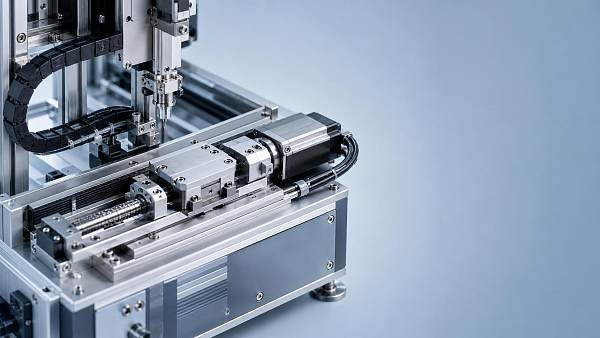
Automation layouts are becoming denser because production cells must handle more functions inside smaller machine envelopes. Inspection, dispensing, assembly, handling, and testing are increasingly combined in one station.
This shift pushes engineers toward compact linear motion systems that can deliver repeatable travel without consuming valuable installation space. A smaller unit is useful only when it still protects accuracy, uptime, and serviceability.
The pressure is especially visible in electronics, battery manufacturing, laboratory automation, and medical devices. These sectors value clean motion, consistent positioning, and low integration complexity.
TradeNexus Pro tracks this trend as part of a wider industrial pattern. Equipment decisions now sit at the intersection of production efficiency, supplier risk, regional manufacturing shifts, and technology adoption speed.
What counts as a compact linear motion system
The term usually refers to linear modules, miniature guides, rodless actuators, compact belt drives, and screw-driven axes designed for limited mounting space.
Some are built for short strokes and high precision. Others prioritize speed, low profile geometry, or integrated motor placement. The right choice depends on the motion task, not on size alone.
A compact package may include guide rail, drive mechanism, carriage, encoder options, lubrication features, and cable management in one assembly. That integration can reduce design time, but it also narrows tolerance for mismatch.
The main architectures to compare
Selection starts with the motion profile
A compact axis can fail in practice even when catalog values look acceptable. The common mistake is sizing by static load while ignoring motion behavior.
Start with stroke length, payload, center of gravity, acceleration, duty cycle, and positioning tolerance. Then look at mounting orientation, overhang moments, and environmental exposure.
Short-stroke pick-and-place applications often need rapid settling and repeatability. Dispensing or optical inspection usually depends more on smoothness, vibration control, and stable guidance.
In battery or electronics lines, cable bend radius and connector position can become as critical as thrust rating. In compact machines, wiring often determines whether an axis is truly usable.
Questions that reveal fit early
- Is the load centered, offset, or changing during travel?
- Does the process need micron-level repeatability or only reliable transfer?
- Will the unit run continuously, intermittently, or in short bursts?
- How much access exists for lubrication, seal replacement, or carriage inspection?
- Can the machine tolerate noise, particle generation, or thermal drift?
Key performance factors in limited space
Compact linear motion systems are usually selected under competing constraints. That makes tradeoff visibility more valuable than headline specifications.
Load and moment capacity
Small size does not remove bending moments. Off-center tooling, vertical mounting, and cantilevered payloads can quickly overload a slim carriage.
Precision and repeatability
Catalog precision should be matched to process tolerance. Overbuying precision raises cost. Underbuying it creates scrap, alignment issues, and unstable cycle times.
Speed and settling behavior
Fast travel is useful only when the axis can settle without oscillation. Compact frames may amplify vibration if structural stiffness is not considered together with control tuning.
Installation flexibility
Low-profile bodies, side mounting, integrated motors, and modular brackets save space. Yet they can complicate maintenance if clearances are too tight.
Maintenance demand
In real operations, a compact design should reduce intervention, not simply hide service points. Lubrication ports, seal quality, and replacement procedures deserve close review.
Application context changes the right answer
The same compact linear motion systems will perform differently across sectors. Context matters because process risk, cleanliness standards, and uptime expectations are not equal.
In smart electronics, fast indexing and consistent positioning often dominate. In healthcare technology, noise, hygiene, traceability, and validation documents may carry more weight.
Green energy equipment can introduce dust, heat, or aggressive duty cycles. Advanced manufacturing cells may demand flexible reconfiguration as product mixes change.
This is where broader intelligence becomes useful. Platforms such as TradeNexus Pro help connect component selection with supplier credibility, market trends, and cross-border sourcing realities.
Supplier evaluation should go beyond the product sheet
Compact linear motion systems often look similar in catalogs. The real differences appear in manufacturing consistency, quality assurance, engineering support, and response speed after installation.
A credible supplier should provide dimensional tolerances, load curves, expected life calculations, lubrication guidance, and clear limits for operating conditions.
It is also worth checking whether the supplier supports customization, local stocking, replacement lead times, and documentation for regulated industries or export programs.
Signals that deserve attention
- Application notes tied to real machine use
- Transparent testing methods and lifecycle assumptions
- Stable part numbering and revision control
- Regional service capability and spare parts planning
- Evidence of sector experience, not only generic listings
A practical comparison framework
Before shortlisting, it helps to compare compact linear motion systems against a weighted matrix. This reduces bias toward a single attractive parameter.
Where to focus next
A disciplined evaluation usually begins with the application envelope, then moves to motion loads, then to supplier support and lifecycle evidence.
That order matters. It prevents compact linear motion systems from being selected as a dimensional shortcut rather than a production asset.
The next useful step is to build a shortlist around two or three realistic architectures, request detailed technical data, and review each option against the actual machine layout.
In parallel, it is worth monitoring market and supplier signals through specialized industrial intelligence sources such as TradeNexus Pro. Better context leads to better component decisions, especially when automation programs must scale across regions or product lines.
When compact linear motion systems are assessed this way, the final choice is usually clearer: not the smallest unit on paper, but the one that fits the process, survives the environment, and remains dependable as production changes.
Get weekly intelligence in your inbox.
No noise. No sponsored content. Pure intelligence.
 Oct 24, 2026Tesla Q3 2026 Storage Deployments Rank Second Highest as Revenue Falls 16%Tesla Q3 2026 Storage Deployments Rank Second Highest as Revenue Falls 16%
 Oct 24, 2026Freight Forwarding Services Pricing: Comparing Quotes Beyond Base RatesFreight Forwarding Services Pricing: Comparing Quotes Beyond Base Rates
 Oct 23, 2026IndexBox Issues Off-Grid Solar Outlook to 2035, Forecasting 8.2% CAGRIndexBox Issues Off-Grid Solar Outlook to 2035, Forecasting 8.2% CAGR
 Oct 23, 2026NSF/ANSI 49 Biosafety Cabinets: Product Certification vs. Field TestingNSF/ANSI 49 Biosafety Cabinets: Product Certification vs. Field Testing
 Oct 22, 2026Mitsubishi Electric Develops Industry-First Humanoid Robot–CNC Machining SystemMitsubishi Electric Develops Industry-First Humanoid Robot–CNC Machining System
 Oct 22, 2026Aerospace Aluminum Machining: How to Control Distortion in Thin-Wall PartsAerospace Aluminum Machining: How to Control Distortion in Thin-Wall Parts
 Oct 21, 2026Genesis Energy commissions 200 MWh battery storage system at HuntlyGenesis Energy commissions 200 MWh battery storage system at Huntly
 Oct 21, 2026Buying AMI Smart Meters Wholesale: Compatibility Checks and Total CostsBuying AMI Smart Meters Wholesale: Compatibility Checks and Total Costs
 Oct 20, 2026Werner Enterprises Issues Q3 Earnings Warning as Costs RiseWerner Enterprises Issues Q3 Earnings Warning as Costs Rise
 Oct 20, 2026Are Digital Twins Viable for SMEs? Costs, Use Cases, and Data RequirementsAre Digital Twins Viable for SMEs? Costs, Use Cases, and Data Requirements
 Oct 19, 2026Choosing a Wholesale Servo Motor Exporter: Traceability and Warranty ChecksChoosing a Wholesale Servo Motor Exporter: Traceability and Warranty Checks
 Oct 18, 2026Syringe Manufacturing Equipment: Evaluating Throughput and Assembly AccuracySyringe Manufacturing Equipment: Evaluating Throughput and Assembly Accuracy
 Oct 17, 2026Air Freight Forwarding Services: How to Compare Quotes for Urgent ShipmentsAir Freight Forwarding Services: How to Compare Quotes for Urgent Shipments
 Oct 16, 2026Wholesale Solar Panels: How to Compare Bulk Quotes by Total Landed CostWholesale Solar Panels: How to Compare Bulk Quotes by Total Landed Cost
 Oct 15, 2026Supply Chain Intelligence for Sourcing: How to Vet New SuppliersSupply Chain Intelligence for Sourcing: How to Vet New Suppliers
 Oct 14, 2026How energy costs shape smart manufacturing investment in EuropeHow energy costs shape smart manufacturing investment in Europe
 Oct 14, 2026How skills shortages slow smart manufacturing in Southeast AsiaHow skills shortages slow smart manufacturing in Southeast Asia
 Oct 14, 2026How CNC wire-cut machining maintains tight tolerances in thick partsHow CNC wire-cut machining maintains tight tolerances in thick parts
 Oct 14, 2026Can automated feeding stabilize metal forming in smart factories?Can automated feeding stabilize metal forming in smart factories?
 Oct 14, 2026Can CT inspection detect internal defects in metal additive parts?Can CT inspection detect internal defects in metal additive parts?
 Oct 14, 2026When does additive manufacturing reduce lead time for spare parts?When does additive manufacturing reduce lead time for spare parts?
 Oct 14, 2026How production volume affects ROI on an automated painting lineHow production volume affects ROI on an automated painting line
 Oct 14, 2026What data does manufacturing bottleneck analysis consulting need?What data does manufacturing bottleneck analysis consulting need?
 Oct 14, 2026When should you hire a consultant for manufacturing bottlenecks?When should you hire a consultant for manufacturing bottlenecks?
 Oct 14, 2026What Are Electronics Exporters' Top Supply Chain Resilience Gaps in 2026?What Are Electronics Exporters' Top Supply Chain Resilience Gaps in 2026?
 Oct 14, 2026How Do You Measure AI Adoption Maturity in a Traditional Factory?How Do You Measure AI Adoption Maturity in a Traditional Factory?
 Oct 14, 2026Are Chinese AI-Assisted Surgical Devices Gaining Global Trust?Are Chinese AI-Assisted Surgical Devices Gaining Global Trust?