
Saudi Arabia Launches RMB Settlement for Solar PV EPC Projects
Saudi Arabia’s central bank, the Saudi Central Bank (SAMA), announced on May 21, 2026, a new mechanism enabling direct renminbi (RMB) payments for progress milestones in photovoltaic (PV) power plant EPC projects awarded to Chinese contractors. This development shortens payment review cycles to 30 calendar days and marks a notable shift in cross-border settlement practices for solar infrastructure exports — particularly relevant for solar PV equipment manufacturers, EPC service providers, and international project finance stakeholders.
Event Overview
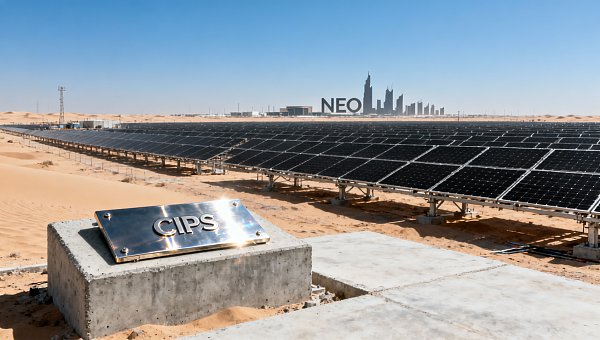
On May 21, 2026, the Saudi Central Bank (SAMA) expanded access to the Cross-Border Interbank Payment System (CIPS) for RMB-denominated settlements. Under the new framework, project owners in Saudi Arabia may pay progress款项 directly in RMB for photovoltaic power plant EPC contracts executed by Chinese firms. The maximum processing time for each payment approval is capped at 30 natural days. The initiative launches with pilot coverage in the NEOM新城 and Al-Uyaynah solar parks; SAMA expects full rollout across all newly commissioned ground-mounted solar PV projects in the Kingdom by end-2026.
Industries Affected
Chinese EPC Contractors
These firms face reduced foreign exchange risk and faster working capital turnover, as RMB receipts eliminate the need for intermediate USD conversions and associated hedging costs. The 30-day payment review window also improves cash flow predictability compared to prior multi-tiered approval processes involving local banks and currency controls.
Chinese Solar Module & Inverter Exporters
While not direct beneficiaries of the RMB settlement mechanism, these suppliers may experience indirect effects: tighter payment terms from EPC clients seeking to align with upstream RMB inflows, or increased demand visibility as faster project financing accelerates procurement timelines. Their exposure remains tied to contractual arrangements within the EPC supply chain rather than direct settlement access.
International Project Finance & Syndicated Lenders
Lenders supporting Saudi solar projects must now assess RMB liquidity management capabilities of borrowers and counterparties. The shortened payment cycle implies earlier disbursement triggers, potentially affecting drawdown schedules, collateral monitoring, and FX risk mitigation frameworks — especially for facilities denominated in non-RMB currencies.
Cross-Border Payment & Treasury Service Providers
Service providers facilitating CIPS connectivity, RMB clearing, or multi-currency reconciliation will see heightened demand for technical integration support and compliance advisory services. However, current scope remains limited to specific EPC contracts under SAMA’s pilot — broad applicability depends on further system integration and regulatory clarity.
Key Considerations for Enterprises and Practitioners
Monitor official guidance beyond the initial announcement
The May 21 statement outlines high-level parameters only. Enterprises should track subsequent circulars from SAMA and China’s People’s Bank of China regarding eligible contract types, documentation requirements, CIPS participant eligibility, and reporting obligations — all of which will define operational feasibility.
Identify pilot-project dependencies in active tenders
Firms bidding on NEOM or Al-Uyaynah solar EPC packages should verify whether RMB settlement applies to their specific contract structure (e.g., subcontractor payments, equipment import duties, or local content invoicing). Not all payment flows may qualify — only progress payments under main EPC agreements are confirmed.
Distinguish policy signal from immediate execution capacity
While the 30-day target is stated, actual processing speed will depend on local bank readiness, CIPS node availability in Riyadh, and staff familiarity with RMB documentation. Early adopters should treat the timeline as aspirational until verified through first-cycle transactions.
Prepare internal treasury and compliance alignment
Chinese EPC firms should update internal systems to accept RMB invoices, reconcile CIPS reference numbers, and report cross-border receipts per SAFE (State Administration of Foreign Exchange) guidelines. Coordination between finance, legal, and overseas project teams is essential before accepting RMB-denominated milestone payments.
Editorial Perspective / Industry Observation
Observably, this initiative functions primarily as a policy signal — one that reflects deepening bilateral financial infrastructure coordination, rather than an immediately scalable settlement channel. Analysis shows it targets a narrow but strategically significant use case: large-scale, Chinese-executed solar infrastructure in Saudi Arabia. It does not extend to general trade, O&M contracts, or third-party subcontractors at this stage. From an industry perspective, its significance lies less in near-term volume impact and more in signaling institutional willingness to reduce USD dependency in priority energy sectors — a trend likely to influence similar mechanisms in other Gulf Cooperation Council (GCC) markets over time. Continued observation is warranted for expansion beyond EPC progress payments and inclusion of additional renewable subsectors (e.g., wind or green hydrogen).
In summary, the RMB settlement mechanism for Saudi solar PV EPC projects represents a targeted financial infrastructure upgrade — not a wholesale shift in trade settlement norms. Its current value is procedural efficiency for a defined subset of Chinese contractors operating in two pilot zones. For the broader industry, it serves as an early indicator of how energy transition partnerships may increasingly intersect with bilateral currency cooperation — though practical adoption remains contingent on implementation fidelity and incremental scope expansion.
Source: Announcement by the Saudi Central Bank (SAMA), May 21, 2026.
Note: Expansion timeline to all new ground-mounted solar PV projects by end-2026 remains a stated objective; actual coverage pace and eligibility criteria require ongoing verification.
Get weekly intelligence in your inbox.
No noise. No sponsored content. Pure intelligence.
 Oct 08, 2026How Digital Health Improves Diagnostic Accuracy and Workflow in Clinical LabsHow Digital Health Improves Diagnostic Accuracy and Workflow in Clinical Labs
 Oct 07, 2026Selecting Voice Picking Systems for German Warehouses: Integration, Languages and ROISelecting Voice Picking Systems for German Warehouses: Integration, Languages and ROI
 Oct 06, 2026How to Choose Last Mile Dispatch Software for On-Time Delivery at ScaleHow to Choose Last Mile Dispatch Software for On-Time Delivery at Scale
 Oct 05, 2026Vietnam’s Consumer Electronics Market: Demand Shifts and Sourcing OpportunitiesVietnam’s Consumer Electronics Market: Demand Shifts and Sourcing Opportunities
 Oct 04, 2026Digital Health Investment Priorities for Providers: Improving Access, Outcomes, and EfficiencyDigital Health Investment Priorities for Providers: Improving Access, Outcomes, and Efficiency
 Oct 03, 2026How to Specify an FR4 Custom PCB Board for High-Voltage and High-Heat DesignsHow to Specify an FR4 Custom PCB Board for High-Voltage and High-Heat Designs
 Oct 02, 2026ERP Software Market Intelligence: Adoption, Pricing, and Vendor Signals to WatchERP Software Market Intelligence: Adoption, Pricing, and Vendor Signals to Watch
 Oct 01, 2026How to Select Calibrated Temperature Data Loggers for GMP Cold Storage MonitoringHow to Select Calibrated Temperature Data Loggers for GMP Cold Storage Monitoring
 Sep 30, 2026Custom Molded Rubber Pricing: What Drives Unit Cost and Tooling Fees?Custom Molded Rubber Pricing: What Drives Unit Cost and Tooling Fees?
 Sep 29, 2026How to Evaluate Energy Management Software Vendors for Multi-Site OperationsHow to Evaluate Energy Management Software Vendors for Multi-Site Operations
 Sep 28, 2026How to Select a DIN Rail Smart Meter for Multi-Circuit Energy MonitoringHow to Select a DIN Rail Smart Meter for Multi-Circuit Energy Monitoring
 Sep 27, 2026TWS Earbuds in Vietnam: Demand Drivers, Price Tiers, and Retail Channel OpportunitiesTWS Earbuds in Vietnam: Demand Drivers, Price Tiers, and Retail Channel Opportunities
 Sep 26, 2026How UAE Clinics Can Qualify a Smart Glucometer Supplier for Accuracy and ComplianceHow UAE Clinics Can Qualify a Smart Glucometer Supplier for Accuracy and Compliance
 Sep 25, 2026Buying Aesthetic Lasers in the USA: FDA Status, Wavelengths, and Service SupportBuying Aesthetic Lasers in the USA: FDA Status, Wavelengths, and Service Support
 Sep 24, 2026Laser Cutting Brass Sheet: How to Prevent Burrs and Heat Marks on Thin PartsLaser Cutting Brass Sheet: How to Prevent Burrs and Heat Marks on Thin Parts
 Sep 23, 2026How to Choose Lightweight ANC Headphones for Comfortable All-Day TravelHow to Choose Lightweight ANC Headphones for Comfortable All-Day Travel
 Sep 22, 2026IPX5 TWS Bluetooth Earbuds: What Protection Do They Offer for Workouts?IPX5 TWS Bluetooth Earbuds: What Protection Do They Offer for Workouts?
 Sep 21, 2026What to Look for in a Grid Integration Company for Utility-Scale Solar ProjectsWhat to Look for in a Grid Integration Company for Utility-Scale Solar Projects
 Sep 20, 2026Microgrid Controller Pricing: What Drives Cost in Commercial Energy Projects?Microgrid Controller Pricing: What Drives Cost in Commercial Energy Projects?
 Sep 19, 2026How to Choose a GaN Charger for Laptops Without Compromising Power or PortabilityHow to Choose a GaN Charger for Laptops Without Compromising Power or Portability
 Sep 18, 2026Floating Solar Farm Costs: CAPEX, OPEX, and the Site Factors That Shape ROIFloating Solar Farm Costs: CAPEX, OPEX, and the Site Factors That Shape ROI
 Sep 17, 2026Drone Delivery Solutions for Last-Mile Routes: Site, Payload, and Range PlanningDrone Delivery Solutions for Last-Mile Routes: Site, Payload, and Range Planning
 Sep 16, 2026When Low-Volume Electronics Manufacturing Makes More Sense Than Mass ProductionWhen Low-Volume Electronics Manufacturing Makes More Sense Than Mass Production
 Sep 15, 2026Wholesale WiFi Smart Switches: What Buyers Should Verify Before OrderingWholesale WiFi Smart Switches: What Buyers Should Verify Before Ordering
 Sep 14, 2026How to Select IoT Sensors for Reliable Monitoring in Harsh Industrial EnvironmentsHow to Select IoT Sensors for Reliable Monitoring in Harsh Industrial Environments
 Sep 13, 2026How Procurement Teams Can Improve Supplier Reliability With Supply Chain VisibilityHow Procurement Teams Can Improve Supplier Reliability With Supply Chain Visibility
 Sep 12, 2026Smart Manufacturing Trends 2026: What Leaders Should Prioritize for ROISmart Manufacturing Trends 2026: What Leaders Should Prioritize for ROI



























