
How safe are bulk containers for hazardous materials?
How safe are intermediate bulk containers for hazardous materials in real-world operations? For quality control and safety managers, the short answer is this: they can be very safe when the container matches the substance, the certification matches the transport mode, and inspection discipline is strong. They become high-risk assets when any of those conditions fail.
The core search intent behind this topic is practical evaluation. Readers are not looking for a generic definition of bulk packaging. They want to know how to judge whether intermediate bulk containers for hazardous materials are compliant, reliable, and suitable for daily use across storage, handling, and transport.
For quality and safety teams, the main concerns are predictable. Will the container resist the chemical inside it? Does it meet UN performance requirements? What failure modes appear most often in the field? Which inspection points prevent leaks, worker exposure, contamination, or regulatory penalties?
This article focuses on those decisions. It explains what makes hazardous-material bulk containers safe, where risks usually emerge, how certification should be interpreted, and what quality control and safety managers should verify before approving use in operations.
Are intermediate bulk containers actually safe for hazardous materials?
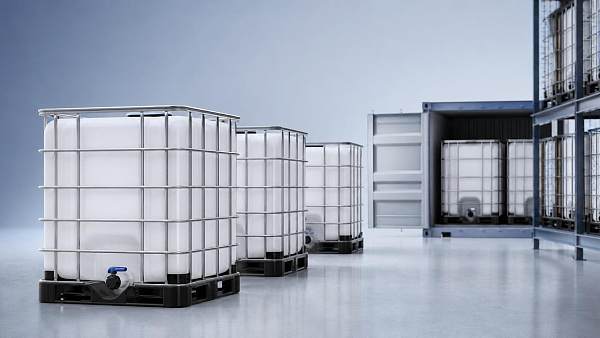
Yes, but only under controlled conditions. Intermediate bulk containers for hazardous materials are designed to handle larger volumes than drums while maintaining containment integrity. Their safety depends less on size alone and more on engineering fit, regulatory approval, filling discipline, and handling conditions.
In compliant systems, IBCs can reduce manual handling, improve stacking efficiency, and support safer bulk movement. In poorly managed systems, the same containers can magnify exposure events because a single failure may release far more product than a damaged small package.
That is why safety managers should avoid broad assumptions such as “all UN-rated IBCs are safe for chemicals.” A UN mark is necessary, but not sufficient. Real safety comes from matching the exact packaging design to the hazard class, chemical behavior, and operating environment.
For most industrial buyers, the right question is not whether IBCs are safe in theory. It is whether a specific IBC configuration is safe for a specific material, filling process, transport route, and storage condition in your facility and supply chain.
What determines the safety of a hazardous-material bulk container?
Four variables usually decide the outcome: material compatibility, structural design, regulatory certification, and operational control. If one of these is weak, the container may still pass incoming inspection yet fail later during filling, warehousing, or transit.
Material compatibility is often the first gate. Some hazardous liquids permeate plastics, embrittle seals, react with metal components, or generate pressure. A container that is physically intact can still be chemically unsuitable, which makes compatibility data more important than visual appearance alone.
Structural design matters because hazardous-material IBCs face more than static storage. They must tolerate filling forces, forklift impact, vibration, drop stress, stacking load, and temperature variation. The bottle, cage, pallet base, valve assembly, closures, and vents all contribute to overall safety.
Certification matters because hazardous transport is regulated by performance standards rather than supplier claims. Safety managers should verify the actual code marking, test level, packaging group suitability, and recertification status instead of relying on sales literature or generic product descriptions.
Operational control is the final layer. Even a well-designed container can fail if overfilled, stacked incorrectly, exposed to incompatible residues, left in UV degradation conditions, or handled with damaged fork tines. Most real incidents arise from interaction between design limits and human practice.
Which standards and certifications should quality and safety managers verify?
The most important baseline is UN performance packaging certification for dangerous goods. The marking on the container identifies design type, material category, packaging group suitability, manufacturing date, and other traceability details needed to confirm legal and technical fitness for use.
Managers should also consider which regulations apply to the shipment lane. Depending on geography and mode, that can include ADR for European road transport, IMDG for maritime movement, RID for rail, and ICAO or IATA rules for air, where many IBC options are restricted.
For reusable composite or plastic IBCs, periodic inspection and test intervals are critical. A container may have been compliant when first manufactured but no longer be lawful or safe if mandatory leakproofness tests, visual inspections, or reconditioning requirements were missed.
Do not treat a certification mark as a blanket approval for every hazardous substance. UN testing confirms that a packaging design passed specified performance tests. It does not automatically prove compatibility with every solvent, oxidizer, corrosive, or waste stream your site may handle.
A strong review process therefore combines regulatory verification with chemical compatibility confirmation, supplier documentation, and internal use-case assessment. This is especially important for mixed operations where the same IBC model may be proposed for several products with very different hazard profiles.
What are the most common failure modes in real operations?
Leaks from bottom discharge valves are among the most common field issues. Valves are exposed to impact, improper closure, worn seals, and contamination. Even minor drips can become major safety events when dealing with toxic, flammable, or corrosive materials.
Stress cracking is another recurring problem, especially with aggressive chemicals or repeated environmental exposure. A container can appear serviceable during routine checks but develop cracks after prolonged contact, temperature cycling, or mechanical stress around corners, seams, and outlet areas.
Permeation is less visible but equally important. Some chemicals slowly migrate through polymer walls, leading to vapor release, odor issues, weight loss, or outer-surface contamination. Safety teams sometimes detect this only after worker complaints or unexpected atmosphere readings near stored units.
Handling damage is also underestimated. Forklift punctures, pallet base deformation, cage distortion, and drops during loading can compromise the package even when the inner bottle remains intact at first. Secondary failure may occur later during stacking or transport vibration.
Another overlooked risk is product misfill. If operators use the wrong container for the wrong chemical, the failure mechanism may not be immediate. Incompatibility can develop over hours or days, which is why labeling control and batch-level verification are central to safe use.
How should you assess chemical compatibility before approval?
Start with the safety data sheet, but do not stop there. The SDS helps identify hazard class, corrosivity, flash point, and reactivity, yet it rarely provides enough packaging-specific detail to approve an IBC by itself. More granular compatibility data is needed.
Ask the supplier for documented compatibility charts, test evidence, lining specifications, gasket material details, and any concentration or temperature limitations. A chemical may be acceptable in diluted form but not at the concentration your process uses or at your peak filling temperature.
Pay close attention to closures and accessories. Many failures come not from the main bottle wall, but from gasket swelling, valve seal attack, cap degradation, or vent incompatibility. The full system must be evaluated, not just the primary body material.
If the substance is especially aggressive, unstable, high-purity, or newly introduced, consider a controlled qualification process. That may include bench compatibility trials, limited pilot use, enhanced inspection frequency, and a formal signoff from quality, EHS, and logistics stakeholders.
For hazardous waste streams, compatibility assessment is even more important because composition can vary over time. A container approved for one batch may not be suitable for another if the waste chemistry shifts, contamination increases, or reactive residues are introduced upstream.
What should an inspection checklist include before filling and shipment?
Inspection should begin with identity and traceability. Verify the container type, UN mark, inspection or requalification status, manufacturing date where relevant, product assignment, and labeling readiness. If any traceability element is missing, the unit should be held for review.
Next, inspect the structure. Check the inner receptacle for bulging, cracks, discoloration, abrasion, or signs of permeation. Examine the cage for corrosion, bent members, broken welds, or instability. Review the pallet base for damage that could affect forklift handling or stacking.
Then inspect the valve and closure system. Confirm that caps, seals, threads, tamper elements, and gaskets are present and intact. Verify smooth valve operation and look for evidence of residue, prior leakage, or impact around the outlet housing.
Cleanliness matters as much as physical integrity. For refilled or reconditioned units, confirm that residues from previous contents have been removed and that cleaning validation, where necessary, is documented. Cross-contamination can create both safety hazards and quality failures.
Finally, check fill controls. Confirm net quantity limits, headspace requirements, specific gravity allowances, torque procedures, and closure instructions. Overfilling is a common precursor to pressure-related leaks, especially where temperature changes occur during transport or storage.
When are IBCs a better choice than drums or other packaging?
IBCs are often preferred when operations need efficient bulk handling, reduced packaging count, and better warehouse density. For many compatible hazardous liquids, they lower handling frequency and simplify transfer into process lines, which can reduce worker exposure points.
They are especially useful in supply chains with repeatable product flows, trained handlers, compatible forklift infrastructure, and clear inspection systems. In these environments, intermediate bulk containers for hazardous materials can support both safety consistency and logistics efficiency.
However, they are not always the best answer. Drums may be safer where product volumes are small, segregation is complex, movement is frequent over rough conditions, or the consequence of a single large release is unacceptable. Smaller packages can sometimes offer better risk containment.
Likewise, highly sensitive, air-reactive, or temperature-critical materials may require specialized tanks, pressure-rated systems, or single-use high-barrier solutions beyond standard IBC designs. Packaging choice should reflect the hazard scenario, not simply freight economics.
How can safety managers reduce risk after deployment?
First, standardize approval rules. Build a documented matrix linking each hazardous material to approved container models, closure sets, fill limits, storage conditions, and transport modes. This prevents informal substitutions that often lead to compatibility or compliance failures.
Second, train operators on the failure points that matter most. Generic hazardous-goods training is useful, but teams also need IBC-specific instruction on valve protection, stacking limitations, torque practice, forklift entry, contamination control, and rejection criteria for damaged units.
Third, use incident and near-miss data to refine controls. Small valve drips, cage distortions, or recurring seal replacements should not be treated as isolated maintenance issues. They often signal a systemic mismatch between container design and operational reality.
Fourth, involve procurement. The safest packaging program is weakened when purchasing decisions focus mainly on unit price. Safety and quality managers should ensure that supplier selection includes technical support, documentation quality, requalification capability, and consistent manufacturing standards.
Finally, audit field conditions. Exposure to sunlight, rainwater, heat, incompatible neighboring chemicals, or rough yard handling can erode safety margins over time. A container approved on paper may still become unsafe if the storage and transport environment changes significantly.
Final judgment: how safe are bulk containers for hazardous materials?
Bulk containers can be highly safe for hazardous materials, but only when safety is engineered and managed, not assumed. For quality control and safety managers, the deciding factors are compatibility, certification, inspection rigor, and disciplined operating practice.
If you verify the exact UN approval, confirm chemical compatibility at the system level, control filling and handling, and maintain a strong inspection routine, IBCs can protect people, product integrity, and supply continuity. If any of those controls are weak, the risk rises quickly.
The most useful mindset is to treat intermediate bulk containers for hazardous materials as controlled technical assets rather than simple packaging. When selected and managed properly, they are not just compliant containers. They are a measurable part of your site’s risk reduction strategy.
Get weekly intelligence in your inbox.
No noise. No sponsored content. Pure intelligence.
 Oct 08, 2026How Digital Health Improves Diagnostic Accuracy and Workflow in Clinical LabsHow Digital Health Improves Diagnostic Accuracy and Workflow in Clinical Labs
 Oct 07, 2026Selecting Voice Picking Systems for German Warehouses: Integration, Languages and ROISelecting Voice Picking Systems for German Warehouses: Integration, Languages and ROI
 Oct 06, 2026How to Choose Last Mile Dispatch Software for On-Time Delivery at ScaleHow to Choose Last Mile Dispatch Software for On-Time Delivery at Scale
 Oct 05, 2026Vietnam’s Consumer Electronics Market: Demand Shifts and Sourcing OpportunitiesVietnam’s Consumer Electronics Market: Demand Shifts and Sourcing Opportunities
 Oct 04, 2026Digital Health Investment Priorities for Providers: Improving Access, Outcomes, and EfficiencyDigital Health Investment Priorities for Providers: Improving Access, Outcomes, and Efficiency
 Oct 03, 2026How to Specify an FR4 Custom PCB Board for High-Voltage and High-Heat DesignsHow to Specify an FR4 Custom PCB Board for High-Voltage and High-Heat Designs
 Oct 02, 2026ERP Software Market Intelligence: Adoption, Pricing, and Vendor Signals to WatchERP Software Market Intelligence: Adoption, Pricing, and Vendor Signals to Watch
 Oct 01, 2026How to Select Calibrated Temperature Data Loggers for GMP Cold Storage MonitoringHow to Select Calibrated Temperature Data Loggers for GMP Cold Storage Monitoring
 Sep 30, 2026Custom Molded Rubber Pricing: What Drives Unit Cost and Tooling Fees?Custom Molded Rubber Pricing: What Drives Unit Cost and Tooling Fees?
 Sep 29, 2026How to Evaluate Energy Management Software Vendors for Multi-Site OperationsHow to Evaluate Energy Management Software Vendors for Multi-Site Operations
 Sep 28, 2026How to Select a DIN Rail Smart Meter for Multi-Circuit Energy MonitoringHow to Select a DIN Rail Smart Meter for Multi-Circuit Energy Monitoring
 Sep 27, 2026TWS Earbuds in Vietnam: Demand Drivers, Price Tiers, and Retail Channel OpportunitiesTWS Earbuds in Vietnam: Demand Drivers, Price Tiers, and Retail Channel Opportunities
 Sep 26, 2026How UAE Clinics Can Qualify a Smart Glucometer Supplier for Accuracy and ComplianceHow UAE Clinics Can Qualify a Smart Glucometer Supplier for Accuracy and Compliance
 Sep 25, 2026Buying Aesthetic Lasers in the USA: FDA Status, Wavelengths, and Service SupportBuying Aesthetic Lasers in the USA: FDA Status, Wavelengths, and Service Support
 Sep 24, 2026Laser Cutting Brass Sheet: How to Prevent Burrs and Heat Marks on Thin PartsLaser Cutting Brass Sheet: How to Prevent Burrs and Heat Marks on Thin Parts
 Sep 23, 2026How to Choose Lightweight ANC Headphones for Comfortable All-Day TravelHow to Choose Lightweight ANC Headphones for Comfortable All-Day Travel
 Sep 22, 2026IPX5 TWS Bluetooth Earbuds: What Protection Do They Offer for Workouts?IPX5 TWS Bluetooth Earbuds: What Protection Do They Offer for Workouts?
 Sep 21, 2026What to Look for in a Grid Integration Company for Utility-Scale Solar ProjectsWhat to Look for in a Grid Integration Company for Utility-Scale Solar Projects
 Sep 20, 2026Microgrid Controller Pricing: What Drives Cost in Commercial Energy Projects?Microgrid Controller Pricing: What Drives Cost in Commercial Energy Projects?
 Sep 19, 2026How to Choose a GaN Charger for Laptops Without Compromising Power or PortabilityHow to Choose a GaN Charger for Laptops Without Compromising Power or Portability
 Sep 18, 2026Floating Solar Farm Costs: CAPEX, OPEX, and the Site Factors That Shape ROIFloating Solar Farm Costs: CAPEX, OPEX, and the Site Factors That Shape ROI
 Sep 17, 2026Drone Delivery Solutions for Last-Mile Routes: Site, Payload, and Range PlanningDrone Delivery Solutions for Last-Mile Routes: Site, Payload, and Range Planning
 Sep 16, 2026When Low-Volume Electronics Manufacturing Makes More Sense Than Mass ProductionWhen Low-Volume Electronics Manufacturing Makes More Sense Than Mass Production
 Sep 15, 2026Wholesale WiFi Smart Switches: What Buyers Should Verify Before OrderingWholesale WiFi Smart Switches: What Buyers Should Verify Before Ordering
 Sep 14, 2026How to Select IoT Sensors for Reliable Monitoring in Harsh Industrial EnvironmentsHow to Select IoT Sensors for Reliable Monitoring in Harsh Industrial Environments
 Sep 13, 2026How Procurement Teams Can Improve Supplier Reliability With Supply Chain VisibilityHow Procurement Teams Can Improve Supplier Reliability With Supply Chain Visibility
 Sep 12, 2026Smart Manufacturing Trends 2026: What Leaders Should Prioritize for ROISmart Manufacturing Trends 2026: What Leaders Should Prioritize for ROI



























