
Is digital customs clearance for e-commerce worth it?
Is digital customs clearance for e-commerce worth it for companies managing cross-border growth at scale? The short answer is often yes, but only when the workflow matches shipment complexity, regulatory exposure, and system readiness.
Digital customs clearance for e-commerce can accelerate filing, reduce manual errors, and improve shipment visibility. It can also create new challenges around integration, broker coordination, data governance, and exception handling.
For organizations navigating multi-country trade, the decision should focus on measurable outcomes. Speed matters, yet compliance, landed cost, and audit resilience matter just as much.
What is digital customs clearance for e-commerce?
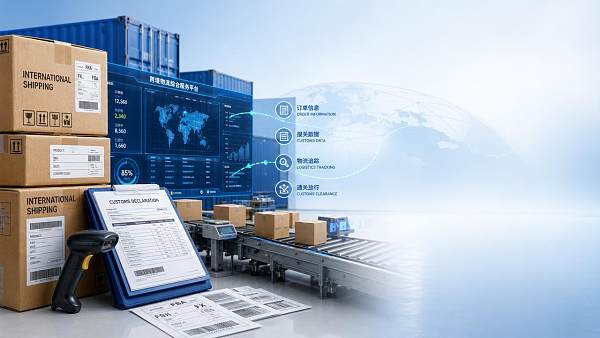
Digital customs clearance for e-commerce refers to using software, data interfaces, and automated documentation to submit customs information electronically for cross-border online orders.
Instead of relying on fragmented emails, paper invoices, and manual code entry, digital workflows connect order data, product data, carrier details, and customs declarations.
A typical setup includes shipment data capture, HS code support, commercial invoice generation, duty and tax estimation, broker communication, and clearance status tracking.
The real value is not simply digitization. The value comes from cleaner data, earlier validation, and faster responses when customs agencies request clarification.
Why has it become a bigger issue now?
Cross-border e-commerce volumes have increased, while customs authorities have raised expectations for data quality, product transparency, and tax accuracy.
At the same time, many enterprises now sell through multiple channels. Marketplaces, direct websites, distributors, and fulfillment partners can generate inconsistent shipment records.
Digital customs clearance for e-commerce helps standardize those records before they trigger delays, storage charges, or post-entry compliance problems.
When is digital customs clearance for e-commerce worth the investment?
It is usually worth the investment when cross-border volume is rising and customs processing is already affecting delivery promises, refund rates, or operating margin.
The strongest business case appears when shipments are frequent, destinations are diverse, and product catalogs require detailed classification and valuation logic.
It is also valuable when internal teams struggle to reconcile customs data across ERP, order management, carrier portals, and external brokers.
Signs the current process is too manual
- Shipment holds happen because invoice fields are missing or inconsistent.
- Duty estimates differ across channels and create margin surprises.
- Product descriptions are too generic for customs review.
- HS codes depend on individual knowledge rather than controlled rules.
- Clearance status is hard to track across countries or providers.
Cases where value may be limited
If cross-border order volume is low and destinations are simple, a full digital transformation may be unnecessary. A lighter broker-managed process could be enough.
The same applies when product ranges are narrow, duty exposure is modest, and current clearance performance is already stable.
How does digital customs clearance for e-commerce improve operations?
The operational benefits are broader than speed alone. Digital customs clearance for e-commerce can improve consistency, forecasting, and accountability across the trade workflow.
1. Faster document readiness
Automated data pulls reduce the time needed to prepare invoices, packing details, and customs entries. That is especially useful during demand spikes or promotional campaigns.
2. Better compliance control
Validation rules can flag incomplete consignee data, suspicious values, or restricted product attributes before goods move into customs review.
3. More accurate landed cost visibility
Duty and tax calculations become easier to model when classification, origin data, and declared values are managed in one structured flow.
4. Easier exception management
When a shipment is held, digital records make it easier to identify the exact missing field, document, or mismatch without searching across disconnected inboxes.
5. Stronger reporting for continuous improvement
Organizations can monitor delay reasons, broker response times, declaration error rates, and destination-specific compliance patterns over time.
What risks or hidden challenges should be considered?
Digital customs clearance for e-commerce is not a magic fix. Poor source data, weak ownership, and unrealistic rollout expectations can undermine the investment.
Data quality remains the core issue
If product descriptions are vague or origin data is outdated, software will only transmit bad information faster. Customs risk does not disappear through automation.
Integration can be harder than expected
Order platforms, warehouse systems, finance tools, and broker interfaces may use different field structures. Mapping them correctly takes time and disciplined testing.
Country rules still vary
There is no single global customs model. De minimis thresholds, tax collection rules, documentation expectations, and inspection patterns differ by market.
Internal governance is often overlooked
Without clear ownership for classification, valuation, and exception response, a digital system can create more alerts than the team can manage effectively.
How should companies compare digital customs clearance for e-commerce options?
The right evaluation framework should go beyond feature lists. Decision quality improves when trade compliance requirements are matched against operational realities.
Questions worth asking during selection
- Can the solution handle multi-country rule changes without heavy rework?
- How are broker handoffs managed when exceptions occur?
- Does the platform preserve an audit trail for classification and value changes?
- How quickly can new SKUs be cleared for export readiness?
What does implementation usually involve?
Implementation starts with process mapping, not software screens. Teams need to identify where customs data originates, who owns it, and where failures currently occur.
Then comes master data cleanup. Product descriptions, origin rules, declared value logic, and customer records must be reviewed before automation scales them.
A practical rollout sequence
- Audit current delays, penalties, and manual work hours.
- Standardize trade-critical product and shipment data.
- Pilot digital customs clearance for e-commerce in one corridor.
- Measure clearance time, error rate, and landed cost variance.
- Expand gradually by country, channel, or product family.
This staged approach reduces disruption and helps validate whether digital customs clearance for e-commerce is delivering practical returns.
FAQ summary: how to judge whether digital customs clearance for e-commerce is worth it
In most cross-border environments, digital customs clearance for e-commerce is worth it when it solves real bottlenecks instead of simply replacing manual forms with digital ones.
The most successful programs combine compliance discipline, structured data, and operational visibility. Those three factors determine whether automation creates speed or just exposes hidden weaknesses.
For organizations building resilient global trade operations, the next step is clear. Review current customs friction points, quantify their cost, and test a focused digital workflow where improvement can be measured quickly.
Within high-authority B2B ecosystems such as TradeNexus Pro, deeper market intelligence can also support better trade decisions by linking customs modernization with broader supply chain strategy.
Get weekly intelligence in your inbox.
No noise. No sponsored content. Pure intelligence.
 Oct 08, 2026How Digital Health Improves Diagnostic Accuracy and Workflow in Clinical LabsHow Digital Health Improves Diagnostic Accuracy and Workflow in Clinical Labs
 Oct 07, 2026Selecting Voice Picking Systems for German Warehouses: Integration, Languages and ROISelecting Voice Picking Systems for German Warehouses: Integration, Languages and ROI
 Oct 06, 2026How to Choose Last Mile Dispatch Software for On-Time Delivery at ScaleHow to Choose Last Mile Dispatch Software for On-Time Delivery at Scale
 Oct 05, 2026Vietnam’s Consumer Electronics Market: Demand Shifts and Sourcing OpportunitiesVietnam’s Consumer Electronics Market: Demand Shifts and Sourcing Opportunities
 Oct 04, 2026Digital Health Investment Priorities for Providers: Improving Access, Outcomes, and EfficiencyDigital Health Investment Priorities for Providers: Improving Access, Outcomes, and Efficiency
 Oct 03, 2026How to Specify an FR4 Custom PCB Board for High-Voltage and High-Heat DesignsHow to Specify an FR4 Custom PCB Board for High-Voltage and High-Heat Designs
 Oct 02, 2026ERP Software Market Intelligence: Adoption, Pricing, and Vendor Signals to WatchERP Software Market Intelligence: Adoption, Pricing, and Vendor Signals to Watch
 Oct 01, 2026How to Select Calibrated Temperature Data Loggers for GMP Cold Storage MonitoringHow to Select Calibrated Temperature Data Loggers for GMP Cold Storage Monitoring
 Sep 30, 2026Custom Molded Rubber Pricing: What Drives Unit Cost and Tooling Fees?Custom Molded Rubber Pricing: What Drives Unit Cost and Tooling Fees?
 Sep 29, 2026How to Evaluate Energy Management Software Vendors for Multi-Site OperationsHow to Evaluate Energy Management Software Vendors for Multi-Site Operations
 Sep 28, 2026How to Select a DIN Rail Smart Meter for Multi-Circuit Energy MonitoringHow to Select a DIN Rail Smart Meter for Multi-Circuit Energy Monitoring
 Sep 27, 2026TWS Earbuds in Vietnam: Demand Drivers, Price Tiers, and Retail Channel OpportunitiesTWS Earbuds in Vietnam: Demand Drivers, Price Tiers, and Retail Channel Opportunities
 Sep 26, 2026How UAE Clinics Can Qualify a Smart Glucometer Supplier for Accuracy and ComplianceHow UAE Clinics Can Qualify a Smart Glucometer Supplier for Accuracy and Compliance
 Sep 25, 2026Buying Aesthetic Lasers in the USA: FDA Status, Wavelengths, and Service SupportBuying Aesthetic Lasers in the USA: FDA Status, Wavelengths, and Service Support
 Sep 24, 2026Laser Cutting Brass Sheet: How to Prevent Burrs and Heat Marks on Thin PartsLaser Cutting Brass Sheet: How to Prevent Burrs and Heat Marks on Thin Parts
 Sep 23, 2026How to Choose Lightweight ANC Headphones for Comfortable All-Day TravelHow to Choose Lightweight ANC Headphones for Comfortable All-Day Travel
 Sep 22, 2026IPX5 TWS Bluetooth Earbuds: What Protection Do They Offer for Workouts?IPX5 TWS Bluetooth Earbuds: What Protection Do They Offer for Workouts?
 Sep 21, 2026What to Look for in a Grid Integration Company for Utility-Scale Solar ProjectsWhat to Look for in a Grid Integration Company for Utility-Scale Solar Projects
 Sep 20, 2026Microgrid Controller Pricing: What Drives Cost in Commercial Energy Projects?Microgrid Controller Pricing: What Drives Cost in Commercial Energy Projects?
 Sep 19, 2026How to Choose a GaN Charger for Laptops Without Compromising Power or PortabilityHow to Choose a GaN Charger for Laptops Without Compromising Power or Portability
 Sep 18, 2026Floating Solar Farm Costs: CAPEX, OPEX, and the Site Factors That Shape ROIFloating Solar Farm Costs: CAPEX, OPEX, and the Site Factors That Shape ROI
 Sep 17, 2026Drone Delivery Solutions for Last-Mile Routes: Site, Payload, and Range PlanningDrone Delivery Solutions for Last-Mile Routes: Site, Payload, and Range Planning
 Sep 16, 2026When Low-Volume Electronics Manufacturing Makes More Sense Than Mass ProductionWhen Low-Volume Electronics Manufacturing Makes More Sense Than Mass Production
 Sep 15, 2026Wholesale WiFi Smart Switches: What Buyers Should Verify Before OrderingWholesale WiFi Smart Switches: What Buyers Should Verify Before Ordering
 Sep 14, 2026How to Select IoT Sensors for Reliable Monitoring in Harsh Industrial EnvironmentsHow to Select IoT Sensors for Reliable Monitoring in Harsh Industrial Environments
 Sep 13, 2026How Procurement Teams Can Improve Supplier Reliability With Supply Chain VisibilityHow Procurement Teams Can Improve Supplier Reliability With Supply Chain Visibility
 Sep 12, 2026Smart Manufacturing Trends 2026: What Leaders Should Prioritize for ROISmart Manufacturing Trends 2026: What Leaders Should Prioritize for ROI



























