
When yard management systems start saving warehouse time
When yard congestion starts slowing dock turns and labor productivity, business evaluators look for measurable gains. That is where yard management systems for warehouse optimization begin to prove their value—connecting trailers, appointments, gates, and dock activity into one visible workflow. For companies under pressure to cut delays, improve asset use, and support faster decisions, the right system can turn yard operations into a strategic source of warehouse time savings.
Why warehouse time losses often begin in the yard
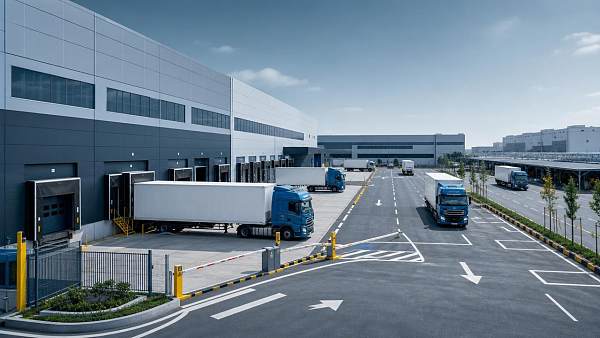
Warehouse slowdowns rarely start at the rack or conveyor. They often start outside, where trailer queues, missed appointments, and poor gate coordination disrupt inbound and outbound flow.
In many sectors, from advanced manufacturing to healthcare technology, dock teams still rely on calls, spreadsheets, and visual checks. That limits response speed and creates blind spots.
This is why yard management systems for warehouse optimization matter. They create a shared operational picture, so warehouse time is protected before labor and dock capacity are wasted.
A checklist-based evaluation helps separate useful features from surface-level claims. It also keeps the review focused on cycle time, dwell time, detention cost, and dock utilization.
Use this checklist to evaluate yard management systems for warehouse optimization
The best review starts with execution points, not software hype. Use the checklist below to test whether a system can actually save warehouse time.
- Map trailer visibility in real time, including arrival, parking position, dwell status, and readiness, so dock teams stop searching and start assigning work faster.
- Verify appointment scheduling depth, including carrier slots, priority rules, no-show handling, and dynamic rescheduling when production or shipping plans change during the day.
- Check gate process automation, such as QR, OCR, badge, or mobile workflows, to shorten entry time and reduce manual yard checks.
- Confirm dock-door orchestration links trailers, labor availability, and warehouse task readiness, so unloading and loading begin with fewer idle gaps.
- Assess exception alerts for overstays, missed appointments, detention risk, and temperature-sensitive cargo, enabling action before service failures expand downstream.
- Review integration with WMS, TMS, ERP, and telematics, because isolated yard data rarely delivers full warehouse optimization or accurate cross-team decisions.
- Measure analytics support for dwell time, turn time, gate-to-dock delay, and door utilization, since savings must be visible to justify change.
- Test mobile usability for yard jockeys, guards, and dock supervisors, because poor device workflows quickly undermine adoption in live operations.
- Inspect rule-based prioritization for urgent orders, export deadlines, inbound shortages, or production-critical materials that cannot wait in a generic queue.
- Validate multi-site scalability if operations span plants, distribution centers, or cross-border hubs, where consistent controls improve network-wide performance.
What strong yard execution looks like in different operating scenarios
High-volume inbound facilities
Inbound-heavy sites lose time when trailers arrive in clusters and dock assignments lag. A yard platform should sequence arrivals against labor, door availability, and receiving priorities.
For yard management systems for warehouse optimization, the gain comes from reducing queue buildup. Faster trailer placement protects receiving throughput and stabilizes downstream put-away activity.
Time-sensitive outbound operations
Outbound operations depend on synchronized staging, loading, and departure windows. If the yard is unmanaged, completed loads wait too long or leave from the wrong sequence.
A capable system links departure commitments with trailer readiness and dock progress. That improves turn performance and lowers the risk of missed transport cutoffs.
Mixed-use industrial campuses
Complex campuses often combine suppliers, internal transfers, finished goods, and service traffic. Manual coordination struggles when every vehicle type follows different timing rules.
Here, yard management systems for warehouse optimization support zone control, task routing, and priority management. That reduces internal handoff delays and protects warehouse labor productivity.
Regulated or condition-sensitive cargo flows
In healthcare technology, green energy components, or sensitive electronics, delays can trigger quality risk as well as service risk. Visibility must include exception handling, not just trailer counts.
Systems that flag dwell thresholds, required handling windows, and documentation issues help prevent yard delays from becoming warehouse rework or compliance exposure.
Common gaps that reduce time savings
Many implementations underperform for predictable reasons. The issue is often not the concept, but missing process discipline and weak operational alignment.
Ignoring process baseline data
Without current dwell time, turn time, and detention metrics, improvement claims stay vague. Baseline numbers are needed to prove warehouse optimization outcomes after rollout.
Automating bad scheduling rules
A digital tool will not fix poor appointment logic. If slot lengths, cutoffs, and priority rules are unrealistic, the system simply accelerates the wrong process.
Treating yard and warehouse as separate worlds
Time savings disappear when dock teams, yard teams, and transport coordinators work from different signals. Integration and shared exception handling are essential.
Underestimating mobile execution
If guards and jockeys cannot complete tasks quickly on a device, updates will lag. Late status changes weaken every promise of real-time optimization.
Focusing only on gate speed
Fast gate entry matters, but it is only one step. Real value comes when gate events trigger smarter dock assignment and warehouse-ready task execution.
Practical steps to implement yard management systems for warehouse optimization
- Start with one measurable bottleneck, such as excessive trailer dwell or missed dock appointments, and define the target reduction before vendor comparison begins.
- Document current yard movements, decision points, and handoffs, then remove duplicate approvals or manual calls that create avoidable latency.
- Align gate, yard, dock, and warehouse rules in one workflow design, so alerts and statuses drive action instead of passive reporting.
- Pilot with live exception scenarios, including late carriers, urgent loads, and dock congestion, to test whether the system performs under pressure.
- Track a focused KPI set: trailer turn time, dwell time, dock idle minutes, detention charges, and schedule adherence across shifts.
For organizations comparing options across broad industrial use cases, strong evaluation discipline matters as much as feature depth. The goal is not visibility alone, but usable control.
That is where editorial platforms such as TradeNexus Pro help frame the discussion. Deep sector analysis makes it easier to compare operational fit, integration maturity, and long-term scalability.
Conclusion and next action
When delays outside the building start consuming labor time inside it, the case for yard management systems for warehouse optimization becomes practical, not theoretical. The right platform reduces search time, improves trailer flow, and supports faster dock decisions.
Use the checklist above to review current yard friction, validate system fit, and connect every feature to a warehouse time outcome. If the yard can be measured, it can be improved—and that improvement often starts at the dock edge.
Get weekly intelligence in your inbox.
No noise. No sponsored content. Pure intelligence.
 Oct 08, 2026How Digital Health Improves Diagnostic Accuracy and Workflow in Clinical LabsHow Digital Health Improves Diagnostic Accuracy and Workflow in Clinical Labs
 Oct 07, 2026Selecting Voice Picking Systems for German Warehouses: Integration, Languages and ROISelecting Voice Picking Systems for German Warehouses: Integration, Languages and ROI
 Oct 06, 2026How to Choose Last Mile Dispatch Software for On-Time Delivery at ScaleHow to Choose Last Mile Dispatch Software for On-Time Delivery at Scale
 Oct 05, 2026Vietnam’s Consumer Electronics Market: Demand Shifts and Sourcing OpportunitiesVietnam’s Consumer Electronics Market: Demand Shifts and Sourcing Opportunities
 Oct 04, 2026Digital Health Investment Priorities for Providers: Improving Access, Outcomes, and EfficiencyDigital Health Investment Priorities for Providers: Improving Access, Outcomes, and Efficiency
 Oct 03, 2026How to Specify an FR4 Custom PCB Board for High-Voltage and High-Heat DesignsHow to Specify an FR4 Custom PCB Board for High-Voltage and High-Heat Designs
 Oct 02, 2026ERP Software Market Intelligence: Adoption, Pricing, and Vendor Signals to WatchERP Software Market Intelligence: Adoption, Pricing, and Vendor Signals to Watch
 Oct 01, 2026How to Select Calibrated Temperature Data Loggers for GMP Cold Storage MonitoringHow to Select Calibrated Temperature Data Loggers for GMP Cold Storage Monitoring
 Sep 30, 2026Custom Molded Rubber Pricing: What Drives Unit Cost and Tooling Fees?Custom Molded Rubber Pricing: What Drives Unit Cost and Tooling Fees?
 Sep 29, 2026How to Evaluate Energy Management Software Vendors for Multi-Site OperationsHow to Evaluate Energy Management Software Vendors for Multi-Site Operations
 Sep 28, 2026How to Select a DIN Rail Smart Meter for Multi-Circuit Energy MonitoringHow to Select a DIN Rail Smart Meter for Multi-Circuit Energy Monitoring
 Sep 27, 2026TWS Earbuds in Vietnam: Demand Drivers, Price Tiers, and Retail Channel OpportunitiesTWS Earbuds in Vietnam: Demand Drivers, Price Tiers, and Retail Channel Opportunities
 Sep 26, 2026How UAE Clinics Can Qualify a Smart Glucometer Supplier for Accuracy and ComplianceHow UAE Clinics Can Qualify a Smart Glucometer Supplier for Accuracy and Compliance
 Sep 25, 2026Buying Aesthetic Lasers in the USA: FDA Status, Wavelengths, and Service SupportBuying Aesthetic Lasers in the USA: FDA Status, Wavelengths, and Service Support
 Sep 24, 2026Laser Cutting Brass Sheet: How to Prevent Burrs and Heat Marks on Thin PartsLaser Cutting Brass Sheet: How to Prevent Burrs and Heat Marks on Thin Parts
 Sep 23, 2026How to Choose Lightweight ANC Headphones for Comfortable All-Day TravelHow to Choose Lightweight ANC Headphones for Comfortable All-Day Travel
 Sep 22, 2026IPX5 TWS Bluetooth Earbuds: What Protection Do They Offer for Workouts?IPX5 TWS Bluetooth Earbuds: What Protection Do They Offer for Workouts?
 Sep 21, 2026What to Look for in a Grid Integration Company for Utility-Scale Solar ProjectsWhat to Look for in a Grid Integration Company for Utility-Scale Solar Projects
 Sep 20, 2026Microgrid Controller Pricing: What Drives Cost in Commercial Energy Projects?Microgrid Controller Pricing: What Drives Cost in Commercial Energy Projects?
 Sep 19, 2026How to Choose a GaN Charger for Laptops Without Compromising Power or PortabilityHow to Choose a GaN Charger for Laptops Without Compromising Power or Portability
 Sep 18, 2026Floating Solar Farm Costs: CAPEX, OPEX, and the Site Factors That Shape ROIFloating Solar Farm Costs: CAPEX, OPEX, and the Site Factors That Shape ROI
 Sep 17, 2026Drone Delivery Solutions for Last-Mile Routes: Site, Payload, and Range PlanningDrone Delivery Solutions for Last-Mile Routes: Site, Payload, and Range Planning
 Sep 16, 2026When Low-Volume Electronics Manufacturing Makes More Sense Than Mass ProductionWhen Low-Volume Electronics Manufacturing Makes More Sense Than Mass Production
 Sep 15, 2026Wholesale WiFi Smart Switches: What Buyers Should Verify Before OrderingWholesale WiFi Smart Switches: What Buyers Should Verify Before Ordering
 Sep 14, 2026How to Select IoT Sensors for Reliable Monitoring in Harsh Industrial EnvironmentsHow to Select IoT Sensors for Reliable Monitoring in Harsh Industrial Environments
 Sep 13, 2026How Procurement Teams Can Improve Supplier Reliability With Supply Chain VisibilityHow Procurement Teams Can Improve Supplier Reliability With Supply Chain Visibility
 Sep 12, 2026Smart Manufacturing Trends 2026: What Leaders Should Prioritize for ROISmart Manufacturing Trends 2026: What Leaders Should Prioritize for ROI



























