
How port automation tech is changing smart ports
As global trade grows more complex, port automation tech for smart ports is reshaping how cargo moves, data flows, and decisions are made across modern logistics networks. From AI-driven scheduling to automated cranes and real-time visibility systems, these technologies are helping ports improve efficiency, reduce bottlenecks, and strengthen supply chain resilience. This article explores the key innovations, benefits, and strategic implications behind this transformation.
Why port automation tech for smart ports matters now
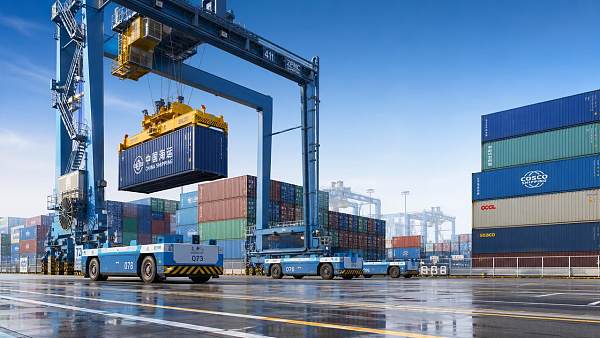
Ports are no longer just transfer points between sea, rail, and road. They are becoming digital control centers where equipment, software, cargo data, and customs processes must work together in real time.
For information researchers, the key question is not whether automation is relevant, but which technologies create measurable value under different operating conditions. Through that lens, port automation tech for smart ports should be evaluated as a strategic infrastructure stack rather than a single product category.
Pressure is rising from larger vessel sizes, tighter berth windows, labor constraints, emissions targets, and growing customer expectations for end-to-end visibility. Ports that still rely on fragmented systems often struggle with yard congestion, inconsistent equipment utilization, and slow decision cycles.
- Terminal operators need faster turnaround without sacrificing safety.
- Shippers want predictable dwell times and cleaner milestone tracking.
- Procurement teams must compare vendors across software, machinery, integration, and lifecycle support.
- Public and private stakeholders increasingly require decarbonization and resilience planning.
This is where TradeNexus Pro adds value. TNP helps procurement directors, supply chain managers, and enterprise decision-makers interpret technology shifts across Advanced Manufacturing, Green Energy, Smart Electronics, Healthcare Technology, and Supply Chain SaaS, which all intersect with port modernization in practical ways.
What sits inside the automation stack
A smart port usually combines physical automation, digital orchestration, and analytics. The most effective projects do not start with hardware alone. They align equipment control, operating systems, and networked data flows from berth to gate.
- Automated cranes and guided vehicles for repetitive cargo movement.
- Terminal operating systems that optimize berth, yard, and gate activities.
- IoT sensors, cameras, and telematics for live asset monitoring.
- AI models for slot planning, congestion prediction, and maintenance scheduling.
- Integration layers that connect customs, trucking, rail, warehouses, and enterprise platforms.
Which technologies are driving the biggest operational gains?
Not every automation tool delivers the same return. Some solve labor-intensive handling tasks. Others improve decision quality by reducing information delays. For research and sourcing teams, comparing functions by use case is more useful than comparing them by buzzword.
The table below outlines how major categories of port automation tech for smart ports are typically applied and what operational problems they target.
A useful takeaway is that high-value gains often come from combining at least two layers. For example, automated cranes without optimized yard software can still leave queues unresolved. Likewise, good analytics without machine connectivity creates visibility, but not fast execution.
Why software now matters as much as heavy equipment
Historically, port modernization focused on mechanical lifting capacity. Today, the competitive gap often appears in orchestration software. Terminal operating systems, port community systems, and API-based integration platforms determine whether data can move between carriers, freight forwarders, truckers, customs, and inland partners.
This trend closely connects port operations with Supply Chain SaaS, one of TNP’s core sectors. Buyers increasingly need to assess data architecture, cybersecurity posture, and interoperability standards alongside physical equipment specifications.
Where smart port automation creates the clearest business value
The impact of port automation tech for smart ports varies by cargo profile, asset age, labor model, and intermodal complexity. A balanced evaluation should look beyond pure speed and focus on operational fit.
High-volume container terminals
These sites often benefit most from automated stacking cranes, gate automation, and AI-assisted yard planning. Their challenge is not only volume, but synchronization between vessel operations, yard density, and truck appointment flows.
Multi-user ports with fragmented data flows
Here, the fastest win may come from shared data platforms rather than full equipment automation. When truckers, customs brokers, shipping lines, and terminal teams work from inconsistent data, delays multiply even if lifting assets are modern.
Energy, electronics, and healthcare-linked cargo corridors
Ports serving green energy components, smart electronics, or temperature-sensitive healthcare technology often need precise tracking, reduced dwell times, and auditable handling events. In such corridors, sensor-rich visibility and event integration may matter more than maximum crane automation alone.
The table below helps information researchers compare automation priorities by operating scenario rather than by vendor marketing claims.
This scenario-based view is especially important when budgets are limited. In many cases, selective digitization of gates, scheduling, and visibility creates a stronger near-term business case than a fully automated terminal concept.
How to evaluate suppliers and solutions without missing key risks
Procurement decisions in smart port projects are rarely simple. Buyers must compare operational technology, enterprise software, integration services, and long-term support models. The real risk is choosing a technically impressive system that does not fit the port’s workflows, labor structure, or data maturity.
A practical evaluation checklist
- Define the bottleneck first. Is the problem berth planning, yard density, gate congestion, equipment downtime, or partner visibility?
- Map legacy systems. Review terminal software, PLC environments, sensor coverage, and current API capabilities before discussing target features.
- Assess scalability. The right platform should support growth in container moves, user connections, and automation zones without a full redesign.
- Check service depth. Implementation support, operator training, cybersecurity updates, and change management often decide project outcomes.
- Model total cost. Include retrofit complexity, downtime risk, software licensing, maintenance, and integration effort.
Common selection mistakes
- Buying for headline automation level instead of actual process constraints.
- Underestimating data governance and cybersecurity requirements.
- Ignoring labor transition planning and operator acceptance.
- Treating software integration as a minor workstream rather than a core work package.
TNP’s research approach is useful here because automation decisions at ports connect with manufacturing automation, electronics hardware reliability, energy use, and SaaS architecture. Cross-sector intelligence helps buyers see second-order risks that single-domain comparisons often miss.
What costs, compliance, and implementation factors should buyers expect?
Cost planning for port automation tech for smart ports should be structured in layers. Capital expenditure is only part of the picture. Integration, training, maintenance, and resilience planning can significantly change project economics.
Main cost components
- Equipment investment for cranes, vehicles, sensors, control hardware, and communication infrastructure.
- Software licensing or subscription fees for scheduling, operating systems, analytics, and partner portals.
- Integration and testing costs across customs, ERP, TOS, WMS, gate systems, and external partners.
- Workforce enablement including training, remote operations setup, and safety procedures.
- Ongoing service costs for cybersecurity, support, updates, and predictive maintenance tools.
Relevant standards and compliance topics
Requirements vary by jurisdiction and cargo type, but buyers typically review functional safety, electrical systems, cybersecurity controls, emissions reporting, and data protection obligations. Ports handling regulated cargo may also need stronger traceability and event audit capabilities.
Rather than asking whether a solution is simply “compliant,” researchers should ask which standards apply to their use case, what evidence the supplier can provide, and how updates will be maintained over the system lifecycle.
Implementation strategy: full rollout or phased modernization?
Phased modernization is often more realistic than a one-time transformation. Many ports begin with digital gate workflows, equipment telemetry, or AI planning pilots before expanding into remote operations or autonomous yard transport.
This staged model reduces shutdown risk and gives procurement teams better evidence for future investment. It also suits operators that must modernize around active traffic and mixed legacy assets.
FAQ: what do information researchers usually ask about smart port automation?
How do I know whether a port needs hardware automation or software optimization first?
Start with process data. If the main issue is variable moves per hour, unsafe manual handling, or labor-intensive transfer cycles, hardware automation may deserve priority. If the issue is poor visibility, conflicting schedules, or uncoordinated handoffs, software and integration usually deliver faster returns.
Which scenarios are best suited to port automation tech for smart ports?
The strongest fit appears in high-volume terminals, congestion-prone hubs, and cargo corridors where timing, traceability, or handling quality directly affect downstream supply chains. It is also valuable in ports serving advanced manufacturing, green energy equipment, and smart electronics where shipment reliability matters across multiple partners.
What should procurement teams focus on during vendor comparison?
Focus on interoperability, lifecycle support, retrofit feasibility, cybersecurity, operating references, and measurable fit with your bottlenecks. Ask vendors how their solution performs under peak loads, data disruptions, and phased deployment constraints.
Are smart port projects only for the largest global terminals?
No. Smaller and regional ports can benefit from selective automation such as digital documentation, appointment systems, remote monitoring, and predictive maintenance. The objective is not to copy mega-port architecture, but to match investment to operational pain points.
What comes next for smart ports?
The next phase will likely combine deeper AI decision support, stronger machine-to-machine coordination, and tighter links between port systems and wider supply chain platforms. Digital twins, energy-aware operations, and predictive exception management will become more important as ports balance speed, resilience, and sustainability.
For researchers and decision-makers, the most important shift is this: port automation tech for smart ports is moving from isolated terminal improvement to strategic trade infrastructure. Its value now reaches procurement planning, supplier risk management, and sector-wide logistics design.
Why choose us
TradeNexus Pro helps enterprise buyers and market researchers move beyond surface-level automation claims. Our coverage connects port technologies with the sectors that shape tomorrow’s trade flows, including Advanced Manufacturing, Green Energy, Smart Electronics, Healthcare Technology, and Supply Chain SaaS.
If you are evaluating port automation tech for smart ports, you can consult TNP for practical support on solution comparison, deployment logic, integration priorities, and commercial due diligence.
- Confirm key parameters for crane automation, yard systems, visibility layers, and software interoperability.
- Discuss product and platform selection based on terminal type, cargo profile, and expansion goals.
- Review expected delivery cycles, phased implementation options, and legacy integration constraints.
- Assess certification and compliance considerations relevant to your region and cargo environment.
- Open structured quotation discussions with better-defined technical and operational requirements.
For organizations building a clearer sourcing roadmap, TNP provides the strategic context needed to compare technologies, reduce decision risk, and align port modernization with broader supply chain goals.
- IoT sensors
- Advanced Manufacturing
- Green Energy
- Smart Electronics
- Healthcare Technology
- Supply Chain SaaS
- Enterprise Decision
- port automation tech
- port automation tech for smart ports
- Global Trade
- Procurement Directors
- Decision Support
- Market Research
- sensors
- digital twin
- predictive maintenance
- supply chain resilience
Get weekly intelligence in your inbox.
No noise. No sponsored content. Pure intelligence.
 Oct 08, 2026How Digital Health Improves Diagnostic Accuracy and Workflow in Clinical LabsHow Digital Health Improves Diagnostic Accuracy and Workflow in Clinical Labs
 Oct 07, 2026Selecting Voice Picking Systems for German Warehouses: Integration, Languages and ROISelecting Voice Picking Systems for German Warehouses: Integration, Languages and ROI
 Oct 06, 2026How to Choose Last Mile Dispatch Software for On-Time Delivery at ScaleHow to Choose Last Mile Dispatch Software for On-Time Delivery at Scale
 Oct 05, 2026Vietnam’s Consumer Electronics Market: Demand Shifts and Sourcing OpportunitiesVietnam’s Consumer Electronics Market: Demand Shifts and Sourcing Opportunities
 Oct 04, 2026Digital Health Investment Priorities for Providers: Improving Access, Outcomes, and EfficiencyDigital Health Investment Priorities for Providers: Improving Access, Outcomes, and Efficiency
 Oct 03, 2026How to Specify an FR4 Custom PCB Board for High-Voltage and High-Heat DesignsHow to Specify an FR4 Custom PCB Board for High-Voltage and High-Heat Designs
 Oct 02, 2026ERP Software Market Intelligence: Adoption, Pricing, and Vendor Signals to WatchERP Software Market Intelligence: Adoption, Pricing, and Vendor Signals to Watch
 Oct 01, 2026How to Select Calibrated Temperature Data Loggers for GMP Cold Storage MonitoringHow to Select Calibrated Temperature Data Loggers for GMP Cold Storage Monitoring
 Sep 30, 2026Custom Molded Rubber Pricing: What Drives Unit Cost and Tooling Fees?Custom Molded Rubber Pricing: What Drives Unit Cost and Tooling Fees?
 Sep 29, 2026How to Evaluate Energy Management Software Vendors for Multi-Site OperationsHow to Evaluate Energy Management Software Vendors for Multi-Site Operations
 Sep 28, 2026How to Select a DIN Rail Smart Meter for Multi-Circuit Energy MonitoringHow to Select a DIN Rail Smart Meter for Multi-Circuit Energy Monitoring
 Sep 27, 2026TWS Earbuds in Vietnam: Demand Drivers, Price Tiers, and Retail Channel OpportunitiesTWS Earbuds in Vietnam: Demand Drivers, Price Tiers, and Retail Channel Opportunities
 Sep 26, 2026How UAE Clinics Can Qualify a Smart Glucometer Supplier for Accuracy and ComplianceHow UAE Clinics Can Qualify a Smart Glucometer Supplier for Accuracy and Compliance
 Sep 25, 2026Buying Aesthetic Lasers in the USA: FDA Status, Wavelengths, and Service SupportBuying Aesthetic Lasers in the USA: FDA Status, Wavelengths, and Service Support
 Sep 24, 2026Laser Cutting Brass Sheet: How to Prevent Burrs and Heat Marks on Thin PartsLaser Cutting Brass Sheet: How to Prevent Burrs and Heat Marks on Thin Parts
 Sep 23, 2026How to Choose Lightweight ANC Headphones for Comfortable All-Day TravelHow to Choose Lightweight ANC Headphones for Comfortable All-Day Travel
 Sep 22, 2026IPX5 TWS Bluetooth Earbuds: What Protection Do They Offer for Workouts?IPX5 TWS Bluetooth Earbuds: What Protection Do They Offer for Workouts?
 Sep 21, 2026What to Look for in a Grid Integration Company for Utility-Scale Solar ProjectsWhat to Look for in a Grid Integration Company for Utility-Scale Solar Projects
 Sep 20, 2026Microgrid Controller Pricing: What Drives Cost in Commercial Energy Projects?Microgrid Controller Pricing: What Drives Cost in Commercial Energy Projects?
 Sep 19, 2026How to Choose a GaN Charger for Laptops Without Compromising Power or PortabilityHow to Choose a GaN Charger for Laptops Without Compromising Power or Portability
 Sep 18, 2026Floating Solar Farm Costs: CAPEX, OPEX, and the Site Factors That Shape ROIFloating Solar Farm Costs: CAPEX, OPEX, and the Site Factors That Shape ROI
 Sep 17, 2026Drone Delivery Solutions for Last-Mile Routes: Site, Payload, and Range PlanningDrone Delivery Solutions for Last-Mile Routes: Site, Payload, and Range Planning
 Sep 16, 2026When Low-Volume Electronics Manufacturing Makes More Sense Than Mass ProductionWhen Low-Volume Electronics Manufacturing Makes More Sense Than Mass Production
 Sep 15, 2026Wholesale WiFi Smart Switches: What Buyers Should Verify Before OrderingWholesale WiFi Smart Switches: What Buyers Should Verify Before Ordering
 Sep 14, 2026How to Select IoT Sensors for Reliable Monitoring in Harsh Industrial EnvironmentsHow to Select IoT Sensors for Reliable Monitoring in Harsh Industrial Environments
 Sep 13, 2026How Procurement Teams Can Improve Supplier Reliability With Supply Chain VisibilityHow Procurement Teams Can Improve Supplier Reliability With Supply Chain Visibility
 Sep 12, 2026Smart Manufacturing Trends 2026: What Leaders Should Prioritize for ROISmart Manufacturing Trends 2026: What Leaders Should Prioritize for ROI



























