
FDA Updates 510(k) Guidance: AI in Rehab Devices Requires Standalone Algorithm Validation
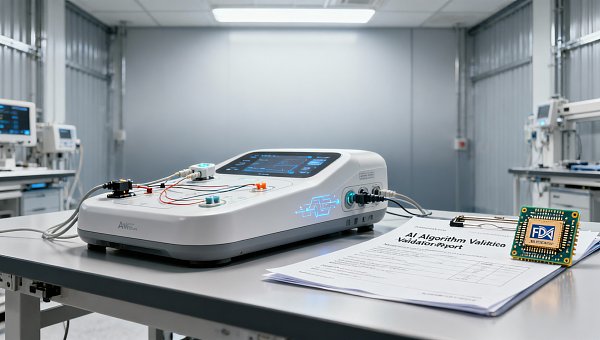
On May 7, 2026, the U.S. Food and Drug Administration (FDA) released Revision 22.3 of its 510(k) Electronic Submission Guidance, introducing a mandatory requirement for standalone AI Algorithm Validation Reports for rehabilitation devices incorporating artificial intelligence functions—including gait analysis, electromyographic (EMG) feedback, and cognitive training recommendation systems. This regulatory shift directly impacts manufacturers and exporters of AI-integrated rehab technologies, particularly those based in China and other non-U.S. jurisdictions seeking market access via the 510(k) pathway.
Event Overview
The FDA formally updated its 510(k) Electronic Submission Guidance v22.3 on May 7, 2026. The revision explicitly states that any rehabilitation device (Rehab Device) containing AI-based functionalities must include, as part of its 510(k) submission, a separate AI Algorithm Validation Report. This report must comprehensively document clinical dataset provenance, bias assessment methodology, robustness testing protocols (e.g., under sensor noise, demographic variability, or degraded signal conditions), and version control and update management procedures. Concurrently, the FDA launched a new Pre-submission AI Consultation service, enabling sponsors to request formal regulatory feedback on AI validation strategy up to three months prior to official submission.
Industries Affected
Direct Trade Enterprises: Exporters and U.S.-bound distributors of AI-enabled rehab devices face heightened pre-market compliance burdens. Impact manifests in extended submission timelines (estimated +8–12 weeks for algorithm report development and review), increased third-party validation costs (e.g., clinical data curation, adversarial testing), and higher risk of substantive review requests or refusal-to-accept (RTA) letters—especially for submissions lacking transparent bias mitigation evidence.
Raw Material & Component Suppliers: Firms supplying AI-relevant hardware (e.g., edge inference chips, high-fidelity motion sensors, low-latency wireless modules) or software-enabling infrastructure (e.g., certified real-time OS kernels, secure over-the-air update frameworks) may experience revised procurement specifications. Buyers are increasingly requesting traceable compliance documentation (e.g., ISO/IEC 23053 alignment, hardware-level safety certifications) to support downstream algorithm validation—not merely component performance specs.
Contract Manufacturing & OEM Facilities: Facilities producing AI-integrated rehab hardware must now maintain auditable records linking firmware versions, sensor calibration logs, and algorithm binaries to specific production batches. This extends quality management system (QMS) requirements beyond traditional design controls into AI lifecycle governance—impacting change control, configuration management, and post-market surveillance readiness.
Supply Chain Service Providers: Regulatory consultants, clinical validation partners, and AI verification labs face surging demand for FDA-aligned algorithm validation services. However, capacity constraints exist: few labs currently hold documented experience with FDA’s newly emphasized robustness metrics (e.g., worst-case scenario testing across age, ethnicity, and impairment severity subgroups). Logistics and customs brokers may also see tighter scrutiny on technical documentation accompanying shipments labeled “AI-assisted medical device.”
Key Focus Areas and Recommended Actions
Validate Clinical Data Provenance Early
Manufacturers must ensure datasets used for training and validation originate from ethically sourced, IRB-approved studies with documented demographic representation. Retrospective use of de-identified hospital EMR or wearable data requires explicit FDA-pre-cleared data governance plans—retroactive justification is no longer sufficient.
Leverage the Pre-submission AI Consultation Channel
Firms should initiate formal consultation at least 12 weeks before target submission. Successful engagements require submitting draft validation protocols—not just final reports—and clearly articulating how bias assessment aligns with FDA’s 2024 Artificial Intelligence/Machine Learning (AI/ML)-Based Software as a Medical Device (SaMD) Validation Framework.
Integrate Algorithm Lifecycle Controls into QMS
Update internal quality systems to cover AI model versioning, retraining triggers, deployment rollback mechanisms, and change impact assessments—even for minor parameter adjustments. FDA expects these controls to be auditable during inspections and referenced in the 510(k) summary.
Editorial Perspective / Industry Observation
Observably, this revision signals a structural pivot—not merely procedural tightening—from FDA’s Center for Devices and Radiological Health (CDRH). It reflects growing recognition that AI functionality in rehab devices operates not as a passive feature but as an active clinical decision-support agent whose behavior evolves with use. Analysis shows the emphasis on robustness testing and update control suggests FDA anticipates real-world adaptation risks (e.g., algorithm drift during long-term home use) more than static accuracy benchmarks. From an industry perspective, the policy is better understood as a catalyst for maturing AI governance practices rather than a barrier per se; firms with embedded clinical AI teams and traceable data pipelines are likely to gain competitive advantage in speed-to-market.
Conclusion
This guidance update marks a decisive step toward harmonizing AI validation expectations across therapeutic domains. While it raises entry complexity for new entrants, it also establishes clearer, more predictable criteria for regulatory acceptance—reducing ambiguity in what constitutes “sufficient” AI evidence. For the global rehab technology ecosystem, the broader implication is a shift from product-centric clearance to system-level accountability, where algorithm integrity becomes inseparable from device safety and effectiveness.
Source Attribution & Ongoing Monitoring
Primary source: U.S. FDA, 510(k) Electronic Submission Guidance, Version 22.3, effective May 7, 2026 (FDA.gov/cdrh/510k-guidance-v22-3). Supplemental reference: FDA Draft Guidance Artificial Intelligence/Machine Learning (AI/ML)-Based Software as a Medical Device (SaMD) Validation Framework (2024, currently in final review). Stakeholders should monitor upcoming CDRH webinars on AI validation reporting templates (scheduled Q3 2026) and potential updates to the De Novo Classification Process for novel AI-rehab combinations.
Get weekly intelligence in your inbox.
No noise. No sponsored content. Pure intelligence.
 Oct 08, 2026How Digital Health Improves Diagnostic Accuracy and Workflow in Clinical LabsHow Digital Health Improves Diagnostic Accuracy and Workflow in Clinical Labs
 Oct 07, 2026Selecting Voice Picking Systems for German Warehouses: Integration, Languages and ROISelecting Voice Picking Systems for German Warehouses: Integration, Languages and ROI
 Oct 06, 2026How to Choose Last Mile Dispatch Software for On-Time Delivery at ScaleHow to Choose Last Mile Dispatch Software for On-Time Delivery at Scale
 Oct 05, 2026Vietnam’s Consumer Electronics Market: Demand Shifts and Sourcing OpportunitiesVietnam’s Consumer Electronics Market: Demand Shifts and Sourcing Opportunities
 Oct 04, 2026Digital Health Investment Priorities for Providers: Improving Access, Outcomes, and EfficiencyDigital Health Investment Priorities for Providers: Improving Access, Outcomes, and Efficiency
 Oct 03, 2026How to Specify an FR4 Custom PCB Board for High-Voltage and High-Heat DesignsHow to Specify an FR4 Custom PCB Board for High-Voltage and High-Heat Designs
 Oct 02, 2026ERP Software Market Intelligence: Adoption, Pricing, and Vendor Signals to WatchERP Software Market Intelligence: Adoption, Pricing, and Vendor Signals to Watch
 Oct 01, 2026How to Select Calibrated Temperature Data Loggers for GMP Cold Storage MonitoringHow to Select Calibrated Temperature Data Loggers for GMP Cold Storage Monitoring
 Sep 30, 2026Custom Molded Rubber Pricing: What Drives Unit Cost and Tooling Fees?Custom Molded Rubber Pricing: What Drives Unit Cost and Tooling Fees?
 Sep 29, 2026How to Evaluate Energy Management Software Vendors for Multi-Site OperationsHow to Evaluate Energy Management Software Vendors for Multi-Site Operations
 Sep 28, 2026How to Select a DIN Rail Smart Meter for Multi-Circuit Energy MonitoringHow to Select a DIN Rail Smart Meter for Multi-Circuit Energy Monitoring
 Sep 27, 2026TWS Earbuds in Vietnam: Demand Drivers, Price Tiers, and Retail Channel OpportunitiesTWS Earbuds in Vietnam: Demand Drivers, Price Tiers, and Retail Channel Opportunities
 Sep 26, 2026How UAE Clinics Can Qualify a Smart Glucometer Supplier for Accuracy and ComplianceHow UAE Clinics Can Qualify a Smart Glucometer Supplier for Accuracy and Compliance
 Sep 25, 2026Buying Aesthetic Lasers in the USA: FDA Status, Wavelengths, and Service SupportBuying Aesthetic Lasers in the USA: FDA Status, Wavelengths, and Service Support
 Sep 24, 2026Laser Cutting Brass Sheet: How to Prevent Burrs and Heat Marks on Thin PartsLaser Cutting Brass Sheet: How to Prevent Burrs and Heat Marks on Thin Parts
 Sep 23, 2026How to Choose Lightweight ANC Headphones for Comfortable All-Day TravelHow to Choose Lightweight ANC Headphones for Comfortable All-Day Travel
 Sep 22, 2026IPX5 TWS Bluetooth Earbuds: What Protection Do They Offer for Workouts?IPX5 TWS Bluetooth Earbuds: What Protection Do They Offer for Workouts?
 Sep 21, 2026What to Look for in a Grid Integration Company for Utility-Scale Solar ProjectsWhat to Look for in a Grid Integration Company for Utility-Scale Solar Projects
 Sep 20, 2026Microgrid Controller Pricing: What Drives Cost in Commercial Energy Projects?Microgrid Controller Pricing: What Drives Cost in Commercial Energy Projects?
 Sep 19, 2026How to Choose a GaN Charger for Laptops Without Compromising Power or PortabilityHow to Choose a GaN Charger for Laptops Without Compromising Power or Portability
 Sep 18, 2026Floating Solar Farm Costs: CAPEX, OPEX, and the Site Factors That Shape ROIFloating Solar Farm Costs: CAPEX, OPEX, and the Site Factors That Shape ROI
 Sep 17, 2026Drone Delivery Solutions for Last-Mile Routes: Site, Payload, and Range PlanningDrone Delivery Solutions for Last-Mile Routes: Site, Payload, and Range Planning
 Sep 16, 2026When Low-Volume Electronics Manufacturing Makes More Sense Than Mass ProductionWhen Low-Volume Electronics Manufacturing Makes More Sense Than Mass Production
 Sep 15, 2026Wholesale WiFi Smart Switches: What Buyers Should Verify Before OrderingWholesale WiFi Smart Switches: What Buyers Should Verify Before Ordering
 Sep 14, 2026How to Select IoT Sensors for Reliable Monitoring in Harsh Industrial EnvironmentsHow to Select IoT Sensors for Reliable Monitoring in Harsh Industrial Environments
 Sep 13, 2026How Procurement Teams Can Improve Supplier Reliability With Supply Chain VisibilityHow Procurement Teams Can Improve Supplier Reliability With Supply Chain Visibility
 Sep 12, 2026Smart Manufacturing Trends 2026: What Leaders Should Prioritize for ROISmart Manufacturing Trends 2026: What Leaders Should Prioritize for ROI



























