
Reach Trucks Wholesale: What Affects Price More Than Brand
When evaluating reach trucks wholesale, brand reputation matters—but it rarely tells the full pricing story. For procurement teams, factors like lift height, battery type, load capacity, warehouse conditions, after-sales support, and order volume often have a greater impact on total cost. Understanding these variables helps buyers compare offers more accurately and make sourcing decisions that support both operational efficiency and long-term value.
In practice, two reach truck quotations with similar brand visibility can differ by 15% to 35% once configuration, battery chemistry, mast design, safety options, and service terms are included. That gap is especially relevant for buyers managing multi-site warehousing, e-commerce fulfillment, cold storage, or export-oriented distribution operations.
For procurement professionals sourcing reach trucks wholesale, the goal is not simply to find the lowest unit price. The better objective is to identify the cost drivers that shape lifetime value over 3 to 7 years, including uptime, maintenance intervals, operator productivity, spare parts availability, and delivery risk.
Why Brand Alone Is a Weak Pricing Benchmark in Reach Trucks Wholesale
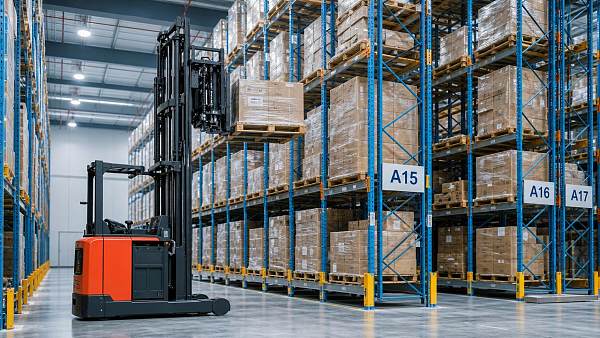
Brand can signal engineering consistency, resale confidence, and service maturity, but it is not a precise proxy for actual cost. In reach trucks wholesale, buyers often discover that the same brand offers multiple pricing tiers based on battery platform, fork positioning options, cabin ergonomics, telematics readiness, and local compliance needs.
A standard 1.5-ton unit for racking heights of 6 to 8 meters is priced very differently from a 2.0-ton specification designed for 10 to 12 meters with camera systems and cold-room protection. Even before shipping and commissioning are added, technical scope may outweigh brand premium by a wide margin.
The Procurement Problem Behind Surface-Level Price Comparisons
Many sourcing teams compare quotations by model category only, without normalizing duty cycle, charging method, aisle width, and attachment requirements. This creates a misleading shortlist, because a lower-priced offer may exclude the battery, side shift, charger, or 12-month service package that another supplier already includes.
A better comparison starts with 4 baseline variables: rated load, lift height, daily operating hours, and warehouse floor conditions. Once those are fixed, procurement can measure price differences in a more defensible way and reduce post-purchase variation orders.
What Usually Changes the Price More Than the Nameplate
The table below shows the most common price variables in reach trucks wholesale and how they affect commercial evaluation beyond brand positioning.
The key takeaway is simple: procurement should compare matched operating specifications, not just supplier names. In many tenders, the largest cost swings come from configuration choices that directly affect safety, throughput, and maintenance exposure.
The Biggest Cost Drivers Procurement Teams Should Audit First
A disciplined sourcing process for reach trucks wholesale usually starts with 5 technical checks. These checks help eliminate under-scoped offers and identify whether a lower quote will create higher ownership cost within the first 12 to 24 months.
1. Lift Height and Residual Capacity
Lift height is one of the clearest price multipliers. A truck rated at 1.8 tons at low height may offer much less residual capacity at 9 or 10 meters. Buyers must validate the actual pallet weight at top beam level, not only the nominal load listed in a brochure.
This matters in high-density storage where a mismatch of even 100 to 200 kg can force slower handling or split loads. In that case, the cheaper truck may reduce warehouse productivity by several pallet moves per hour.
2. Battery Type and Charging Strategy
Battery chemistry changes both capex and operating model. Lead-acid remains common in single-shift operations, especially where battery replacement routines are already established. Lithium-ion is increasingly preferred for 2-shift or 3-shift environments because opportunity charging can reduce spare battery inventory.
Procurement should calculate not only battery price, but charger requirements, charging time, ventilation needs, and labor impact. A higher initial quote may still be financially stronger if it cuts charging downtime by 1 to 2 hours per shift.
Questions to ask suppliers about battery scope
- Is the quoted battery included in the truck price or listed separately?
- What is the expected charging window: 1 hour, 2 hours, or a full off-shift cycle?
- Does the offer include charger, battery management system, and installation support?
- What are the expected replacement intervals under 1-shift versus 3-shift usage?
3. Warehouse Layout and Aisle Conditions
Warehouse geometry has a direct effect on reach truck selection. If the aisle width is 2.7 meters instead of 3.0 meters, steering design, chassis length, and mast visibility become critical. On uneven floors or dock-transition areas, tire choice and stability settings can also change the specification.
Buyers should confirm 6 basic site inputs before finalizing any reach trucks wholesale RFQ: aisle width, rack height, pallet dimensions, floor condition, shift frequency, and ambient temperature. Missing one of these inputs often leads to later price revisions.
4. Safety Features and Operator Assistance
Speed reduction at height, fork cameras, height selectors, blue warning lights, and load weight indicators are no longer optional in many professional facilities. These features may increase price by a moderate percentage, but they often reduce product damage, rack impact, and operator fatigue.
For sectors handling sensitive electronics, medical packaging, or high-value components, damage prevention can justify the added specification. Procurement should treat these options as operational controls, not cosmetic extras.
5. Service Terms and Spare Parts Readiness
After-sales support is one of the most underestimated cost drivers in reach trucks wholesale. A lower purchase price can quickly lose value if spare parts take 3 to 5 weeks to arrive or if local technicians are unavailable for commissioning and warranty claims.
For procurement managers, service SLAs should be reviewed as carefully as motor power or mast height. A response commitment within 24 to 48 hours is often more valuable than a small discount on the initial invoice.
How Order Volume, Incoterms, and Delivery Scope Reshape Wholesale Pricing
In wholesale transactions, commercial terms can shift total project cost as much as technical configuration. A buyer ordering 10 units across 2 delivery phases may receive a very different structure than a buyer ordering 3 units for immediate shipment, even when the truck specification is identical.
This is why procurement should assess unit price, logistics cost, accessory bundling, commissioning scope, and payment milestones together. Comparing truck-only prices without these commercial details can distort the sourcing decision.
Wholesale Levers That Commonly Affect Total Landed Cost
The following table outlines the commercial variables that frequently move pricing in reach trucks wholesale negotiations.
For most enterprise buyers, landed cost transparency matters more than headline discount. A supplier with a slightly higher quote may still be the stronger choice if lead time is shorter, commissioning is included, and spare parts stocking is documented.
Volume Discounts Are Real, but Only Under the Right Conditions
Bulk buying in reach trucks wholesale usually delivers the best value when at least 3 conditions are met: standardized specification, aligned delivery schedule, and centralized after-sales support. Without that alignment, larger orders can actually increase complexity and installation delays.
Procurement teams should also ask whether discounts apply to accessories, chargers, spare parts packages, or only the base truck. In many negotiations, the bigger savings come from bundled support items rather than the chassis itself.
A Practical Evaluation Framework for Buyers Comparing Reach Trucks Wholesale Offers
To improve sourcing accuracy, procurement can score suppliers across technical fit, commercial clarity, service readiness, and operating cost. A simple 100-point matrix is often enough to prevent overreliance on brand perception or low opening price.
Recommended 4-Part Evaluation Model
- Technical fit: capacity, lift height, aisle compatibility, battery configuration, safety options.
- Commercial terms: unit price, accessories included, Incoterms, payment schedule, lead time.
- Service capability: commissioning, training, warranty scope, parts availability, response time.
- Total operating cost: energy use, maintenance intervals, battery lifecycle, expected uptime.
This approach is especially useful for buyers managing warehouses in advanced manufacturing, electronics assembly, healthcare distribution, or logistics software-enabled fulfillment environments. In these settings, uptime and handling precision are often more valuable than a small reduction in acquisition price.
Common sourcing mistakes to avoid
- Comparing offers without matching battery scope and charger specification.
- Ignoring residual capacity at the highest storage level.
- Accepting long spare-parts lead times without a stocking plan.
- Using brand reputation as a substitute for warehouse-specific technical review.
- Focusing on unit price while excluding training, commissioning, and maintenance access.
What Strong RFQs Usually Include
Well-structured RFQs for reach trucks wholesale typically specify 8 to 10 operational details: load weight, lift height, pallet size, aisle width, daily hours, shift count, battery preference, floor condition, temperature range, and required delivery date. The more precise the RFQ, the less likely buyers are to receive non-comparable quotations.
Where procurement teams need strategic market visibility, platforms such as TradeNexus Pro can add value by helping decision-makers monitor supplier positioning, sector demand shifts, and sourcing risks across advanced manufacturing and supply chain ecosystems.
Final Buying Perspective for Procurement Teams
The most effective reach trucks wholesale decisions are built on specification discipline, not brand shortcuts. Lift height, battery platform, load profile, facility conditions, support coverage, and order structure usually explain far more of the final price than the badge on the truck.
For procurement teams, the strongest commercial outcome comes from comparing normalized offers, checking hidden scope gaps, and evaluating 3- to 5-year operating impact before award. That process reduces risk, improves uptime, and supports more credible budget planning across warehouse operations.
If you are reviewing reach trucks wholesale options for an upcoming project, now is the right time to refine your RFQ, validate supplier service terms, and request a configuration-based comparison instead of a brand-only quote. Contact us to discuss sourcing details, obtain a tailored evaluation framework, or explore more procurement-focused supply chain solutions.
Get weekly intelligence in your inbox.
No noise. No sponsored content. Pure intelligence.
 Oct 08, 2026How Digital Health Improves Diagnostic Accuracy and Workflow in Clinical LabsHow Digital Health Improves Diagnostic Accuracy and Workflow in Clinical Labs
 Oct 07, 2026Selecting Voice Picking Systems for German Warehouses: Integration, Languages and ROISelecting Voice Picking Systems for German Warehouses: Integration, Languages and ROI
 Oct 06, 2026How to Choose Last Mile Dispatch Software for On-Time Delivery at ScaleHow to Choose Last Mile Dispatch Software for On-Time Delivery at Scale
 Oct 05, 2026Vietnam’s Consumer Electronics Market: Demand Shifts and Sourcing OpportunitiesVietnam’s Consumer Electronics Market: Demand Shifts and Sourcing Opportunities
 Oct 04, 2026Digital Health Investment Priorities for Providers: Improving Access, Outcomes, and EfficiencyDigital Health Investment Priorities for Providers: Improving Access, Outcomes, and Efficiency
 Oct 03, 2026How to Specify an FR4 Custom PCB Board for High-Voltage and High-Heat DesignsHow to Specify an FR4 Custom PCB Board for High-Voltage and High-Heat Designs
 Oct 02, 2026ERP Software Market Intelligence: Adoption, Pricing, and Vendor Signals to WatchERP Software Market Intelligence: Adoption, Pricing, and Vendor Signals to Watch
 Oct 01, 2026How to Select Calibrated Temperature Data Loggers for GMP Cold Storage MonitoringHow to Select Calibrated Temperature Data Loggers for GMP Cold Storage Monitoring
 Sep 30, 2026Custom Molded Rubber Pricing: What Drives Unit Cost and Tooling Fees?Custom Molded Rubber Pricing: What Drives Unit Cost and Tooling Fees?
 Sep 29, 2026How to Evaluate Energy Management Software Vendors for Multi-Site OperationsHow to Evaluate Energy Management Software Vendors for Multi-Site Operations
 Sep 28, 2026How to Select a DIN Rail Smart Meter for Multi-Circuit Energy MonitoringHow to Select a DIN Rail Smart Meter for Multi-Circuit Energy Monitoring
 Sep 27, 2026TWS Earbuds in Vietnam: Demand Drivers, Price Tiers, and Retail Channel OpportunitiesTWS Earbuds in Vietnam: Demand Drivers, Price Tiers, and Retail Channel Opportunities
 Sep 26, 2026How UAE Clinics Can Qualify a Smart Glucometer Supplier for Accuracy and ComplianceHow UAE Clinics Can Qualify a Smart Glucometer Supplier for Accuracy and Compliance
 Sep 25, 2026Buying Aesthetic Lasers in the USA: FDA Status, Wavelengths, and Service SupportBuying Aesthetic Lasers in the USA: FDA Status, Wavelengths, and Service Support
 Sep 24, 2026Laser Cutting Brass Sheet: How to Prevent Burrs and Heat Marks on Thin PartsLaser Cutting Brass Sheet: How to Prevent Burrs and Heat Marks on Thin Parts
 Sep 23, 2026How to Choose Lightweight ANC Headphones for Comfortable All-Day TravelHow to Choose Lightweight ANC Headphones for Comfortable All-Day Travel
 Sep 22, 2026IPX5 TWS Bluetooth Earbuds: What Protection Do They Offer for Workouts?IPX5 TWS Bluetooth Earbuds: What Protection Do They Offer for Workouts?
 Sep 21, 2026What to Look for in a Grid Integration Company for Utility-Scale Solar ProjectsWhat to Look for in a Grid Integration Company for Utility-Scale Solar Projects
 Sep 20, 2026Microgrid Controller Pricing: What Drives Cost in Commercial Energy Projects?Microgrid Controller Pricing: What Drives Cost in Commercial Energy Projects?
 Sep 19, 2026How to Choose a GaN Charger for Laptops Without Compromising Power or PortabilityHow to Choose a GaN Charger for Laptops Without Compromising Power or Portability
 Sep 18, 2026Floating Solar Farm Costs: CAPEX, OPEX, and the Site Factors That Shape ROIFloating Solar Farm Costs: CAPEX, OPEX, and the Site Factors That Shape ROI
 Sep 17, 2026Drone Delivery Solutions for Last-Mile Routes: Site, Payload, and Range PlanningDrone Delivery Solutions for Last-Mile Routes: Site, Payload, and Range Planning
 Sep 16, 2026When Low-Volume Electronics Manufacturing Makes More Sense Than Mass ProductionWhen Low-Volume Electronics Manufacturing Makes More Sense Than Mass Production
 Sep 15, 2026Wholesale WiFi Smart Switches: What Buyers Should Verify Before OrderingWholesale WiFi Smart Switches: What Buyers Should Verify Before Ordering
 Sep 14, 2026How to Select IoT Sensors for Reliable Monitoring in Harsh Industrial EnvironmentsHow to Select IoT Sensors for Reliable Monitoring in Harsh Industrial Environments
 Sep 13, 2026How Procurement Teams Can Improve Supplier Reliability With Supply Chain VisibilityHow Procurement Teams Can Improve Supplier Reliability With Supply Chain Visibility
 Sep 12, 2026Smart Manufacturing Trends 2026: What Leaders Should Prioritize for ROISmart Manufacturing Trends 2026: What Leaders Should Prioritize for ROI



























