
IEC 63171-3:2026 Mandates M12-X Connectors for Industrial Exports
On 8 May 2026, the International Electrotechnical Commission (IEC) officially published IEC 63171-3:2026 — a new international standard specifying electrical, mechanical, and electromagnetic compatibility (EMC) requirements for high-density M12-X coded industrial connectors. Its adoption signals a pivotal shift for Chinese exporters in factory automation and industrial materials, as key markets including the European Union, South Korea, and Australia have confirmed its inclusion in CE, KC, and RCM certification prerequisites effective from Q3 2026.
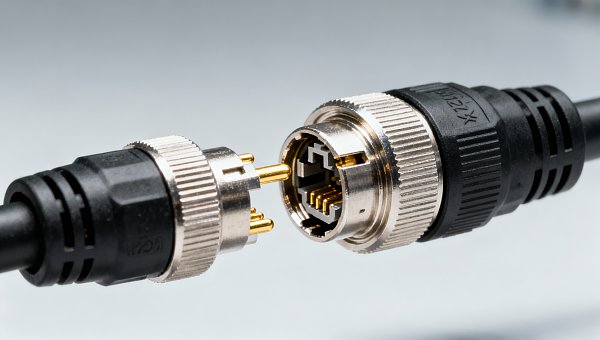
Event Overview
The International Electrotechnical Commission (IEC) released IEC 63171-3:2026 on 8 May 2026. The standard defines performance criteria for M12-X coded connectors used in industrial automation equipment. Regulatory authorities in the EU, South Korea, and Australia have formally indicated that compliance with this standard will be required for market access under CE, KC, and RCM conformity assessment schemes starting Q3 2026.
Industries Affected
Direct Exporters: Manufacturers exporting programmable logic controllers (PLCs), remote I/O systems, and servo drives to the EU, South Korea, or Australia face immediate certification implications. Non-compliant products may encounter customs delays, rejection at border inspection points, or forced re-export — directly impacting delivery timelines and contractual penalties.
Raw Material Procurement Firms: Suppliers sourcing connector housings, contact pins, or overmolding compounds must now align material specifications — especially thermal class, flame retardancy (e.g., UL 94 V-0), and plating thickness — with IEC 63171-3’s dimensional and environmental test requirements. Sourcing decisions made prior to Q2 2026 may require revision to avoid component-level nonconformity.
Contract Manufacturing & OEM Facilities: EMS providers and system integrators assembling automation hardware must update design control documentation, revise IPC-A-610 acceptance criteria for connector insertion force and mating cycles, and validate EMC shielding integrity per Clause 7 of the standard. Retrofitting existing production lines for M12-X tooling and testing fixtures is expected to incur lead-time and capex adjustments.
Supply Chain Service Providers: Third-party testing labs, certification bodies, and logistics intermediaries handling pre-shipment conformity verification must expand their scope of accreditation to cover IEC 63171-3’s vibration endurance (IEC 60068-2-64), salt mist resistance (IEC 60068-2-11), and surge immunity (IEC 61000-4-5) test protocols — potentially affecting turnaround time and service pricing.
Key Focus Areas and Recommended Actions
Verify product-level interface architecture against Annex A of IEC 63171-3:2026
Manufacturers should conduct gap analysis comparing current M12-X implementations (e.g., pin assignment, keying geometry, sealing depth) with the mandatory dimensional tolerances and coding definitions in Annex A. Deviations exceeding ±0.05 mm in critical interfaces may invalidate certification.
Initiate early engagement with accredited testing laboratories
Given projected lab capacity constraints ahead of Q3 2026 deadlines, exporters are advised to secure test scheduling by end-July 2026 — particularly for combined EMC + environmental stress validation, which requires minimum 12-week throughput under current industry benchmarks.
Review technical documentation for regulatory traceability
Declaration of Conformity (DoC) templates, user manuals, and PCB silkscreen markings must explicitly reference IEC 63171-3:2026 — not just generic “M12-X” labeling — to satisfy market surveillance authority audits in target jurisdictions.
Editorial Perspective / Industry Observation
Analysis shows that IEC 63171-3:2026 does not introduce fundamentally new connector functionality, but rather consolidates previously fragmented regional specifications (e.g., DIN 60068 variants, Korean KTC 1001-2) into a single global baseline. Observably, this reflects a broader trend toward harmonized physical layer standards in Industry 4.0 infrastructure — where interoperability at the hardware interface level increasingly determines system-level scalability. From an industry perspective, the standard’s timing coincides with rising demand for edge-deployed automation nodes; tighter mechanical robustness requirements suggest growing emphasis on field reliability over cost-optimized assembly. Current more relevant question is not whether adaptation is necessary, but how quickly mid-tier manufacturers can achieve certification without compromising margin or lead time.
Conclusion
This standard marks less a technical disruption and more a procedural inflection point: it formalizes what was already emerging as de facto practice among Tier-1 automation suppliers. For the broader industrial export ecosystem, successful navigation hinges not on innovation, but on disciplined documentation control, cross-functional alignment between R&D and regulatory affairs, and proactive supply chain communication. Rational observation suggests that companies treating this as a compliance-only exercise risk underestimating its cascading impact on design cycle planning and component lifecycle management.
Source Attribution
Official publication: IEC Webstore (IEC 63171-3:2026, issued 8 May 2026). Regulatory confirmations cited from: EU NANDO database notice 2026/CE-IND-042 (published 15 April 2026); MFDS KC Notice No. 2026-18 (South Korea, 20 April 2026); Australian Communications and Media Authority (ACMA) RCM Bulletin Q2-2026. Note: Final implementation guidance from national accreditation bodies remains pending — ongoing monitoring recommended through July 2026.
Get weekly intelligence in your inbox.
No noise. No sponsored content. Pure intelligence.
 Oct 08, 2026How Digital Health Improves Diagnostic Accuracy and Workflow in Clinical LabsHow Digital Health Improves Diagnostic Accuracy and Workflow in Clinical Labs
 Oct 07, 2026Selecting Voice Picking Systems for German Warehouses: Integration, Languages and ROISelecting Voice Picking Systems for German Warehouses: Integration, Languages and ROI
 Oct 06, 2026How to Choose Last Mile Dispatch Software for On-Time Delivery at ScaleHow to Choose Last Mile Dispatch Software for On-Time Delivery at Scale
 Oct 05, 2026Vietnam’s Consumer Electronics Market: Demand Shifts and Sourcing OpportunitiesVietnam’s Consumer Electronics Market: Demand Shifts and Sourcing Opportunities
 Oct 04, 2026Digital Health Investment Priorities for Providers: Improving Access, Outcomes, and EfficiencyDigital Health Investment Priorities for Providers: Improving Access, Outcomes, and Efficiency
 Oct 03, 2026How to Specify an FR4 Custom PCB Board for High-Voltage and High-Heat DesignsHow to Specify an FR4 Custom PCB Board for High-Voltage and High-Heat Designs
 Oct 02, 2026ERP Software Market Intelligence: Adoption, Pricing, and Vendor Signals to WatchERP Software Market Intelligence: Adoption, Pricing, and Vendor Signals to Watch
 Oct 01, 2026How to Select Calibrated Temperature Data Loggers for GMP Cold Storage MonitoringHow to Select Calibrated Temperature Data Loggers for GMP Cold Storage Monitoring
 Sep 30, 2026Custom Molded Rubber Pricing: What Drives Unit Cost and Tooling Fees?Custom Molded Rubber Pricing: What Drives Unit Cost and Tooling Fees?
 Sep 29, 2026How to Evaluate Energy Management Software Vendors for Multi-Site OperationsHow to Evaluate Energy Management Software Vendors for Multi-Site Operations
 Sep 28, 2026How to Select a DIN Rail Smart Meter for Multi-Circuit Energy MonitoringHow to Select a DIN Rail Smart Meter for Multi-Circuit Energy Monitoring
 Sep 27, 2026TWS Earbuds in Vietnam: Demand Drivers, Price Tiers, and Retail Channel OpportunitiesTWS Earbuds in Vietnam: Demand Drivers, Price Tiers, and Retail Channel Opportunities
 Sep 26, 2026How UAE Clinics Can Qualify a Smart Glucometer Supplier for Accuracy and ComplianceHow UAE Clinics Can Qualify a Smart Glucometer Supplier for Accuracy and Compliance
 Sep 25, 2026Buying Aesthetic Lasers in the USA: FDA Status, Wavelengths, and Service SupportBuying Aesthetic Lasers in the USA: FDA Status, Wavelengths, and Service Support
 Sep 24, 2026Laser Cutting Brass Sheet: How to Prevent Burrs and Heat Marks on Thin PartsLaser Cutting Brass Sheet: How to Prevent Burrs and Heat Marks on Thin Parts
 Sep 23, 2026How to Choose Lightweight ANC Headphones for Comfortable All-Day TravelHow to Choose Lightweight ANC Headphones for Comfortable All-Day Travel
 Sep 22, 2026IPX5 TWS Bluetooth Earbuds: What Protection Do They Offer for Workouts?IPX5 TWS Bluetooth Earbuds: What Protection Do They Offer for Workouts?
 Sep 21, 2026What to Look for in a Grid Integration Company for Utility-Scale Solar ProjectsWhat to Look for in a Grid Integration Company for Utility-Scale Solar Projects
 Sep 20, 2026Microgrid Controller Pricing: What Drives Cost in Commercial Energy Projects?Microgrid Controller Pricing: What Drives Cost in Commercial Energy Projects?
 Sep 19, 2026How to Choose a GaN Charger for Laptops Without Compromising Power or PortabilityHow to Choose a GaN Charger for Laptops Without Compromising Power or Portability
 Sep 18, 2026Floating Solar Farm Costs: CAPEX, OPEX, and the Site Factors That Shape ROIFloating Solar Farm Costs: CAPEX, OPEX, and the Site Factors That Shape ROI
 Sep 17, 2026Drone Delivery Solutions for Last-Mile Routes: Site, Payload, and Range PlanningDrone Delivery Solutions for Last-Mile Routes: Site, Payload, and Range Planning
 Sep 16, 2026When Low-Volume Electronics Manufacturing Makes More Sense Than Mass ProductionWhen Low-Volume Electronics Manufacturing Makes More Sense Than Mass Production
 Sep 15, 2026Wholesale WiFi Smart Switches: What Buyers Should Verify Before OrderingWholesale WiFi Smart Switches: What Buyers Should Verify Before Ordering
 Sep 14, 2026How to Select IoT Sensors for Reliable Monitoring in Harsh Industrial EnvironmentsHow to Select IoT Sensors for Reliable Monitoring in Harsh Industrial Environments
 Sep 13, 2026How Procurement Teams Can Improve Supplier Reliability With Supply Chain VisibilityHow Procurement Teams Can Improve Supplier Reliability With Supply Chain Visibility
 Sep 12, 2026Smart Manufacturing Trends 2026: What Leaders Should Prioritize for ROISmart Manufacturing Trends 2026: What Leaders Should Prioritize for ROI



























