
Electric Forklifts vs LPG: Which Costs Less Over Time?
For finance decision-makers weighing fleet upgrades, the real question is not just purchase price but total cost over time. When comparing electric forklifts with LPG models, factors like energy, maintenance, downtime, and compliance can significantly reshape long-term ROI. This article breaks down the cost drivers that matter most, helping you evaluate which option delivers stronger financial performance for your operation.
What should finance teams measure before comparing electric forklifts and LPG fleets?
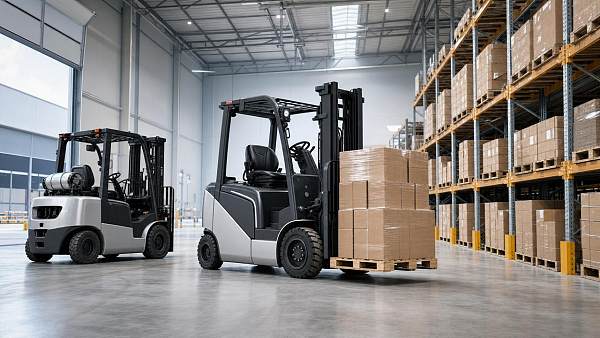
A useful comparison starts with the right cost frame. Many approvals fail because the discussion stays focused on unit price instead of asset life, operating profile, and hidden support costs.
For most multi-shift warehouses, plants, and distribution sites, electric forklifts and LPG trucks should be compared across total cost of ownership, not sticker price. That includes energy, service labor, battery or fuel infrastructure, operator productivity, and regulatory exposure.
This matters across advanced manufacturing, green energy components, smart electronics, healthcare technology logistics, and supply chain software-enabled warehouse networks. In these sectors, uptime and traceable cost performance often carry more weight than upfront savings.
- Capex: purchase price, charging equipment, battery package, LPG storage equipment, ventilation adjustments, and site preparation.
- Opex: electricity, LPG consumption, preventive maintenance, replacement parts, tires, and operator time lost to refueling or battery changes.
- Risk cost: unplanned downtime, safety incidents, indoor air-quality controls, carbon reporting pressure, and residual value uncertainty.
When financial approvers ask which option costs less over time, the answer often depends on utilization intensity, local utility rates, fuel pricing volatility, and whether indoor use requires stricter environmental controls.
Where do electric forklifts usually outperform LPG on lifetime cost?
Electric forklifts often gain a cost advantage when fleets run indoors, follow predictable shift schedules, and require frequent starts, stops, and tight maneuvering. In these settings, lower energy cost per operating hour can accumulate quickly.
Maintenance is another major driver. Electric drivetrains typically have fewer moving parts than internal combustion systems. That can reduce routine service events linked to engines, spark plugs, filters, exhaust systems, and fuel delivery components.
For finance leaders, the savings are not only mechanical. Electric forklifts can support lower noise, cleaner indoor operation, and simpler alignment with ESG reporting, especially in sectors where customers and investors increasingly ask for measurable emissions reductions.
Common cost strengths of electric forklifts
- Lower day-to-day energy cost in regions where electricity prices are stable and off-peak charging is available.
- Reduced planned maintenance compared with engine-based forklifts, especially for indoor fleets with high annual operating hours.
- Fewer air-quality concerns in enclosed areas, which may reduce indirect compliance and facility management costs.
- Potentially better fit for operations integrating warehouse analytics, telematics, and energy monitoring tools.
The strongest business case usually appears when electric forklifts are matched with disciplined charging practices, suitable battery chemistry, and a realistic shift design. Without that planning, expected savings can be diluted.
When can LPG forklifts still make financial sense?
LPG forklifts remain viable in mixed indoor-outdoor operations, remote facilities, and duty cycles where immediate refueling matters more than charging windows. They can also work well where power infrastructure upgrades are expensive or delayed.
For some buyers, the lower initial equipment price of an LPG truck can improve short-term capital planning. That may appeal to sites with uncertain throughput, leased buildings, or temporary capacity expansion.
However, finance teams should distinguish between lower upfront cost and lower lifetime cost. LPG fleets often carry ongoing fuel price exposure and may require more engine-related maintenance over time.
Scenarios where LPG may stay competitive
- Outdoor-heavy applications with uneven schedules and limited charging access.
- Facilities needing long run times without battery swapping or fast-charging downtime.
- Sites where utility upgrades, switchgear work, or charger installation would materially increase project capex.
The key is not to assume a legacy fleet should remain unchanged. A hybrid fleet strategy can sometimes produce the best economic outcome, with electric forklifts assigned to indoor repetitive tasks and LPG units reserved for higher-range or outdoor workloads.
Side-by-side cost comparison: what changes after year one?
The table below summarizes the cost categories finance teams typically use when reviewing electric forklifts against LPG alternatives. Actual figures vary by region, shift pattern, battery type, fuel contracts, and service terms, but the structure helps standardize internal evaluation.
For many buyers, year one appears expensive for electric forklifts because of infrastructure. By years three to five, lower operating cost can offset that gap, especially in high-utilization fleets. LPG can remain competitive in lighter-duty or infrastructure-constrained environments.
Which cost variables are most often missed in approval models?
Approval models often underestimate secondary costs. This is where good procurement intelligence becomes valuable. A narrow quotation comparison rarely captures true exposure over the asset life.
Hidden variables worth quantifying
- Battery replacement timing, warranty conditions, and charging losses.
- Operator labor linked to refueling, battery swapping, or waiting for charger availability.
- Facility modifications, including electrical capacity studies, fire safety review, and designated fueling or charging zones.
- Residual value and disposal handling at end of life.
- Cost of emissions-related audits, ventilation needs, or sustainability reporting pressure in customer contracts.
In industries managing sensitive goods, such as electronics or healthcare technology components, cleanliness and controlled indoor conditions can also influence the total economic picture. That makes electric forklifts more than an equipment choice; they become part of a facility risk strategy.
How should buyers evaluate electric forklifts by application scenario?
Not every operation should standardize around one power source. Finance teams need an application-level view that links duty cycle, floor conditions, ambient temperature, and facility constraints to cost performance.
The table below helps structure a scenario-based review of electric forklifts and LPG units in cross-industry settings commonly seen in manufacturing, warehousing, and distribution.
This scenario view helps prevent overgeneralization. Electric forklifts are not automatically the cheaper answer in every operation, but they often become financially attractive where utilization is high and the environment favors indoor efficiency.
What should a procurement and finance checklist include?
A disciplined approval process reduces the risk of choosing the wrong power source based on incomplete vendor comparisons. Finance and procurement should review operational data before evaluating quotations.
Recommended review points
- Measure annual running hours per truck, not just fleet size. Two fleets with the same truck count can have very different lifetime economics.
- Map indoor and outdoor usage separately. Electric forklifts tend to perform best when indoor duty is dominant and consistent.
- Request itemized quotes that separate truck price, battery, charger, installation, training, and service support.
- Stress-test energy and fuel assumptions using multiple price scenarios over three to seven years.
- Review maintenance support coverage, spare parts availability, and expected response time for critical breakdowns.
- Check relevant local safety, ventilation, charging, and facility compliance obligations before issuing final approval.
This structured approach is especially important for enterprise buyers operating across several facilities. A single fleet policy may not fit every site, and an informed sourcing model usually outperforms a one-size-fits-all decision.
How do compliance and reporting pressures affect forklift economics?
Compliance costs are easy to ignore because they do not always appear on the equipment quote. Yet in many sectors, they influence insurance, customer audits, environmental reporting, and site operating procedures.
Electric forklifts may support easier alignment with internal decarbonization goals and cleaner indoor operations. LPG units may still be acceptable, but facilities often need to manage combustion-related considerations more closely, particularly in enclosed spaces.
- Indoor air-quality management can create indirect operating costs for combustion-based fleets.
- Energy transition policies can affect depreciation assumptions and future asset preference.
- Large buyers increasingly include emissions and sustainability questions in supplier evaluations, which can shape fleet strategy.
For finance approvers, the message is simple: compliance is not just a legal box. It can shift the cost curve and the commercial value of your operation over time.
FAQ: common questions from buyers comparing electric forklifts and LPG
Do electric forklifts always cost less over time?
No. Electric forklifts often deliver lower long-term operating cost in indoor, high-utilization settings, but the result depends on charging infrastructure, electricity pricing, duty cycle, and battery strategy. If your site needs major power upgrades, the payback period can extend.
What payback period should finance teams expect?
There is no universal payback window. Many buyers model three, five, and seven-year scenarios. A shorter payback is more likely when trucks run many hours per year and when maintenance savings are material. A longer payback is common in low-use fleets or infrastructure-constrained sites.
Are electric forklifts suitable for multi-shift operations?
Yes, but only with the right charging and battery plan. Opportunity charging, spare batteries, or battery technologies designed for intensive use can support multi-shift deployment. Finance teams should verify the full infrastructure and labor impact before approval.
What is the biggest mistake in forklift cost comparisons?
The biggest mistake is comparing purchase price alone. A sound review must include fuel or electricity, maintenance, downtime, facility modifications, compliance considerations, and end-of-life value. Without these, the apparent low-cost option can become more expensive within a few years.
Why work with us when evaluating fleet power decisions?
TradeNexus Pro supports procurement directors, supply chain managers, and enterprise decision-makers with sector-specific market intelligence rather than generic equipment commentary. For buyers comparing electric forklifts and LPG fleets, that means sharper visibility into supply chain shifts, operating tradeoffs, and sourcing risks.
Our focus across advanced manufacturing, green energy, smart electronics, healthcare technology, and supply chain SaaS allows us to connect fleet decisions with broader business priorities such as facility modernization, emissions strategy, and resilient procurement planning.
What you can discuss with us
- Parameter confirmation for operating hours, load profile, indoor-outdoor ratio, and charging assumptions.
- Product and fleet selection guidance based on application scenario, budget structure, and rollout urgency.
- Delivery timing considerations, supplier readiness, and regional sourcing constraints.
- Custom comparison frameworks for capex, opex, compliance, and downtime risk.
- Quote review support to separate visible price from long-term ownership cost.
If your team is reviewing electric forklifts for a new facility, a fleet replacement cycle, or a mixed-power strategy, connect with TradeNexus Pro for a more decision-ready cost framework. The most valuable next step is not a faster quote. It is a better model for choosing the right asset mix before capital is committed.
Get weekly intelligence in your inbox.
No noise. No sponsored content. Pure intelligence.
 Oct 08, 2026How Digital Health Improves Diagnostic Accuracy and Workflow in Clinical LabsHow Digital Health Improves Diagnostic Accuracy and Workflow in Clinical Labs
 Oct 07, 2026Selecting Voice Picking Systems for German Warehouses: Integration, Languages and ROISelecting Voice Picking Systems for German Warehouses: Integration, Languages and ROI
 Oct 06, 2026How to Choose Last Mile Dispatch Software for On-Time Delivery at ScaleHow to Choose Last Mile Dispatch Software for On-Time Delivery at Scale
 Oct 05, 2026Vietnam’s Consumer Electronics Market: Demand Shifts and Sourcing OpportunitiesVietnam’s Consumer Electronics Market: Demand Shifts and Sourcing Opportunities
 Oct 04, 2026Digital Health Investment Priorities for Providers: Improving Access, Outcomes, and EfficiencyDigital Health Investment Priorities for Providers: Improving Access, Outcomes, and Efficiency
 Oct 03, 2026How to Specify an FR4 Custom PCB Board for High-Voltage and High-Heat DesignsHow to Specify an FR4 Custom PCB Board for High-Voltage and High-Heat Designs
 Oct 02, 2026ERP Software Market Intelligence: Adoption, Pricing, and Vendor Signals to WatchERP Software Market Intelligence: Adoption, Pricing, and Vendor Signals to Watch
 Oct 01, 2026How to Select Calibrated Temperature Data Loggers for GMP Cold Storage MonitoringHow to Select Calibrated Temperature Data Loggers for GMP Cold Storage Monitoring
 Sep 30, 2026Custom Molded Rubber Pricing: What Drives Unit Cost and Tooling Fees?Custom Molded Rubber Pricing: What Drives Unit Cost and Tooling Fees?
 Sep 29, 2026How to Evaluate Energy Management Software Vendors for Multi-Site OperationsHow to Evaluate Energy Management Software Vendors for Multi-Site Operations
 Sep 28, 2026How to Select a DIN Rail Smart Meter for Multi-Circuit Energy MonitoringHow to Select a DIN Rail Smart Meter for Multi-Circuit Energy Monitoring
 Sep 27, 2026TWS Earbuds in Vietnam: Demand Drivers, Price Tiers, and Retail Channel OpportunitiesTWS Earbuds in Vietnam: Demand Drivers, Price Tiers, and Retail Channel Opportunities
 Sep 26, 2026How UAE Clinics Can Qualify a Smart Glucometer Supplier for Accuracy and ComplianceHow UAE Clinics Can Qualify a Smart Glucometer Supplier for Accuracy and Compliance
 Sep 25, 2026Buying Aesthetic Lasers in the USA: FDA Status, Wavelengths, and Service SupportBuying Aesthetic Lasers in the USA: FDA Status, Wavelengths, and Service Support
 Sep 24, 2026Laser Cutting Brass Sheet: How to Prevent Burrs and Heat Marks on Thin PartsLaser Cutting Brass Sheet: How to Prevent Burrs and Heat Marks on Thin Parts
 Sep 23, 2026How to Choose Lightweight ANC Headphones for Comfortable All-Day TravelHow to Choose Lightweight ANC Headphones for Comfortable All-Day Travel
 Sep 22, 2026IPX5 TWS Bluetooth Earbuds: What Protection Do They Offer for Workouts?IPX5 TWS Bluetooth Earbuds: What Protection Do They Offer for Workouts?
 Sep 21, 2026What to Look for in a Grid Integration Company for Utility-Scale Solar ProjectsWhat to Look for in a Grid Integration Company for Utility-Scale Solar Projects
 Sep 20, 2026Microgrid Controller Pricing: What Drives Cost in Commercial Energy Projects?Microgrid Controller Pricing: What Drives Cost in Commercial Energy Projects?
 Sep 19, 2026How to Choose a GaN Charger for Laptops Without Compromising Power or PortabilityHow to Choose a GaN Charger for Laptops Without Compromising Power or Portability
 Sep 18, 2026Floating Solar Farm Costs: CAPEX, OPEX, and the Site Factors That Shape ROIFloating Solar Farm Costs: CAPEX, OPEX, and the Site Factors That Shape ROI
 Sep 17, 2026Drone Delivery Solutions for Last-Mile Routes: Site, Payload, and Range PlanningDrone Delivery Solutions for Last-Mile Routes: Site, Payload, and Range Planning
 Sep 16, 2026When Low-Volume Electronics Manufacturing Makes More Sense Than Mass ProductionWhen Low-Volume Electronics Manufacturing Makes More Sense Than Mass Production
 Sep 15, 2026Wholesale WiFi Smart Switches: What Buyers Should Verify Before OrderingWholesale WiFi Smart Switches: What Buyers Should Verify Before Ordering
 Sep 14, 2026How to Select IoT Sensors for Reliable Monitoring in Harsh Industrial EnvironmentsHow to Select IoT Sensors for Reliable Monitoring in Harsh Industrial Environments
 Sep 13, 2026How Procurement Teams Can Improve Supplier Reliability With Supply Chain VisibilityHow Procurement Teams Can Improve Supplier Reliability With Supply Chain Visibility
 Sep 12, 2026Smart Manufacturing Trends 2026: What Leaders Should Prioritize for ROISmart Manufacturing Trends 2026: What Leaders Should Prioritize for ROI



























