ISO Releases First Zero-Carbon City Standard — China’s Practices Included
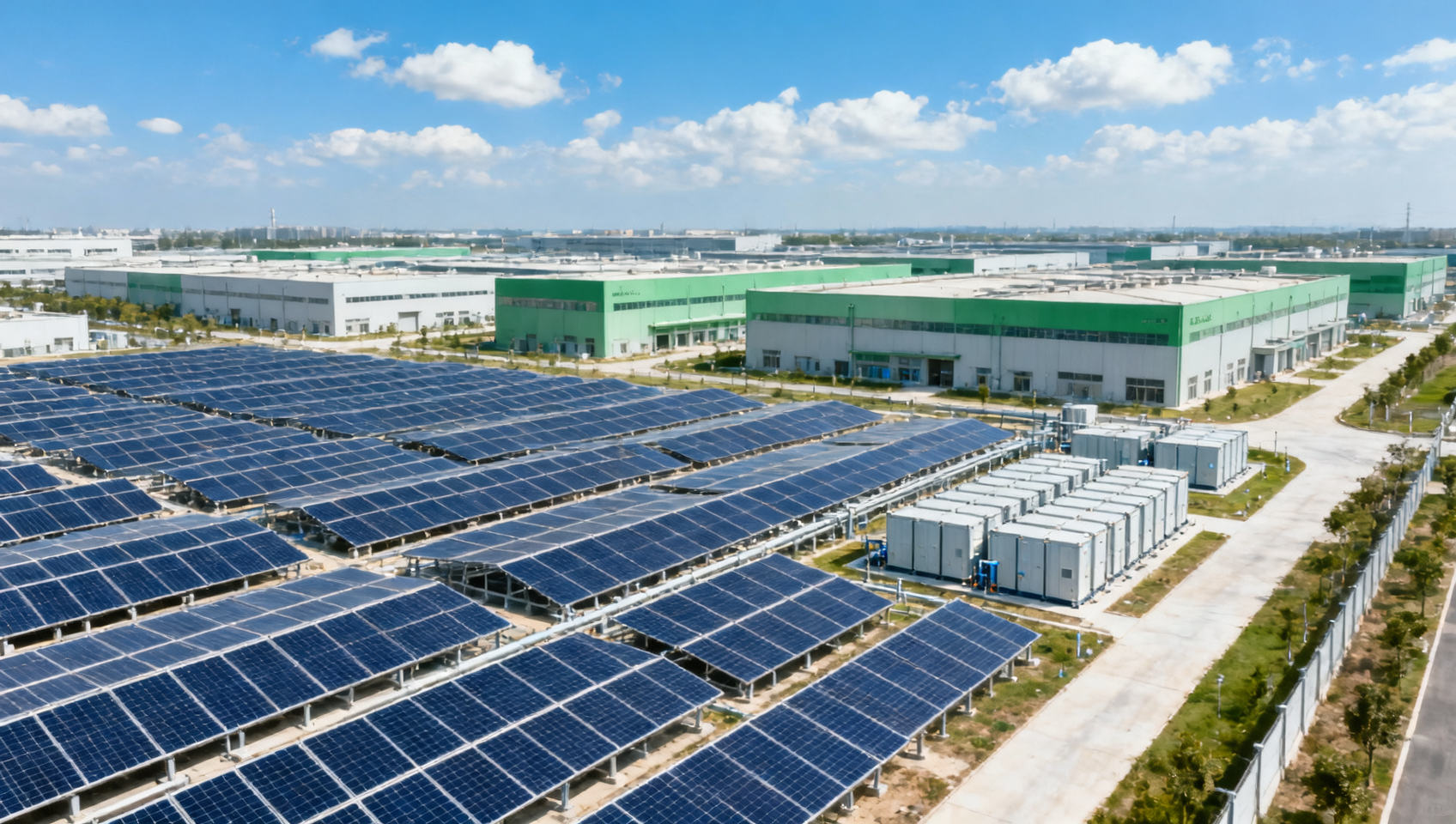
On 22 April 2026, the International Organization for Standardization (ISO) published ISO/TR 37115–1:2026, Urban and Community Sustainability — Zero-Carbon Cities — Part 1: Case Studies. This marks the first international standard to formally incorporate Chinese zero-carbon park models, green factory frameworks, and integrated distributed photovoltaic + energy storage systems into its global case library. Export-oriented infrastructure suppliers, municipal procurement agencies, EPC contractors, and green construction importers in overseas markets are now expected to reference this standard when assessing technical compliance and system delivery capability of Chinese vendors.
Event Overview
On 22 April 2026, ISO officially released ISO/TR 37115–1:2026, titled Urban and Community Sustainability — Zero-Carbon Cities — Part 1: Case Studies. The document includes real-world implementations from China — specifically zero-carbon industrial parks, certified green manufacturing facilities, and integrated distributed solar PV with on-site battery storage systems — as validated reference cases. No further details regarding implementation timelines, national adoptions, or revision schedules have been publicly confirmed.
Industries Affected by This Standard
Direct Exporters of Green Infrastructure Systems
These include manufacturers and system integrators supplying photovoltaic arrays, energy storage units, smart grid controllers, and building-integrated decarbonization solutions to overseas public-sector or utility clients. Their products and project documentation may now be evaluated against ISO/TR 37115–1:2026 during technical prequalification or tender review stages — especially where municipal procurement or multilateral development bank funding is involved.
EPC Contractors Engaged in Overseas Urban Projects
Firms delivering turnkey urban infrastructure — such as district-level energy hubs, low-carbon transport corridors, or net-zero municipal buildings — may face increased scrutiny on alignment with the standard’s case-based design principles. Compliance is not mandatory, but deviation without justification could affect bid competitiveness in jurisdictions referencing ISO sustainability frameworks.
Green Building Material and Component Suppliers
Vendors providing certified low-carbon steel, low-embodied-carbon concrete, or energy-efficient HVAC systems used in zero-carbon city projects may find their product specifications increasingly cross-referenced against the performance benchmarks implied by the Chinese case studies — particularly where those cases emphasize lifecycle emissions, local material sourcing, or modular construction logic.
Supply Chain Service Providers Supporting Export Compliance
This includes third-party certification bodies, testing laboratories, and technical documentation consultants assisting Chinese exporters in preparing conformity evidence. With ISO/TR 37115–1:2026 now publicly available, demand may rise for verification services aligned with its cited implementation patterns — though no formal conformity assessment scheme has been announced.
What Relevant Enterprises or Practitioners Should Monitor and Do Now
Track official adoption signals beyond ISO publication
ISO/TR documents are technical reports — not binding standards. Current impact depends on whether national standardization bodies (e.g., ANSI, BSI, JISC) or procurement authorities (e.g., EU cities, ASEAN infrastructure agencies) explicitly cite or require alignment with ISO/TR 37115–1:2026. Monitor updates from national ISO member bodies and major municipal procurement portals over Q3–Q4 2026.
Review project documentation for alignment with cited Chinese cases
Compare existing export-ready proposals, system architecture diagrams, and carbon accounting methodologies against the structural logic and boundary definitions used in the included Chinese zero-carbon park and green factory examples. Focus especially on scope of emissions coverage (Scope 1–2–3), integration of renewable generation with load management, and reporting of operational vs. embodied carbon metrics.
Distinguish between policy signal and contractual requirement
At present, ISO/TR 37115–1:2026 carries no legal or contractual weight unless referenced in tender conditions or national regulatory guidance. Avoid premature re-engineering of offerings; instead, treat it as a diagnostic tool to anticipate emerging expectations in green urban procurement — particularly for projects funded by climate-resilient development finance institutions.
Prepare internal alignment briefings for technical sales and compliance teams
Ensure frontline staff understand that inclusion of Chinese practices reflects documented implementation experience — not endorsement of any single technology vendor or national regulation. Clarify that the standard does not prescribe specific equipment brands, software platforms, or construction methods, but rather illustrates functional outcomes (e.g., ‘on-site renewable generation covering ≥90% of annual operational demand’).
Editorial Observation / Industry Perspective
From an industry perspective, ISO/TR 37115–1:2026 is best understood as a consolidation of practice-based evidence — not a prescriptive rulebook. Its inclusion of Chinese zero-carbon city implementations signals growing recognition of non-Western decarbonization pathways within global standard-setting forums. However, analysis shows it remains a technical reference, not a compliance gateway: no conformity assessment framework, certification pathway, or enforcement mechanism has been established. Observers note that its primary near-term function is likely to shape tender language and evaluation criteria — especially in emerging-market urban infrastructure programs backed by multilateral climate finance.
It is more accurately interpreted as a forward-looking signal than an immediate operational mandate. The fact that it is structured as a case study report — rather than a requirements standard — suggests ISO intends it to inform, not regulate. Continued attention is warranted, particularly as national standardization bodies begin translating or referencing it in domestic green procurement guidelines.
Current impact is indirect but consequential: it elevates the visibility and legitimacy of certain implementation models, thereby influencing how technical due diligence is conducted in cross-border green infrastructure deals.
Conclusion
This publication does not change regulatory obligations, but it recalibrates technical expectations in international green urban development. For suppliers and service providers, its value lies not in compliance per se, but in strategic anticipation: understanding which implementation patterns are gaining institutional traction helps prioritize R&D investments, documentation upgrades, and market-specific technical positioning. It is, at this stage, a benchmarking reference — not a gatekeeper.
Information Sources
Main source: ISO official announcement and published text of ISO/TR 37115–1:2026, released 22 April 2026.
Points requiring ongoing observation: National adoptions or references by procurement authorities; development of related conformity assessment schemes; updates to ISO/TC 268 work programme.
Get weekly intelligence in your inbox.
No noise. No sponsored content. Pure intelligence.
 Apr 23, 2026Taobao Factory Spark 3.0 Launches AI Workbench for SME Export FactoriesTaobao Factory Spark 3.0 Launches AI Workbench for SME Export Factories
 Apr 23, 2026TENENG Group Inspects IoT Safety Compliance at Jiangnan ChemicalTENENG Group Inspects IoT Safety Compliance at Jiangnan Chemical
 Apr 23, 2026China Launches First Embodied AI Open Data CommunityChina Launches First Embodied AI Open Data Community
 Apr 23, 2026PV Glass Prices Flat for 9 Weeks Amid Rising Integrated ProcurementPV Glass Prices Flat for 9 Weeks Amid Rising Integrated Procurement
 Apr 23, 20262984 NQI One-Stop Platforms Launched Nationwide2984 NQI One-Stop Platforms Launched Nationwide
 Apr 23, 2026China’s Green Smart Ship Tech Norms Accelerate BMS & Shore Power ExportChina’s Green Smart Ship Tech Norms Accelerate BMS & Shore Power Export
 Apr 23, 2026China Builds World's Largest Agri-Meteorological IoT NetworkChina Builds World's Largest Agri-Meteorological IoT Network
 Apr 23, 2026EU CBAM Carbon Tariff Enters Enforcement on April 1, 2026EU CBAM Carbon Tariff Enters Enforcement on April 1, 2026
 Apr 23, 2026Five Ministries Issue Zero-Carbon Factory Guidance for Export IndustriesFive Ministries Issue Zero-Carbon Factory Guidance for Export Industries
 Apr 23, 2026ISO Releases First Zero-Carbon City Standard — China’s Practices IncludedISO Releases First Zero-Carbon City Standard — China’s Practices Included
 Apr 22, 2026China Leads Global Offshore Wind Installations for 5th YearChina Leads Global Offshore Wind Installations for 5th Year
 Apr 22, 2026China Launches National Mine Safety IoT Monitoring NetworkChina Launches National Mine Safety IoT Monitoring Network
 Apr 22, 2026Yinchuan Boiler Pure Water Solution Certified for Middle East ProjectsYinchuan Boiler Pure Water Solution Certified for Middle East Projects
 Apr 22, 2026China to Enforce Mandatory EV Battery Recycling Standards by 2026China to Enforce Mandatory EV Battery Recycling Standards by 2026
 Apr 22, 2026Vietnam Launches Anti-Circumvention Probe on Electronic ComponentsVietnam Launches Anti-Circumvention Probe on Electronic Components
 Apr 22, 20262026 Shanghai Fastener Show: Robotic Fasteners Drive Overseas Procurement2026 Shanghai Fastener Show: Robotic Fasteners Drive Overseas Procurement
 Apr 22, 2026US BIS Adds EV On-Board Charger Crypto Modules to EAR Appendix 7US BIS Adds EV On-Board Charger Crypto Modules to EAR Appendix 7
 Apr 22, 2026TÜV Rheinland Updates BESS Certification: Propagation Blocking Now MandatoryTÜV Rheinland Updates BESS Certification: Propagation Blocking Now Mandatory
 Apr 22, 2026Red Sea Crisis Escalates: Suez AI Speed Limits & Slot Review from Apr 19Red Sea Crisis Escalates: Suez AI Speed Limits & Slot Review from Apr 19
 Apr 22, 2026EU CBAM Carbon Tariff Takes Effect April 1, 2026EU CBAM Carbon Tariff Takes Effect April 1, 2026
 Apr 21, 2026When to Replace CT Scanner Parts Before Downtime StartsWhen to Replace CT Scanner Parts Before Downtime Starts
 Apr 21, 2026How to Cut Costs in Lathe Turning Without ReworkHow to Cut Costs in Lathe Turning Without Rework
 Apr 21, 2026Lathe Turning Tolerances: What Can You Expect?Lathe Turning Tolerances: What Can You Expect?
 Apr 21, 2026How to Avoid Risks in Solar Panels WholesaleHow to Avoid Risks in Solar Panels Wholesale
 Apr 21, 2026Solar Panels Wholesale: How to Compare SuppliersSolar Panels Wholesale: How to Compare Suppliers
 Apr 21, 2026Solar Mounting Cost Factors You Should KnowSolar Mounting Cost Factors You Should Know
 Apr 21, 2026Solar Mounting Options: Which One Fits Your Project?Solar Mounting Options: Which One Fits Your Project?