Taobao Factory Spark 3.0 Launches AI Workbench for SME Export Factories
Taobao Factory Spark 3.0 — an AI-powered workflow platform — was officially launched on April 22, 2026, in Yiwu. The release introduces automated AI capabilities for quality inspection reporting, real-time multilingual BOM and process card translation, and one-click generation of product manuals in multiple languages. CNC machining, electronic components, and other small- and medium-sized export-oriented manufacturing firms in China are the primary beneficiaries, as the tool integrates with Alibaba.com and Global Sources APIs to lower digital delivery costs.
Event Overview
On April 22, 2026, the ‘Taobao Factory Spark’ event in Yiwu unveiled version 3.0 of its AI agent workbench. Confirmed features include: automatic parsing of overseas buyers’ emails to generate inspection reports; real-time translation of BOMs and process cards; and one-click generation of multilingual product manuals. The platform is currently connected to APIs from Alibaba.com and Global Sources. It targets Chinese SMEs engaged in CNC processing, electronic components, and similar export manufacturing sectors.
Industries Affected by This Update
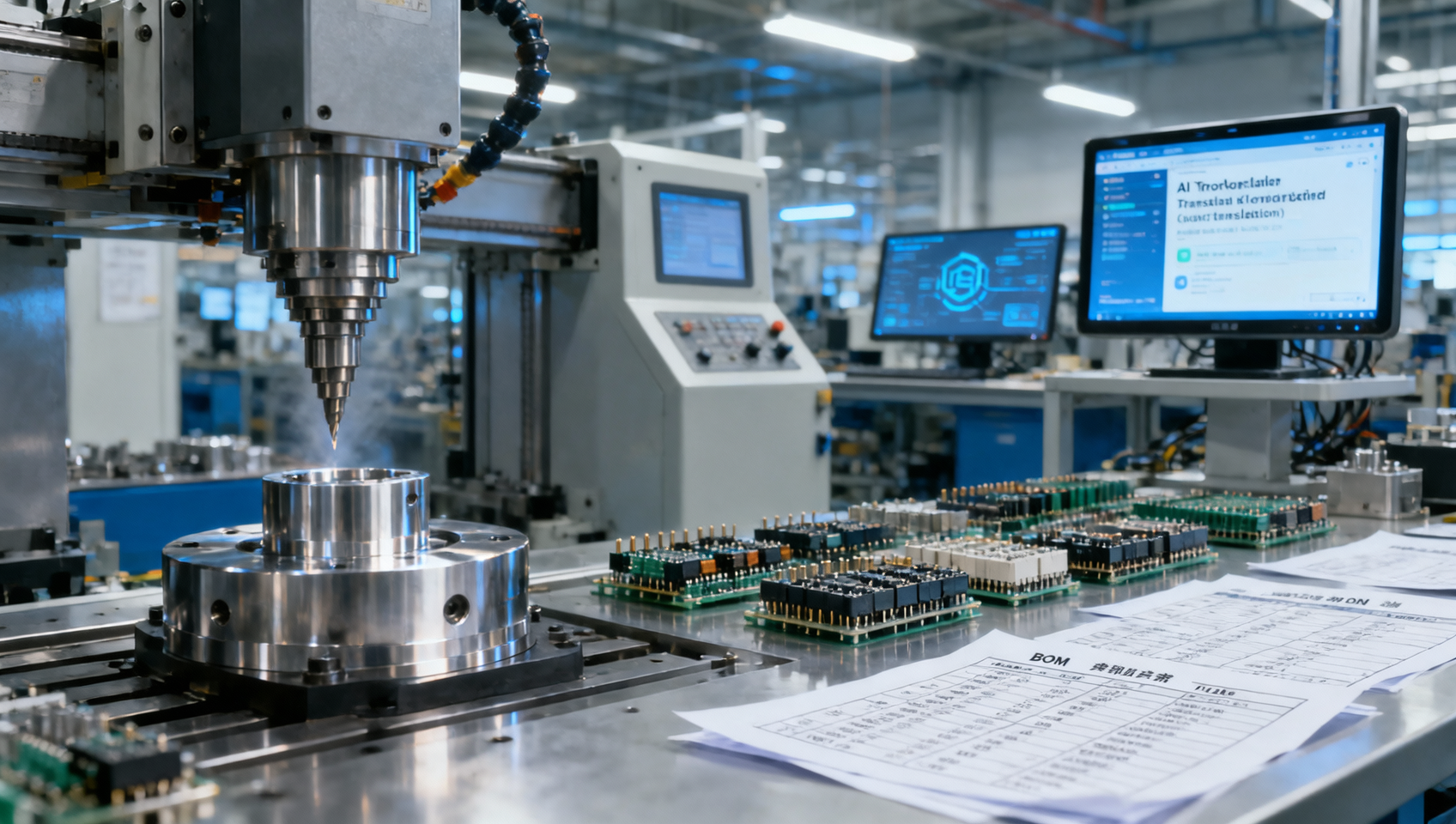
CNC machining manufacturers: These factories often handle fragmented, low-volume, high-variability orders from global buyers. The AI workbench reduces manual effort in interpreting technical specifications and compliance documentation across languages — a frequent bottleneck in pre-shipment verification and handover. Impact centers on faster response time to buyer requests and reduced miscommunication risk during production handoffs.
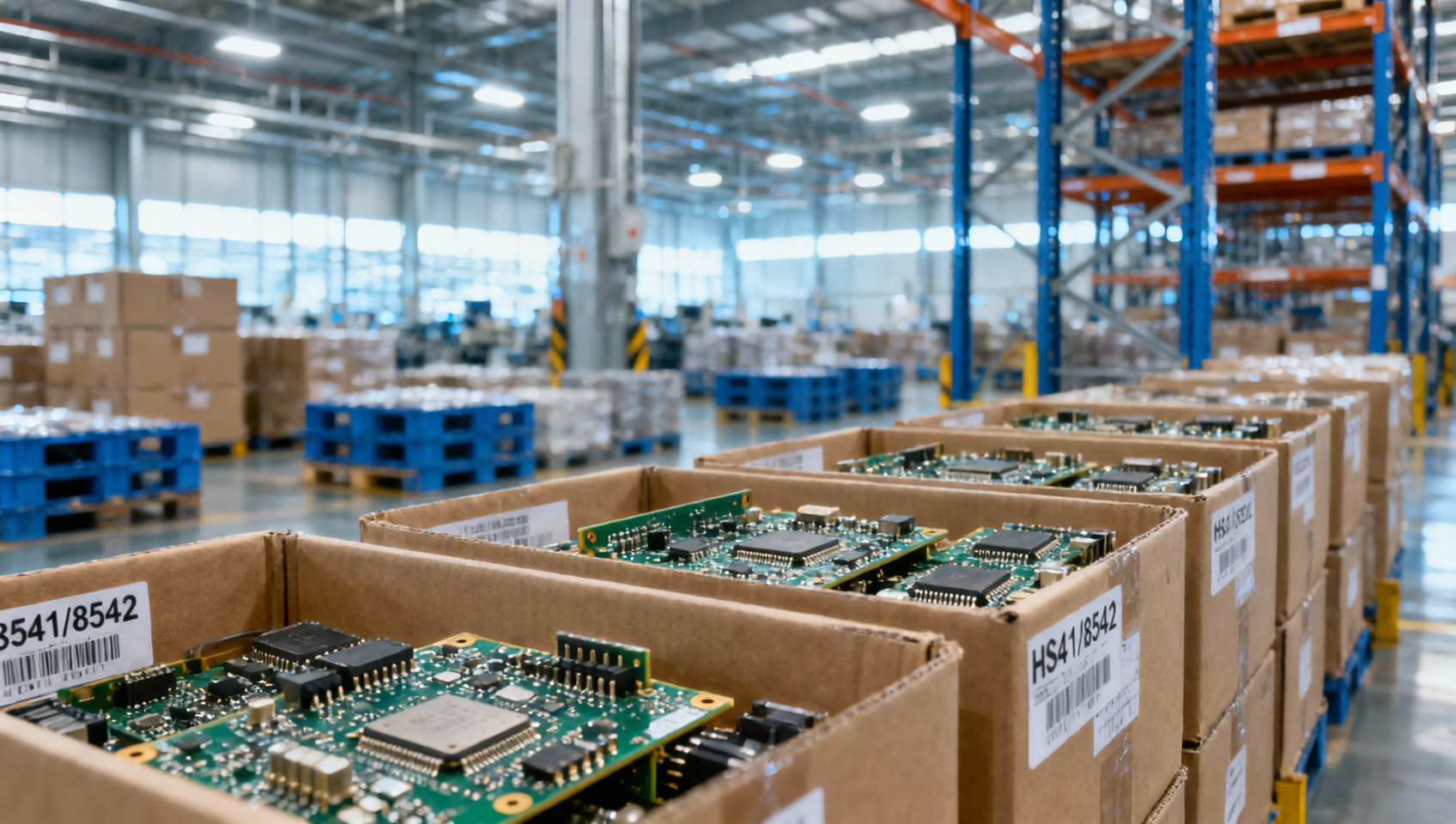
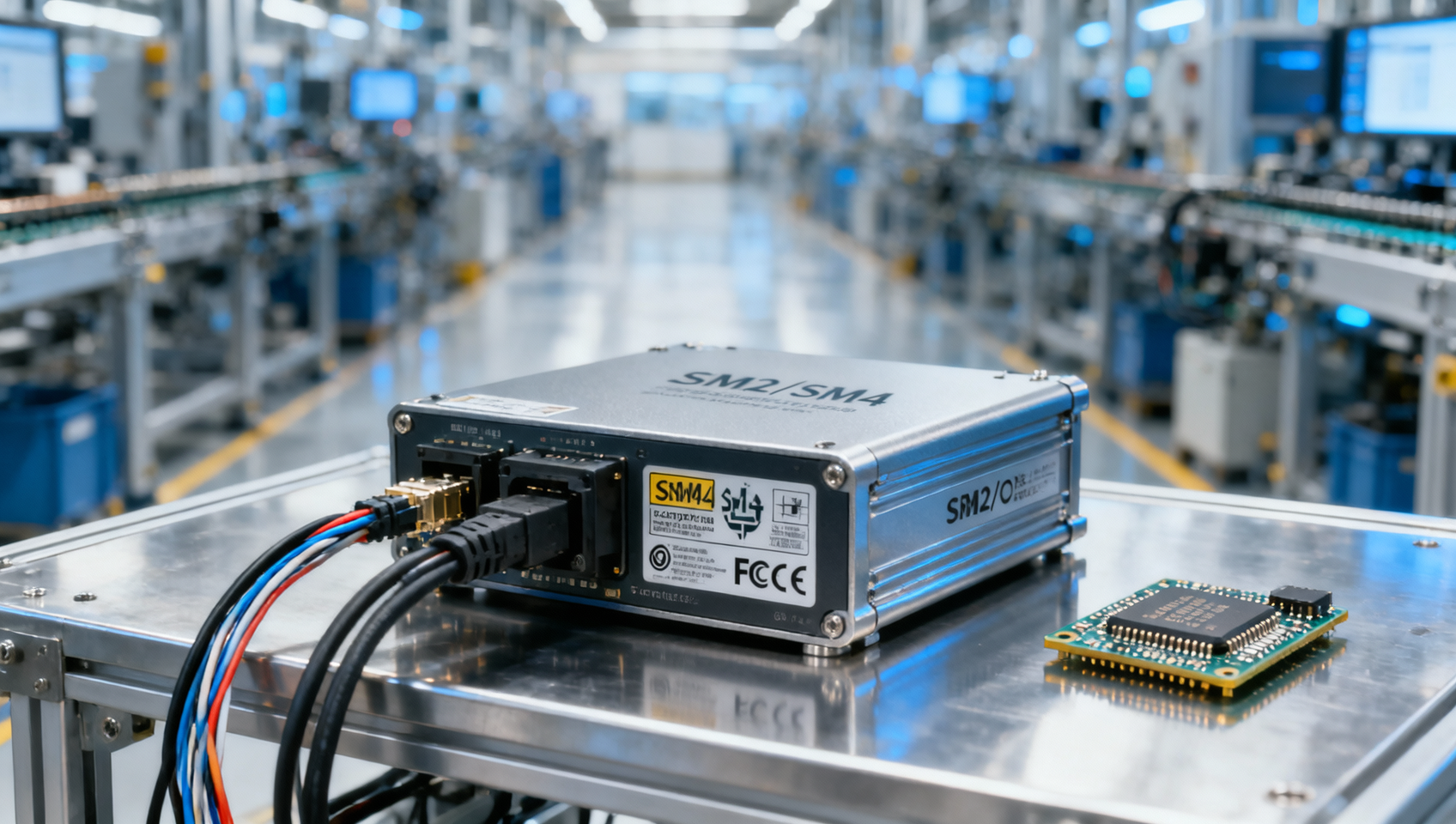
Electronic components suppliers: BOM accuracy and multilingual technical documentation are critical when serving OEM/ODM clients across EU, US, and Southeast Asian markets. The automated BOM translation and manual generation directly affect quoting speed, sample coordination, and post-order support efficiency — especially where engineering teams lack dedicated localization resources.
Export-focused contract manufacturers (CMs): CMs frequently act as intermediaries between foreign brand owners and domestic production lines. The AI-generated inspection reports — derived from buyer emails — streamline internal QA alignment and reduce rework caused by ambiguous or incomplete instructions. This affects delivery predictability and audit readiness.
What Relevant Enterprises or Practitioners Should Monitor and Do Now
Track official integration scope and API coverage updates
While the launch confirms integration with Alibaba.com and Global Sources, current public information does not specify whether ERP or MES systems can be connected, nor whether third-party QC platforms (e.g., SGS, BV) are supported. Enterprises should monitor official announcements for expansion beyond email-based input and static document translation.
Assess readiness for multilingual technical documentation workflows
Factories relying on bilingual staff or external translators for BOMs and manuals should evaluate whether their existing file formats (e.g., Excel structures, PDF schematics) align with the AI workbench’s parsing logic. Early testing with actual customer-provided files — rather than generic templates — is advisable before scaling usage.
Distinguish between functional capability and operational adoption
The tool enables automation, but successful deployment depends on consistent input hygiene (e.g., standardized email subject lines, structured attachment naming). Companies should treat this as a process redesign initiative — not just a software rollout — and assign internal ownership for prompt validation and feedback loops with the platform.
Prepare for potential shifts in buyer communication expectations
As more suppliers adopt AI-assisted response tools, overseas buyers may begin expecting faster turnaround on inspection reports or translated specs. Export teams should review SLA assumptions and update internal escalation protocols — particularly for edge cases where AI output requires human review (e.g., non-standard units, proprietary terminology).
Editorial Perspective / Industry Observation
From an industry perspective, Taobao Factory Spark 3.0 is better understood as an early-stage infrastructure signal — not yet a mature, end-to-end solution. Its value lies less in replacing human judgment and more in compressing routine, language-dependent handoff steps between international buyers and factory floor teams. Analysis suggests it reflects growing pressure on SME exporters to meet digital responsiveness benchmarks previously associated only with larger players. Observation shows that adoption will likely remain uneven: firms with structured data inputs and repeat buyer relationships stand to gain most, while those handling highly customized, one-off orders may see limited ROI without complementary process standardization.
Current more appropriate interpretation is that this marks a step toward modular, API-driven digital enablement — not a standalone transformation. The broader implication is that interoperability (e.g., with sourcing platforms, QC services, logistics APIs) matters more than feature count. Industry attention should therefore focus less on the AI ‘capability’ itself and more on how openly and reliably the underlying architecture supports integration with existing operational systems.
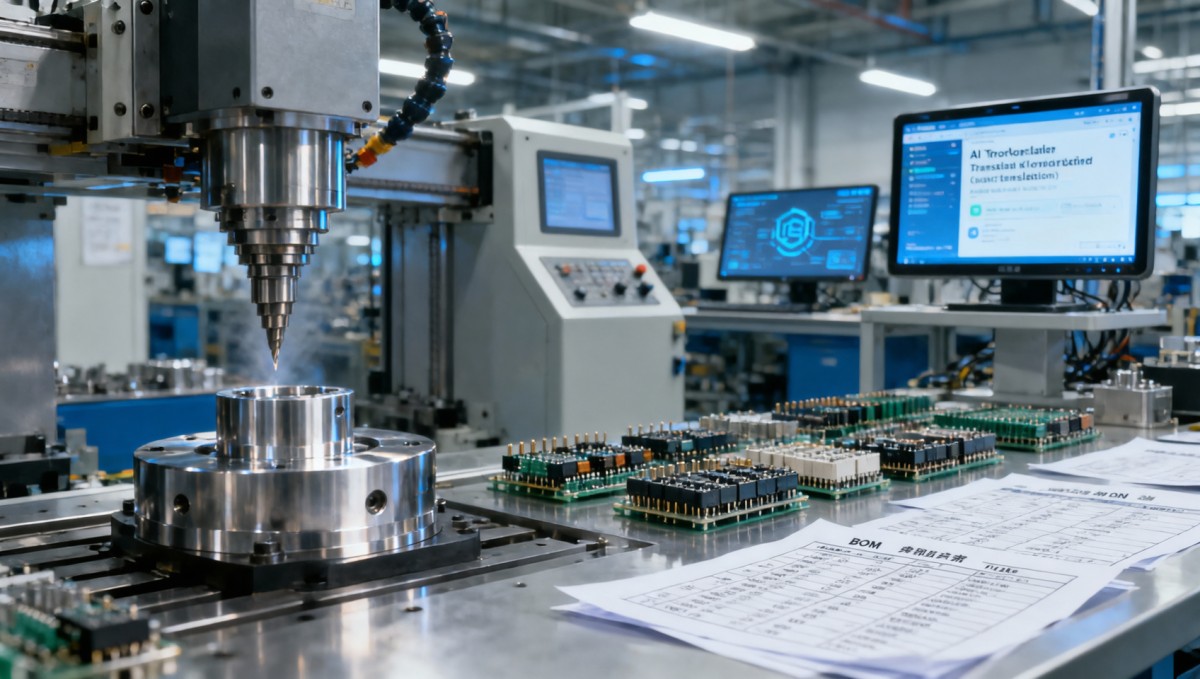
Conclusion: Taobao Factory Spark 3.0 does not redefine export manufacturing workflows, but it lowers the entry threshold for basic AI-assisted documentation and inspection tasks. Its significance lies in signaling a shift toward embedded, lightweight AI tools — delivered via existing B2B platforms — rather than enterprise-grade deployments. For SMEs, this is best approached as a targeted productivity lever, not a strategic overhaul. Current understanding should emphasize incremental utility over systemic change.
Information Source: Official announcement at the Taobao Factory Spark event held in Yiwu on April 22, 2026. No third-party verification or independent performance metrics were disclosed. Ongoing observation is recommended regarding API expansion scope, supported file formats, and documented use-case success rates across verticals.
Get weekly intelligence in your inbox.
No noise. No sponsored content. Pure intelligence.
 Apr 23, 2026Taobao Factory Spark 3.0 Launches AI Workbench for SME Export FactoriesTaobao Factory Spark 3.0 Launches AI Workbench for SME Export Factories
 Apr 23, 2026TENENG Group Inspects IoT Safety Compliance at Jiangnan ChemicalTENENG Group Inspects IoT Safety Compliance at Jiangnan Chemical
 Apr 23, 2026China Launches First Embodied AI Open Data CommunityChina Launches First Embodied AI Open Data Community
 Apr 23, 2026PV Glass Prices Flat for 9 Weeks Amid Rising Integrated ProcurementPV Glass Prices Flat for 9 Weeks Amid Rising Integrated Procurement
 Apr 23, 20262984 NQI One-Stop Platforms Launched Nationwide2984 NQI One-Stop Platforms Launched Nationwide
 Apr 23, 2026China’s Green Smart Ship Tech Norms Accelerate BMS & Shore Power ExportChina’s Green Smart Ship Tech Norms Accelerate BMS & Shore Power Export
 Apr 23, 2026China Builds World's Largest Agri-Meteorological IoT NetworkChina Builds World's Largest Agri-Meteorological IoT Network
 Apr 23, 2026EU CBAM Carbon Tariff Enters Enforcement on April 1, 2026EU CBAM Carbon Tariff Enters Enforcement on April 1, 2026
 Apr 23, 2026Five Ministries Issue Zero-Carbon Factory Guidance for Export IndustriesFive Ministries Issue Zero-Carbon Factory Guidance for Export Industries
 Apr 23, 2026ISO Releases First Zero-Carbon City Standard — China’s Practices IncludedISO Releases First Zero-Carbon City Standard — China’s Practices Included
 Apr 22, 2026China Leads Global Offshore Wind Installations for 5th YearChina Leads Global Offshore Wind Installations for 5th Year
 Apr 22, 2026China Launches National Mine Safety IoT Monitoring NetworkChina Launches National Mine Safety IoT Monitoring Network
 Apr 22, 2026Yinchuan Boiler Pure Water Solution Certified for Middle East ProjectsYinchuan Boiler Pure Water Solution Certified for Middle East Projects
 Apr 22, 2026China to Enforce Mandatory EV Battery Recycling Standards by 2026China to Enforce Mandatory EV Battery Recycling Standards by 2026
 Apr 22, 2026Vietnam Launches Anti-Circumvention Probe on Electronic ComponentsVietnam Launches Anti-Circumvention Probe on Electronic Components
 Apr 22, 20262026 Shanghai Fastener Show: Robotic Fasteners Drive Overseas Procurement2026 Shanghai Fastener Show: Robotic Fasteners Drive Overseas Procurement
 Apr 22, 2026US BIS Adds EV On-Board Charger Crypto Modules to EAR Appendix 7US BIS Adds EV On-Board Charger Crypto Modules to EAR Appendix 7
 Apr 22, 2026TÜV Rheinland Updates BESS Certification: Propagation Blocking Now MandatoryTÜV Rheinland Updates BESS Certification: Propagation Blocking Now Mandatory
 Apr 22, 2026Red Sea Crisis Escalates: Suez AI Speed Limits & Slot Review from Apr 19Red Sea Crisis Escalates: Suez AI Speed Limits & Slot Review from Apr 19
 Apr 22, 2026EU CBAM Carbon Tariff Takes Effect April 1, 2026EU CBAM Carbon Tariff Takes Effect April 1, 2026
 Apr 21, 2026When to Replace CT Scanner Parts Before Downtime StartsWhen to Replace CT Scanner Parts Before Downtime Starts
 Apr 21, 2026How to Cut Costs in Lathe Turning Without ReworkHow to Cut Costs in Lathe Turning Without Rework
 Apr 21, 2026Lathe Turning Tolerances: What Can You Expect?Lathe Turning Tolerances: What Can You Expect?
 Apr 21, 2026How to Avoid Risks in Solar Panels WholesaleHow to Avoid Risks in Solar Panels Wholesale
 Apr 21, 2026Solar Panels Wholesale: How to Compare SuppliersSolar Panels Wholesale: How to Compare Suppliers
 Apr 21, 2026Solar Mounting Cost Factors You Should KnowSolar Mounting Cost Factors You Should Know
 Apr 21, 2026Solar Mounting Options: Which One Fits Your Project?Solar Mounting Options: Which One Fits Your Project?