Solar Mounting Cost Factors You Should Know
Understanding solar mounting costs goes far beyond comparing hardware prices. For buyers evaluating solar mounting and solar panels wholesale options, total project value depends on material choice, site conditions, labor, logistics, compliance, and long-term performance. Whether you are a technical assessor, project manager, distributor, or financial approver, knowing these cost factors helps you make smarter sourcing decisions, reduce risk, and improve return on investment.
What really drives solar mounting cost in B2B projects?
In commercial and utility purchasing, solar mounting cost is rarely defined by steel or aluminum pricing alone. A workable estimate usually combines 5 core layers: structure material, engineering complexity, installation method, compliance scope, and lifecycle maintenance. Buyers who compare only unit price per bracket often miss hidden expenses that appear later in transport, rework, or field adaptation.
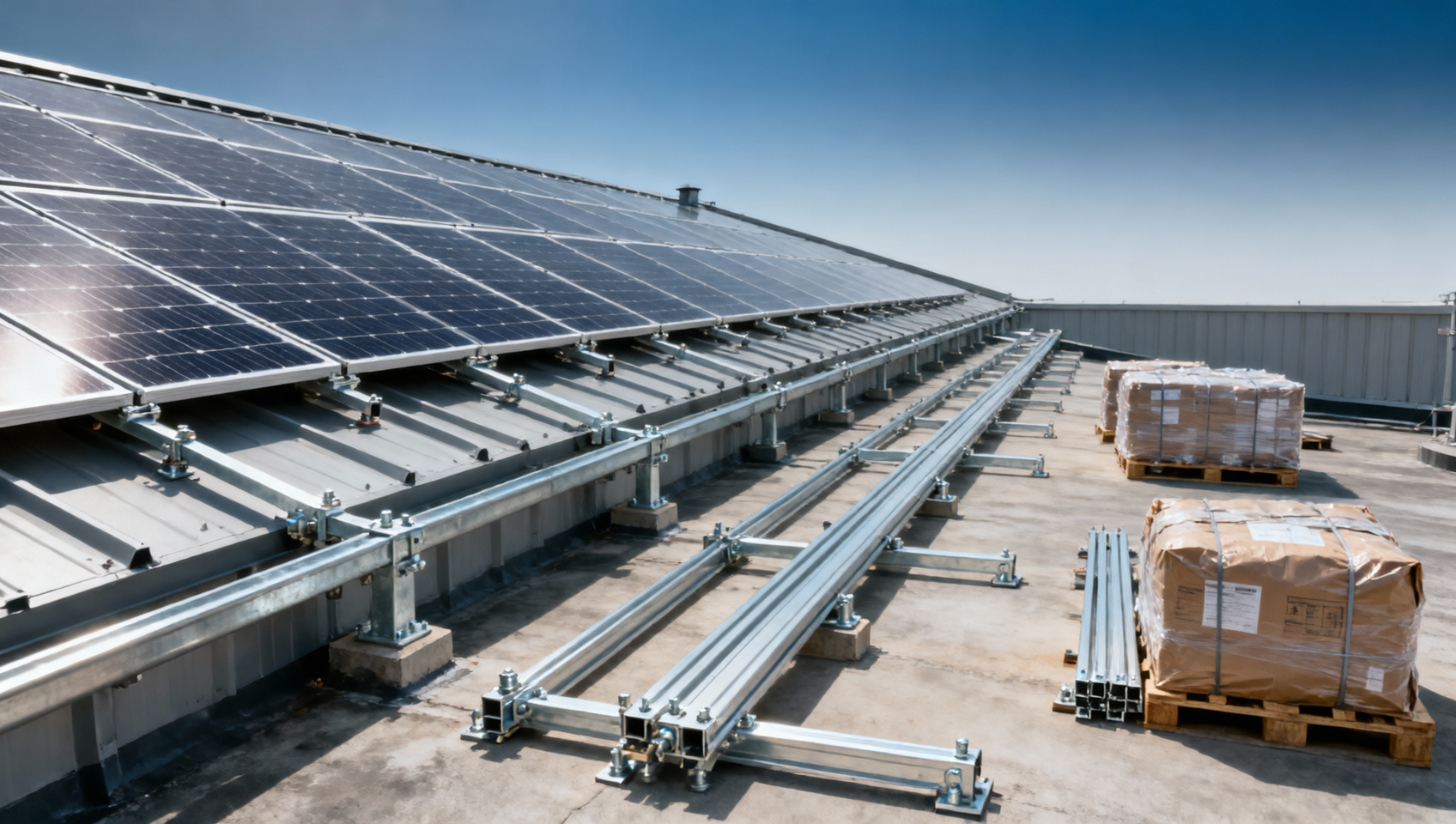
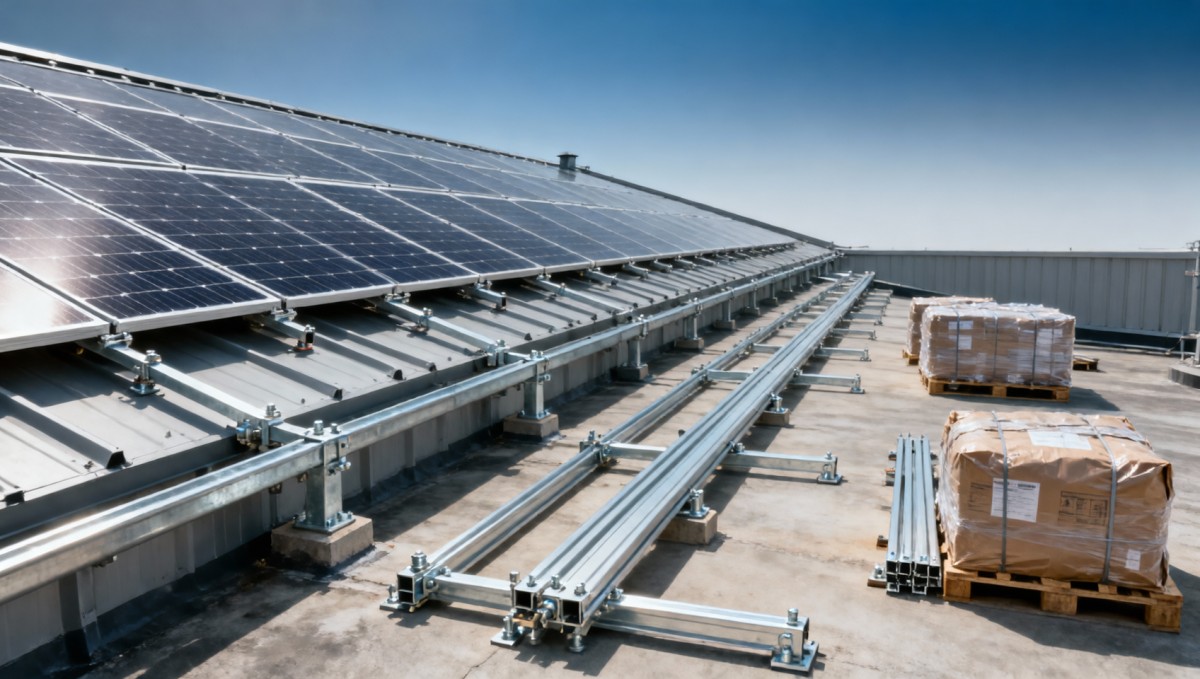
For project managers and technical evaluators, the first cost question should be whether the system is intended for rooftop, ground mount, carport, or special terrain. A flat concrete roof, a trapezoidal metal roof, and a sloped tile roof can require very different attachment methods, waterproofing strategies, and labor hours. That difference can shift project installation effort from 1 baseline level to 2 or 3 times more complex.
Financial approvers should also consider the total installed value over a 20–25 year operating horizon rather than the initial hardware invoice. A lower-price mounting system may lead to shorter service life, higher corrosion risk, or more frequent bolt checks every 6–12 months. In contrast, a better-matched system may reduce downtime, preserve module stability, and lower long-term field service costs.
For distributors and sourcing teams, another key cost driver is project standardization. If 3 similar sites can use one common rail profile, one clamp family, and one fastener set, procurement becomes easier and spare parts planning improves. When every site uses a different mounting architecture, the apparent flexibility often turns into inventory fragmentation and slower quotation cycles.
Five cost layers buyers should review before comparing quotations
- Material system: galvanized steel, aluminum alloy, stainless fasteners, and coating thickness all affect durability, weight, and transport economics.
- Site and wind load conditions: coastal, high-humidity, snow-load, and high-wind projects usually require stronger design margins and more anchoring points.
- Labor intensity: roof access, safety measures, lifting conditions, and alignment tolerance can raise installation time from a few days to several weeks.
- Logistics and packaging: long rails, mixed pallets, export crating, and container optimization affect landed cost in cross-border supply.
- Compliance and documentation: structural calculations, material traceability, and installation manuals can add value and reduce approval delays.
This layered view is especially useful for information researchers and business evaluators working through multiple supplier offers. It helps separate a low quote from a complete quote. On TradeNexus Pro, this kind of decision framing matters because procurement teams need not just supplier visibility, but a clearer way to interpret risk, cost structure, and implementation fit across global B2B opportunities.
How do material choice and system type change the budget?
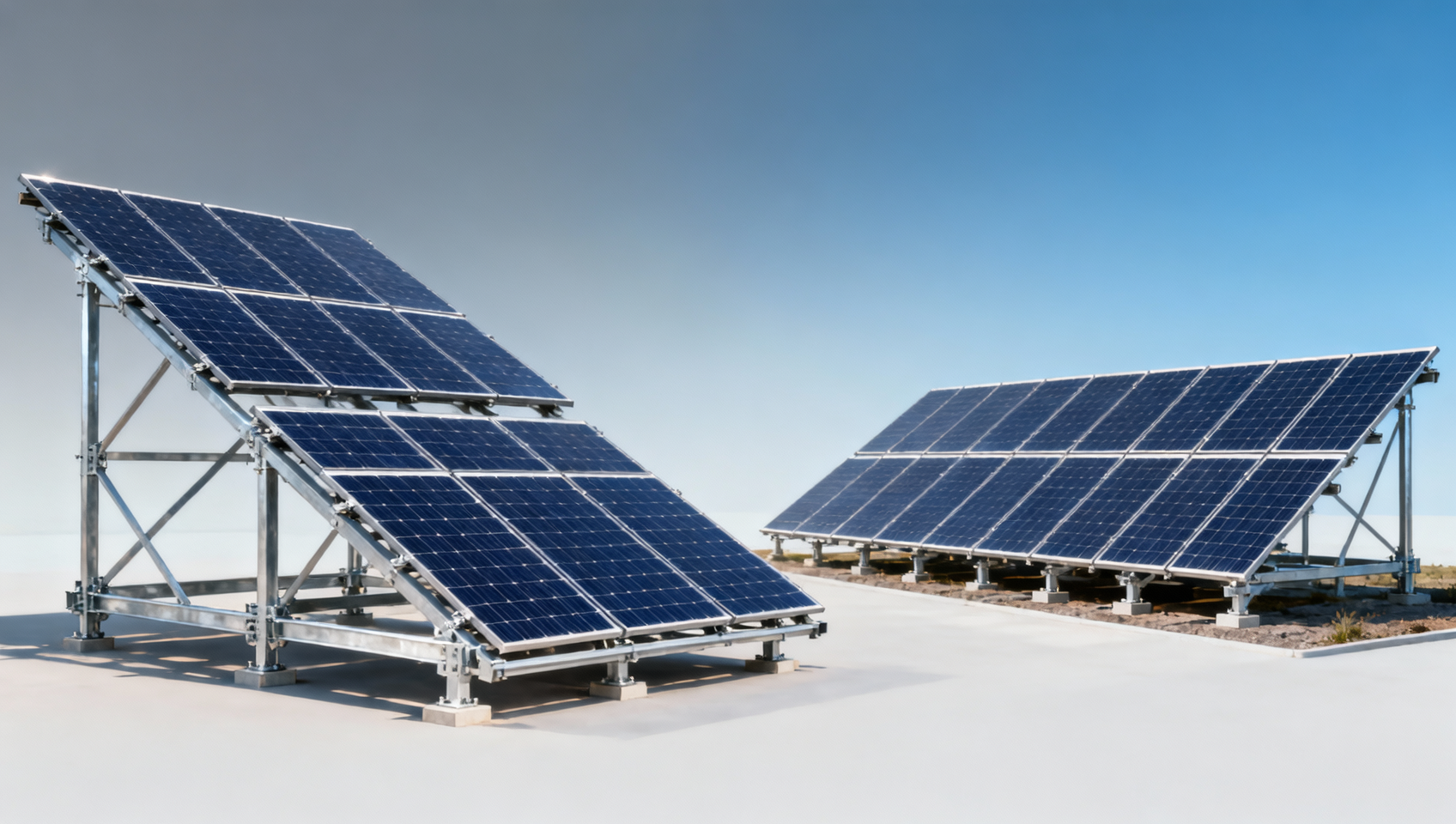
Material choice influences both direct system cost and downstream project execution. Aluminum structures are often selected where lower weight matters, such as rooftops with loading constraints or projects seeking easier manual handling. Steel systems may offer stronger cost competitiveness in some ground-mounted applications, especially where heavier sections and simpler foundations can be justified by land conditions and equipment access.
However, buyers should not treat aluminum versus steel as a simple cheaper-versus-better comparison. The more relevant question is fit. In corrosive environments, protective finish and fastening compatibility become critical. In high-volume projects, a system with fewer components may save more labor than the apparent metal cost difference. Over 2–4 weeks of field installation, that labor effect can become more important than the raw material delta.
System type also matters. Fixed-tilt ground mount, ballast rooftop systems, penetration rooftop systems, and solar carports all have different cost signatures. Ballast systems can reduce roof penetration but may increase structural weight review and transport volume. Penetration systems may be lighter, yet they demand careful sealing detail and roof-specific attachments. The right answer depends on building condition, permitting path, and maintenance access.
For wholesale buyers combining solar mounting and solar panels wholesale planning, compatibility is another budget variable. Module dimensions, frame thickness, clamp zones, and array layout affect rail spacing and clamp selection. A mounting system that supports multiple mainstream module sizes can reduce SKU complexity for distributors and improve planning flexibility when panel supply changes across quarters.
Typical cost impact by mounting approach
The table below helps procurement teams compare how common solar mounting configurations affect engineering, logistics, and installation cost. It is not a price list. Instead, it highlights where project budgets usually move up or down based on technical and operational realities.
A useful takeaway is that “low hardware cost” does not always mean “low project cost.” A roof system with 15% lower component pricing may still produce a higher installed cost if attachment points are more numerous or field tolerances are tighter. That is why technical and commercial review should happen together, especially when budgets are under pressure and delivery windows are short.
Practical selection signals for buyers
- If roof load reserve is limited, prioritize lower-weight systems and verify static load calculations before asking for a final quote.
- If the site is in a coastal or humid zone, check coating system, galvanization route, and stainless fastener grade rather than comparing only metal weight.
- If labor cost is high, favor modular systems with fewer parts, pre-assembled components, and faster alignment in the field.
- If you manage multiple markets, ask whether one mounting platform can cover 2–3 common module formats to simplify stocking.
Which hidden project costs are often missed during sourcing?
The most common sourcing mistake is treating solar mounting cost as a parts-only exercise. In reality, several hidden items influence budget performance: engineering review, roof survey quality, freight damage risk, customs lead time, installation tooling, and post-install inspection. These costs do not always appear in the first quotation, yet they directly affect schedule certainty and total procurement efficiency.
For example, an incomplete roof survey can trigger redesign after materials are already ordered. That may create a 7–15 day delay, extra freight, and unplanned labor standby. On ground projects, insufficient geotechnical understanding can change foundation assumptions, increasing concrete volume or pile length. These are not rare exceptions; they are routine cost drivers when project information is weak at the quotation stage.
Another overlooked factor is packaging efficiency. Long profiles and mixed hardware cartons require clear packing logic for export. If container utilization is poor, landed cost rises quickly. If packing labels are unclear, site receiving becomes slower and installation teams lose time sorting rails, clamps, and connectors. For distributors, this operational friction affects downstream margin as much as ex-works price does.
Compliance documentation also has a budget dimension. Depending on the market, buyers may need structural calculations, material certificates, corrosion-related information, or installation instructions suitable for local approval. Missing documentation can delay project sign-off even when the product itself is usable. In many B2B transactions, approval time is a real cost center because procurement, engineering, and finance all work on linked milestones.
Common hidden solar mounting cost items
Use the following matrix to identify where budget leakage often occurs before contract award. It is particularly useful for business evaluators and financial approvers who need a structured review beyond unit price comparison.
When these items are reviewed early, sourcing outcomes improve. A practical procurement process often includes 4 checkpoints: site input confirmation, technical suitability review, landed cost validation, and documentation completeness. Teams that follow this sequence usually make cleaner decisions than teams comparing only base hardware quotations from multiple suppliers.
A four-step review path before issuing purchase approval
- Confirm project inputs: roof type, array layout, module dimensions, wind and snow assumptions, and expected installation timeline.
- Check engineering fit: attachment method, corrosion resistance, service access, and compatibility with available labor skill level.
- Review commercial scope: Incoterms, packaging method, spare parts, document package, and likely lead time of 2–6 weeks depending on complexity.
- Validate operational readiness: receiving plan, field tools, inspection checklist, and responsibility split between supplier, EPC, and site team.
What should technical, commercial, and finance teams check together?
Solar mounting procurement works best when engineering, sourcing, and finance review one framework instead of three separate spreadsheets. Technical teams focus on load path, fastening reliability, and environmental suitability. Commercial teams care about lead time, packaging, and terms. Finance teams need visibility on budget predictability, risk of change orders, and expected maintenance implications over the system life.
A shared evaluation model usually includes 6 key checks: material suitability, structural logic, installation efficiency, compliance support, delivery feasibility, and lifecycle serviceability. This model helps distributors and project owners avoid the common tension where the lowest quotation wins procurement review but later creates field complications. In cross-border B2B projects, the ability to align these departments can save both time and negotiation cost.
Standards awareness also matters. While requirements differ by market, buyers commonly ask for evidence related to structural design assumptions, corrosion resistance approach, and basic material traceability. The point is not to request unnecessary paperwork. It is to ensure the mounting system can move through approval, delivery, installation, and operation without repeated clarification loops.
This is where a B2B intelligence platform like TradeNexus Pro adds practical value. Decision-makers often do not lack supplier names; they lack context. They need a way to compare solution logic, identify sourcing risk, and connect technical evaluation with market realities across green energy supply chains. Better intelligence shortens evaluation cycles and supports more defensible purchasing decisions.
Cross-functional solar mounting evaluation checklist
- Technical assessment: verify roof or ground condition, attachment suitability, environmental exposure, and expected service interval such as annual or semiannual inspection.
- Commercial assessment: compare quoted scope, spare parts, packaging, shipment format, and lead-time reliability over peak procurement periods.
- Financial assessment: test sensitivity to freight changes, redesign risk, labor productivity assumptions, and total cost over a 20–25 year lifecycle.
- Project execution assessment: confirm installation sequence, documentation handover, site storage needs, and responsibilities during punch-list closure.
Questions that improve approval quality
Ask whether the system can accommodate module supply changes without redesign. Ask how many attachment points are required per string block or roof bay. Ask whether replacement hardware can be supplied quickly if a site team loses or damages components. Even simple questions like these can reveal whether a quotation is robust or only attractive at first glance.
For financial approvers, another useful question is whether a slightly higher upfront cost reduces schedule risk or field labor. In some projects, avoiding a 1–2 week delay is more valuable than a small hardware saving. For project leaders under commissioning deadlines, schedule certainty is often a measurable part of return on investment.
FAQ: solar mounting cost factors buyers ask most often
How should I compare solar mounting quotations fairly?
Compare them on at least 5 dimensions: bill of materials scope, material and corrosion strategy, installation complexity, documentation package, and logistics method. If one quote excludes fasteners, waterproofing accessories, or structural notes, it is not directly comparable to a more complete offer. A fair comparison should reflect landed and installable scope, not just factory output.
Which applications usually have the most variable solar mounting cost?
Flat roofs with ballast, tile roofs, uneven ground sites, and solar carports often show wider variation because structural review, attachment detail, and field coordination are more complex. Standard metal roofs and simple fixed-tilt ground systems are usually easier to estimate, provided site inputs are accurate from the start.
What lead time should buyers expect?
Lead time depends on design finalization, material availability, processing route, and destination logistics. For common configurations, buyers often review ranges such as 2–4 weeks for production readiness, plus shipping time based on route and trade terms. Custom structures, mixed-site orders, or documentation-heavy projects can take longer, especially when design approval loops are slow.
Is the cheapest mounting system usually the best value?
Not necessarily. The best value is the system that matches the site, installs efficiently, clears project review smoothly, and remains maintainable over the operating life. A lower-cost option can become expensive if it needs redesign, causes installation delays, or increases maintenance frequency. Total project value should always be the decision benchmark.
Why work with us when evaluating solar mounting and wholesale sourcing?
TradeNexus Pro supports buyers who need more than general market noise. Our focus on green energy and adjacent industrial supply chains helps procurement directors, technical reviewers, distributors, and project leaders understand how solar mounting cost is shaped by material strategy, project execution, and supplier positioning. That perspective is especially valuable when teams must compare multiple offers across regions and approval functions.
If you are assessing solar mounting and solar panels wholesale opportunities, we can help you structure the conversation around the issues that matter most: parameter confirmation, system selection logic, delivery cycle expectations, documentation readiness, customization boundaries, and sourcing risk signals. This makes internal approval easier and supplier discussions more productive from the start.
You can engage with us for specific commercial and technical topics such as module-to-mount compatibility, rooftop versus ground-mount option screening, typical lead-time planning, sample support pathways, quote comparison logic, and compliance-related information review. For distributors and market researchers, we also help clarify where product standardization can simplify inventory and improve project response speed.
If your team is preparing a purchase plan, budget review, or supplier shortlist, contact TradeNexus Pro with your project type, module format, installation scenario, target delivery window, and documentation needs. A clearer brief leads to faster evaluation, more accurate quotation comparison, and stronger decision confidence across technical, commercial, and financial stakeholders.
Get weekly intelligence in your inbox.
No noise. No sponsored content. Pure intelligence.
 Apr 22, 2026China Leads Global Offshore Wind Installations for 5th YearChina Leads Global Offshore Wind Installations for 5th Year
 Apr 22, 2026China Launches National Mine Safety IoT Monitoring NetworkChina Launches National Mine Safety IoT Monitoring Network
 Apr 22, 2026Yinchuan Boiler Pure Water Solution Certified for Middle East ProjectsYinchuan Boiler Pure Water Solution Certified for Middle East Projects
 Apr 22, 2026China to Enforce Mandatory EV Battery Recycling Standards by 2026China to Enforce Mandatory EV Battery Recycling Standards by 2026
 Apr 22, 2026Vietnam Launches Anti-Circumvention Probe on Electronic ComponentsVietnam Launches Anti-Circumvention Probe on Electronic Components
 Apr 22, 20262026 Shanghai Fastener Show: Robotic Fasteners Drive Overseas Procurement2026 Shanghai Fastener Show: Robotic Fasteners Drive Overseas Procurement
 Apr 22, 2026US BIS Adds EV On-Board Charger Crypto Modules to EAR Appendix 7US BIS Adds EV On-Board Charger Crypto Modules to EAR Appendix 7
 Apr 22, 2026TÜV Rheinland Updates BESS Certification: Propagation Blocking Now MandatoryTÜV Rheinland Updates BESS Certification: Propagation Blocking Now Mandatory
 Apr 22, 2026Red Sea Crisis Escalates: Suez AI Speed Limits & Slot Review from Apr 19Red Sea Crisis Escalates: Suez AI Speed Limits & Slot Review from Apr 19
 Apr 22, 2026EU CBAM Carbon Tariff Takes Effect April 1, 2026EU CBAM Carbon Tariff Takes Effect April 1, 2026
 Apr 21, 2026When to Replace CT Scanner Parts Before Downtime StartsWhen to Replace CT Scanner Parts Before Downtime Starts
 Apr 21, 2026How to Cut Costs in Lathe Turning Without ReworkHow to Cut Costs in Lathe Turning Without Rework
 Apr 21, 2026Lathe Turning Tolerances: What Can You Expect?Lathe Turning Tolerances: What Can You Expect?
 Apr 21, 2026How to Avoid Risks in Solar Panels WholesaleHow to Avoid Risks in Solar Panels Wholesale
 Apr 21, 2026Solar Panels Wholesale: How to Compare SuppliersSolar Panels Wholesale: How to Compare Suppliers
 Apr 21, 2026Solar Mounting Cost Factors You Should KnowSolar Mounting Cost Factors You Should Know
 Apr 21, 2026Solar Mounting Options: Which One Fits Your Project?Solar Mounting Options: Which One Fits Your Project?
 Apr 21, 2026How to Pick USB C Docking Stations for Dual DisplaysHow to Pick USB C Docking Stations for Dual Displays
 Apr 21, 2026USB C Docking Stations: What Ports Do You Need?USB C Docking Stations: What Ports Do You Need?
 Apr 21, 2026What Affects Dental Milling Machine ROI in 2026?What Affects Dental Milling Machine ROI in 2026?
 Apr 21, 2026Dental Milling Machines: Wet or Dry for Your Lab?Dental Milling Machines: Wet or Dry for Your Lab?
 Apr 21, 2026How to Avoid Common Medical Refrigerator MistakesHow to Avoid Common Medical Refrigerator Mistakes
 Apr 21, 2026Medical Refrigerators: What Specs Matter Most?Medical Refrigerators: What Specs Matter Most?
 Apr 21, 2026Portable or Cart Vet Ultrasound: Which to Buy?Portable or Cart Vet Ultrasound: Which to Buy?
 Apr 21, 2026Vet Ultrasound Buying Guide for Small ClinicsVet Ultrasound Buying Guide for Small Clinics
 Apr 21, 2026Yard Management Systems: Key Features to CompareYard Management Systems: Key Features to Compare
 Apr 21, 2026How Yard Management Systems Improve Dock FlowHow Yard Management Systems Improve Dock Flow