Yard Management Systems: Key Features to Compare
Selecting the right yard management systems solution requires more than a feature checklist. For logistics teams, technical evaluators, and business decision-makers, the best platforms improve trailer visibility, dock coordination, and cost control while supporting broader supply chain performance. This guide compares the key features that matter most when assessing yard management systems for operational efficiency and long-term ROI.
For most buyers, the core question is simple: which yard management system will reduce congestion, improve asset visibility, and support measurable operational gains without creating integration or adoption problems? The best choice is rarely the platform with the longest feature list. It is the one that matches your yard complexity, dock volume, carrier coordination needs, IT environment, and reporting expectations.
When comparing yard management systems, decision-makers usually care about four outcomes first: better real-time visibility, faster trailer and dock movement, lower detention and labor costs, and a clear path to ROI. Technical teams then look deeper at integration architecture, data accuracy, workflow flexibility, and scalability. A useful evaluation should therefore focus less on generic software claims and more on how each capability performs in live operations.
Which yard management system features matter most in real operations?
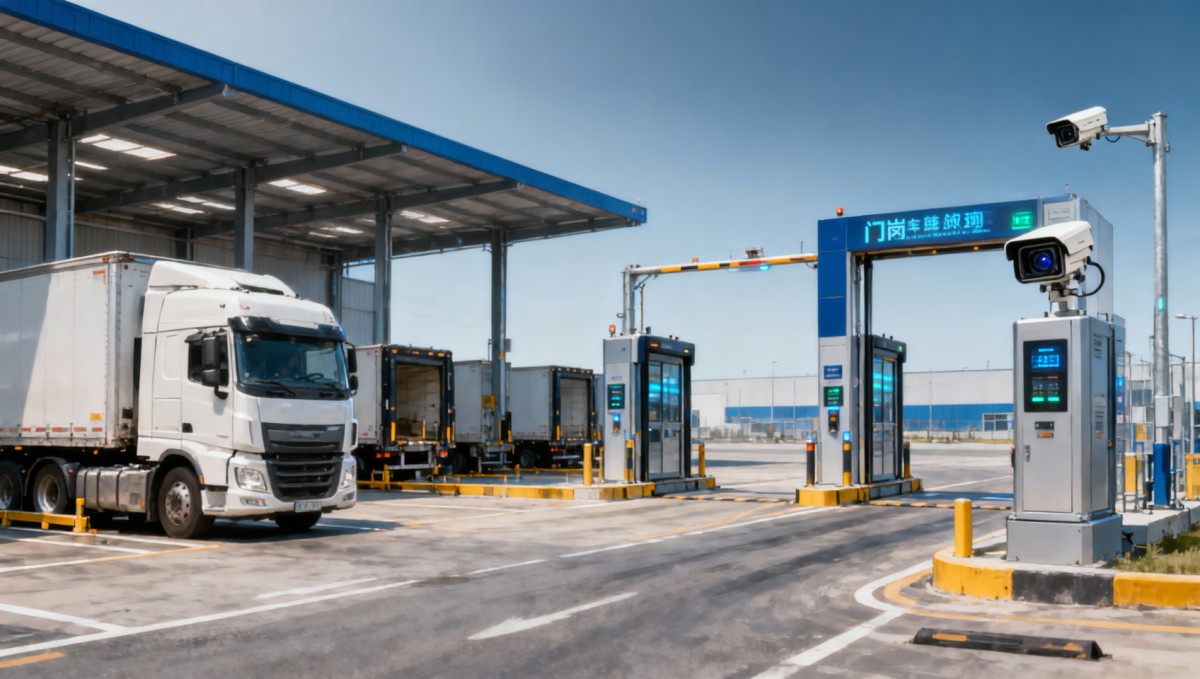
If your team is actively comparing platforms, prioritize the features that directly affect day-to-day yard execution and business performance. These are the capabilities that most often separate a workable system from one that delivers sustained value.
1. Real-time yard visibility
This is the foundation of any effective yard management systems deployment. A strong platform should provide a live view of trailers, containers, tractors, parking zones, gate activity, and dock assignments. Users should be able to see not only where assets are, but also their status: arrived, checked in, waiting, assigned, at dock, loading, unloading, empty, or departed.
When comparing vendors, ask:
- How is location data captured: manual updates, GPS, RFID, OCR, barcode, telematics, or a hybrid model?
- How often is the yard view refreshed?
- Can teams quickly identify idle trailers, misplaced assets, and bottlenecks?
- Does the interface support role-based visibility for gate staff, yard jockeys, planners, and supervisors?
Without reliable real-time visibility, every other workflow becomes slower and more error-prone.
2. Gate management and check-in automation
Gate congestion can undermine the value of the rest of the yard. Strong gate management features should support appointment verification, carrier check-in, identity validation, document capture, seal recording, damage logging, and automated entry and exit workflows.
Useful capabilities include:
- Self-service kiosks for drivers
- License plate recognition or OCR
- Pre-arrival appointment matching
- Automated exception alerts
- Digital audit trails for arrivals and departures
For operations with high traffic volume, these features can reduce queue times and improve throughput while lowering manual administrative effort.
3. Dock scheduling and door assignment
Many buyers evaluate yard management systems separately from dock scheduling, but in practice the connection is critical. The best systems coordinate trailer availability, appointment timing, door availability, labor readiness, and load priority in one workflow.
Compare how well each system handles:
- Dynamic dock door assignment
- Appointment scheduling by carrier or shipment type
- Priority rules for urgent or temperature-sensitive loads
- Conflict detection and rescheduling
- Visibility across warehouse and transportation teams
If dock planning remains disconnected from yard movements, delays and unnecessary trailer shunting usually continue.
4. Yard task management and jockey dispatch
In busy facilities, trailer movement execution is where efficiency gains become visible. A capable yard management system should assign and sequence moves intelligently, reduce unproductive travel time, and give supervisors visibility into task completion.
Look for features such as:
- Automated move requests based on dock events or warehouse needs
- Mobile tasking for yard jockeys
- Rule-based prioritization
- SLA monitoring for move completion times
- Exception management for delayed or missed moves
This matters especially for large distribution centers, retail networks, manufacturing campuses, and multi-door operations where trailer flow is constant.
5. Exception alerts and decision support
A yard rarely runs exactly as planned. The platform should identify issues before they become service failures or cost leaks. Common examples include overstayed trailers, missed appointments, detention risk, door conflicts, temperature-sensitive dwell time breaches, and incomplete documentation.
The key question is not whether alerts exist, but whether they are actionable. Good systems make it easy to route alerts to the right user, escalate based on business rules, and trigger next steps.
How should buyers compare usability, integration, and technical fit?
Operational features are only part of the decision. Many implementations underperform because the platform is difficult to use, hard to integrate, or too rigid for the actual site process.
User experience for different roles
A yard management system is used by multiple groups with different needs: gate staff, yard coordinators, warehouse planners, supervisors, IT teams, and leadership. The interface should support each role without overcomplicating routine tasks.
Evaluate whether the system offers:
- Simple task screens for frontline staff
- Mobile support for field execution
- Configurable dashboards for supervisors
- Minimal training requirements for common transactions
- Fast navigation during high-volume periods
If a platform requires too many clicks, workarounds, or manual notes, adoption risk rises quickly.
Integration with WMS, TMS, ERP, and telematics
For technical evaluators, integration is often one of the most important comparison points. A yard management system should not operate as an isolated control tower. It needs to exchange data with warehouse management systems, transportation management systems, ERP platforms, appointment scheduling tools, gate hardware, and sometimes IoT or telematics providers.
Ask vendors about:
- Prebuilt connectors and APIs
- Real-time versus batch data exchange
- Event orchestration across systems
- Master data handling for carriers, trailers, and locations
- Implementation effort for custom integrations
- Data security and access control
The broader your digital supply chain stack, the more important integration maturity becomes.
Workflow configurability
No two yards operate exactly alike. Manufacturing sites, cold chain facilities, retail distribution centers, and third-party logistics hubs all have different rules, asset types, and service requirements. A strong solution should allow configuration of statuses, task logic, alerts, user permissions, and exception handling without excessive custom coding.
Overly rigid systems can force process compromises. Overly customized systems can become expensive to maintain. The best fit usually sits in the middle: configurable enough for operational reality, standardized enough for supportability.
Deployment model and scalability
Buyers should also compare cloud architecture, multi-site management, localization support, uptime commitments, and performance at higher transaction volumes. If your organization may expand from one site to many, or across regions, the system should scale operationally and administratively.
What business outcomes should executives and finance teams evaluate?
For business evaluators and budget approvers, the comparison should not stop at feature availability. The more useful question is which features drive measurable performance improvement.
Detention, demurrage, and avoidable accessorial cost reduction
One of the clearest value levers is reduced dwell time and better control of trailer stays. Systems that improve check-in, dock assignment, and move execution can help reduce detention charges and improve carrier turn times. If a vendor cannot explain how their workflows affect these metrics, the ROI case may be weak.
Labor productivity
Manual yard coordination often relies on radios, spreadsheets, whiteboards, and repeated phone calls. Yard management systems can streamline task assignment, reduce searching time, and improve supervisor oversight. This can increase output without adding labor, especially in high-volume or labor-constrained operations.
Asset utilization
Better visibility helps organizations use trailers, doors, yard tractors, and staging space more effectively. In some cases, this can delay or avoid capital expenditure on additional yard space or equipment.
Service performance
Yard delays affect warehouse flow, transportation schedules, and customer service. A better yard process can support more reliable inbound receiving, on-time outbound shipping, and tighter coordination with carrier networks.
Reporting and KPI transparency
Executives should compare the depth and quality of reporting. Useful metrics often include:
- Average dwell time by carrier, trailer type, or load category
- Gate turnaround time
- Dock utilization
- Move completion time
- Detention exposure
- Appointment adherence
- Yard occupancy trends
A system that improves execution but cannot prove the outcome is harder to justify and harder to scale internally.
How can teams compare vendors more effectively?
To make a practical decision, buyers should evaluate yard management systems against real operating scenarios rather than generic demonstrations.
Use scenario-based demos
Ask each vendor to demonstrate common and difficult situations, such as:
- High-volume morning gate arrivals
- Urgent dock reassignment
- Trailer search and recovery
- Detention risk escalation
- Inbound loads arriving without complete appointment data
- Yard jockey task reprioritization during congestion
This approach reveals how the system behaves when operations are messy, not just when workflows are ideal.
Score by operational importance, not feature count
Create a weighted scorecard that reflects your actual priorities. For example, a manufacturing site may prioritize production continuity and inbound material flow, while a retail DC may care more about outbound speed and appointment compliance.
Typical scorecard categories include:
- Visibility and tracking accuracy
- Gate efficiency
- Dock coordination
- Move management
- Integration complexity
- Reporting depth
- Ease of use
- Total cost of ownership
- Implementation timeline
- Vendor support quality
Validate implementation realities
Ask detailed questions about onboarding, change management, training, data preparation, hardware dependencies, and customer support after go-live. Many systems look strong in product comparisons but require more process redesign or site-level discipline than expected.
Check industry and site-fit references
Relevant customer references are more valuable than broad logos. A vendor with success in your operating environment can usually provide clearer guidance on rollout risk, adoption patterns, and expected time to value.
Which features are often overrated or misunderstood?
Some comparison points attract attention but deserve less weight unless they align with your actual needs.
Overly broad “AI” claims
Advanced analytics and predictive recommendations can be valuable, but only if the underlying data is accurate and the workflows are already disciplined. For many buyers, strong real-time visibility and reliable execution matter more than ambitious AI promises.
Heavy customization as a selling point
Customization may solve edge cases, but it can increase implementation time, cost, and support burden. Buyers should distinguish between healthy configurability and complex customization that makes upgrades harder.
Dashboard volume over decision quality
More charts do not always mean more control. Focus on whether the system helps users make faster and better operational decisions.
What is the best overall way to choose among yard management systems?
The best yard management systems are the ones that fit operational reality, integrate cleanly with the rest of the supply chain technology stack, and produce measurable improvements in yard flow, labor efficiency, and cost control. For most organizations, the highest-value comparison points are real-time visibility, gate automation, dock coordination, task execution, exception management, usability, and integration maturity.
Buyers should avoid evaluating platforms as simple software checklists. Instead, compare them as operational control systems. Ask how each solution handles your busiest hours, your most common exceptions, and your reporting requirements. Measure value in reduced dwell time, fewer delays, better asset usage, and clearer KPI accountability.
In short, when comparing yard management systems, prioritize operational fit over marketing breadth. The right platform should help frontline teams execute faster, help managers see problems earlier, and help business leaders justify the investment with real performance gains over time.
Get weekly intelligence in your inbox.
No noise. No sponsored content. Pure intelligence.
 Apr 22, 2026China Leads Global Offshore Wind Installations for 5th YearChina Leads Global Offshore Wind Installations for 5th Year
 Apr 22, 2026China Launches National Mine Safety IoT Monitoring NetworkChina Launches National Mine Safety IoT Monitoring Network
 Apr 22, 2026Yinchuan Boiler Pure Water Solution Certified for Middle East ProjectsYinchuan Boiler Pure Water Solution Certified for Middle East Projects
 Apr 22, 2026China to Enforce Mandatory EV Battery Recycling Standards by 2026China to Enforce Mandatory EV Battery Recycling Standards by 2026
 Apr 22, 2026Vietnam Launches Anti-Circumvention Probe on Electronic ComponentsVietnam Launches Anti-Circumvention Probe on Electronic Components
 Apr 22, 20262026 Shanghai Fastener Show: Robotic Fasteners Drive Overseas Procurement2026 Shanghai Fastener Show: Robotic Fasteners Drive Overseas Procurement
 Apr 22, 2026US BIS Adds EV On-Board Charger Crypto Modules to EAR Appendix 7US BIS Adds EV On-Board Charger Crypto Modules to EAR Appendix 7
 Apr 22, 2026TÜV Rheinland Updates BESS Certification: Propagation Blocking Now MandatoryTÜV Rheinland Updates BESS Certification: Propagation Blocking Now Mandatory
 Apr 22, 2026Red Sea Crisis Escalates: Suez AI Speed Limits & Slot Review from Apr 19Red Sea Crisis Escalates: Suez AI Speed Limits & Slot Review from Apr 19
 Apr 22, 2026EU CBAM Carbon Tariff Takes Effect April 1, 2026EU CBAM Carbon Tariff Takes Effect April 1, 2026
 Apr 21, 2026When to Replace CT Scanner Parts Before Downtime StartsWhen to Replace CT Scanner Parts Before Downtime Starts
 Apr 21, 2026How to Cut Costs in Lathe Turning Without ReworkHow to Cut Costs in Lathe Turning Without Rework
 Apr 21, 2026Lathe Turning Tolerances: What Can You Expect?Lathe Turning Tolerances: What Can You Expect?
 Apr 21, 2026How to Avoid Risks in Solar Panels WholesaleHow to Avoid Risks in Solar Panels Wholesale
 Apr 21, 2026Solar Panels Wholesale: How to Compare SuppliersSolar Panels Wholesale: How to Compare Suppliers
 Apr 21, 2026Solar Mounting Cost Factors You Should KnowSolar Mounting Cost Factors You Should Know
 Apr 21, 2026Solar Mounting Options: Which One Fits Your Project?Solar Mounting Options: Which One Fits Your Project?
 Apr 21, 2026How to Pick USB C Docking Stations for Dual DisplaysHow to Pick USB C Docking Stations for Dual Displays
 Apr 21, 2026USB C Docking Stations: What Ports Do You Need?USB C Docking Stations: What Ports Do You Need?
 Apr 21, 2026What Affects Dental Milling Machine ROI in 2026?What Affects Dental Milling Machine ROI in 2026?
 Apr 21, 2026Dental Milling Machines: Wet or Dry for Your Lab?Dental Milling Machines: Wet or Dry for Your Lab?
 Apr 21, 2026How to Avoid Common Medical Refrigerator MistakesHow to Avoid Common Medical Refrigerator Mistakes
 Apr 21, 2026Medical Refrigerators: What Specs Matter Most?Medical Refrigerators: What Specs Matter Most?
 Apr 21, 2026Portable or Cart Vet Ultrasound: Which to Buy?Portable or Cart Vet Ultrasound: Which to Buy?
 Apr 21, 2026Vet Ultrasound Buying Guide for Small ClinicsVet Ultrasound Buying Guide for Small Clinics
 Apr 21, 2026Yard Management Systems: Key Features to CompareYard Management Systems: Key Features to Compare
 Apr 21, 2026How Yard Management Systems Improve Dock FlowHow Yard Management Systems Improve Dock Flow