Medical Refrigerators: What Specs Matter Most?
Medical refrigerators are critical to healthcare safety, but not all units meet the same operational demands. From temperature stability and storage capacity to alarm systems, energy efficiency, and compliance, choosing the right model affects product integrity and long-term cost. For buyers comparing medical refrigerators across clinical, laboratory, and distribution settings, understanding which specifications matter most is essential.
For procurement teams, operators, technical evaluators, and commercial decision-makers, the challenge is rarely just finding a cold storage unit. The real task is matching storage performance to product sensitivity, workflow intensity, audit requirements, and total cost of ownership over 5–10 years.
In healthcare technology supply chains, a refrigerator that performs well in a low-volume clinic may fail in a vaccine hub, blood bank, or laboratory with frequent door openings and strict documentation rules. That is why specification review must go beyond brochure claims and focus on measurable operating parameters.
This guide explains which medical refrigerator specs matter most, how to compare units across use cases, and where buyers should be cautious before approving capital expenditure, distributor selection, or installation planning.
Core Performance Specs That Directly Affect Storage Safety
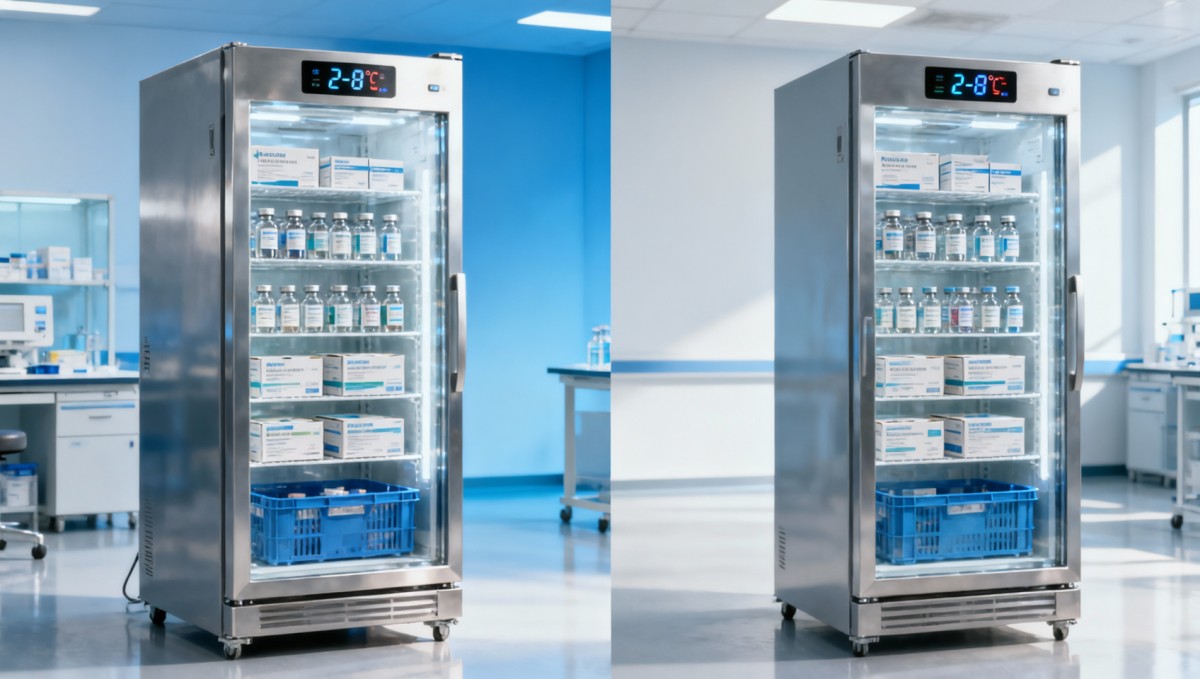
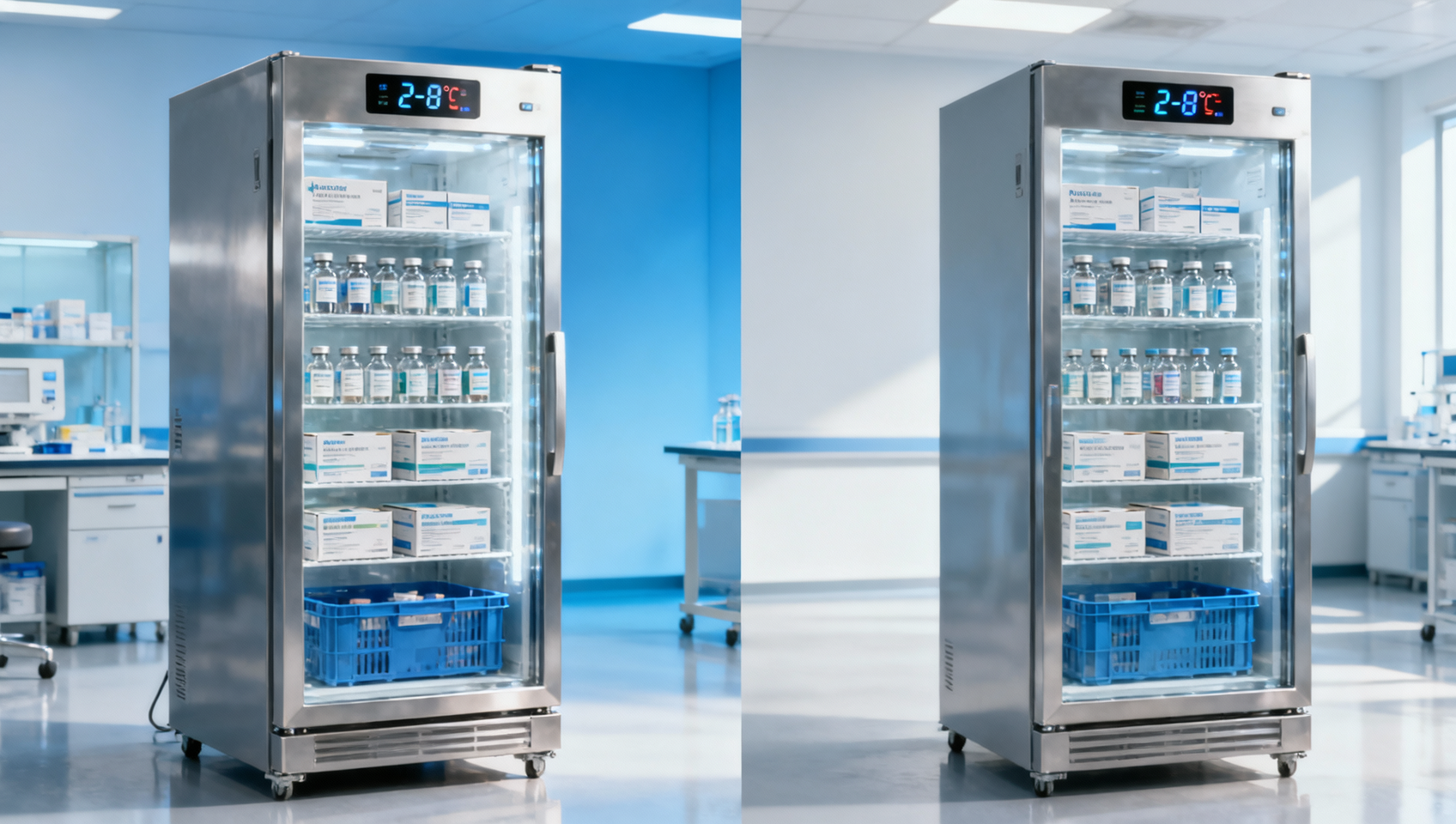
The most important specification in any medical refrigerator is temperature stability. Many healthcare materials require controlled storage within narrow ranges such as 2°C to 8°C, while some laboratory reagents may tolerate slightly different bands. A unit that merely reaches the target temperature is not enough; it must hold that range consistently across 24-hour operating cycles.
Technical teams should separate three related metrics: setpoint range, temperature uniformity, and recovery time. Uniformity describes how closely temperatures remain aligned from top to bottom and front to back, often expressed as a spread such as ±1°C or better. Recovery time indicates how quickly the cabinet returns to setpoint after a 30–60 second door opening.
In busy clinical settings, door openings may occur 20–50 times per day. In such conditions, poor airflow design or undersized compressors can create localized hot spots that jeopardize vaccine potency, sample integrity, or medication shelf life. Operators often discover these problems only after stock loss or audit findings.
Storage capacity also needs a closer reading. Gross volume and usable volume are not the same. A cabinet labeled 400 liters may offer significantly less practical storage once shelves, circulation clearances, and segregation rules are considered. Buyers should ask for usable shelf dimensions, shelf load ratings, and recommended fill percentages.
Another overlooked issue is ambient operating range. Some refrigerators perform reliably only in rooms between 16°C and 32°C. If the installation environment reaches 35°C in summer or drops below 10°C in peripheral spaces, stability can drift. This matters for pharmacies, field clinics, and regional distribution rooms where HVAC conditions are not always ideal.
Key technical indicators to check first
- Temperature control range, typically 2°C to 8°C for many medical cold storage applications.
- Uniformity across the cabinet, ideally within ±1°C under normal loading conditions.
- Recovery time after door opening, often expected within 15–30 minutes depending on cabinet size.
- Usable capacity rather than brochure volume, especially when segregation or basket systems are required.
- Ambient operating conditions, noise level, and ventilation clearances for the installation site.
The table below gives a practical view of how the same specification can matter differently across healthcare settings.
For most buyers, these four indicators should form the first screening layer. If a unit cannot demonstrate stable temperature control, acceptable recovery, and realistic usable volume, additional features such as touchscreens or cosmetic design should not influence the final shortlist.
Alarm Systems, Monitoring, and Compliance Requirements
A medical refrigerator is not only a storage device; it is also part of a risk-control system. Alarm architecture becomes essential when stock value is high, replenishment time is long, or materials are regulated. A cabinet that stores blood products, clinical samples, or high-value injectables should not rely on a simple local buzzer alone.
At minimum, buyers should confirm whether the unit includes high- and low-temperature alarms, door-open alarms, sensor fault alarms, and power-failure notification. In larger facilities, remote contacts, Wi-Fi, Ethernet, or BMS integration may be necessary so that alarms reach staff within seconds rather than waiting for a manual round.
Data logging is equally important. In many healthcare environments, temperature records must be retained for 30, 90, or even 365 days depending on internal protocol and local regulation. The more sensitive the stored products, the more important it is to verify logging interval, export format, timestamp integrity, and calibration practices.
Compliance review should be practical rather than generic. Instead of asking whether a refrigerator is “medical grade,” purchasing teams should verify suitability for the intended workflow: pharmacy storage, vaccine management, laboratory use, blood storage support, or distribution staging. This usually involves checking construction quality, temperature mapping capability, electrical safety, and documentation readiness for audits.
For distributors and project leads, documentation can affect deployment speed. A technically acceptable unit may still cause delays if it lacks calibration certificates, operating manuals, wiring details, spare parts lists, or validation support. Missing paperwork often adds 1–3 weeks to installation and approval timelines.
What to review in alarm and compliance documentation
- Check whether local and remote alarms cover power loss, door opening, over-temperature, under-temperature, and probe errors.
- Confirm logging interval, storage duration, and whether data can be exported through USB, software, or network interface.
- Review calibration method and recommended recalibration cycle, commonly every 6–12 months.
- Ask for installation, maintenance, and validation documents before issuing final approval.
The following table helps technical and commercial evaluators compare monitoring depth across common procurement tiers.
For finance approvers, the value of better monitoring is not abstract. One preventable excursion can destroy inventory worth far more than the added cost of networked alarms, backup notifications, and stronger recordkeeping. In regulated settings, monitoring is often one of the fastest areas where premium specifications pay back.
Choosing Capacity, Cabinet Design, and Workflow Fit
A well-specified medical refrigerator should fit the workflow as closely as it fits the temperature range. Capacity planning is not just about how much stock is stored today. Buyers should calculate average daily usage, peak emergency stock, replenishment cycle, and at least 15% to 25% extra space for segregation and temporary surges.
Cabinet style changes operating efficiency. Undercounter units support point-of-care workflows where access speed matters and floor space is limited. Upright single-door models suit moderate-volume pharmacies and labs. Double-door or larger vertical cabinets are often better for distribution staging or centralized storage where product categories must be separated physically.
Shelving and internal organization deserve more attention during evaluation. Adjustable shelves, pull-out drawers, baskets, and transparent inner doors can reduce door-open time by 10–20 seconds per access event. Over hundreds of openings each month, this improves both temperature control and staff efficiency.
Door type is another practical factor. Solid doors improve insulation and limit light exposure, which can matter for some pharmaceutical products. Glass doors improve visibility and picking speed but may increase heat gain if insulation quality is weak. The right choice depends on inventory sensitivity, access frequency, and room supervision.
Buyers should also think ahead about physical installation. Clearance for airflow, doorway access, floor loading, and backup power connection can all influence project cost. A unit may meet technical requirements yet create commissioning problems if the site cannot support its footprint, ventilation needs, or electrical demand.
Typical sizing logic for buyers
- Estimate average working inventory for 7–14 days, depending on replenishment frequency.
- Add safety stock for demand spikes, delayed deliveries, or emergency programs.
- Reserve 15%–25% internal space for airflow and organized separation.
- Check whether future service expansion could increase storage demand within 12–24 months.
The comparison below can help cross-functional teams match cabinet design to application requirements.
The best workflow fit usually reduces hidden costs. Fewer access errors, shorter door-open periods, and clearer stock zoning lower the risk of excursion events and cut the time operators spend searching for products during peak demand windows.
Energy Efficiency, Serviceability, and Total Cost of Ownership
Purchase price is only one part of the financial picture. A medical refrigerator often runs continuously for 24 hours a day, 365 days a year. Energy consumption, maintenance needs, spare parts access, and downtime risk can materially change ownership cost over a 5-year or 8-year lifecycle.
Energy efficiency matters most in facilities operating multiple units. Even a moderate reduction in annual kWh per cabinet becomes significant across 10, 20, or 50 installed refrigerators. Buyers should request annual energy consumption data under defined test conditions rather than relying on vague efficiency claims.
Serviceability is another major procurement factor. Fast access to replacement sensors, controllers, fans, door gaskets, and compressors reduces outage duration. In many markets, a refrigerator with common components and a responsive service network can be more valuable than a lower-priced alternative with a 2–4 week parts delay.
Maintenance planning should include calibration, condenser cleaning, door seal inspection, alarm testing, and backup power verification. Depending on site workload and environmental dust levels, preventive service may be scheduled every 6 months or annually. Skipping these routines increases drift risk and can shorten equipment life.
Commercial evaluators should also consider what downtime costs. The true impact may include emergency stock transfer, staff overtime, product wastage, urgent service fees, and delayed clinical operations. Total cost of ownership is therefore a combined technical and operational calculation, not just a budget line on the initial invoice.
A practical TCO checklist
Operating cost items
- Annual electricity use and local tariff impact.
- Calibration frequency, labor time, and third-party verification cost if required.
- Availability of local service teams and standard spare parts.
- Expected service response time, such as same day, next day, or 72 hours.
Risk cost items
- Potential value of stored products during a temperature excursion.
- Impact of downtime on patient service, testing schedules, or delivery commitments.
- Audit exposure if temperature records are incomplete or calibration has lapsed.
When buyers compare quotes, it is useful to standardize evaluation across at least 4 categories: technical performance, operating cost, service support, and compliance readiness. This framework often prevents low-price selections that create higher long-term costs.
Common Buying Mistakes and a Smarter Procurement Process
One common mistake is buying by temperature range alone. Two units may both claim 2°C to 8°C performance, yet differ substantially in uniformity, alarm depth, documentation quality, and energy use. Procurement teams that skip side-by-side specification review often miss the factors that matter after installation.
Another frequent error is oversizing or undersizing. Oversized cabinets waste energy and floor space when average occupancy remains below 30%–40%. Undersized models tend to become overpacked, restricting airflow and increasing warm zones. Capacity planning should be tied to reorder cycles, batch volumes, and emergency reserve policy.
Some buyers also fail to define acceptance criteria before delivery. Without clear requirements for temperature mapping, alarm verification, calibration evidence, and installation checks, disputes can arise after commissioning. This slows go-live and creates avoidable friction between distributors, facilities teams, and end users.
A stronger process starts with use-case classification. Is the refrigerator intended for pharmacy storage, routine lab reagents, specimen holding, vaccination workflows, or multi-site cold chain support? Once the use case is defined, teams can align the cabinet type, monitoring level, and budget logic more accurately.
Project managers and distributors should also build a short implementation schedule that covers site survey, electrical review, delivery path verification, installation, configuration, training, and acceptance testing. For many standard projects, this can be completed in 1–3 weeks after delivery if documentation is ready in advance.
Recommended procurement workflow
- Define the storage application, temperature range, access frequency, and recordkeeping requirements.
- Shortlist models based on stability, capacity, alarm coverage, and service support.
- Request technical documents, maintenance expectations, and installation requirements.
- Compare total cost of ownership over at least 5 years, not just purchase price.
- Set clear acceptance criteria for commissioning, user training, and post-installation support.
FAQ for medical refrigerator buyers
How much spare capacity should a medical refrigerator have?
A practical rule is to keep 15%–25% internal space free for airflow and stock organization. If inventory demand is seasonal or emergency-driven, a higher reserve may be justified. Running a cabinet at near 100% fill increases the chance of uneven cooling.
How often should temperature calibration be checked?
Many facilities review calibration every 6–12 months, though high-risk applications may require tighter intervals under internal quality procedures. The right schedule depends on product sensitivity, audit expectations, and how often the unit is opened or moved.
Is a glass door always better for visibility?
Not always. Glass doors can reduce search time, but only if insulation quality remains strong and light exposure is acceptable for stored materials. In lower-supervision environments or where energy efficiency is a priority, solid doors may be the better option.
What service response time should buyers request?
For critical healthcare storage, next-business-day response is often a reasonable minimum target, while higher-risk sites may require same-day support. Spare part availability should be discussed together with response time, because service without parts does not solve downtime risk.
Selecting the right medical refrigerator means balancing precise temperature performance, realistic capacity, reliable alarms, compliance-ready documentation, and lifecycle economics. The most successful purchases are made when end users, technical reviewers, procurement teams, and financial approvers align around operational risk rather than headline price alone.
For healthcare facilities, laboratories, distributors, and project teams evaluating medical cold storage, a structured specification review can prevent stock loss, simplify audits, and improve long-term asset value. If you are comparing options across different applications or planning a broader cold chain upgrade, now is the right time to map your requirements clearly.
To explore tailored medical refrigeration solutions, technical comparison support, or sourcing guidance for healthcare technology projects, contact TradeNexus Pro to discuss your application, request a customized shortlist, and learn more about fit-for-purpose procurement strategies.
Get weekly intelligence in your inbox.
No noise. No sponsored content. Pure intelligence.
 Apr 22, 2026China Leads Global Offshore Wind Installations for 5th YearChina Leads Global Offshore Wind Installations for 5th Year
 Apr 22, 2026China Launches National Mine Safety IoT Monitoring NetworkChina Launches National Mine Safety IoT Monitoring Network
 Apr 22, 2026Yinchuan Boiler Pure Water Solution Certified for Middle East ProjectsYinchuan Boiler Pure Water Solution Certified for Middle East Projects
 Apr 22, 2026China to Enforce Mandatory EV Battery Recycling Standards by 2026China to Enforce Mandatory EV Battery Recycling Standards by 2026
 Apr 22, 2026Vietnam Launches Anti-Circumvention Probe on Electronic ComponentsVietnam Launches Anti-Circumvention Probe on Electronic Components
 Apr 22, 20262026 Shanghai Fastener Show: Robotic Fasteners Drive Overseas Procurement2026 Shanghai Fastener Show: Robotic Fasteners Drive Overseas Procurement
 Apr 22, 2026US BIS Adds EV On-Board Charger Crypto Modules to EAR Appendix 7US BIS Adds EV On-Board Charger Crypto Modules to EAR Appendix 7
 Apr 22, 2026TÜV Rheinland Updates BESS Certification: Propagation Blocking Now MandatoryTÜV Rheinland Updates BESS Certification: Propagation Blocking Now Mandatory
 Apr 22, 2026Red Sea Crisis Escalates: Suez AI Speed Limits & Slot Review from Apr 19Red Sea Crisis Escalates: Suez AI Speed Limits & Slot Review from Apr 19
 Apr 22, 2026EU CBAM Carbon Tariff Takes Effect April 1, 2026EU CBAM Carbon Tariff Takes Effect April 1, 2026
 Apr 21, 2026When to Replace CT Scanner Parts Before Downtime StartsWhen to Replace CT Scanner Parts Before Downtime Starts
 Apr 21, 2026How to Cut Costs in Lathe Turning Without ReworkHow to Cut Costs in Lathe Turning Without Rework
 Apr 21, 2026Lathe Turning Tolerances: What Can You Expect?Lathe Turning Tolerances: What Can You Expect?
 Apr 21, 2026How to Avoid Risks in Solar Panels WholesaleHow to Avoid Risks in Solar Panels Wholesale
 Apr 21, 2026Solar Panels Wholesale: How to Compare SuppliersSolar Panels Wholesale: How to Compare Suppliers
 Apr 21, 2026Solar Mounting Cost Factors You Should KnowSolar Mounting Cost Factors You Should Know
 Apr 21, 2026Solar Mounting Options: Which One Fits Your Project?Solar Mounting Options: Which One Fits Your Project?
 Apr 21, 2026How to Pick USB C Docking Stations for Dual DisplaysHow to Pick USB C Docking Stations for Dual Displays
 Apr 21, 2026USB C Docking Stations: What Ports Do You Need?USB C Docking Stations: What Ports Do You Need?
 Apr 21, 2026What Affects Dental Milling Machine ROI in 2026?What Affects Dental Milling Machine ROI in 2026?
 Apr 21, 2026Dental Milling Machines: Wet or Dry for Your Lab?Dental Milling Machines: Wet or Dry for Your Lab?
 Apr 21, 2026How to Avoid Common Medical Refrigerator MistakesHow to Avoid Common Medical Refrigerator Mistakes
 Apr 21, 2026Medical Refrigerators: What Specs Matter Most?Medical Refrigerators: What Specs Matter Most?
 Apr 21, 2026Portable or Cart Vet Ultrasound: Which to Buy?Portable or Cart Vet Ultrasound: Which to Buy?
 Apr 21, 2026Vet Ultrasound Buying Guide for Small ClinicsVet Ultrasound Buying Guide for Small Clinics
 Apr 21, 2026Yard Management Systems: Key Features to CompareYard Management Systems: Key Features to Compare
 Apr 21, 2026How Yard Management Systems Improve Dock FlowHow Yard Management Systems Improve Dock Flow