Vietnam Launches Anti-Circumvention Probe on Electronic Components
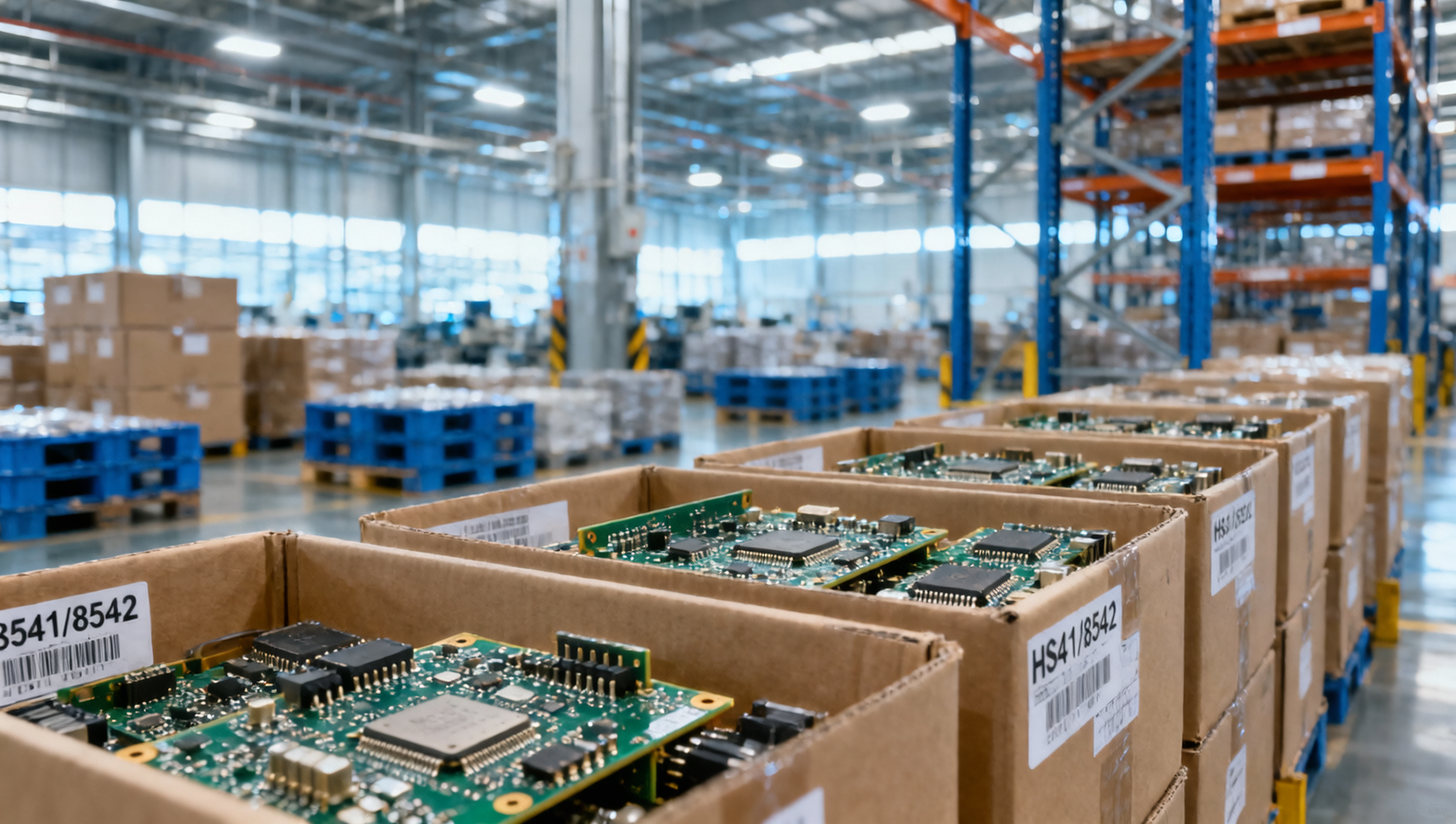
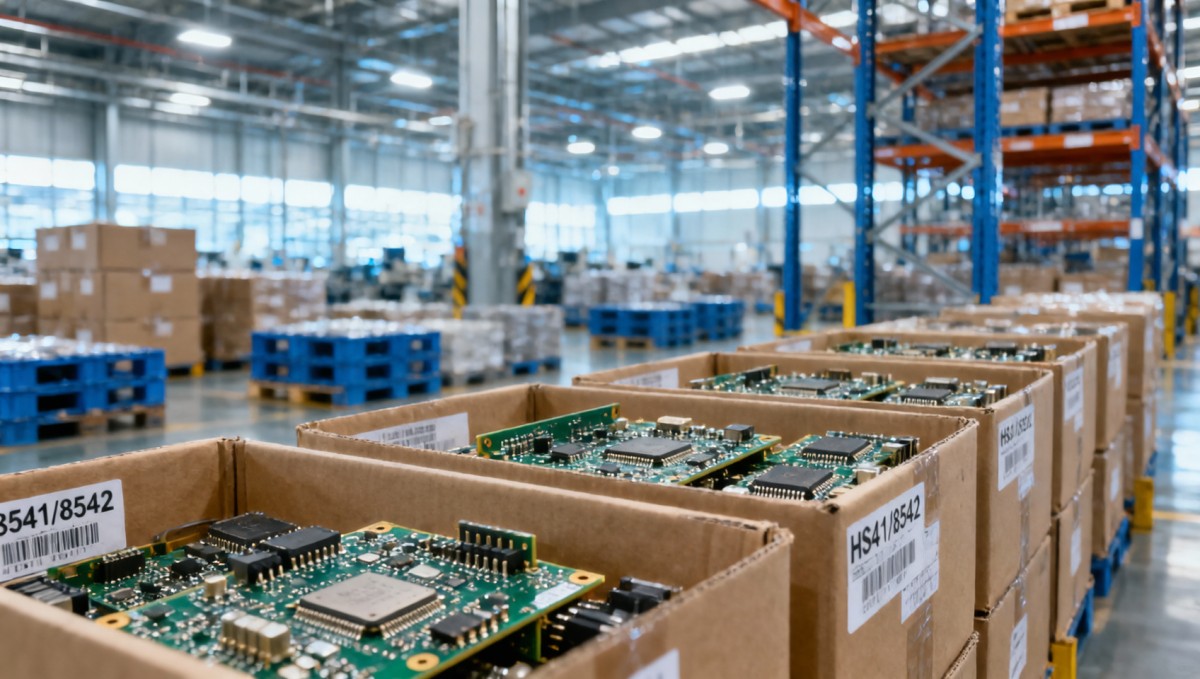
Vietnam’s Ministry of Industry and Trade launched an anti-circumvention investigation on April 21, 2026, targeting electronic components classified under HS codes 8541 and 8542 — specifically Chinese-origin chip modules and PCBA semifinished goods transshipped via third countries including Malaysia, Thailand, and Mexico. This development directly affects electronics distributors, contract manufacturers, and supply chain service providers operating across ASEAN and North America, as it raises compliance costs and operational uncertainty for ‘triangular trade’ arrangements designed to avoid U.S. and EU tariffs.
Event Overview
On April 21, 2026, Vietnam’s Ministry of Industry and Trade officially announced the initiation of an anti-circumvention investigation concerning electronic components (HS 8541/8542). The probe explicitly covers assembled or semi-finished products originating from China but routed through third countries — notably Malaysia, Thailand, and Mexico — prior to import into Vietnam. No provisional duties have been imposed; the investigation is in its preliminary procedural phase.
Industries Affected by Segment
Direct Trading Enterprises: Companies exporting finished or semi-finished electronic assemblies from China to Vietnam via intermediaries in Malaysia, Thailand, or Mexico face heightened scrutiny. Their customs declarations, origin documentation, and value-add evidence may now be subject to verification under Vietnam’s anti-circumvention framework.
Component Sourcing & Procurement Firms: Buyers relying on third-country-sourced modules to meet tariff preferences — especially for U.S./EU-bound shipments routed through Vietnam — must reassess origin substantiation requirements. Documentation gaps (e.g., insufficient proof of substantial transformation) could trigger reclassification or duty reassessment.
Contract Manufacturing & EMS Providers: Facilities in Vietnam assembling imported PCBA or chip modules risk downstream exposure if upstream suppliers cannot verify non-circumvention status. Audit readiness — particularly around bill-of-materials traceability and process documentation — becomes operationally critical.
Distribution & Channel Operators: Regional electronics distributors leveraging ‘triangular trade’ to offer competitive landed costs in ASEAN markets may see margin compression and longer lead times due to increased customs inspections and documentation delays.
Supply Chain & Trade Compliance Services: Firms offering origin certification, tariff classification support, or customs advisory services are likely to see rising demand for anti-circumvention-specific assessments — especially for HS 8541/8542 products moving through Southeast Asian hubs.
What Relevant Enterprises Should Monitor and Do Now
Track official updates from Vietnam’s Ministry of Industry and Trade
The investigation remains at the initiation stage. Stakeholders should monitor formal notices — including scope clarifications, deadlines for submissions, and any extension announcements — published on the Ministry’s official portal and WTO notifications.
Review origin documentation for all HS 8541/8542 imports transshipped via Malaysia, Thailand, or Mexico
Verify whether existing supplier declarations, certificates of origin, and manufacturing records meet Vietnam’s threshold for ‘substantial transformation’. Pay particular attention to assembly processes, value-add percentages, and component sourcing hierarchies.
Distinguish between policy signal and enforceable action
This probe signals growing regulatory attention to indirect circumvention — not yet a binding measure. Businesses should avoid overreacting (e.g., abrupt supplier shifts), but must treat it as a material compliance trigger requiring internal alignment across procurement, logistics, and legal functions.
Prepare contingency options for high-risk SKUs and routes
For products with tight margins or time-sensitive delivery windows, identify alternative sourcing paths — including direct procurement of higher-value-added modules from China — and assess feasibility of local value-add steps in Vietnam that may strengthen origin claims.
Editorial Perspective / Industry Observation
From industry perspective, this investigation is better understood as a regulatory signal than an immediate enforcement outcome. It reflects Vietnam’s increasing willingness to align its trade defense tools with those of major trading partners — particularly in response to observed patterns of tariff engineering in high-value electronics. Analysis来看, the inclusion of specific third countries (Malaysia, Thailand, Mexico) suggests targeted monitoring rather than broad-based suspicion. Observation来看, the timing coincides with rising global scrutiny of semiconductor supply chain transparency — though no link to broader export controls or national security frameworks has been indicated. Current more appropriate interpretation is that this marks a tightening of origin enforcement within existing WTO-compatible frameworks, not a shift toward unilateral trade barriers.
Conclusion
This investigation underscores a structural shift: tariff arbitrage via third-country assembly is becoming less predictable and more document-intensive in key ASEAN jurisdictions. For affected enterprises, the priority is not wholesale route abandonment, but systematic origin due diligence — especially for HS 8541/8542 items. The event is best understood as an early-stage compliance inflection point, not a market closure.
Information Source
Main source: Official announcement by Vietnam’s Ministry of Industry and Trade, dated April 21, 2026. Ongoing developments — including timelines for hearings, submission deadlines, and potential provisional measures — remain subject to official updates and require continuous monitoring.
Get weekly intelligence in your inbox.
No noise. No sponsored content. Pure intelligence.
 Apr 22, 2026China Leads Global Offshore Wind Installations for 5th YearChina Leads Global Offshore Wind Installations for 5th Year
 Apr 22, 2026China Launches National Mine Safety IoT Monitoring NetworkChina Launches National Mine Safety IoT Monitoring Network
 Apr 22, 2026Yinchuan Boiler Pure Water Solution Certified for Middle East ProjectsYinchuan Boiler Pure Water Solution Certified for Middle East Projects
 Apr 22, 2026China to Enforce Mandatory EV Battery Recycling Standards by 2026China to Enforce Mandatory EV Battery Recycling Standards by 2026
 Apr 22, 2026Vietnam Launches Anti-Circumvention Probe on Electronic ComponentsVietnam Launches Anti-Circumvention Probe on Electronic Components
 Apr 22, 20262026 Shanghai Fastener Show: Robotic Fasteners Drive Overseas Procurement2026 Shanghai Fastener Show: Robotic Fasteners Drive Overseas Procurement
 Apr 22, 2026US BIS Adds EV On-Board Charger Crypto Modules to EAR Appendix 7US BIS Adds EV On-Board Charger Crypto Modules to EAR Appendix 7
 Apr 22, 2026TÜV Rheinland Updates BESS Certification: Propagation Blocking Now MandatoryTÜV Rheinland Updates BESS Certification: Propagation Blocking Now Mandatory
 Apr 22, 2026Red Sea Crisis Escalates: Suez AI Speed Limits & Slot Review from Apr 19Red Sea Crisis Escalates: Suez AI Speed Limits & Slot Review from Apr 19
 Apr 22, 2026EU CBAM Carbon Tariff Takes Effect April 1, 2026EU CBAM Carbon Tariff Takes Effect April 1, 2026
 Apr 21, 2026When to Replace CT Scanner Parts Before Downtime StartsWhen to Replace CT Scanner Parts Before Downtime Starts
 Apr 21, 2026How to Cut Costs in Lathe Turning Without ReworkHow to Cut Costs in Lathe Turning Without Rework
 Apr 21, 2026Lathe Turning Tolerances: What Can You Expect?Lathe Turning Tolerances: What Can You Expect?
 Apr 21, 2026How to Avoid Risks in Solar Panels WholesaleHow to Avoid Risks in Solar Panels Wholesale
 Apr 21, 2026Solar Panels Wholesale: How to Compare SuppliersSolar Panels Wholesale: How to Compare Suppliers
 Apr 21, 2026Solar Mounting Cost Factors You Should KnowSolar Mounting Cost Factors You Should Know
 Apr 21, 2026Solar Mounting Options: Which One Fits Your Project?Solar Mounting Options: Which One Fits Your Project?
 Apr 21, 2026How to Pick USB C Docking Stations for Dual DisplaysHow to Pick USB C Docking Stations for Dual Displays
 Apr 21, 2026USB C Docking Stations: What Ports Do You Need?USB C Docking Stations: What Ports Do You Need?
 Apr 21, 2026What Affects Dental Milling Machine ROI in 2026?What Affects Dental Milling Machine ROI in 2026?
 Apr 21, 2026Dental Milling Machines: Wet or Dry for Your Lab?Dental Milling Machines: Wet or Dry for Your Lab?
 Apr 21, 2026How to Avoid Common Medical Refrigerator MistakesHow to Avoid Common Medical Refrigerator Mistakes
 Apr 21, 2026Medical Refrigerators: What Specs Matter Most?Medical Refrigerators: What Specs Matter Most?
 Apr 21, 2026Portable or Cart Vet Ultrasound: Which to Buy?Portable or Cart Vet Ultrasound: Which to Buy?
 Apr 21, 2026Vet Ultrasound Buying Guide for Small ClinicsVet Ultrasound Buying Guide for Small Clinics
 Apr 21, 2026Yard Management Systems: Key Features to CompareYard Management Systems: Key Features to Compare
 Apr 21, 2026How Yard Management Systems Improve Dock FlowHow Yard Management Systems Improve Dock Flow