How Yard Management Systems Improve Dock Flow
For logistics teams seeking faster turnaround and fewer bottlenecks, yard management systems provide the visibility needed to improve dock flow, trailer coordination, and labor efficiency. As supply chains become more data-driven across sectors—from hospital furniture and medical refrigerators to solar mounting and lathe turning—understanding how yard management systems reduce congestion and support smarter decision-making is essential for operators, evaluators, and procurement leaders alike.
In most facilities, poor dock flow is not caused by a lack of docks alone. It is usually the result of limited yard visibility, manual trailer check-ins, missed appointments, unbalanced labor allocation, and slow communication between gate, yard, warehouse, and transport teams. A yard management system (YMS) improves dock flow by turning these disconnected activities into a coordinated, real-time process. For readers evaluating whether the investment is worthwhile, the short answer is yes—when dock congestion, detention costs, trailer dwell time, and scheduling inconsistency are hurting throughput, a YMS can deliver measurable operational and financial gains.
Why dock flow breaks down in the first place

Before evaluating software, it helps to understand the root causes of dock inefficiency. In many sites, yard operations still depend on spreadsheets, radio calls, clipboard-based gate logs, and institutional knowledge. That works up to a point, but it becomes fragile as volume, SKU complexity, carrier variability, or compliance requirements increase.
Common dock flow problems include:
- Unclear trailer location: Teams waste time searching for the right trailer or confirming whether it is ready for a door.
- Poor appointment coordination: Inbound and outbound loads arrive in clusters, overwhelming available dock capacity.
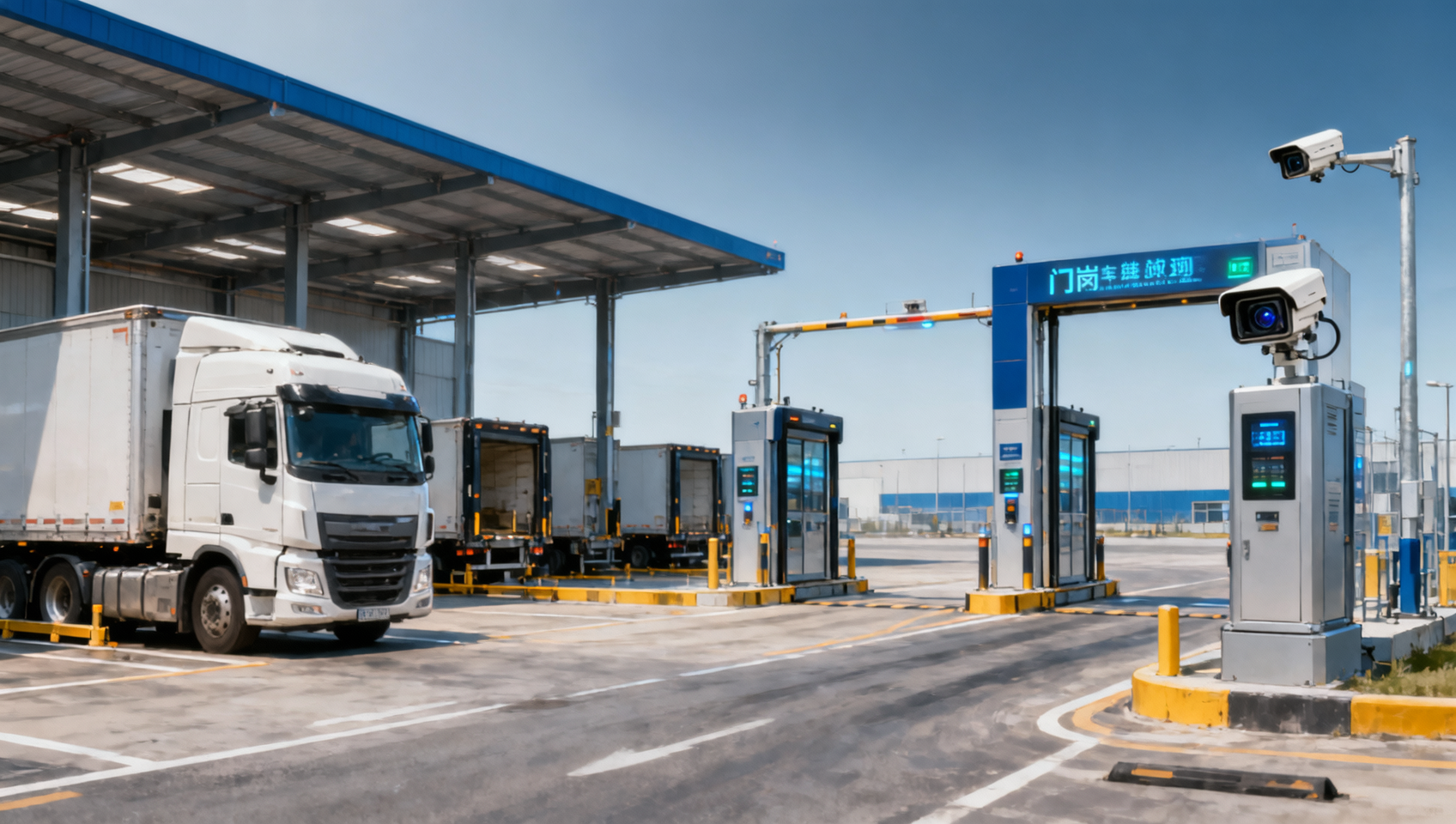
- Long gate processing times: Manual check-in and verification create queues before trailers even enter the yard.
- Limited prioritization: Urgent loads, temperature-sensitive goods, or production-critical materials are not always moved first.
- Labor mismatch: Warehouse teams may be overstaffed in one period and underprepared in another because arrival timing is inaccurate.
- Weak communication: Carriers, security, yard jockeys, dock supervisors, and warehouse operators often work from different information.
These issues do more than slow trucks. They can affect OTIF performance, inventory availability, labor utilization, customer service, and even supplier relationships. In sectors such as healthcare technology or green energy, where delivery timing and equipment handling can be especially sensitive, poor dock flow can create downstream operational risk.
How a yard management system improves dock flow in practical terms
A yard management system improves dock flow by giving operators a live control layer between transportation planning and warehouse execution. Rather than treating the yard as a blind spot, the system makes yard activity visible, trackable, and easier to prioritize.
In practical operations, a YMS typically improves dock flow in the following ways:
1. Real-time yard visibility
A YMS shows which trailers are on site, where they are parked, how long they have been waiting, what they contain, and whether they are assigned, empty, loaded, or ready for movement. This reduces search time and prevents unnecessary delays at the dock door.
2. Smarter dock scheduling
Many systems help manage dock appointments and align arrivals with door availability, labor plans, and warehouse capacity. This reduces congestion peaks and makes dock flow more predictable throughout the day.
3. Faster gate-to-dock coordination
When check-in status, trailer identity, and appointment data are captured digitally, gate processing becomes quicker and more consistent. That means less waiting at entry points and faster progression to staging or dock assignment.
4. Better prioritization of trailer moves
Not every trailer should be handled in arrival order. A good YMS helps teams prioritize by urgency, shipment type, production need, outbound cutoff time, detention risk, or temperature control requirement. This improves decision-making when resources are constrained.
5. Improved yard jockey productivity
With centralized move requests and clearer instructions, shunter or yard jockey activity becomes more efficient. Fewer wasted moves, less idle time, and faster door turns all contribute to improved dock flow.
6. Stronger integration with WMS, TMS, and ERP systems
When the YMS is connected to warehouse and transportation systems, dock teams can act on shared data rather than isolated updates. This creates a smoother flow from inbound arrival to unloading, put-away, picking, staging, and outbound dispatch.
What benefits matter most to different decision-makers
A yard management system is rarely evaluated by one person alone. Different stakeholders care about different outcomes, so the strongest business case is one that connects daily operations to measurable business value.
For operators and supervisors
- Fewer manual calls and status checks
- Faster trailer location and assignment
- Better shift planning and reduced firefighting
- More consistent dock utilization
For technical evaluators
- System integration with WMS, TMS, RFID, GPS, or gate automation
- Real-time event visibility and workflow control
- Scalability across single-site or multi-site networks
- Data quality, reporting, and process configurability
For business evaluators and procurement leaders
- Reduced detention and demurrage-related costs
- Higher dock throughput without immediate facility expansion
- Better carrier experience and appointment compliance
- Improved service levels and reduced disruption risk
For finance approvers
- Clear ROI based on time savings, cost avoidance, and throughput gains
- Lower labor waste and better use of existing assets
- Reduced penalties associated with delayed loading or unloading
- Improved reporting for operational accountability
For project managers and implementation leads
- Defined rollout scope and site readiness requirements
- Change management across gate, yard, warehouse, and transport functions
- Process standardization across shifts or facilities
- Faster identification of bottlenecks during go-live
How to tell whether your facility really needs a YMS
Not every site needs the same level of yard orchestration. But certain signs strongly suggest that dock flow problems are systemic and that a YMS could create value.
Your operation may be a strong candidate if you regularly experience:
- Trailer queues at the gate or in the yard
- Frequent delays in finding trailers or assigning dock doors
- High detention charges or avoidable carrier wait times
- Unpredictable loading and unloading schedules
- Manual appointment management across email, phone, or spreadsheets
- Production delays caused by late inbound materials
- Outbound service failures tied to dock congestion
- Limited KPI visibility around dwell time, turn time, or yard utilization
This applies across a broad mix of industries. A facility handling medical refrigeration, precision-machined parts, solar structures, or high-value electronics may have different product profiles, but the operational challenge is similar: when yard activity is not synchronized with dock execution, capacity is lost even if infrastructure exists.
Which KPIs best measure dock flow improvement
For readers comparing solutions or preparing internal approval, KPI clarity matters. A yard management system should not be justified by software features alone. It should be judged by operational outcomes.
Key metrics to track include:
- Trailer dwell time: How long trailers remain in the yard before being processed
- Gate turnaround time: Time from arrival to completed check-in or exit
- Dock door utilization: How effectively available doors are used over time
- Yard move response time: Speed of trailer repositioning after request
- Detention cost reduction: Savings from shorter wait times
- On-time loading and unloading rate: Reliability of dock execution
- Labor productivity: Output per shift relative to planned workload
- Appointment adherence: Carrier compliance with scheduled windows
Facilities that build a baseline before implementation are in a much stronger position to evaluate actual ROI. This also helps align operations, IT, and finance around the same success criteria.
What to look for when evaluating a yard management system
If the goal is to improve dock flow, not just digitize the yard, buyers should focus on operational fit. Some platforms are strong in visibility but weak in execution. Others may offer deep workflow automation but require more process discipline to deliver results.
Important evaluation criteria include:
- Appointment and dock scheduling tools that reflect real capacity constraints
- Live trailer visibility through GPS, RFID, barcode, or manual scan workflows
- Move orchestration for yard jockeys and dock teams
- Configurable prioritization rules for urgent, perishable, or production-critical loads
- Integration capabilities with WMS, TMS, ERP, telematics, and security systems
- Reporting and analytics for dwell time, turn time, utilization, and exceptions
- Ease of use for gate staff, supervisors, and floor operators
- Multi-site support if process standardization across locations is a goal
Decision-makers should also ask a practical question: will the vendor help redesign workflows, or only install the software? Many dock flow issues are process issues first. Technology creates value fastest when paired with operating model improvement.
Implementation risks and how to avoid disappointing results
Even strong software can underperform if the rollout is poorly scoped. One of the most common mistakes is assuming that visibility alone will solve congestion. In reality, better dock flow requires process alignment, user adoption, and clear ownership of decisions.
Common risks include:
- Inaccurate yard status data due to inconsistent scanning or check-in discipline
- Poor master data for trailers, carriers, appointments, or dock rules
- Weak integration with warehouse or transportation workflows
- Limited operator training and low shift-level adoption
- No agreed KPI baseline or post-launch review process
To reduce these risks, organizations should start with a focused use case: for example, reducing inbound congestion during peak hours, improving outbound dispatch reliability, or lowering trailer dwell time in a high-volume facility. A phased implementation often works better than trying to automate every yard process at once.
Final assessment: when a YMS creates the most value
Yard management systems improve dock flow most effectively in operations where the yard has become a coordination bottleneck rather than just a parking area. If trailers arrive unpredictably, dock schedules shift constantly, teams rely on manual updates, and throughput suffers despite existing physical capacity, a YMS can create meaningful gains.
The real value is not just software visibility. It is better control over trailer movement, better dock prioritization, better labor timing, and better decisions across the entire site. For operators, that means less chaos. For managers, it means measurable performance improvement. For evaluators and approvers, it means a clearer case for investment based on throughput, cost reduction, and service reliability.
In short, a yard management system is most worth considering when dock flow problems are affecting business outcomes. When chosen carefully and implemented with the right process discipline, it can turn the yard from a blind spot into a performance lever.
Get weekly intelligence in your inbox.
No noise. No sponsored content. Pure intelligence.
 Apr 22, 2026China Leads Global Offshore Wind Installations for 5th YearChina Leads Global Offshore Wind Installations for 5th Year
 Apr 22, 2026China Launches National Mine Safety IoT Monitoring NetworkChina Launches National Mine Safety IoT Monitoring Network
 Apr 22, 2026Yinchuan Boiler Pure Water Solution Certified for Middle East ProjectsYinchuan Boiler Pure Water Solution Certified for Middle East Projects
 Apr 22, 2026China to Enforce Mandatory EV Battery Recycling Standards by 2026China to Enforce Mandatory EV Battery Recycling Standards by 2026
 Apr 22, 2026Vietnam Launches Anti-Circumvention Probe on Electronic ComponentsVietnam Launches Anti-Circumvention Probe on Electronic Components
 Apr 22, 20262026 Shanghai Fastener Show: Robotic Fasteners Drive Overseas Procurement2026 Shanghai Fastener Show: Robotic Fasteners Drive Overseas Procurement
 Apr 22, 2026US BIS Adds EV On-Board Charger Crypto Modules to EAR Appendix 7US BIS Adds EV On-Board Charger Crypto Modules to EAR Appendix 7
 Apr 22, 2026TÜV Rheinland Updates BESS Certification: Propagation Blocking Now MandatoryTÜV Rheinland Updates BESS Certification: Propagation Blocking Now Mandatory
 Apr 22, 2026Red Sea Crisis Escalates: Suez AI Speed Limits & Slot Review from Apr 19Red Sea Crisis Escalates: Suez AI Speed Limits & Slot Review from Apr 19
 Apr 22, 2026EU CBAM Carbon Tariff Takes Effect April 1, 2026EU CBAM Carbon Tariff Takes Effect April 1, 2026
 Apr 21, 2026When to Replace CT Scanner Parts Before Downtime StartsWhen to Replace CT Scanner Parts Before Downtime Starts
 Apr 21, 2026How to Cut Costs in Lathe Turning Without ReworkHow to Cut Costs in Lathe Turning Without Rework
 Apr 21, 2026Lathe Turning Tolerances: What Can You Expect?Lathe Turning Tolerances: What Can You Expect?
 Apr 21, 2026How to Avoid Risks in Solar Panels WholesaleHow to Avoid Risks in Solar Panels Wholesale
 Apr 21, 2026Solar Panels Wholesale: How to Compare SuppliersSolar Panels Wholesale: How to Compare Suppliers
 Apr 21, 2026Solar Mounting Cost Factors You Should KnowSolar Mounting Cost Factors You Should Know
 Apr 21, 2026Solar Mounting Options: Which One Fits Your Project?Solar Mounting Options: Which One Fits Your Project?
 Apr 21, 2026How to Pick USB C Docking Stations for Dual DisplaysHow to Pick USB C Docking Stations for Dual Displays
 Apr 21, 2026USB C Docking Stations: What Ports Do You Need?USB C Docking Stations: What Ports Do You Need?
 Apr 21, 2026What Affects Dental Milling Machine ROI in 2026?What Affects Dental Milling Machine ROI in 2026?
 Apr 21, 2026Dental Milling Machines: Wet or Dry for Your Lab?Dental Milling Machines: Wet or Dry for Your Lab?
 Apr 21, 2026How to Avoid Common Medical Refrigerator MistakesHow to Avoid Common Medical Refrigerator Mistakes
 Apr 21, 2026Medical Refrigerators: What Specs Matter Most?Medical Refrigerators: What Specs Matter Most?
 Apr 21, 2026Portable or Cart Vet Ultrasound: Which to Buy?Portable or Cart Vet Ultrasound: Which to Buy?
 Apr 21, 2026Vet Ultrasound Buying Guide for Small ClinicsVet Ultrasound Buying Guide for Small Clinics
 Apr 21, 2026Yard Management Systems: Key Features to CompareYard Management Systems: Key Features to Compare
 Apr 21, 2026How Yard Management Systems Improve Dock FlowHow Yard Management Systems Improve Dock Flow